Power Adapter Plug
CN → US| HS Code | Tariff Rate | Origin | Destination | Doc |
|---|---|---|---|---|
| 8504407007 | 35.0% | CN | US | Official Doc |
| 8504407018 | 35.0% | CN | US | Official Doc |
| 8544429090 | 87.6% | CN | US | Official Doc |
| 8536694010 | 35.0% | CN | US | Official Doc |
| 8536694020 | 35.0% | CN | US | Official Doc |
| 8544429010 | 87.6% | CN | US | Official Doc |
Product Images
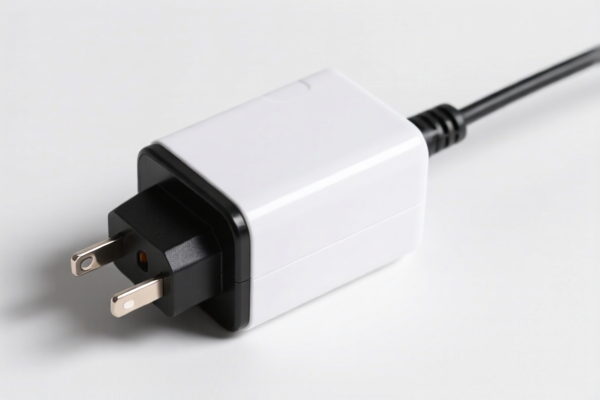
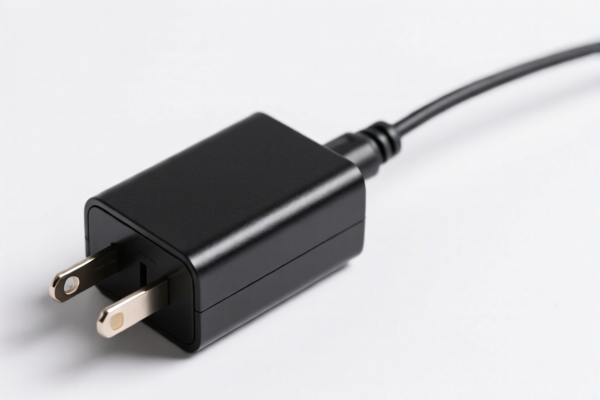
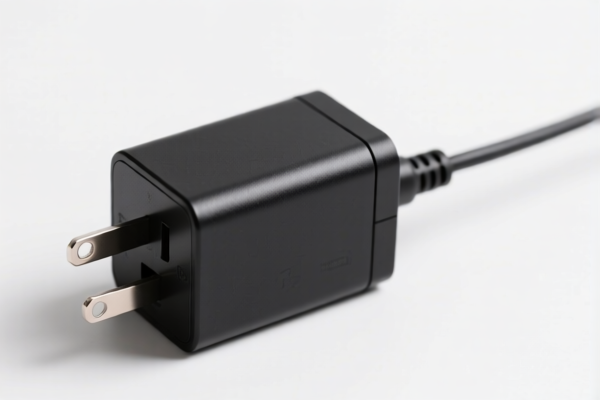
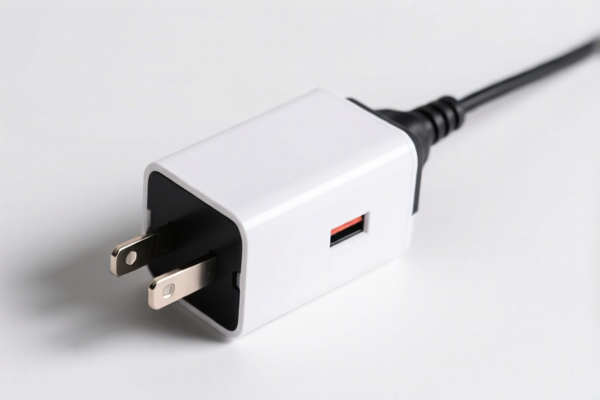
AI Analysis
🔌 Power Adapter Plug (Connectors & Adapters)
🌐 HS Code Reference & Customs Clearance Guide | 2026 Latest Tariff Analysis | Professional Clearance Strategy
📌 I. Product Definition & Classification: Do You Really Understand "Power Adapter Plugs"?
In international trade, the term "Power Adapter Plug" is often ambiguous. It can refer to two distinct categories of electrical components:
1. Power Adapters (Static Converters): Devices that convert alternating current (AC) to direct current (DC) or change voltage levels.
2. Plug Connectors (Assembled Wires): Physical connectors with attached wires, used to link electrical circuits.
⚠️ Key Distinction:
- If the product is a device that changes power (AC/DC converter) → It is a Static Converter (HS 8504).
- If the product is a physical plug/connector with wires attached → It is an Insulated Wire/Connector (HS 8544 or 8536).
📦 II. HS Code Classification Details (2026 Latest Tariff Authority Comparison)
| HS Code | Product Description | Application Scenario | Key Feature |
|---|---|---|---|
8504.40.70.07 |
Static Converters (Power Adapters) | Common power supplies, no material/form conflict | ✅ Active Device |
8504.40.70.18 |
Static Converters (Other) | Electronic device power supplies, no material/use conflict | ✅ Active Device |
8544.42.90.90 |
Assembled Wires with Connectors (Plugs) | Bottom-category match for connectors with wires | ✅ Passive Component |
8536.69.40.10 |
Plugs and Sockets (Coaxial/Other) | Consistent with plug/socket usage, coaxial category | ✅ Passive Component |
8536.69.40.20 |
Plugs and Sockets (Other) | Common form factor for plugs, no material/use conflict | ✅ Passive Component |
8544.42.90.10 |
Conductors with Connectors (Metal/Plastic) | Metal or plastic connectors with conductors | ✅ Passive Component |
🔍 Critical Reminder:
- Power Adapters (devices with circuits) fall under HS 8504.
- Plug Connectors (physical plugs, possibly with short wires) fall under HS 8536 or HS 8544.
- Do NOT confuse a "Power Adapter" (converter) with a "Power Cord Plug" (passive connector). Misclassification leads to massive tax differences!
💰 III. 2026 Latest Tariff Rate Breakdown (Including Surtaxes & Policy Add-ons)
✅ Applicable Country: United States (US)
✅ Origin: China (CN)
✅ Effective Date: November 10, 2025 (and subsequent imports)
🎯 1. 8504.40.70.07 & 8504.40.70.18 —— Power Adapters (Static Converters)
| Item | Content |
|---|---|
| Basic Tariff | 0.0% (ad valorem) |
| Surtax (Section 301) | +25.0% |
| 122 Clause Tariff | +10.0% |
| Total Rate | 35.0% |
| Tax Calculation | CIF Value × 35% |
| De Minimis Eligibility | ❌ Not Eligible (denied) |
| Legal Basis Path | USITC:8504.40.70.07 → Section 301: 25% → 122 Clause: 10% |
📌 Explanation:
- Basic Tariff: 0% for static converters.
- Section 301 Surtax: 25% applied to Chinese goods under Trade Act Section 301.
- 122 Clause Tariff: Additional 10% imposed under Section 122 of the Trade Act (or similar emergency provision).
- Total: 35% is a high burden for power adapters.
🎯 2. 8536.69.40.10 & 8536.69.40.20 —— Plugs and Sockets (Connectors)
| Item | Content |
|---|---|
| Basic Tariff | 0.0% |
| Surtax (Section 301) | +25.0% |
| 122 Clause Tariff | +10.0% |
| Total Rate | 35.0% |
| Tax Calculation | CIF Value × 35% |
| De Minimis Eligibility | ❌ Not Eligible |
| Legal Basis Path | USITC:8536.69.40.xx → Section 301: 25% → 122 Clause: 10% |
📌 Note:
- These codes cover plugs and sockets (e.g., coaxial connectors, general-purpose plugs).
- Same tax structure as power adapters: 35% total.
- Ensure the product is clearly a "plug/connector" and not a "wired assembly" to avoid misclassification into the higher-tariff HS 8544 codes.
🎯 3. 8544.42.90.90 & 8544.42.90.10 —— Conductors with Connectors (Assembled Wires)
| Item | Content |
|---|---|
| Basic Tariff | 2.6% |
| Surtax (Section 301) | +25.0% |
| 122 Clause Tariff | +10.0% |
| Steel/Aluminum/Copper Surtax | +50.0% |
| Total Rate | 87.6% |
| Tax Calculation | CIF Value × 87.6% |
| De Minimis Eligibility | ❌ Not Eligible |
| Legal Basis Path | USITC:8544.42.90.xx → Section 301: 25% → 122 Clause: 10% → Metals: 50% |
📌 Warning:
- HS 8544 applies to insulated wires/cables with attached connectors (e.g., USB cables, power cords with plugs).
- Huge Tax Jump: From 35% to 87.6%!
- Metal Content: If the connector/wire contains steel, aluminum, or copper, an additional 50% may apply under specific provisions.
- Do NOT misclassify a simple "plug" (HS 8536) as an "assembled wire" (HS 8544) unless it actually includes significant conductive wiring.
🛠️ IV. Customs Clearance Practical Advice (Avoid Pitfalls)
✅ 1. Required Documentation Checklist
| Document | Must Provide | Description |
|---|---|---|
| ✅ Product Specification | ✔️ | Clearly state: "Power Adapter" (converter) or "Plug Connector" (passive) |
| ✅ Circuit Diagram (if adapter) | ✔️ | Proves it is a static converter (HS 8504) |
| ✅ Material Composition | ✔️ | Essential for HS 8544 (metal content triggers 50% surtax) |
| ✅ Product Photos | ✔️ | Show clear view of plugs, wires, and labeling |
| ✅ Commercial Invoice | ✔️ | Accurate description: "DC Power Adapter" or "Plastic Plug Connector" |
| ✅ Origin Certificate | ✔️ | For US-China trade, confirm CN origin |
✅ 2. Classification Strategy (Key Mantra)
🔥 "Adapter is 35%, Plug is 35%, Wire Assembly is 87.6%!"
| Situation | Correct HS Code | Wrong Way | Consequence |
|---|---|---|---|
| AC/DC Power Adapter | 8504.40.70.xx |
Misclassified as wire → HS 8544 | 87.6% tax instead of 35% |
| Simple Plug (no wire) | 8536.69.40.xx |
Misclassified as wire → HS 8544 | 87.6% tax instead of 35% |
| USB Cable with Plug | 8544.42.90.xx |
Misclassified as adapter → HS 8504 | Low tax (but risk of penalty for false declaration) |
| Cable with Metal Connector | 8544.42.90.xx |
Ignore metal content | Additional 50% surtax applies! |
✅ 3. Special Cases Handling
| Situation | Handling Advice |
|---|---|
| OEM Power Adapters | Provide datasheet showing voltage conversion capability to justify HS 8504 |
| Cable-Ready vs. Wired | If the plug is not attached to a significant wire, use HS 8536 (35%). If it is, use HS 8544 (87.6%) |
| Metal Connectors | If the plug contains steel/aluminum/copper, expect 87.6% total tax if misclassified as HS 8504/8536 |
| De Minimis (Section 321) | ❌ Not Eligible for any of these codes due to high tax rates |
🌍 V. Global Market Comparison (2026 Latest)
| Country/Region | Recommended HS Code | Tariff (China Origin) | Certifications | Notes |
|---|---|---|---|---|
| 🇺🇸 USA | 8504.40.70.xx / 8536.69.40.xx |
35% (Adapters/Plugs) | FCC, UL, DOE | 87.6% for HS 8544 wires |
| 🇨🇳 China | 8504.40.70.xx |
~10-15% | CCC | Lower than US |
| 🇪🇺 EU | 8504.40.70.xx |
0-4% | CE, RoHS | No Section 301 equivalent |
| 🇯🇵 Japan | 8504.40.70.xx |
0-3% | PSE | No major surtaxes |
📌 Conclusion:
- US is the hardest market due to Section 301 + 122 Clause tariffs.
- HS 8544 (wires) is a tax trap (87.6%) – ensure you are not declaring cables as adapters or plugs.
📌 VI. Common Errors & Pitfalls (Lessons Learned)
❌ Error 1: Declaring a "USB Cable" (HS 8544) as a "Power Adapter" (HS 8504)
👉 Consequence: High risk of penalty for misdeclaration, but tax is lower (35% vs 87.6%). However, customs may flag it as fraud.
❌ Error 2: Declaring a "Plug Connector" (HS 8536) as an "Assembled Wire" (HS 8544)
👉 Consequence: Tax jumps from 35% to 87.6% → Loss of 52.6% profit margin!
❌ Error 3: Ignoring metal content in connectors
👉 Consequence: If steel/aluminum/copper is present, additional 50% may be applied under specific clauses.
❌ Error 4: Using vague terms like "Power Cord"
👉 Consequence: Customs will inspect and may classify as HS 8544 (87.6%) by default.
✅ Correct Approach:
"AC/DC Power Adapter, 12V 2A, Plastic Housing, No Attached Wire, Model XYZ" → HS 8504
"Plastic Plug Connector, No Wire, For Electronic Device" → HS 8536
"USB Type-C Cable with Connector, 1m Length" → HS 8544 (Expect 87.6% tax)
🎯 VII. Conclusion: Precision Saves Money!
🎯 Remember the Mantra:
🔹 "Adapter/Plug: 35% | Wire Assembly: 87.6% | Metal: +50%!"
🔹 "Don't confuse passive plugs with active adapters or wired cables!"
📌 Pro Tip:
If your product is a plug only (no wire), use HS 8536.
If it is a power adapter (converter), use HS 8504.
If it is a cable with a plug, use HS 8544 (and prepare for 87.6% tax!).
📣 Immediate Action:
📞 Contact a licensed customs broker for Pre-Ruling (Advance Ruling) on HS Code classification.
🚀 Avoid the 87.6% tax trap by accurately describing your product!
✨ Professional Clearance Starts with Accurate Classification!
💼 Your Cost Efficiency Depends on the Correct HS Code!
Customer Reviews
About HS Code Classification
The Harmonized System (HS) is an internationally standardized nomenclature developed by the World Customs Organization (WCO) to classify traded products. Over 200 countries use the HS system as the basis for customs tariffs, trade statistics, and import/export regulations.
Each HS code follows a hierarchical structure:
- Chapter (2 digits) — Broad category of goods (e.g., Chapter 84: Machinery and Mechanical Appliances)
- Heading (4 digits) — More specific grouping within the chapter
- Subheading (6 digits) — Internationally standardized breakdown, used by all WCO member countries
- National subdivisions (8-10 digits) — Country-specific extensions for further classification, such as US HTSUS 10-digit codes
Correct HS code classification is essential for smooth customs clearance, accurate duty payment, and compliance with trade regulations. Misclassification can lead to customs delays, overpayment of duties, or penalties.
When importing from CN to US, the applicable tariff rates may include:
- Most-Favored-Nation (MFN) rate — The standard duty rate applied to WTO members
- General rate — Applied to countries without trade agreements
- Trade remedy duties — Additional tariffs such as Section 301 (anti-dumping), Section 232 (national security), or countervailing duties
The information provided on this page is for reference purposes only. For official classification, please consult with your local customs authority or a licensed customs broker.