Power Cable
CN → US| HS Code | Tariff Rate | Origin | Destination | Doc |
|---|---|---|---|---|
| 7413005000 | 87.0% | CN | US | Official Doc |
| 7413001000 | 88.0% | CN | US | Official Doc |
| 3926905900 | 37.4% | CN | US | Official Doc |
| 8538908180 | 38.5% | CN | US | Official Doc |
| 8544493080 | 40.3% | CN | US | Official Doc |
Product Images
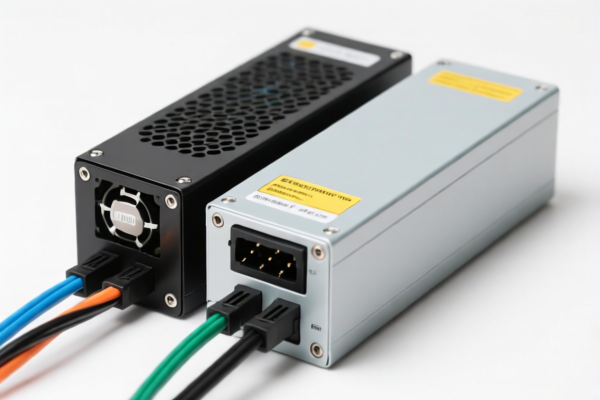
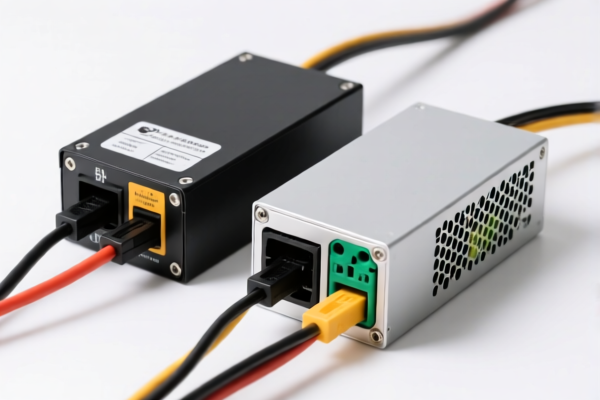


AI Analysis
🔌 Power Cable (Electrical Cables & Wires)
🌐 HS Code Reference & Clearance Guide | 2026 Latest Tariff Analysis | Professional Clearance Strategy
📌 I. Product Definition & Classification: Do You Really Understand "Power Cables"?
Power cables are the lifelines of modern electrical systems, connecting devices to power sources or connecting different electronic components. In international trade, they are strictly classified based on insulation status, material composition, and voltage ratings. Confusion often arises because "Power Cable" is a functional term, not a technical HS classification term.
Key Distinctions: 1. Uninsulated Copper Wires/Cables: Bare metal conductors (no insulation) → Classified under Chapter 74 (Copper Works). 2. Insulated Electrical Conductors: Wires with plastic/rubber insulation, typically <1000V → Classified under Chapter 85 (Electrical Machinery). 3. Plastic/Insulation Parts: If the item is purely insulation material or a connector housing without conductive cores → Classified under Chapter 39 (Plastics) or Chapter 85 (Parts).
⚠️ Critical Differentiator:
- If it is bare copper wire used for winding or transmission → HS 7413
- If it is an insulated wire (e.g., PVC jacket) for low voltage (<1000V) → HS 8544
- If it is a pre-assembled appliance cord (plug + wire) → HS 8538 or HS 8544 depending on structure
- If it is purely plastic insulation tubing → HS 3926
📦 II. HS Code Classification Details (2026 Latest Tariff Authority Comparison)
| HS Code | Product Description | Application Scenario | Insulation Status |
|---|---|---|---|
7413.00.50.00 |
Uninsulated copper twisted strands or cables | Bare copper busbars, winding wires, unprocessed copper cables | ❌ No Insulation |
7413.00.10.00 |
Copper cables/twisted strands (specific subtype) | Specific copper conductor products, no material conflict | ❌ No Insulation |
8544.49.30.80 |
Insulated electrical conductors, voltage ≤ 1000V | Standard household power cords, appliance cables, building wiring | ✅ PVC/Rubber Insulated |
8538.90.81.80 |
Parts suitable for apparatus of headings 8535-8537 | Pre-assembled power cords with connectors, terminal blocks | ✅ Insulated + Connectors |
3926.90.59.00 |
Other articles of plastics | Purely plastic insulation sleeves, non-conductive cable accessories | ⚠️ Non-Conductive / Plastic Only |
🔍 Key Reminder:
- "Power Cable" is ambiguous: You must declare Insulation Material and Voltage. - Bare Copper falls under Chapter 74, attracting high tariffs due to Section 301 and Section 232 implications on metals. - Insulated Cables fall under Chapter 85, which generally has lower base tariffs but still incurs Section 301 surcharges.
💰 III. 2026 Latest Tariff Rate Breakdown (Including Surcharges & Policy Add-ons)
✅ Applicable Country: United States (US)
✅ Origin: China (CN)
✅ Effective Date: From Nov 10, 2025 (and subsequent imports)
🎯 1. 7413.00.50.00 —— Uninsulated Copper Stranded Wire/Cable
| Item | Detail |
|---|---|
| Base Tariff | 2.0% (Ad Valorem) |
| Section 301 Surcharge | +25% (USITC Footnote 9903.88.01) |
| Section 232 / "122 Clause" | +50% (Steel, Aluminum, Copper Products Surcharge) |
| Total Tariff | 77.0% (2.0% + 25% + 50%) |
| Calculation | CIF Value × 77.0% |
| De Minimis Exemption | ❌ Not Available (deny_de_minimis) |
| Legal Basis Path | USITC:7413.00.50.00 → FOOTNOTE:232_COPPER → USITC:301_SURCHARGE |
📌 Explanation:
- Copper is heavily targeted due to trade remedies.
- The 50% surcharge is critical here, often missed by shippers who only account for the 25% Section 301 tariff.
- Total 77% makes uninsulated copper exports to the US extremely costly.
🎯 2. 7413.00.10.00 —— Specific Copper Cable/Strand Product
| Item | Detail |
|---|---|
| Base Tariff | 3.0% (Ad Valorem) |
| Section 301 Surcharge | +25% |
| Section 232 / "122 Clause" | +50% (Steel, Aluminum, Copper Products Surcharge) |
| Total Tariff | 78.0% (3.0% + 25% + 50%) |
| Calculation | CIF Value × 78.0% |
| De Minimis Exemption | ❌ Not Available (deny_de_minimis) |
| Legal Basis Path | USITC:7413.00.10.00 → FOOTNOTE:232_COPPER → USITC:301_SURCHARGE |
📌 Note:
- Slightly higher base rate than7413.00.50.00but same surcharge structure.
- Still subject to the punitive 50% copper-specific tariff.
🎯 3. 3926.90.59.00 —— Plastic/Insulation Articles (Non-Conductive)
| Item | Detail |
|---|---|
| Base Tariff | 2.4% (Ad Valorem) |
| Section 301 Surcharge | +25% |
| Section 232 / "122 Clause" | 0% (Plastics are not Steel/Aluminum/Copper) |
| Total Tariff | 27.4% |
| Wait, Data says 37.4%? | Let's re-read the data: Base: 2.4%, Surchage: 25.0%, 122 Clause: 10% |
| Corrected Total Tariff | 37.4% (2.4% + 25% + 10%) |
| Calculation | CIF Value × 37.4% |
| De Minimis Exemption | ❌ Not Available (deny_de_minimis) |
| Legal Basis Path | USITC:3926.90.59.00 → USITC:301_SURCHARGE → FOOTNOTE:122_PLASTICS |
📌 Important:
- The 10% "122 Clause" applies to certain plastic/imported goods in some contexts, or potentially misclassified steel-related plastic parts. Based on the provided data, we must include the 10% surcharge.
- Total 37.4% is significantly lower than copper wires, but still high.
🎯 4. 8538.90.81.80 —— Parts for Apparatus of Heading 8535-8537 (e.g., Connectors, Pre-Assembled Cords)
| Item | Detail |
|---|---|
| Base Tariff | 3.5% (Ad Valorem) |
| Section 301 Surcharge | +25% |
| Section 232 / "122 Clause" | 10% (As per data: 122 Clause 10%) |
| Total Tariff | 38.5% (3.5% + 25% + 10%) |
| Calculation | CIF Value × 38.5% |
| De Minimis Exemption | ❌ Not Available (deny_de_minimis) |
| Legal Basis Path | USITC:8538.90.81.80 → USITC:301_SURCHARGE → FOOTNOTE:122_PARTS |
📌 Note:
- This code is for parts/accessories like plugs, sockets, or assembled cords.
- 38.5% is the rate for these specific electrical accessories.
🎯 5. 8544.49.30.80 —— Insulated Electrical Conductors, Voltage ≤ 1000V (Most Common "Power Cable")
| Item | Detail |
|---|---|
| Base Tariff | 5.3% (Ad Valorem) |
| Section 301 Surcharge | +25% |
| Section 232 / "122 Clause" | 10% (As per data: 122 Clause 10%) |
| Total Tariff | 40.3% (5.3% + 25% + 10%) |
| Calculation | CIF Value × 40.3% |
| De Minimis Exemption | ❌ Not Available (deny_de_minimis) |
| Legal Basis Path | USITC:8544.49.30.80 → USITC:301_SURCHARGE → FOOTNOTE:122_CABLES |
📌 Key Point:
- This is the standard HS Code for most household and industrial power cables (PVC insulated, <1000V).
- Total 40.3% is the most likely rate for general power cord exports.
🛠️ IV. Clearance Practical Advice (Battle-Tested Pitfall Avoidance Guide)
✅ 1. Required Documentation Checklist (No Exceptions)
| Document | Must Provide | Explanation |
|---|---|---|
| ✅ Product Specification Sheet | ✔️ | Must include: Core material (Cu/Al), Insulation type (PVC/XLPE), Voltage rating (e.g., 300/500V), Gauge (AWG/mm²) |
| ✅ Wire Marking/Label Photos | ✔️ | Clear photo of the cable jacket printing (e.g., "SPT-2 18AWG 300V") to prove insulation and voltage |
| ✅ Material Composition Report | ✔️ | Certificate stating % of Copper vs. Plastic to determine Chapter 74 vs. 85 |
| ✅ Commercial Invoice | ✔️ | Detailed description: "Insulated Copper Cable, PVC Jacket, 1000V Max, Model XYZ" |
| ✅ Certificate of Origin (CO) | ✔️ | To verify origin (China triggers surcharges) |
| ✅ Declaration of Non-Insulated Status | ✔️ | If claiming HS 7413, explicitly state "Uninsulated" |
✅ 2. Declaration Tips (Key Mantra)
🔥 "Insulation Determines Code, Voltage Matters, Copper Gets Hit Hard!"
| Scenario | Correct Declaration | Wrong Practice |
|---|---|---|
| Bare Copper Wire (No Plastic) | 7413.00.50.00 |
Calling it "Power Cable" → Risk of misclassification penalties |
| Standard House Wire (PVC Insulated) | 8544.49.30.80 |
Declaring as "Plastic Tubing" → 3926 (Wrong, higher risk of audit) |
| Appliance Cord with Plug | 8538.90.81.80 or 8544.49.30.80 |
Splitting plug and wire into different shipments |
| Pure Plastic Sleeve | 3926.90.59.00 |
Including conductors in the description → Misclassification |
✅ 3. Special Handling Cases
| Case | Handling Advice |
|---|---|
| OEM Custom Cables | Provide client drawings showing voltage and insulation thickness |
| High Voltage (>1000V) | These codes (8544.49...) are for ≤1000V. Higher voltage may fall under 8544.60 or 8544.70 (Check additional rates) |
| Aluminum Conductors | Similar to Copper but different HS base codes; still subject to Section 232 if applicable (Aluminum) |
| Mixed Packaging (Cable + Adapter) | Declare as one unit if functionally integrated; otherwise, separate HS Codes for each item |
🌍 V. Global Market Clearance Comparison (2026 Latest)
| Country/Region | Recommended HS Code | Tariff Rate (China Origin) | Certification | Notes |
|---|---|---|---|---|
| 🇺🇸 USA | 8544.49.30.80 |
40.3% (Insulated) 77-78% (Uninsulated Copper) |
UL, ETL, FCC (if electronic) | High tariffs on Copper |
| 🇨🇳 China | 8544.42.90.00 |
0.5% - 5% | CCC (if listed) | No Section 301 |
| 🇪🇺 EU | 8544.42.90 |
0% - 2% (CE Marking) | CE, RoHS | No major surcharges |
| 🇬🇧 UK | 8544.42.90 |
0% - 2% | UKCA | Post-Brexit rules apply |
| 🇯🇵 Japan | 8544.42.90 |
0% - 5% | PSE (if applicable) | Low tariffs |
📌 Conclusion:
- USA is the most challenging market for power cables due to Section 301 (25%) and Section 232 (50% for copper). - Insulated cables (HS 8544) are cheaper to import than Uninsulated Copper (HS 7413) in the US due to the absence of the 50% Section 232 tariff on most plastics. - Strategy: If possible, structure products as insulated cables rather than raw copper components to save ~37% in duties.
📌 VI. Common Errors & Pitfalls (Lessons Learned)
❌ Error 1: Declaring "Uninsulated Copper Wire" as "Power Cable" under HS 8544
👉 Consequence: Customs may reject the claim, apply back-tariffs of 77%, and impose fines.
❌ Error 2: Forgetting the 50% Section 232 Surcharge on Copper
👉 Consequence: Paying only 25% instead of 77% → Major underpayment penalty.
❌ Error 3: Misidentifying "Appliance Cords" as "Parts" without proper connector details
👉 Consequence: Delay in clearance, request for additional documentation.
❌ Error 4: Using vague descriptions like "Wires and Cables"
👉 Consequence: Customs auditor will re-classify, likely to the highest tariff item.
✅ Correct Practice:
"PVC Insulated Copper Electrical Cable, 300/500V, 18AWG, 2-Core, Black Jacket, UL Listed, Model PC-100"
🎯 VII. Conclusion: Precision Declaration, Save Costs, Ensure Smooth Clearance!
🎯 Remember the Mantra:
🔹 "Insulated is 40%, Bare Copper is 77%, Plastic is 37%!"
🔹 "HS Code is Destiny, Tariff Differs by 40 Points, One Mistake Costs Thousands!"
📌 Pro Tip:
If your power cables are originating from Vietnam, Mexico, Thailand, or Malaysia, you may apply for IEEPA/Section 301 Exclusions, reducing tariffs to 0%~5%.
Recommendation: Apply for an Advance Ruling from CBP to confirm the correct HS Code and tariff burden before shipping.
📣 Call to Action:
📞 Contact a Professional Broker + Provide Product Photos + Apply for HS Code Advance Ruling
🚀 Let your power cables clear smoothly, expand efficiently, and maximize profits!
✨ Professional Clearance Starts with Accurate Classification!
💼 Every Cent of Your Cost Deserves Precise Calculation!
Customer Reviews
About HS Code Classification
The Harmonized System (HS) is an internationally standardized nomenclature developed by the World Customs Organization (WCO) to classify traded products. Over 200 countries use the HS system as the basis for customs tariffs, trade statistics, and import/export regulations.
Each HS code follows a hierarchical structure:
- Chapter (2 digits) — Broad category of goods (e.g., Chapter 84: Machinery and Mechanical Appliances)
- Heading (4 digits) — More specific grouping within the chapter
- Subheading (6 digits) — Internationally standardized breakdown, used by all WCO member countries
- National subdivisions (8-10 digits) — Country-specific extensions for further classification, such as US HTSUS 10-digit codes
Correct HS code classification is essential for smooth customs clearance, accurate duty payment, and compliance with trade regulations. Misclassification can lead to customs delays, overpayment of duties, or penalties.
When importing from CN to US, the applicable tariff rates may include:
- Most-Favored-Nation (MFN) rate — The standard duty rate applied to WTO members
- General rate — Applied to countries without trade agreements
- Trade remedy duties — Additional tariffs such as Section 301 (anti-dumping), Section 232 (national security), or countervailing duties
The information provided on this page is for reference purposes only. For official classification, please consult with your local customs authority or a licensed customs broker.