Power Cord
CN → US| HS Code | Tariff Rate | Origin | Destination | Doc |
|---|---|---|---|---|
| 3926909989 | 22.8% | CN | US | Official Doc |
| 3926904590 | 13.5% | CN | US | Official Doc |
| 8536698000 | 37.7% | CN | US | Official Doc |
| 8536904000 | 35.0% | CN | US | Official Doc |
Product Images
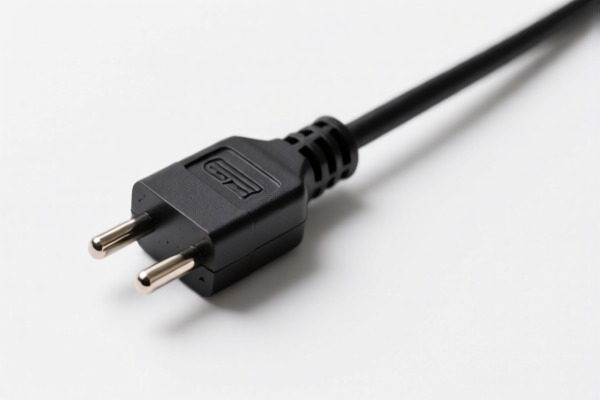
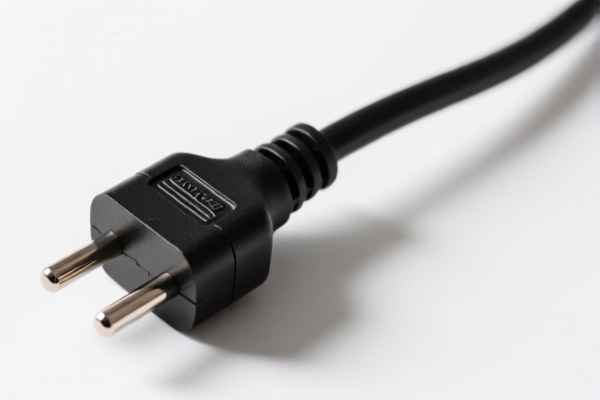
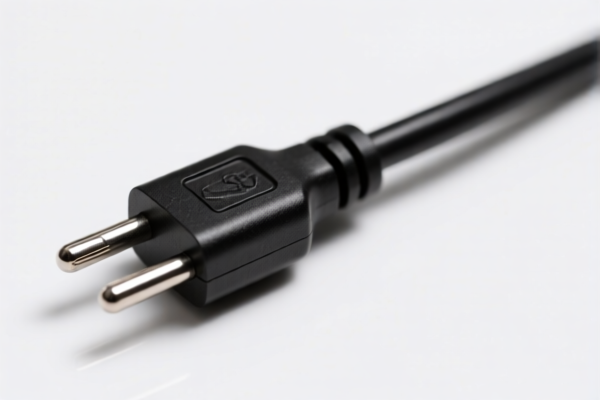
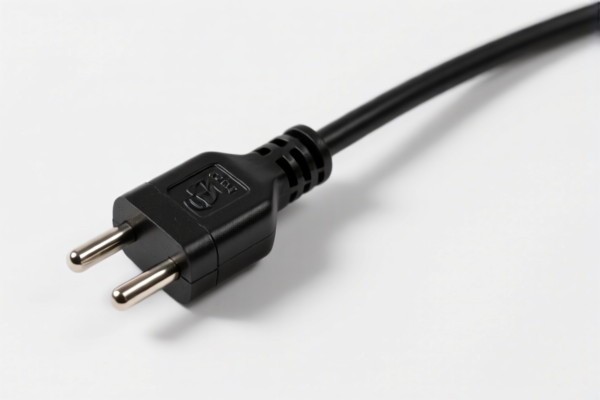
AI Analysis
🔌 Power Cord (Electrical Accessories)
🌐 HS Code Reference & Customs Clearance Guide | 2026 Latest Tariff Analysis | Professional Compliance Strategy
📌 I. Product Definition & Classification: Are You Mixing Up the Cord and the Plug?
In international trade, "Power Cord" is a broad term that often leads to critical classification errors. Customs authorities strictly distinguish between the flexible cable assembly (the wire itself) and the plug/socket apparatus (the connection device).
1. Flexible Cables & Cords (The Wire):
If the item is purely a coiled cable, extension cord (without plugs), or raw flexible cable, it may fall under Chapter 85 (Electrical) or Chapter 39 (Plastics, if insulated). However, ready-made power cords with connectors are usually classified under Chapter 85.
2. Connectors, Plugs, and Sockets (The Hardware):
If the "Power Cord" includes plugs, sockets, lamp-holders, or junction boxes for voltages ≤ 1,000V, it falls under Heading 8536. This is the most common category for finished power cords used in electronics.
3. Seals and Gaskets (Rare for Cords):
If the item contains rubber/plastic seals used only for sealing cables (not for electrical connection), it might fall under 3926.90. Note: This is uncommon for standard consumer power cords.
⚠️ Key Distinction Point:
- If it is a plug, socket, or connector → Go to HS Code 8536 (Lowest Base Duty, High US Tariff).
- If it is just a cable without connectors → Check Chapter 8549/8544 (Not in this specific data set).
- If it is a plastic seal/gasket for a cable → HS Code 3926.90.
📦 II. HS Code Classification Details (2026 Latest Tariff对照)
Based on the provided data, here are the applicable HS Codes for "Power Cord" related items. Note: Standard power cords with plugs/sockets are primarily classified under 8536.
| HS Code | Product Description | Application Scenario | Key Components |
|---|---|---|---|
8536.69.80.00 |
Lamp-holders, Plugs and Sockets: Other | Standard power cords with plugs/sockets, voltage ≤ 1,000V | Plug, Socket, Cord (as a complete switching/protecting apparatus) |
8536.90.40.00 |
Other Apparatus: Terminals, Electrical Splices and Couplings | Wire connectors, splices, couplings (not full plugs/sockets) | Terminals, Splices, Electrical Couplers |
3926.90.45.90 |
Other Articles of Plastics: Gaskets, Washers, Seals | Plastic/Rubber seals for cables (Non-electrical function) | Seals, Gaskets (Plastic/Rubber) |
3926.90.99.89 |
Other Articles of Plastics: Other | Generic plastic parts unrelated to electrical connection | Non-electrical plastic accessories |
🔍 Crucial Note for Power Cords:
- Most finished Power Cords (with plugs/sockets) are classified under8536.69.80.00or8536.90.40.00.
- Do NOT classify a standard power cord with a plug as "Plastic Articles" (3926) just because it has plastic insulation. The electrical function dominates.
💰 III. 2026 Latest Tariff Rate Breakdown (China Origin → US)
✅ Applicable Country: United States (US)
✅ Origin: China (CN)
✅ Effective Date: Ongoing (Section 301 & IEEPA)
🎯 1. 8536.69.80.00 —— Lamp-holders, Plugs, and Sockets (Other)
| Item | Detail |
|---|---|
| Product Description | Other articles of electrical apparatus for making connections (Plugs/Sockets) |
| Base Duty | 2.7% (General Rate) |
| Section 301 Add. Duty | +25.0% |
| Total Tax Rate | 27.7% |
| Tax Calculation | CIF Value × 27.7% |
| De Minimis Exemption | ❌ Not Eligible (Section 301 duties apply regardless of value) |
| Legal Basis | Section 301 Tariff List (Headings 8536.69.80.00) |
📌 Explanation:
- Base Duty (2.7%): Standard US Most Favored Nation (MFN) rate for electrical connectors.
- Section 301 Duty (25%): Additional tariff imposed on Chinese-made electrical components.
- Total Cost Impact: For every $1,000 of goods, expect $277 in duties.
- Why this code? Finished power cords with plugs are considered "apparatus for making connections to electrical circuits."
🎯 2. 8536.90.40.00 —— Terminals, Electrical Splices, and Couplings
| Item | Detail |
|---|---|
| Product Description | Terminals, electrical splices, and electrical couplings |
| Base Duty | 0.0% |
| Section 301 Add. Duty | +25.0% |
| Total Tax Rate | 25.0% |
| Tax Calculation | CIF Value × 25.0% |
| De Minimis Exemption | ❌ Not Eligible |
| Legal Basis | Section 301 Tariff List (Headings 8536.90.40.00) |
📌 Explanation:
- If your product is only wire connectors/splices (no plug/socket housing), the base duty drops to 0%.
- Total Cost Impact: For every $1,000 of goods, expect $250 in duties.
- Savings: $2.70 per $100 compared to plugs/sockets.
- Caution: Do not misdeclare a Plug as a "Terminal" to save $2.7%. Customs audits often catch this mismatch.
🎯 3. 3926.90.45.90 —— Gaskets, Washers, and Seals (Plastic)
| Item | Detail |
|---|---|
| Product Description | Gaskets, washers, and other seals (Plastic) |
| Base Duty | 3.5% |
| Section 301 Add. Duty | +25.0% |
| Total Tax Rate | 28.5% |
| Tax Calculation | CIF Value × 28.5% |
| De Minimis Exemption | ❌ Not Eligible |
| Legal Basis | Section 301 Tariff List (Headings 3926.90.45.90) |
📌 Explanation:
- Only applies if the item is a non-electrical seal (e.g., rubber O-ring for cable waterproofing).
- Highest Tax Rate (28.5%) among the options.
- Do NOT use this for power cords unless they are purely plastic seals without electrical function.
🎯 4. 3926.90.99.89 —— Other Plastic Articles (General)
| Item | Detail |
|---|---|
| Product Description | Other articles of plastics (General) |
| Base Duty | 5.3% |
| Section 301 Add. Duty | +7.5% |
| Total Tax Rate | 12.8% |
| Tax Calculation | CIF Value × 12.8% |
| De Minimis Exemption | ❌ Not Eligible (Note: 7.5% is lower than 25%, but only for non-electrical plastics) |
| Legal Basis | Section 301 Tariff List (Headings 3926.90.99.89) |
📌 Explanation:
- Lowest Tax Rate (12.8%), but ONLY for non-electrical plastic items.
- Risk: Misclassifying a power cord as "plastic article" is a high-risk violation.
- Use Case: Plastic strain reliefs if sold separately and not part of an electrical assembly? Even then, risky. Stick to 8536 for electrical cords.
🛠️ IV. Customs Clearance Practical Advice (Avoid These Pitfalls)
✅ 1. Documentation Checklist (Mandatory)
| Document | Required? | Purpose |
|---|---|---|
| Product Photo | ✅ Yes | Show plug type (NEMA 5-15, EU, etc.), cord thickness, insulation material. |
| Bill of Materials (BOM) | ✅ Yes | Prove it’s an electrical apparatus (wires + copper terminals + plastic housing). |
| Technical Spec Sheet | ✅ Yes | Voltage, Amperage, Length, Certification (UL, CE, RoHS). |
| Commercial Invoice | ✅ Yes | Clearly describe as "Power Cord with Plug, Voltage ≤ 1000V". |
| Certifications | ✅ Yes | UL/ETL/CETL for US market. Without this, customs may block entry. |
✅ 2. Classification Tips (Key Mantra)
🔥 "Plugs & Sockets go to 8536, Not Plastic Chapter 39!"
| Scenario | Correct HS Code | Incorrect HS Code | Consequence |
|---|---|---|---|
| Standard Power Cord with Plug | 8536.69.80.00 (27.7%) |
3926.90.99.89 (12.8%) |
Audit Risk: Underpayment of duties + Penalties |
| Wire Connector/Splice (No Plug) | 8536.90.40.00 (25.0%) |
8536.69.80.00 (27.7%) |
Overpayment: Paying $2.70 extra per $100 unnecessarily |
| Plastic Cable Seal (Non-Electrical) | 3926.90.45.90 (28.5%) |
8536... |
Misclassification: Wrong function, wrong tax |
✅ 3. Special Cases
| Case | Handling Advice |
|---|---|
| USB-C / Lightning Cables | Classified under 8536.69.80.00 as plugs/connectors. |
| Extension Cords (with Plug) | Classified under 8536.69.80.00. Do not split into "cord" and "plug". |
| Raw Coiled Cable (No Plug) | Not in this data set. Usually 8544.42 or 8544.49. Base duty ~0%, but check current lists. |
| Cord with Strain Relief Only | If sold as a separate plastic part, consider 3926.90.99.89, but risky. Better to include in assembly. |
🌍 V. Global Market Comparison (2026)
| Country/Region | Recommended HS Code | Duty Rate (China) | Certification Needed | Notes |
|---|---|---|---|---|
| 🇺🇸 USA | 8536.69.80.00 |
27.7% | UL/ETL + FCC (if active) | Section 301 applies heavily. |
| 🇨🇳 China | 8536.69.80.00 |
0% ~ 3.5% | CCC | Low duty, no Section 301. |
| 🇪🇺 EU | 8536.69.80.00 |
0% ~ 4% | CE + RoHS | No additional tariffs. |
| 🇬🇧 UK | 8536.69.80.00 |
0% ~ 4% | UKCA | Post-Brexit rules apply. |
| 🇨🇦 Canada | 8536.69.80.00 |
0% | CSA | Free trade under CUSMA. |
📌 Conclusion:
- USA is the highest cost market for power cords due to 25% Section 301 duty.
- Total Landed Cost in US = Product Cost + Shipping + 27.7% Duty.
- Strategy: If possible, source from Vietnam, Mexico, or India to avoid Section 301 tariffs.
📌 VI. Common Errors & Pitfalls (Lessons Learned)
❌ Error 1: Declaring a Power Cord with Plug as "Plastic Accessory" (3926).
👉 Result: Underpayment of ~15% duties. Customs will issue a Notice of Action (NOA) and demand back taxes + penalties.
❌ Error 2: Splitting a Power Cord into "Plug" and "Cable" for separate classification.
👉 Result: Complexity Risk. Customs prefers the complete article classification (8536.69.80.00). Splitting may lead to higher combined duties if not aligned.
❌ Error 3: Ignoring UL/ETL Certification.
👉 Result: CBP Detention. Electrical safety components must have recognized testing lab marks. Without it, goods may be seized.
✅ Correct Declaration Example:
"Electrical Power Cord, 6ft, 3-Wire, NEMA 5-15 Plug, PVC Insulation, UL Certified, Voltage 125V"
🎯 VII. Conclusion: Precision Saves Money
🎯 Key Takeaways:
🔹 Plugs & Sockets = 27.7% Total Duty (US)
🔹 Wire Connectors = 25.0% Total Duty (US)
🔹 Never classify electrical connectors as "Plastic Articles"
🔹 Certification (UL/CE) is Mandatory for Clearance
📌 Pro Tip:
If you import large volumes, consider Section 301 Exclusions (if available for your specific HTS) or restructure supply chain to Vietnam/Mexico to reduce the 25% surcharge.
Always request a Pre-Ruling from CBP for complex cord assemblies to avoid surprises.
📣 Action Item:
📞 Verify Plug Type & Voltage → 📄 Ensure UL/CE Marking → 📝 Classify under 8536.69.80.00 → 🚚 Clear Customs Smoothly
✨ Accurate Classification = Lower Tariffs + Faster Clearance
💼 Don’t Let Power Cords Trip Your Supply Chain!
Customer Reviews
About HS Code Classification
The Harmonized System (HS) is an internationally standardized nomenclature developed by the World Customs Organization (WCO) to classify traded products. Over 200 countries use the HS system as the basis for customs tariffs, trade statistics, and import/export regulations.
Each HS code follows a hierarchical structure:
- Chapter (2 digits) — Broad category of goods (e.g., Chapter 84: Machinery and Mechanical Appliances)
- Heading (4 digits) — More specific grouping within the chapter
- Subheading (6 digits) — Internationally standardized breakdown, used by all WCO member countries
- National subdivisions (8-10 digits) — Country-specific extensions for further classification, such as US HTSUS 10-digit codes
Correct HS code classification is essential for smooth customs clearance, accurate duty payment, and compliance with trade regulations. Misclassification can lead to customs delays, overpayment of duties, or penalties.
When importing from CN to US, the applicable tariff rates may include:
- Most-Favored-Nation (MFN) rate — The standard duty rate applied to WTO members
- General rate — Applied to countries without trade agreements
- Trade remedy duties — Additional tariffs such as Section 301 (anti-dumping), Section 232 (national security), or countervailing duties
The information provided on this page is for reference purposes only. For official classification, please consult with your local customs authority or a licensed customs broker.