Power Inverter
CN → US| HS Code | Tariff Rate | Origin | Destination | Doc |
|---|---|---|---|---|
| 8504409570 | 35.0% | CN | US | Official Doc |
| 8504409580 | 35.0% | CN | US | Official Doc |
Product Images
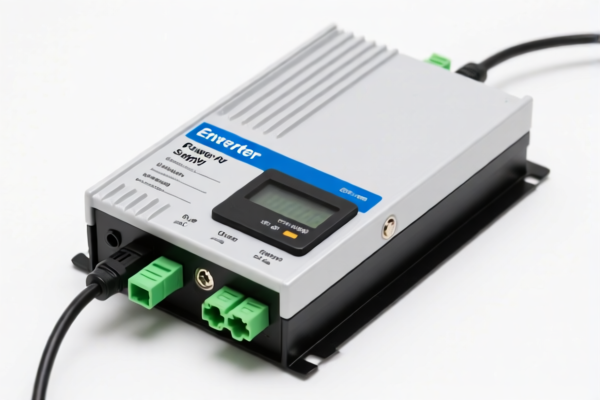
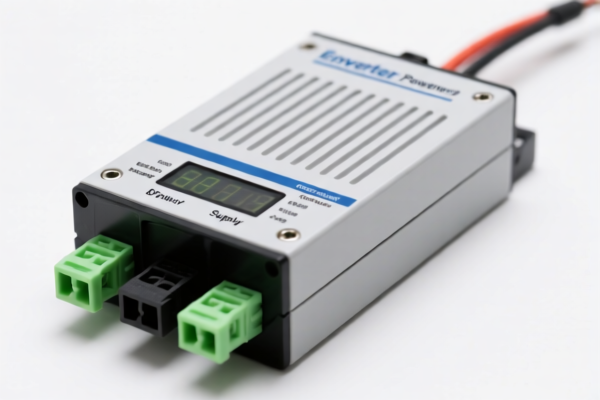
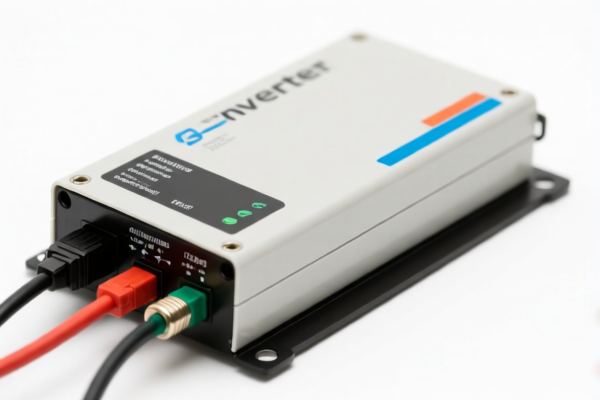
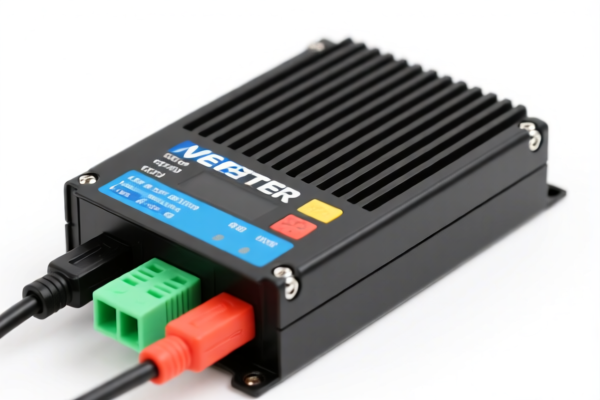
AI Analysis
⚡ Power Inverters (Static Converters / DC-to-AC Converters)
🌐 HS Code Reference & Customs Clearance Guide | 2026 Latest Tariff Analysis | Professional-Level Clearance Strategy
📌 1. Product Definition: What Exactly is a "Power Inverter"?
A Power Inverter is a device that converts direct current (DC) electricity (typically from batteries, solar panels, or fuel cells) into alternating current (AC) electricity, which is used by household appliances, industrial machinery, and grid-connected systems. In international trade, these devices fall under Chapter 85: Electrical Machinery and Equipment, specifically under Heading 85.04: Electrical transformers, static converters (for example, rectifiers) and inductors.
Static converters are broadly categorized into Rectifiers (AC to DC) and Inverters (DC to AC). Since the user input is "power inverter," we must distinguish between two key subcategories within HS Code 8504.40: 1. Other Inverters: Specific inverters for certain applications (e.g., traction, specialized industrial). 2. Other Other: General-purpose inverters not falling under the specific "Other Inverters" category.
⚠️ Key Distinction Point:
- If the inverter is designed for specific industrial traction (e.g., electric vehicles, trains) or specialized grid-tie applications with distinct regulatory definitions, it may fall under 8504.40.95.70.
- If the inverter is a general-purpose DC-to-AC converter (e.g., for home solar systems, portable power stations, or general industrial use) that does not meet the strict definition of "Other Inverters" in subheading 8504.40.95.70, it falls under 8504.40.95.80.
📦 2. HS Code Classification Details (2026 Latest Tariff Authority Comparison)
| HS Code | Product Description | Application Scenario | Duty Rate (Total) |
|---|---|---|---|
8504.40.95.70 |
Static Converters: Other Inverters | Specialized inverters (e.g., traction, specific industrial controls) | 25.0% |
8504.40.95.80 |
Static Converters: Other Other | General-purpose power inverters (solar, portable, industrial) | 25.0% |
🔍 Important Reminder:
- Both codes fall under 8504.40 (Static Converters).
- The distinction between 70 and 80 is based on the specific technical definition of "Inverter" in the tariff schedule. If the inverter is not explicitly listed as a specific type of "Other Inverter," it defaults to "Other Other" (80).
- Do not confuse with Transformers (8504.1x) or Inductors (8504.5x). Power inverters are static converters, not transformers.
💰 3. 2026 Latest Tariff Rate Breakdown (Including Surcharge)
✅ Applicable Country: United States (US)
✅ Country of Origin: China (CN)
✅ Effective Date: 2025 November 10 onwards (including subsequent imports)
🎯 1. 8504.40.95.70 —— Static Converters: Other Inverters
| Item | Content |
|---|---|
| Base Tariff Rate | 0% (ad valorem) |
| Section 301 Surcharge (USITC) | +25% (Footnote 9903.88.01) |
| IEEPA Surcharge (China/HK) | Not explicitly listed in DATA |
| Total Tariff Rate | 25.0% |
| Tax Calculation | CIF Value × 25% |
| De Minimis Exemption | ❌ Not Available |
| Legal Basis Path | USITC:8504.40.95.70 → FOOTNOTE:9903.88.01 |
📌 Explanation:
- The 25% total tax is entirely due to the Section 301 surcharge.
- The base tariff for static converters is 0%, but the 25% additional duty applies to Chinese-origin goods.
- No IEEPA surcharge is listed in the provided data for this specific code, so the total remains 25%.
🎯 2. 8504.40.95.80 —— Static Converters: Other Other
| Item | Content |
|---|---|
| Base Tariff Rate | 0% (ad valorem) |
| Section 301 Surcharge (USITC) | +25% (Footnote 9903.88.01) |
| IEEPA Surcharge (China/HK) | Not explicitly listed in DATA |
| Total Tariff Rate | 25.0% |
| Tax Calculation | CIF Value × 25% |
| De Minimis Exemption | ❌ Not Available |
| Legal Basis Path | USITC:8504.40.95.80 → FOOTNOTE:9903.88.01 |
📌 Note:
- This code covers general-purpose power inverters (e.g., home solar inverters, portable power station inverters).
- The tax rate is identical to 8504.40.95.70: 25% total.
- Even if the inverter is for "solar power" or "portable use," if it does not meet the specific definition of "Other Inverters" (70), it falls under "Other Other" (80) and is subject to the same 25% duty.
🛠️ 4. Customs Clearance Practical Advice (Real-World Pitfall Avoidance Guide)
✅ 1. Documentation Checklist (Essential)
| Document | Required | Description |
|---|---|---|
| ✅ Product Specification Sheet | ✔️ | Include input/output voltage, frequency, power rating, efficiency, and waveform type (sine/pure sine). |
| ✅ Circuit Diagram | ✔️ | Critical to prove it is a static converter (no moving parts) and not a generator. |
| ✅ Product Photos (with Nameplate) | ✔️ | Must show input/output terminals, model number, and manufacturer. |
| ✅ Third-Party Test Report | ✔️ | UL, CE, FCC, or IEC 62109 (safety standard for inverters). |
| ✅ Commercial Invoice | ✔️ | Clearly state "Power Inverter (Static Converter)" and HS Code. |
| ✅ Certificate of Origin (CO) | ✔️ | Essential for determining surcharge applicability. |
| ✅ Packing List | ✔️ | Detail accessories (cables, mounting brackets). Do not split shipment if it’s one unit. |
✅ 2. Declaration Tips (Key Mantra)
🔥 "Clarify Static Converter, Not Transformer; Pure Sine Wave Matters; Avoid Generic Terms!"
| Scenario | Correct Declaration | Incorrect Practice |
|---|---|---|
| General Solar/Home Inverter | 8504.40.95.80 - "Static Converter, Other Other" |
Using "Transformer" or "Generator" → Wrong HS Code |
| Specialized Industrial/Traction Inverter | 8504.40.95.70 - "Static Converter, Other Inverters" |
Using "Other Other" → Minor Risk, but 70 is more accurate if applicable |
| Inverter + Battery Pack | Declare Separately | Bundled Declaration → Complex Tax Calculation |
| Portable Power Station (with Inverter) | Inverter Part: 8504.40.95.80Battery Part: 8507.60 |
Declare as "Power Station" → Ambiguous, may cause delays |
✅ 3. Special Cases Handling
| Scenario | Handling Advice |
|---|---|
| OEM Custom Inverters | Provide client order + design specs to prove it’s a standard static converter. |
| Hybrid Inverters (Solar + Grid) | Still classified as Static Converters (8504.40). Not a transformer. |
| Inverters with Built-in Batteries | The inverter component is 8504.40.95.80; the battery is 8507.60. Declare separately for accurate tax. |
| Low-Power Inverters (< 1 kW) | Still 8504.40.95.80. No de minimis exemption for Section 301 goods. |
🌍 5. Global Market Comparison (2026 Latest)
| Country/Region | Recommended HS Code | Tariff Rate | Certification | Notes |
|---|---|---|---|---|
| 🇺🇸 USA | 8504.40.95.70 / .80 |
25% (Total) | UL, FCC | High tariff due to Section 301. |
| 🇨🇳 China | 8504.40.95.70 / .80 |
0% (Base) | CCC | No additional surcharge for exports. |
| 🇪🇺 EU | 8504.40.90.00 |
0% (if CE) | CE, RoHS | No surcharge. Standard EU duty is 0%. |
| 🇦🇺 Australia | 8504.40.90.00 |
5% | RCM | Standard MFN rate. |
| 🇯🇵 Japan | 8504.40.00.00 |
0% | PSE, JIS | No surcharge. |
📌 Conclusion:
- USA is the most challenging market due to the 25% surcharge on Chinese-origin power inverters.
- EU and Japan offer 0% duty, but require strict compliance (CE/PSE).
- China Export: No tax burden on export side, but importers in the US face high costs.
📌 6. Common Mistakes & Pitfall Guide (Lessons Learned)
❌ Mistake 1: Classifying inverters as Transformers (8504.1x).
👉 Consequence: Wrong HS Code → Seizure or Retrospective Duty Adjustment. Inverters are static converters, not transformers.
❌ Mistake 2: Using "DC-AC Converter" without specifying Static Converter.
👉 Consequence: Customs may query the declaration. Must explicitly state "Static Converter" in the description.
❌ Mistake 3: Declaring "Power Inverter" without Input/Output Voltage.
👉 Consequence: Delay in clearance. Provide full electrical specs.
❌ Mistake 4: Assuming De Minimis applies to inverters.
👉 Consequence: No exemption for Section 301 goods under $800. Full 25% tax applies regardless of value.
✅ Correct Declaration Example:
"Static Power Inverter, DC-to-AC, Pure Sine Wave, Input 48V DC, Output 120V AC, 500W, Model XYZ, UL Listed, FCC Certified, Made in China"
🎯 7. Conclusion: Precision in Classification Saves Money!
🎯 Remember the Mantra:
🔹 "Inverter = Static Converter (8504.40), Not Transformer!"
🔹 "US Import = 25% Duty, No Exemption!"
🔹 "Specify 'Other Other' (80) unless Specialized (70)"
📌 Pro Tip:
- If your inverters are originating from Vietnam, Mexico, or Thailand, you may qualify for IEEPA Exemption or lower tariffs.
- Apply for an Advance Ruling (Pre-Ruling) from US Customs (CBP) before shipping to confirm the exact HS Code (70 vs. 80) and avoid post-import audits.
📣 Immediate Action:
📞 Contact a licensed customs broker + Provide product datasheet + Request HS Code Pre-Ruling.
🚀 Ensure smooth clearance, avoid 25% surprise costs, and protect your profit margin!
✨ Professional Clearance Starts with Accurate Classification!
💼 Every dollar of duty saved is a dollar of profit gained!
Customer Reviews
About HS Code Classification
The Harmonized System (HS) is an internationally standardized nomenclature developed by the World Customs Organization (WCO) to classify traded products. Over 200 countries use the HS system as the basis for customs tariffs, trade statistics, and import/export regulations.
Each HS code follows a hierarchical structure:
- Chapter (2 digits) — Broad category of goods (e.g., Chapter 84: Machinery and Mechanical Appliances)
- Heading (4 digits) — More specific grouping within the chapter
- Subheading (6 digits) — Internationally standardized breakdown, used by all WCO member countries
- National subdivisions (8-10 digits) — Country-specific extensions for further classification, such as US HTSUS 10-digit codes
Correct HS code classification is essential for smooth customs clearance, accurate duty payment, and compliance with trade regulations. Misclassification can lead to customs delays, overpayment of duties, or penalties.
When importing from CN to US, the applicable tariff rates may include:
- Most-Favored-Nation (MFN) rate — The standard duty rate applied to WTO members
- General rate — Applied to countries without trade agreements
- Trade remedy duties — Additional tariffs such as Section 301 (anti-dumping), Section 232 (national security), or countervailing duties
The information provided on this page is for reference purposes only. For official classification, please consult with your local customs authority or a licensed customs broker.