Power Socket
CN → US| HS Code | Tariff Rate | Origin | Destination | Doc |
|---|---|---|---|---|
| 8536698000 | 37.7% | CN | US | Official Doc |
| 8544429090 | 87.6% | CN | US | Official Doc |
| 8537109170 | 37.7% | CN | US | Official Doc |
| 8537109120 | 37.7% | CN | US | Official Doc |
| 8544429010 | 87.6% | CN | US | Official Doc |
| 8536308000 | 35.0% | CN | US | Official Doc |
Product Images
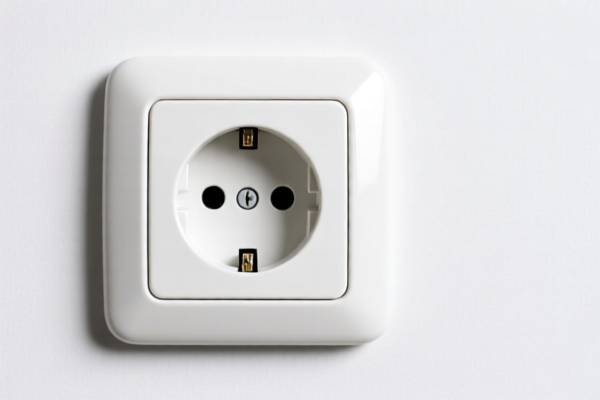
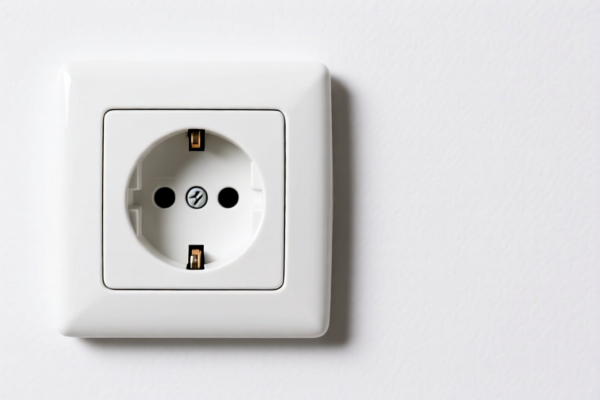
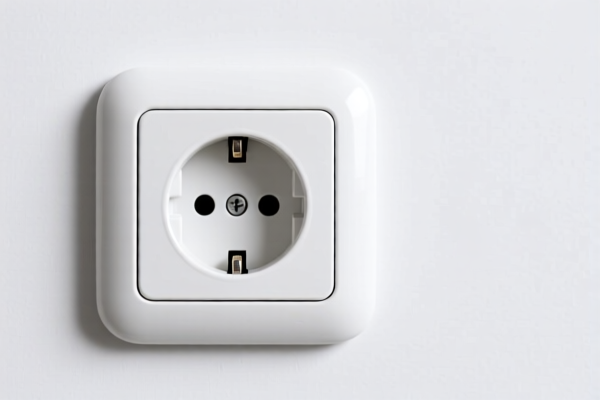
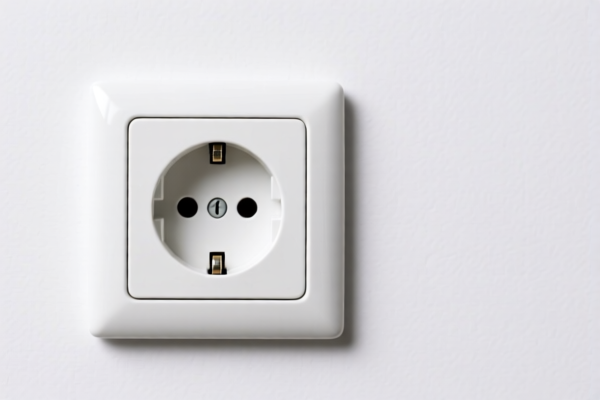
AI Analysis
🔌 Power Socket / Extension Cord (电源插板)
🌐 HS Code Reference & Customs Clearance Guide | 2026 Latest Tariff Analysis | Professional Strategy
📌 1. Product Definition & Classification: What Exactly Is a "Power Socket"?
A "Power Socket" in international trade is a broad category. Its classification depends entirely on its physical form and function. It is generally divided into two main categories for customs purposes:
- Plugs & Sockets (Connectors): Devices designed to connect circuits or power supplies (e.g., wall outlets, socket strips with internal mechanisms).
- Insulated Wires/Cables with Connectors: Devices primarily functioning as cables/extensions, where the socket is an accessory to the wire (e.g., extension cords, power strips in cable form).
⚠️ Key Distinction Point:
- If the product is primarily a housing/mechanical device for connecting appliances to mains → Goes to 8536 or 8537.
- If the product is primarily a cable/wire with connectors at ends → Goes to 8544.
- Misclassification here leads to massive tax differences (35% vs. 87.6%).
📦 2. HS Code Classification Matrix (Based on Provided Data)
| HS Code | Product Description | Function/Use Case | Primary Characteristic | Total Tax Rate |
|---|---|---|---|---|
8536.69.80.00 |
Other Connectors (Plugs & Sockets) | Electrical apparatus; form: Other connecting devices. | Socket/Strip Body | 37.7% |
8537.10.91.70 |
Power Distribution Boards/Panels (≤1000V) | Power distribution equipment for ≤1000V. | Distribution Panel | 37.7% |
8537.10.91.20 |
Components of Power Distribution/Control Equipment (≤1000V) | Part of power distribution/control systems. | Control/Distribution Component | 37.7% |
8544.42.90.10 |
Insulated Wires/Cables with Connectors (≤1000V) | Extension cords; electric conductors. | Cable/Extension Wire | 87.6% |
8544.42.90.90 |
Other Insulated Wires/Cables with Connectors (≤1000V) | Electric wires/cables with connectors. | Cable (Generic) | 87.6% |
8536.30.80.00 |
Other Circuit Connection Apparatus (≤1000V) | Electrical apparatus for circuit connection. | Switch/Socket Connection | 35.0% |
🔍 Critical Insight:
- The 8544 codes (Cables) carry a much higher tax burden (87.6%) due to specific material surcharges (Steel/Aluminum/Copper +50%).
- The 8536/8537 codes (Connectors/Distribution) are more favorable (35.0%–37.7%), provided the product is classified as a mechanical connector or distribution board, not just a cable.
💰 3. 2026 Tariff Rate Breakdown (Detailed Tax Clauses)
✅ Applicable Country: United States (US)
✅ Origin: China (CN)
✅ Effective Date: Current US Trade Policy (Section 301 + IEEPA)
🎯 Group A: Connector & Distribution Categories (Lower Tax Bracket)
HS Codes: 8536.69.80.00, 8537.10.91.70, 8537.10.91.20, 8536.30.80.00
| Item | Detail |
|---|---|
| Base Tariff | 0.0% – 2.7% (Varies by specific subheading: 8536.30.80 is 0.0%; 8536.69 and 8537.10 are 2.7%) |
| Section 301 Tariff | +25.0% (Imposed on Chinese goods under US Trade Act Section 301) |
| Section 122 Tariff | +10.0% (Additional surcharge specified in data) |
| Total Tax Rate | 35.0% (for 8536.30) or 37.7% (for others) |
| Calculation | CIF Value × 35.0%/37.7% |
| De Minimis | ❌ Not Eligible |
📌 Explanation:
- These codes treat the power socket as a mechanical/electrical component or distribution device.
- The tax is relatively moderate. The key is proving it is a "Connector" or "Distribution Board" and not merely a "Cable."
🎯 Group B: Insulated Cable/Extension Cord Categories (High Tax Bracket)
HS Codes: 8544.42.90.10, 8544.42.90.90
| Item | Detail |
|---|---|
| Base Tariff | 2.6% |
| Section 301 Tariff | +25.0% |
| Section 122 Tariff | +10.0% |
| Material Surcharge | +50.0% (Specifically for products containing Steel, Aluminum, or Copper components) |
| Total Tax Rate | 87.6% |
| Calculation | CIF Value × 87.6% |
| De Minimis | ❌ Not Eligible |
📌 Explanation:
- These codes classify the product as Insulated Wires/Cables.
- The 87.6% rate is punitive, driven by the +50% material surcharge on copper/aluminum/steel components.
- Risk Alert: If your "Power Strip" is essentially a long cable with a plug, US Customs may classify it under 8544, resulting in nearly 90% tax.
🛠️ 4. Customs Clearance Practical Advice (Avoiding Pitfalls)
✅ 1. Strategic Classification Choice
| Scenario | Recommended HS Code | Tax Rate | Why? |
|---|---|---|---|
| Standard Wall Socket / Strip Housing | 8536.69.80.00 |
37.7% | It is a "Connector," not a cable. Focus on the mechanical housing and internal contacts. |
| Industrial Distribution Panel | 8537.10.91.70 |
37.7% | If it has switches/breakers for distributing power, it’s a "Distribution Board." |
| Extension Cord (Long Cable with Plug) | 8544.42.90.90 |
87.6% | ⚠️ High Risk! Try to argue it’s a "Connector assembly" (8536) if it has complex internal switching, but often it falls here. |
| Simple Circuit Connection Device | 8536.30.80.00 |
35.0% | Lowest tax rate, but only if it strictly fits "Circuit Connection Apparatus" without being a cable. |
💡 Pro Tip:
Always prefer the 8536/8537 classification if possible.
- Argument: "The primary function is the socket mechanism (housing, contacts, safety shutters), not the length of the wire."
- Evidence: Provide photos emphasizing the socket outlet side rather than the cable length.
✅ 2. Documentation Requirements
| Document | Requirement | Notes |
|---|---|---|
| Commercial Invoice | Must state "Power Socket" or "Extension Cord" | Avoid vague terms like "Electrical Part." Be specific. |
| Product Photos | Front view of sockets, rear view, cable ends | Show that it is a functional connector unit. |
| Technical Datasheet | Voltage (≤1000V), Amperage, Material | Confirm it meets the "≤1000V" criteria for all listed codes. |
| Material Composition | List of Copper, Plastic, Steel | Crucial for determining if the +50% surcharge applies to 8544. |
✅ 3. Critical Warnings (Blood Lessons)
❌ Mistake 1: Calling an "Extension Cord" a "Power Strip" to avoid cable tariffs.
👉 Consequence: If Customs inspectors measure the cable length and see it’s primarily a wire, they will reclassify to 8544 → Tax jumps from 37.7% to 87.6%.
👉 Fix: If it’s >3 meters, it’s likely a cable. If it’s a compact strip with short leads, argue for 8536.
❌ Mistake 2: Ignoring the "Steel/Aluminum/Copper" surcharge.
👉 Consequence: For 8544 codes, even if the base tax seems low, the 50% material surcharge applies because power cables are rich in copper.
👉 Fix: Calculate total cost including this 50% hit before importing.
❌ Mistake 3: Using 8536.30.80.00 for a simple socket.
👉 Consequence: This code is for "Circuit Connection Apparatus" (often switches). If it’s just a plug/socket, 8536.69.80.00 is safer.
👉 Fix: Ensure the product matches the "Distribution" or "Connector" definition precisely.
🌍 5. Global Market Comparison (2026 Context)
| Market | Preferred HS Code | Approx. Tax (China Origin) | Notes |
|---|---|---|---|
| 🇺🇸 USA | 8536.69.80.00 / 8537.10.91.70 |
37.7% | Avoid 8544 (87.6%) unless necessary. |
| 🇪🇺 EU | 8536.69 |
~4-6% | No Section 301/122 tariffs. Much cheaper. |
| 🇨🇳 China | 8536.69 |
~0-2% | Low import tax for domestic production/re-import. |
📌 Conclusion:
The US market is extremely hostile to Chinese electrical connectors due to Section 301 and 122 tariffs.
- Strategy: If possible, consider transshipment or assembly in third countries (e.g., Vietnam, Mexico) to avoid origin-based surcharges.
- Alternative: Use 8536 codes (37.7%) instead of 8544 codes (87.6%) by structuring the product description around the "Socket/Connector" function, not the "Cable" function.
📌 6. Summary Checklist for Importers
- Check Voltage: Must be ≤1000V for all listed codes.
- Choose Code Wisely:
- Target 35-38%: Use
8536or8537. - Accept 87.6%: Only if it’s clearly a cable (
8544) and you have no other choice.
- Target 35-38%: Use
- Prepare Docs: Invoice, Photos, Specs.
- Declare Accurately: "Power Socket Connector, Plastic/Metal, ≤1000V, for Household Use."
- Beware of Surcharges: The +50% copper/steel tax for cables is brutal.
🎯 Final Advice:
"Don't let a 'cord' cost you an arm and a leg.
Fight for the 8536 classification. Protect your margin."
📢 Action Item:
Consult with a licensed customs broker to pre-classify your specific product model. A small fee now can save you 50% in taxes later.
✨ Accurate Classification = Higher Profit
💼 Don't Guess. Verify. Save.
Customer Reviews
About HS Code Classification
The Harmonized System (HS) is an internationally standardized nomenclature developed by the World Customs Organization (WCO) to classify traded products. Over 200 countries use the HS system as the basis for customs tariffs, trade statistics, and import/export regulations.
Each HS code follows a hierarchical structure:
- Chapter (2 digits) — Broad category of goods (e.g., Chapter 84: Machinery and Mechanical Appliances)
- Heading (4 digits) — More specific grouping within the chapter
- Subheading (6 digits) — Internationally standardized breakdown, used by all WCO member countries
- National subdivisions (8-10 digits) — Country-specific extensions for further classification, such as US HTSUS 10-digit codes
Correct HS code classification is essential for smooth customs clearance, accurate duty payment, and compliance with trade regulations. Misclassification can lead to customs delays, overpayment of duties, or penalties.
When importing from CN to US, the applicable tariff rates may include:
- Most-Favored-Nation (MFN) rate — The standard duty rate applied to WTO members
- General rate — Applied to countries without trade agreements
- Trade remedy duties — Additional tariffs such as Section 301 (anti-dumping), Section 232 (national security), or countervailing duties
The information provided on this page is for reference purposes only. For official classification, please consult with your local customs authority or a licensed customs broker.