Power Strip Socket
CN → US| HS Code | Tariff Rate | Origin | Destination | Doc |
|---|---|---|---|---|
| 8537109170 | 37.7% | CN | US | Official Doc |
| 8536698000 | 37.7% | CN | US | Official Doc |
| 8544429090 | 87.6% | CN | US | Official Doc |
| 8537109120 | 37.7% | CN | US | Official Doc |
| 8544429010 | 87.6% | CN | US | Official Doc |
Product Images
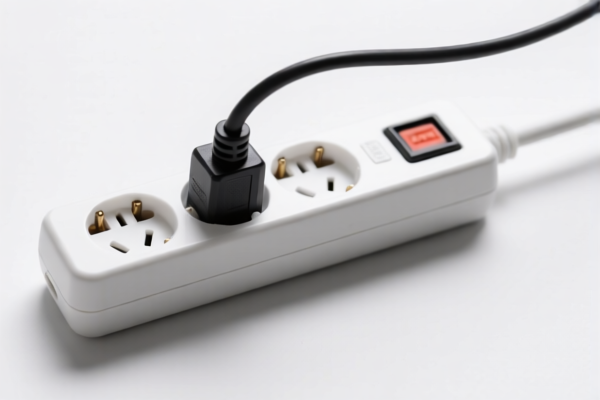
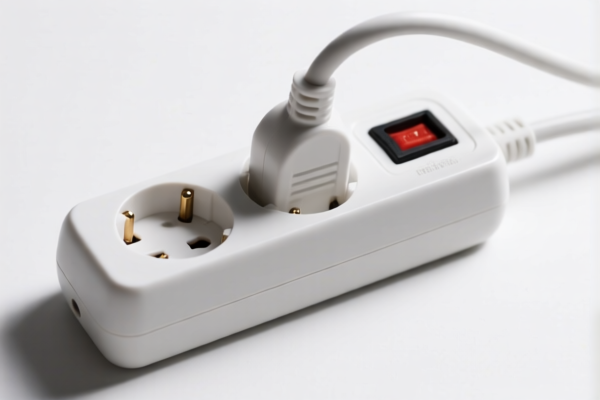
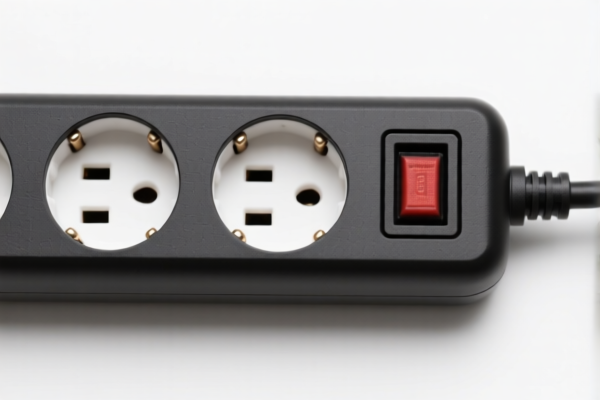
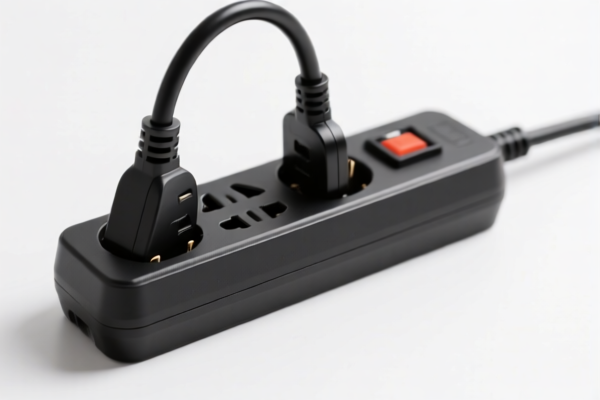
AI Analysis
🔌 Power Strip & Socket Assembly (Electrical Distribution & Connection Devices)
🌐 HS Code Reference & Customs Clearance Guide | 2026 Latest Tariff Analysis | Professional-Level Strategy for US Imports from China
📌 Part 1: Product Definition & Classification: Do You Really Understand "Power Strips"?
A Power Strip (or Surge Protector/Extension Cord with Socket) is a fundamental electrical accessory used to distribute power from a single source to multiple outlets. In international trade, it is not a single HS Code. It is broken down based on its physical structure and function:
- The Distribution Panel/Board (The "Box"): The main housing containing the circuit breaker, wiring, and socket mounting plate. → HS 8537.10
- The Socket/Outlet Unit (The "Hole"): The individual insulated plastic/metal component that the plug inserts into. → HS 8536.69
- The Cord & Plug (The "Wire"): The insulated conductors with connectors at the ends (input plug + output sockets). → HS 8544.42
⚠️ Critical Distinction:
- If you import a complete, assembled power strip (box + cord + sockets): Customs often requires you to declare the main component or the whole set under 8537.10 (Distribution Boards) if it has control/safety mechanisms (breakers), or split the declaration if shipped loose.
- If you import only the socket inserts (e.g., 1000 pcs of socket units): Declare under 8536.69.
- If you import only the cables/plugs (no box/sockets): Declare under 8544.42.
- Do not mix these in one line item without specifying the exact component, as tax rates vary drastically (37.7% vs. 87.6%).
📦 Part 2: HS Code Classification Details (2026 Latest Tariff Authority Match)
Based on the provided data, here are the exact HS Codes and their corresponding tax structures. Note: All items below are subject to high US tariffs on Chinese goods.
| HS Code | Product Description (Summary) | Composition/Material | Applicable Scenario |
|---|---|---|---|
8537.10.91.70 |
Distribution Boards/Panels for voltages ≤ 1000V | Main housing, busbars, circuit breakers | The main body of a power strip with surge protection or switch |
8536.69.80.00 |
Socket/Outlet Connections | Insulated plastic + metal conductive parts | Individual socket units, wall plates, replacement sockets |
8544.42.90.90 |
Insulated Conductors with connectors (cables) | Wire + Plugs (Male/Female) | Power cords, extension cables, wires with connectors ≤ 1000V |
8537.10.91.20 |
Parts of Power Distribution/Control Equipment (≤ 1000V) | Internal components for distribution units | Switches, terminal blocks, or internal wiring harnesses |
8544.42.90.10 |
Insulated Conductors with Connectors (Extension Cord form) | Wire + Plugs, specific "other" category | Standard extension cords, power cables with plugs |
🔍 Key Insight:
- 8537/8536 (37.7% Total Tax): Applies to the housing, sockets, and control parts.
- 8544 (87.6% Total Tax): Applies to the wires and cords. This is significantly higher due to additional duties on steel/aluminum/copper content.
- Why the difference? The US imposes a specific 50% Additional Duty under "122 Provision" for products containing steel, aluminum, or copper components in certain electrical classifications (HS 8544), driving the total tax from ~37% to ~87%.
💰 Part 3: 2026 Tariff Rate Breakdown (Detailed & Strict)
✅ Applicable Country: United States (US)
✅ Origin: China (CN)
✅ Impact: High Cost. Do not underestimate these rates.
🎯 1. Distribution Panels & Sockets (HS 8537.10 & 8536.69)
Applies to: Power strip bodies, socket units, internal switches.
| HS Code | Product | Base Duty | Section 301 Duty | Section 122 Duty | Total Effective Tax |
|---|---|---|---|---|---|
8537.10.91.70 |
Distribution Panel (≤1000V) | 2.7% | 25.0% | 10% | 37.7% |
8537.10.91.20 |
Parts of Distribution Eq. | 2.7% | 25.0% | 10% | 37.7% |
8536.69.80.00 |
Socket/Outlet Unit | 2.7% | 25.0% | 10% | 37.7% |
📌 Explanation:
- Base Duty (2.7%): Standard MFN rate for electrical apparatus.
- Section 301 Duty (25.0%): The "Trump Tariff" / Trade War tariff on Chinese electronics.
- Section 122 Duty (10%): Additional duty under 19 U.S.C. § 1517 (often applied to certain electrical components to protect domestic manufacturing).
- Total: 37.7% of CIF value.
- De Minimis? ❌ NO. These items are excluded from the $800 de minimis exemption (Section 321) if they are subject to Section 301/122 duties. Check current CBP enforcement: Many 301-listed items are explicitly excluded from de minimis.
🎯 2. Cables & Wires (HS 8544.42)
Applies to: Power cords, extension cables, wires with plugs.
| HS Code | Product | Base Duty | Section 301 Duty | Section 122 Duty | Metal Add'l Duty | Total Effective Tax |
|---|---|---|---|---|---|---|
8544.42.90.90 |
Insulated Conductor (with connector) | 2.6% | 25.0% | 10% | +50% (Steel/Al/Cu) | 87.6% |
8544.42.90.10 |
Extension Cord (with connector) | 2.6% | 25.0% | 10% | +50% (Steel/Al/Cu) | 87.6% |
📌 Explanation:
- Base Duty (2.6%): Standard rate for insulated wire.
- Section 301 Duty (25.0%): Applies to Chinese-origin wires.
- Section 122 Duty (10%): Additional duty on electrical parts.
- Metal Add'l Duty (50%): CRITICAL. Under 122 Provision, products containing steel, aluminum, or copper conductors in certain HS 8544 subheadings face an additional 50% duty. Since power cords contain copper (conductor) and often metal plugs/strands, this triggers the highest bracket.
- Total: 87.6%. This is extremely high. Even a $10 cable incurs ~$8.76 in duties.⚠️ Warning:
- De Minimis ($800): Items under HS 8544.42.90 are highly likely excluded from de minimis due to the 301/122 duties. Do not rely on this exemption for bulk shipments.
- Valuation: Customs will value the copper content and material composition strictly.
🛠️ Part 4: Customs Clearance Practical Advice (Avoiding Pitfalls)
✅ 1. Documentation Checklist (Non-Negotiable)
| Document | Required? | Purpose |
|---|---|---|
| Commercial Invoice | ✅ Yes | Must clearly list HS Code, Country of Origin (China), and Itemized Value per component. |
| Packing List | ✅ Yes | Separate lines for "Power Strip Body" (8537) and "Cable" (8544) if shipped separately. |
| Product Specifications | ✅ Yes | Must include Voltage (≤1000V), Current Rating, Material (Plastic/Metal), and Plug Type (NEMA 5-15, etc.). |
| Copper/Metal Content Statement | ✅ Yes (For 8544) | Prove if the cable contains steel/aluminum/copper to justify the 50% add'l duty. Misdeclaration leads to penalties. |
| FCC Certificate | ✅ Yes (If active) | Power strips with surge protection may require FCC ID. Passive ones may not, but CBP often asks. |
| ETL/UL Listing | ✅ Recommended | Safety certification. Lack of it may lead to CBP refusal or detention. |
✅ 2. Declaration Strategy (Key Tips)
🔥 Golden Rule: "Separate the Box from the Wire!"
| Scenario | Correct HS Code | Tax Rate | Risk if Misclassified |
|---|---|---|---|
| Assembled Power Strip (Box + Cable + Socket) | Split Declaration Recommended 1. Body: 8537.10.91.70 2. Cable: 8544.42.90.90 3. Socket: 8536.69.80.00 |
37.7% (Body) 87.6% (Cable) |
If declared as one item under 8537, you underpay the cable tax (37.7% vs 87.6%). CBP will assess the highest rate or penalize for misdeclaration. |
| Only Sockets/Outlets | 8536.69.80.00 |
37.7% | Safe. Low risk. |
| Only Cables/Extension Cords | 8544.42.90.90 |
87.6% | High cost. Ensure copper content is declared correctly. |
| Complete Unit (No Split) | 8537.10.91.70 (Conservative) | 37.7% | Risk: CBP may reclassify the cable portion to 8544 and charge 87.6% on the cable value, plus penalties. Better to split. |
📌 Pro Tip:
- If importing assembled power strips, declare them as "Power Distribution Panel" (8537) for the main unit and "Insulated Cable" (8544) for the attached cord if possible (e.g., removable cord).
- If the cord is permanently attached, CBP may still split the valuation. Be prepared to provide a value breakdown (e.g., $5 for box/sockets, $2 for cable).
✅ 3. Special Cases
| Case | Advice |
|---|---|
| Surge Protectors | Classified under 8537.10 (has control/safety). Tax: 37.7%. |
| Simple Extension Cords | Classified under 8544.42 (cable). Tax: 87.6%. |
| Industrial Power Strips | Same codes. Ensure voltage/current specs are clear. |
| OEM/White Label | Provide authorization letters. No change in HS code. |
| De Minimis Shipment | AVOID. Due to 301/122 duties, most power strips/supplies are excluded. Expect full duty payment. |
🌍 Part 5: Global Market Comparison (2026)
| Country | HS Code (Power Strip) | Base Tariff | Additional Tariffs (China) | Total Effective Rate |
|---|---|---|---|---|
| 🇺🇸 USA | 8537.10 / 8544.42 | 2.6% - 2.7% | 301 (25%) + 122 (10-50%) | 37.7% - 87.6% |
| 🇪🇺 EU | 8537.10 | 2.5% - 4% | None (WTO) | ~4% |
| 🇨🇳 China | 8537.10 | 0% - 5% | Export Duty: 0% | ~0-5% |
| 🇬🇧 UK | 8537.10 | 0% - 4% | None | ~4% |
| 🇨🇦 Canada | 8537.10 | 0% - 5% | None | ~5% |
📌 Conclusion:
- The US market is the most expensive for Chinese-origin power strips due to Section 301 and 122 duties.
- EU/UK/Canada are much more favorable (~0-5%).
- Strategy: If targeting the US, consider supply chain diversification (e.g., manufacture in Vietnam/Mexico) to avoid 301/122 duties. If shipping from China, budget for 38-88% duty costs.
📌 Part 6: Common Mistakes & Pitfalls (Blood Lessons)
❌ Mistake 1: Declaring a cable as "Electrical Appliance" (HS 8537) to avoid the 87.6% rate.
👉 Result: CBP reclassifies it to 8544, charges 87.6% + penalties + interest. Cost increases by 50% extra.
❌ Mistake 2: Using De Minimis ($800) for bulk shipments of power strips.
👉 Result: CBP denies entry, charges full duties (37.7-87.6%), and fines the importer. Loss of goods + fines.
❌ Mistake 3: Not separating Box and Cable in value.
👉 Result: If CBP audits, they assign the higher rate (87.6%) to the entire value. Split the value!
❌ Mistake 4: Ignoring Section 122 (10% + 50%) on cables.
👉 Result: Underpayment of duties. CBP will issue a Post Entry Correction (PEC) or demand payment with interest.
✅ Correct Practice:
"Power Strip, 4-Outlet, 125V, 15A, With Surge Protection, Model XYZ, FCC/ETL Certified.
Breakdown:
- Main Unit (Box/Sockets): HS 8537.10.91.70 – $5.00
- Attached Cable: HS 8544.42.90.90 – $2.00"
🎯 Part 7: Conclusion: Precision Saves Money!
🎯 Remember the Mantras:
🔹 "Box is 37%, Wire is 87%!"
🔹 "Split the Value, Split the HS, Save from Audit!"
🔹 "No De Minimis for 301/122 Items!"
📌 Pro Tip:
- For US Imports from China, budget 40-90% duty costs.
- Consider transshipment (e.g., through Mexico/Vietnam) to reduce 301/122 exposure.
- Always use Advance Ruling from CBP if uncertain about classification.
📣 Action Item:
📞 Contact a US Customs Broker immediately.
📄 Prepare Detailed Specs (Voltage, Material, Copper Content).
🚀 Optimize Your Supply Chain to mitigate the 87.6% cable tax.
✨ Professional Clearance Starts with Accurate Classification!
💼 Every Dollar of Duty is a Cost You Must Control!
Customer Reviews
About HS Code Classification
The Harmonized System (HS) is an internationally standardized nomenclature developed by the World Customs Organization (WCO) to classify traded products. Over 200 countries use the HS system as the basis for customs tariffs, trade statistics, and import/export regulations.
Each HS code follows a hierarchical structure:
- Chapter (2 digits) — Broad category of goods (e.g., Chapter 84: Machinery and Mechanical Appliances)
- Heading (4 digits) — More specific grouping within the chapter
- Subheading (6 digits) — Internationally standardized breakdown, used by all WCO member countries
- National subdivisions (8-10 digits) — Country-specific extensions for further classification, such as US HTSUS 10-digit codes
Correct HS code classification is essential for smooth customs clearance, accurate duty payment, and compliance with trade regulations. Misclassification can lead to customs delays, overpayment of duties, or penalties.
When importing from CN to US, the applicable tariff rates may include:
- Most-Favored-Nation (MFN) rate — The standard duty rate applied to WTO members
- General rate — Applied to countries without trade agreements
- Trade remedy duties — Additional tariffs such as Section 301 (anti-dumping), Section 232 (national security), or countervailing duties
The information provided on this page is for reference purposes only. For official classification, please consult with your local customs authority or a licensed customs broker.