Power Tester
CN → US| HS Code | Tariff Rate | Origin | Destination | Doc |
|---|---|---|---|---|
| 9030310000 | 35.0% | CN | US | Official Doc |
| 9030333800 | 35.0% | CN | US | Official Doc |
Product Images
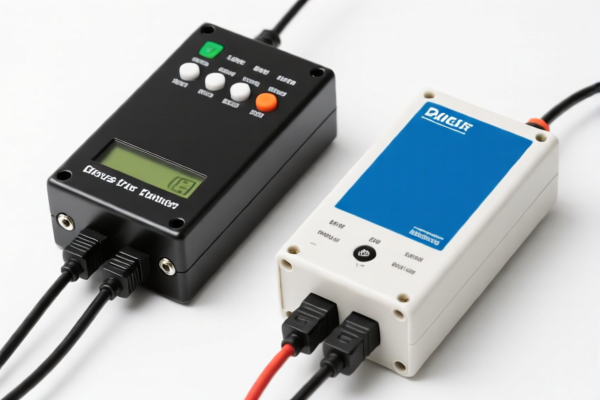
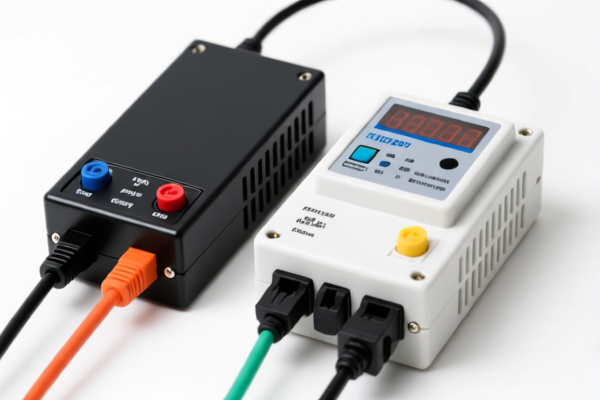
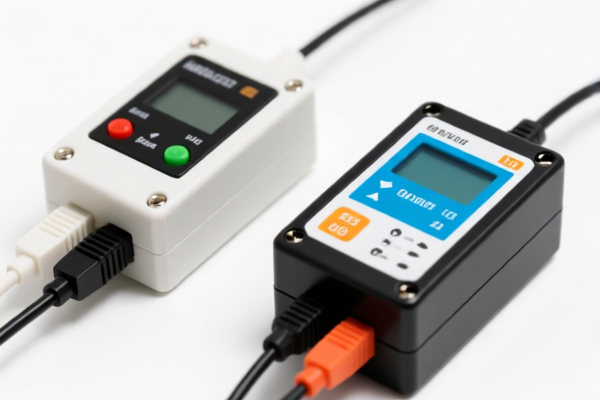
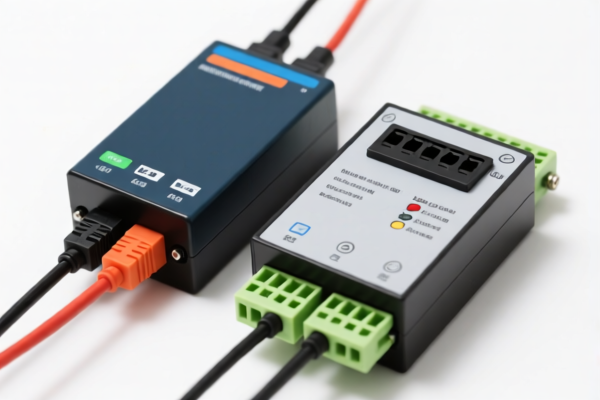
AI Analysis
⚡ Power Tester & Electrical Measurement Instruments
🌐 HS Code Reference & Customs Clearance Guide | 2026 Latest Tariff Analysis | Professional Compliance Strategy
📌 I. Product Definition & Classification: What Exactly is a "Power Tester"?
A Power Tester (also known as an electrical power analyzer, energy meter, or power quality analyzer) is a precision instrument used to measure electrical parameters such as voltage, current, power (active, reactive, apparent), power factor, frequency, and harmonics. In international trade, these devices fall under Chapter 90 (Optical, photographic, cinematographic, measuring, checking, precision, medical or surgical instruments).
Key Distinction for Classification:
The classification hinges on whether the device has a recording device and its primary function (general electrical measurement vs. semiconductor wafer testing).
⚠️ Critical Classification Rules:
- With Recording Device: If the instrument captures, stores, or prints data logs (e.g., via USB, internal memory, or printer attachment for trend analysis), it generally falls under heading 9030.39 or 9030.89.
- Without Recording Device (Analog/Digital Display Only): If the device only shows real-time readings on a screen or dial without data logging capabilities, it falls under 9030.31 (Multimeters) or 9030.33 (Other instruments for measuring voltage, current, resistance, or power).
- Semiconductor Wafer Testing: Excluded from this category (heading 9028).
- Ionizing Radiation Detectors: Excluded (separate heading).
📦 II. HS Code Classification Details (2026 Official Tariff Schedule)
Based on the provided data, here are the two primary HS Codes applicable to non-recording Power Testers:
| HS Code | Product Description | Applicability | Recording Capability |
|---|---|---|---|
9030.31.00.00 |
Multimeters, without a recording device | Basic power testers, digital multimeters (DMMs) that measure V, I, R, P | ❌ No (Display only) |
9030.33.38.00 |
Other instruments for measuring voltage, current, resistance, or power, without a recording device | Advanced power analyzers, clamp meters, energy testers, quality analyzers (non-multimeter form factor) | ❌ No (Display only) |
🔍 Key Distinction:
- If your "Power Tester" is essentially a Multimeter (measuring V, I, R, P simultaneously via probes), use9030.31.00.00.
- If it is a dedicated Power Analyzer (with current clamps, power sockets, waveform display, but no data logging), use9030.33.38.00.
- ⚠️ Do NOT use these codes if your device saves data to a file or prints graphs. You would need a different subheading (e.g.,9030.39), which may have different tariff implications not listed in the provided data.
💰 III. 2026 Latest Tariff Rate Breakdown (Including Surtaxes)
✅ Applicable Market: United States (US)
✅ Origin: China (CN)
✅ Effective Date: Current rates apply (Note: Provided data shows specific surtaxes)
🎯 1. 9030.31.00.00 — Multimeters (Without Recording)
| Item | Details |
|---|---|
| Base Tariff Rate | 0.0% (Ad Valorem) |
| Section 301 Surtax | +25.0% (Additional Duty) |
| Total Effective Tariff | 25.0% |
| Calculation Basis | CIF Value (Cost, Insurance, Freight) × 25% |
| De Minimis Eligibility | ❌ No (Value must be declared; no $800 exemption for Chinese-origin goods under Section 301) |
| Legal Reference Path | USITC:9030.31.00.00 → Footnote 9903.88.01 (Section 301 List 4B) |
📌 Explanation:
- While the base WTO tariff is 0%, the 25% Section 301 tariff applies to most Chinese-made electronic measurement instruments.
- This is a significant cost factor and must be included in your landed cost calculation.
🎯 2. 9030.33.38.00 — Other Power Instruments (Without Recording)
| Item | Details |
|---|---|
| Base Tariff Rate | 0.0% (Ad Valorem) |
| Section 301 Surtax | +25.0% (Additional Duty) |
| Total Effective Tariff | 25.0% |
| Calculation Basis | CIF Value × 25% |
| De Minimis Eligibility | ❌ No |
| Legal Reference Path | USITC:9030.33.38.00 → Footnote 9903.88.01 (Section 301 List 4B) |
📌 Explanation:
- Same tariff structure as multimeters.
- Even if the device is a high-end power analyzer, if it does not record data, it falls under this subheading and incurs the 25% surtax.
🛠️ IV. Customs Clearance Practical Advice (Avoid Pitfalls)
✅ 1. Documentation Checklist (Mandatory)
| Document | Required | Notes |
|---|---|---|
| Product Datasheet | ✔️ | Must clearly state: "No Recording Function" or "Real-time Display Only" |
| User Manual | ✔️ | Highlight sections showing only LCD/LED displays; explicitly state if no USB/data export exists |
| Commercial Invoice | ✔️ | Description must be precise: e.g., "Digital Power Meter, No Data Logging" |
| Packing List | ✔️ | List all components (probes, clamps, manuals) |
| Certificate of Origin | ✔️ | To prove Chinese origin (and confirm applicability of 301 tariffs) |
| Declaration of Non-Recording | ✔️ | Optional but recommended: A signed letter stating the device has no memory/storage for data recording |
✅ 2. Classification Strategy & Tips
🔥 "No Recording = 25% Tax; Recording = Different Code!"
| Scenario | Correct HS Code | Risk |
|---|---|---|
| Basic Digital Power Meter (Shows V/I/P on screen, no USB) | 9030.31.00.00 |
Low risk if clearly described |
| Advanced Power Analyzer (Clamp-on, 3-phase, shows waveforms, no data save) | 9030.33.38.00 |
Medium risk; ensure it’s not mistaken for a "recording" device |
| Power Quality Analyzer (Saves harmonic data to USB/SD card) | ❌ Not in Provided Data (Likely 9030.39) |
High Risk: Misclassification can lead to penalties |
| Semiconductor Wafer Tester | ❌ Not in Provided Data (Heading 9028) | High Risk: Wrong chapter entirely |
✅ 3. Critical Warnings
⚠️ Pitfall 1: "Recording" Definition
- If your device has internal memory, USB data export, or Bluetooth logging, it is NOT "without a recording device."
- Consequence: Wrong HS Code → Possible 25% tariff evasion charge + penalties.
- Solution: If your device records data, consult a customs broker for 9030.39 classification (tariff may differ).
⚠️ Pitfall 2: "Multimeter" vs. "Other Instruments"
- If your device is a true power analyzer (not just a multimeter), use 9030.33.38.00.
- Using 9030.31.00.00 for a complex power analyzer may trigger customs audits for misclassification.
⚠️ Pitfall 3: Semiconductor Testing
- If the device is used for testing semiconductor wafers or devices, it is excluded from both codes above.
- Consequence: Incorrect clearance → Seizure or return.
🌍 V. Global Market Comparison (2026)
| Country/Region | Recommended HS Code | Tariff (China Origin) | Certification Requirements | Notes |
|---|---|---|---|---|
| 🇺🇸 USA | 9030.31.00.00 or 9030.33.38.00 |
25% (Section 301) | FCC ID (if wireless), UL/CUL (safety) | High tariff burden |
| 🇨🇳 China | 9030.31.00.00 or 9030.33.38.00 |
0%~8% (MFN) | CCC (if listed), RoHS | No US-style surtax |
| 🇪🇺 EU | 9030.31.00 or 9030.33.33 |
0% (Most MFN rates) | CE Mark, RoHS, WEEE | No additional tariffs |
| 🇬🇧 UK | 9030.31.00 or 9030.33.33 |
0% | UKCA, CE | Post-Brexit standards apply |
| 🇯🇵 Japan | 9030.31.00 or 9030.33.33 |
0%~3% | PSE, METI | Low tariffs |
📌 Conclusion:
- The US market is the most expensive due to the 25% Section 301 surtax.
- All other major markets have 0% or low tariffs for these instruments.
📌 VI. Common Mistakes & Pitfalls (Lessons Learned)
❌ Mistake 1: Assuming all "Power Testers" are the same
👉 Result: Misclassification between 9030.31 and 9030.33 → Customs delays
👉 Fix: Distinguish between Multimeters and Specialized Power Analyzers.
❌ Mistake 2: Ignoring the "Recording" clause
👉 Result: Using 9030.31.00.00 for a device with USB data logging → Penalties
👉 Fix: Verify if the device has any data storage capability. If yes, do NOT use the provided codes.
❌ Mistake 3: Not declaring "No Recording" clearly
👉 Result: Customs officer assumes recording capability → Higher duty or inspection
👉 Fix: Include "Non-Recording: Display Only" in the commercial invoice description.
✅ Correct Declaration Example:
"Digital Power Meter, Model XYZ, Measures Voltage/Current/Power, No Data Recording Function, Display Only, FCC Certified"
🎯 VII. Conclusion: Precision in Classification Saves Money
🎯 Key Takeaway:
🔹 "No Recording = 25% Tariff (US)"
🔹 "With Recording = Different HS Code (Check Customs Broker)"
🔹 "Semiconductor Testing = Excluded"
📌 Pro Tip:
If your product has recording capabilities, consult a licensed customs broker immediately. The provided HS Codes only apply to non-recording devices. Misclassification can lead to back taxes, fines, and shipment delays.
📣 Action Required:
📞 Verify if your Power Tester has any data logging feature.
📄 Document the "No Recording" feature in your invoice.
🚀 Prepare for a 25% additional tariff if importing into the US.
✨ Accurate Classification is the Key to Smooth Customs Clearance!
💼 Protect Your Margins – Declare Correctly!
Customer Reviews
About HS Code Classification
The Harmonized System (HS) is an internationally standardized nomenclature developed by the World Customs Organization (WCO) to classify traded products. Over 200 countries use the HS system as the basis for customs tariffs, trade statistics, and import/export regulations.
Each HS code follows a hierarchical structure:
- Chapter (2 digits) — Broad category of goods (e.g., Chapter 84: Machinery and Mechanical Appliances)
- Heading (4 digits) — More specific grouping within the chapter
- Subheading (6 digits) — Internationally standardized breakdown, used by all WCO member countries
- National subdivisions (8-10 digits) — Country-specific extensions for further classification, such as US HTSUS 10-digit codes
Correct HS code classification is essential for smooth customs clearance, accurate duty payment, and compliance with trade regulations. Misclassification can lead to customs delays, overpayment of duties, or penalties.
When importing from CN to US, the applicable tariff rates may include:
- Most-Favored-Nation (MFN) rate — The standard duty rate applied to WTO members
- General rate — Applied to countries without trade agreements
- Trade remedy duties — Additional tariffs such as Section 301 (anti-dumping), Section 232 (national security), or countervailing duties
The information provided on this page is for reference purposes only. For official classification, please consult with your local customs authority or a licensed customs broker.