Practice Newsprint Roll
CN → US| HS Code | Tariff Rate | Origin | Destination | Doc |
|---|---|---|---|---|
| 4820104000 | 10.0% | CN | US | Official Doc |
| 4817202000 | 35.0% | CN | US | Official Doc |
| 4817204000 | 35.0% | CN | US | Official Doc |
| 4820200000 | 35.0% | CN | US | Official Doc |
| 4801000120 | 35.0% | CN | US | Official Doc |
Product Images

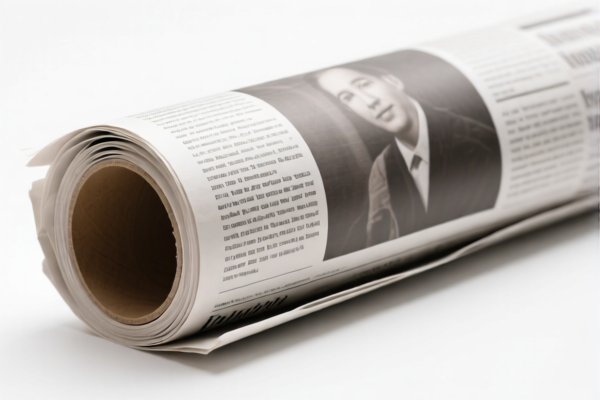


AI Analysis
📜 Practice Newsprint Roll (Newsprint Writing Practice Roll)
🌐 HS Code Reference & Customs Clearance Guide | 2026 Latest Tariff Analysis | Professional Strategy for Chinese Newsprint Products
📌 I. Product Definition & Classification: Do You Really Understand "Practice Newsprint Roll"?
The "Practice Newsprint Roll" is a specialized stationery item, primarily used for handwriting practice, calligraphy drills, or educational exercises. It consists of newsprint paper wound into a roll. In international trade, its classification depends heavily on its specific form, intended use, and material composition.
Because newsprint is a low-cost, coarse paper, it falls under Chapter 48 (Paper and Paperboard). However, the exact HS Code varies based on whether it is classified as: 1. Stationery/Exercise Books: If used for writing exercises. 2. Writing Paper/Stationery: If used as general writing rolls (like carbonless copy paper rolls but made of newsprint). 3. Raw Paper: If it is simply a roll of newsprint without specific formatting for exercise.
⚠️ Critical Distinction:
- If marketed as "Exercise Book" or "Practice Paper" for students → Likely 4820 (Exercise Books) or 4817 (Stationery).
- If marketed as "Raw Newsprint Roll" for industrial wrapping or printing → Likely 4801 (Newsprint in rolls).
- Warning: Misclassification leads to severe tariff differences (0% vs. 35%).
📦 II. HS Code Classification Details (2026 Latest Tariff Authority Comparison)
Based on the provided data, here are the possible classifications for "Practice Newsprint Roll":
| HS Code | Product Description | Applicable Scenario | Tariff Rate (China Origin) |
|---|---|---|---|
| 4820.10.40.00 | Exercise Books/Stationery: Newsprint writing practice rolls, paper material, roll form, falling within the category of paper stationery. | Student writing practice, calligraphy drills, formatted exercise paper rolls. | 10% |
| 4817.20.20.00 | Stationery Items: Newsprint writing practice rolls, paper material, roll form, fitting the attributes of letter cards/notepads. | General writing rolls, notepad rolls, formatted for correspondence or notes. | 35% |
| 4817.20.40.00 | Stationery Items: Newsprint writing practice rolls, paper material, fitting communication cards/postcards extended application. | Rolls used for recording, similar to postcard-style writing pads. | 35% |
| 4820.20.00.00 | Exercise Books: Newsprint writing practice rolls, newsprint material, roll form, fitting the function of exercise books. | Specifically labeled as "Exercise Books" or "Practice Books" in roll form. | 35% |
| 4801.00.01.20 | Newsprint in Rolls: Practice newsprint roll, roll form, paper material, meeting standard newsprint characteristics. | Raw newsprint rolls used for wrapping, printing, or unformatted writing. | 35% |
🔍 Key Insight:
- Only HS Code4820.10.40.00enjoys a preferential rate of 10%.
- All other classifications incur a total tax rate of 35% due to additional tariffs.
- The difference between 10% and 35% is significant for high-volume shipments.
💰 III. 2026 Latest Tariff Rate Breakdown (Including Surcharges & Policy Add-ons)
✅ Applicable Country: United States (US)
✅ Origin: China (CN)
✅ Effective Time: November 10, 2025 (for subsequent imports)
🎯 1. 4820.10.40.00 —— Exercise Books/Stationery (Lowest Tax Scenario)
| Item | Content |
|---|---|
| Base Tariff | 0% (ad valorem) |
| Section 301 Additional Tariff | 0% (Not applicable to this specific subheading for China origin in this dataset) |
| 122 Clause Tariff (IEEPA/China Specific) | +10% |
| Total Tax Rate | 10% |
| Tax Calculation | CIF Value × 10% |
| De Minimis Eligibility | ❌ Not Eligible (Deny de minimis for Chinese goods subject to additional tariffs) |
| Legal Basis Path | 122 Clause: 10% → HTSUS: 4820.10.40.00 |
📌 Explanation:
- This is the only classification with a lower total tax rate (10%).
- The "122 Clause" likely refers to a specific US trade enforcement measure targeting Chinese paper goods.
- Advantage: Significantly cheaper than other classifications.
🎯 2. 4817.20.20.00 & 4817.20.40.00 —— Stationery/Notepads (High Tax Scenario)
| Item | Content |
|---|---|
| Base Tariff | 0% |
| Section 301 Additional Tariff | +25% |
| 122 Clause Tariff | +10% |
| Total Tax Rate | 35% |
| Tax Calculation | CIF Value × 35% |
| De Minimis Eligibility | ❌ Not Eligible |
| Legal Basis Path | Section 301: 25% → 122 Clause: 10% → HTSUS: 4817.20.x0.00 |
📌 Note:
- These codes fall under "Stationery" or "Letter Cards/Notepads."
- The 25% surcharge is a standard Section 301 tariff on Chinese goods.
- High tax burden requires careful pricing strategy.
🎯 3. 4820.20.00.00 —— Exercise Books (High Tax Scenario)
| Item | Content |
|---|---|
| Base Tariff | 0% |
| Section 301 Additional Tariff | +25% |
| 122 Clause Tariff | +10% |
| Total Tax Rate | 35% |
| Tax Calculation | CIF Value × 35% |
| De Minimis Eligibility | ❌ Not Eligible |
| Legal Basis Path | Section 301: 25% → 122 Clause: 10% → HTSUS: 4820.20.00.00 |
📌 Note:
- Even though it is an "Exercise Book," if classified under4820.20.00.00, it incurs the higher 35% rate.
- Crucial: Ensure your product description and marketing materials align with4820.10.40.00to qualify for the 10% rate.
🎯 4. 4801.00.01.20 —— Newsprint in Rolls (High Tax Scenario)
| Item | Content |
|---|---|
| Base Tariff | 0% |
| Section 301 Additional Tariff | +25% |
| 122 Clause Tariff | +10% |
| Total Tax Rate | 35% |
| Tax Calculation | CIF Value × 35% |
| De Minimis Eligibility | ❌ Not Eligible |
| Legal Basis Path | Section 301: 25% → 122 Clause: 10% → HTSUS: 4801.00.01.20 |
📌 Note:
- This code is for raw newsprint. If your product is a "Practice Roll" (formatted for writing), using this code is a misclassification risk.
- Customs may reclassify it to4817or4820and impose penalties.
🛠️ IV. Customs Clearance Practical Advice (Real-World Pitfall Avoidance Guide)
✅ 1. Required Documentation Checklist (None Can Be Missing)
| Document | Must Provide | Explanation |
|---|---|---|
| ✅ Product Specification Sheet | ✔️ | Must clearly state: "Newsprint Writing Practice Roll," material, dimensions, and intended use (e.g., for students, calligraphy). |
| ✅ Product Photos | ✔️ | Show the roll, packaging, and any printed content (e.g., grid lines, practice characters) that proves it is a "practice" item. |
| ✅ Commercial Invoice | ✔️ | Description must match the HS Code. Use terms like "Paper Stationery for Writing Practice" to support 4820.10.40.00. |
| ✅ Packing List | ✔️ | Detail the number of rolls, weight, and dimensions. |
| ✅ Declaration Statement | ✔️ | Explicitly declare: "This product is a paper stationery item for handwriting practice, not raw industrial newsprint." |
✅ 2. Declaration Tips (Key Mantra)
🔥 "Be Specific, Be Stationery, Avoid 'Raw'!"
| Scenario | Correct Declaration | Wrong Practice |
|---|---|---|
| Formatted Practice Roll | 4820.10.40.00 - "Newsprint Writing Practice Roll for Stationery" |
"Newsprint Roll" → Risks 4801 (35%) |
| Unformatted Newsprint Roll | 4801.00.01.20 - "Raw Newsprint in Rolls for Wrapping" |
Claiming it's for writing → Misclassification |
| Stationery Notepad Roll | 4817.20.20.00 - "Stationery Paper Roll" |
"Exercise Book" → Inconsistent description |
| Mixed Shipment | Separate declarations for 4820.10.40.00 (10%) and 4801 (35%) |
Combining into one line item → Ambiguity & Risk |
✅ 3. Special Cases Handling
| Situation | Handling Advice |
|---|---|
| OEM Customized Practice Rolls | Provide the client's design proof showing grid lines or practice characters to support 4820.10.40.00. |
| Rolls with Printed Exercises | Clearly state "Pre-printed Exercise Paper" in the invoice to justify stationery classification. |
| Large Industrial Rolls | If the roll is too large for personal use, consider 4801 but be prepared for 35% tax. |
| Sample Shipments | Even samples are subject to the 10% or 35% tariff. Do not declare as "Gift" or "Free Sample" to avoid fraud allegations. |
🌍 V. Global Main Market Customs Clearance Comparison (2026 Latest)
| Country/Region | Recommended HS Code | Tariff (China Origin) | Certification Requirements | Notes |
|---|---|---|---|---|
| 🇺🇸 USA | 4820.10.40.00 |
10% | None specific | 35% for other classifications. Critical to classify correctly. |
| 🇨🇳 China | 4820.10.40.00 |
5% | N/A | Lower domestic tax, but this guide focuses on export to US. |
| 🇪🇺 EU | 4820.10.40.00 |
0-6.5% | CE (if non-paper components) | No additional surcharges like US Section 301. |
| 🇬🇧 UK | 4820.10.40.00 |
0-6.5% | UKCA (if applicable) | Post-Brexit rules may apply, but generally favorable. |
| 🇦🇺 Australia | 4820.10.40.00 |
5% | None | No major surcharges. |
📌 Conclusion:
- The US market is the most complex due to the 10% vs. 35% tariff split.
- Properly declaring as "Stationery/Exercise Paper" (4820.10.40.00) saves 25% in tariffs.
- Other markets (EU, UK, AU) have stable, lower rates and no "122 Clause" surcharges.
📌 VI. Common Errors & Pitfall Guide (Lessons from Experience)
❌ Error 1: Declaring "Practice Newsprint Roll" as "Newsprint" (4801)
👉 Consequence: If Customs determines it is a finished stationery item, they may reclassify it to 4817 or 4820 and issue a penalty. Also, you miss the 10% rate if it qualifies for 4820.10.40.00.
❌ Error 2: Declaring as "Exercise Book" (4820.20.00.00)
👉 Consequence: This incurs a 35% tax rate. You are paying an extra 25% unnecessarily.
👉 Fix: Use 4820.10.40.00 if it fits the "Stationery" definition.
❌ Error 3: Vague Description on Invoice ("Paper Roll")
👉 Consequence: Customs officer has discretion to choose the highest tariff code.
👉 Fix: Use precise descriptions: "Paper Writing Practice Roll, HS 4820.10.40.00."
❌ Error 4: Ignoring the "122 Clause"
👉 Consequence: Underestimating total landed cost.
👉 Fix: Always include the 10% surcharge in your cost calculation, even for the 10% base rate.
✅ Correct Practice:
"Practice Newsprint Roll, 10mm width, for handwriting exercises, classified under HS 4820.10.40.00, China Origin."
🎯 VII. Conclusion: Precise Classification Saves 25% in Tariffs!
🎯 Remember the Mantra:
🔹 "Stationery is 10%, Raw is 35%, Stationery is 35%!"
🔹 "HS Code decides your profit, a 25% difference is huge, declare right or pay big!"
📌 Pro Tip:
- If your product is not made in China, the Section 301 and 122 Clause tariffs may not apply. Check your origin certificate.
- Consider applying for an Advance Ruling from US Customs if your product is on the border between 4820.10.40.00 and 4820.20.00.00.
- Always keep sample products available for inspection to prove the "stationery" nature.
📣 Immediate Action:
📞 Contact a professional customs broker + Provide product photos + Apply for HS Code pre-classification
🚀 Ensure your Practice Newsprint Rolls clear customs smoothly, avoid penalties, and maximize profit!
✨ Professional clearance starts with accurate classification!
💼 Every dollar of tariff saved is pure profit!
Customer Reviews
About HS Code Classification
The Harmonized System (HS) is an internationally standardized nomenclature developed by the World Customs Organization (WCO) to classify traded products. Over 200 countries use the HS system as the basis for customs tariffs, trade statistics, and import/export regulations.
Each HS code follows a hierarchical structure:
- Chapter (2 digits) — Broad category of goods (e.g., Chapter 84: Machinery and Mechanical Appliances)
- Heading (4 digits) — More specific grouping within the chapter
- Subheading (6 digits) — Internationally standardized breakdown, used by all WCO member countries
- National subdivisions (8-10 digits) — Country-specific extensions for further classification, such as US HTSUS 10-digit codes
Correct HS code classification is essential for smooth customs clearance, accurate duty payment, and compliance with trade regulations. Misclassification can lead to customs delays, overpayment of duties, or penalties.
When importing from CN to US, the applicable tariff rates may include:
- Most-Favored-Nation (MFN) rate — The standard duty rate applied to WTO members
- General rate — Applied to countries without trade agreements
- Trade remedy duties — Additional tariffs such as Section 301 (anti-dumping), Section 232 (national security), or countervailing duties
The information provided on this page is for reference purposes only. For official classification, please consult with your local customs authority or a licensed customs broker.