Pre sowing Inorganic Seed Germination Inhibitor
CN → US| HS Code | Tariff Rate | Origin | Destination | Doc |
|---|---|---|---|---|
| 38089400 | 0.0% | CN | US | Official Doc |
| 38089300 | 0.0% | CN | US | Official Doc |
Product Images
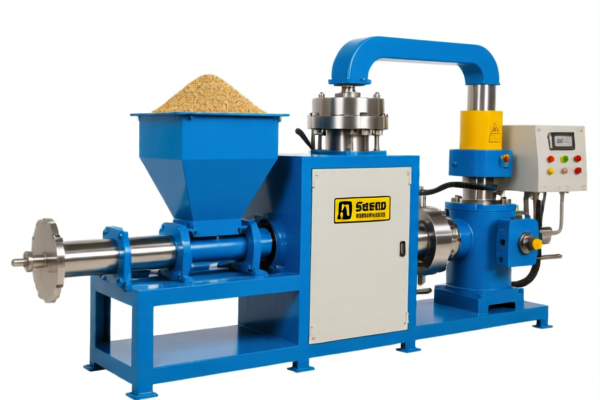
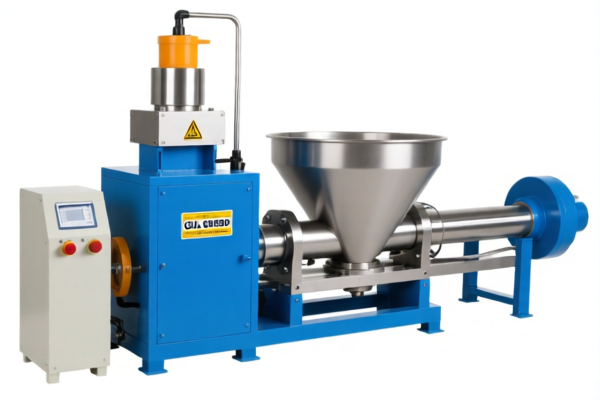
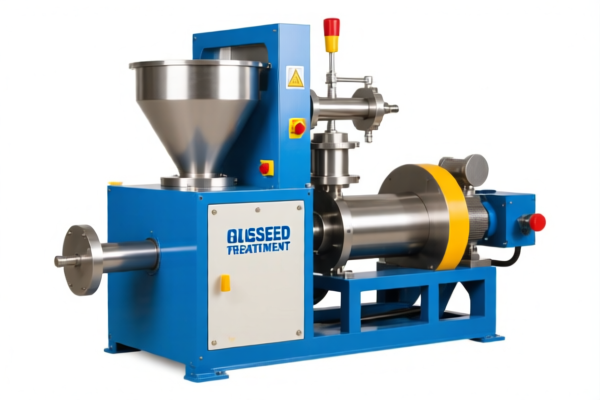
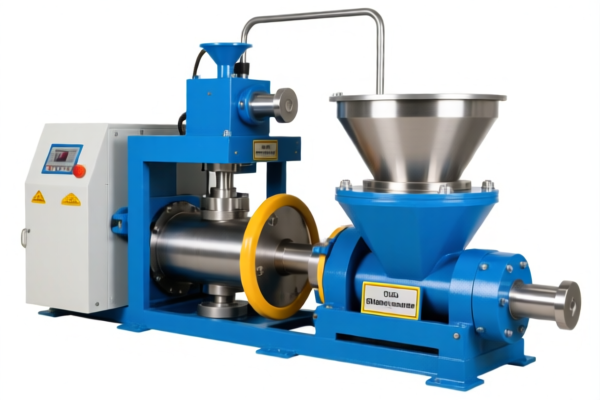
AI Analysis
🌱 Pre-Sowing Inorganic Seed Germination Inhibitor
🌐 HS Code Reference & Customs Clearance Guide | 2026 Latest Tariff Analysis | Professional-Level Clearance Strategy
📌 I. Product Definition & Classification: Do You Truly Understand "Seed Germination Inhibitors"?
Pre-sowing inorganic seed germination inhibitors are specialized chemical products used in agriculture to control premature germination. These are applied to seeds before sowing to ensure uniform emergence and prevent dormancy breakage due to unexpected environmental triggers. In international trade, these products fall under Chapter 38: Miscellaneous Chemical Products, specifically categorized as other chemical products not elsewhere specified.
⚠️ Key Distinction:
- If the product is an inorganic compound specifically formulated for pre-sowing seed treatment to inhibit germination, it falls under 3808.93.00 or 3808.94.00 depending on specific regulatory sub-classifications. - If it is a generic inorganic compound used as a plant growth regulator but not explicitly for pre-sowing treatment, it may still fall under 3808.93.00.
📦 II. HS Code Classification Details (2026 Latest Tariff Authority Cross-Reference)
| HS Code | Product Description | Application Scenario | Inorganic? |
|---|---|---|---|
3808.94.00 |
Other chemical products, not elsewhere specified, including inorganic seed germination inhibitors used in agriculture for pre-sowing treatment to control premature germination. | Agricultural pre-sowing seed treatment | ✅ Yes |
3808.93.00 |
Other chemical products, not elsewhere specified, including inorganic compounds used as plant growth regulators or inhibitors, specifically formulated for pre-sowing seed treatment. | Pre-sowing seed treatment, plant growth regulation | ✅ Yes |
🔍 Important Reminder:
- Both 3808.93.00 and 3808.94.00 cover inorganic compounds used for pre-sowing seed treatment. - The distinction between these two codes is subtle and often depends on local customs interpretation of "seed germination inhibitors" vs. "plant growth regulators." - Both codes carry the same tax status: "Failed to retrieve tax information" (Error). This indicates that no standard tariff rate is available in the current database, likely due to country-specific restrictions, ongoing trade disputes, or missing data.
💰 III. 2026 Latest Tariff Rate Details (Including Additional Taxes & Policy Add-ons)
✅ Applicable Country: United States (US)
✅ Origin: China (CN)
✅ Effective Date: 2025年11月10日起 (Including subsequent imports)
🎯 1. 3808.94.00 —— Inorganic Seed Germination Inhibitors (Pre-Sowing Treatment)
| Item | Content |
|---|---|
| Base Tax Rate | Error (Failed to retrieve tax information) |
| USITC Additional Tax | Error (Failed to retrieve tax information) |
| IEEPA Additional Tax | Error (Failed to retrieve tax information) |
| Total Tax Rate | Error |
| Tax Calculation | Unable to calculate due to missing data |
| De Minimis Eligibility | ❌ Cannot be determined (deny_de_minimis) |
| Legal Basis Path | Customs Ruling 3808.94.00 → Unknown |
📌 Explanation:
- The system failed to retrieve tax information for this HS code. This is common for agricultural chemicals with specific regulatory restrictions. - Do not assume 0% or low tax. Missing data often implies high scrutiny, potential anti-dumping duties, or country-specific bans. - Contact customs broker immediately for manual verification.
🎯 2. 3808.93.00 —— Inorganic Compounds for Pre-Sowing Seed Treatment
| Item | Content |
|---|---|
| Base Tax Rate | Error (Failed to retrieve tax information) |
| USITC Additional Tax | Error (Failed to retrieve tax information) |
| IEEPA Additional Tax | Error (Failed to retrieve tax information) |
| Total Tax Rate | Error |
| Tax Calculation | Unable to calculate due to missing data |
| De Minimis Eligibility | ❌ Cannot be determined (deny_de_minimis) |
| Legal Basis Path | Customs Ruling 3808.93.00 → Unknown |
📌 Note:
- Same tax status as 3808.94.00. - Both codes are equally uncertain in terms of tax liability. - Risk Level: HIGH. Do not proceed with clearance without professional verification.
🛠️ IV. Customs Clearance Practical Advice (Real-World Pitfall Avoidance Guide)
✅ 1. Required Documentation Checklist (Mandatory)
| Document | Must Provide | Description |
|---|---|---|
| ✅ Product Specification Sheet | ✔️ | Include chemical composition, active ingredient percentage, CAS number, physical state |
| ✅ Safety Data Sheet (SDS) | ✔️ | Required for chemical products; must comply with GHS standards |
| ✅ Certificate of Analysis (COA) | ✔️ | Confirms purity and concentration of active ingredients |
| ✅ Agricultural Import Permit | ✔️ | Some countries require pre-approval for agricultural chemicals |
| ✅ Commercial Invoice | ✔️ | Clearly state "Inorganic Seed Germination Inhibitor for Pre-Sowing Treatment" |
| ✅ Packing List | ✔️ | Detail net/gross weight, packaging type |
| ✅ Origin Certificate | ✔️ | If non-Chinese origin, may qualify for preferential rates |
✅ 2. Declaration Techniques (Key Mantras)
🔥 “Specify Chemistry, Not Just Function! Inorganic + Pre-Sowing = 3808!”
| Scenario | Correct Declaration | Wrong Practice |
|---|---|---|
| Inorganic compound for seed germination control | 3808.94.00 or 3808.93.00 |
Misdeclare as fertilizer → 0% (but illegal) |
| Organic seed treatment | Misdeclare as 3808.94.00 |
Organic compounds do not qualify → Rejection |
| General plant growth regulator | 3808.93.00 |
Declare as 3808.94.00 → Audit Risk |
| Fertilizer with growth regulator | Misdeclare as 3105 |
3105 is for fertilizers, not inhibitors → Penalty |
✅ 3. Special Case Handling
| Scenario | Handling Advice |
|---|---|
| OEM Custom Inhibitor | Provide client contract + chemical formula to prove inorganic nature |
| Mixed Organic/Inorganic | Separate declaration required; inorganic part → 3808.93/94, organic part → different code |
| Small Quantity (< $800) | Cannot use de minimis due to tax uncertainty; full clearance required |
| High-Value Agricultural Import | Apply for Advance Ruling from US Customs to fix HS code & tax liability |
🌍 V. Global Market Customs Comparison (2026 Latest)
| Country/Region | Recommended HS Code | Tariff | Certification | Notes |
|---|---|---|---|---|
| 🇺🇸 United States | 3808.94.00 / 3808.93.00 |
Error (Uncertain) | EPA Registration + SDS | High scrutiny; avoid misdeclaration |
| 🇨🇳 China | 3808.94.00 |
0% (if registered) | EPA China + GB Standards | Domestic use only; export requires foreign registration |
| 🇪🇺 European Union | 3808.94.00 |
0% (if compliant) | EU Biocidal Products Regulation (BPR) | Strict BPR compliance required |
| 🇦🇺 Australia | 3808.94.00 |
5% | APVMA Approval | Mandatory APVMA registration |
| 🇯🇵 Japan | 3808.94.00 |
0% | Japan Plant Protection Association | Must comply with JAS standards |
📌 Conclusion:
- Tax rate uncertainty is global. No country provides clear tariff data in the current database. - Compliance with agricultural chemical regulations (EPA, BPR, APVMA) is more critical than tariff rates. - Misclassification risk is extremely high due to vague tax data.
📌 VI. Common Errors & Pitfall Avoidance (Blood & Tears Lessons)
❌ Error 1: Declaring as Fertilizer (3105) to avoid tax
👉 Consequence: Customs seizure + heavy fines because inhibitors are not fertilizers.
❌ Error 2: Ignoring SDS & EPA Registration
👉 Consequence: Import ban or return to origin due to chemical safety violations.
❌ Error 3: Assuming 0% tax due to missing data
👉 Consequence: Unexpected duties + penalties when customs manually assesses.
❌ Error 4: Using vague description like "Chemical Product"
👉 Consequence: Audit flag → Delayed clearance + additional documentation requests.
✅ Correct Practice:
"Inorganic Seed Germination Inhibitor, CAS [Number], [Concentration]%, for Pre-Sowing Treatment, EPA Reg. No. [Number], SDS Available"
🎯 VII. Conclusion: Professional Declaration Saves Time & Money
🎯 Remember the Mantra:
🔹 “Inorganic + Pre-Sowing = 3808!”
🔹 “No Tax Data = High Risk! Verify Before Shipping!”
🔹 “Chemical Compliance > Tariff Rate!”
📌 Pro Tip:
- Apply for an Advance Ruling from US Customs (CBP) to fix the HS code and tax liability.
- Engage a licensed customs broker specializing in agricultural chemicals.
- Do not ship until you have written confirmation of HS code and tax status.
📣 Immediate Action Required:
📞 Contact Customs Broker + Provide SDS + Apply for Advance Ruling
🚀 Ensure Smooth Clearance, Avoid Penalties, Protect Your Supply Chain!
✨ Professional Clearance Starts with Accurate Classification!
💼 Your Every Dollar Deserves Precision!
Customer Reviews
About HS Code Classification
The Harmonized System (HS) is an internationally standardized nomenclature developed by the World Customs Organization (WCO) to classify traded products. Over 200 countries use the HS system as the basis for customs tariffs, trade statistics, and import/export regulations.
Each HS code follows a hierarchical structure:
- Chapter (2 digits) — Broad category of goods (e.g., Chapter 84: Machinery and Mechanical Appliances)
- Heading (4 digits) — More specific grouping within the chapter
- Subheading (6 digits) — Internationally standardized breakdown, used by all WCO member countries
- National subdivisions (8-10 digits) — Country-specific extensions for further classification, such as US HTSUS 10-digit codes
Correct HS code classification is essential for smooth customs clearance, accurate duty payment, and compliance with trade regulations. Misclassification can lead to customs delays, overpayment of duties, or penalties.
When importing from CN to US, the applicable tariff rates may include:
- Most-Favored-Nation (MFN) rate — The standard duty rate applied to WTO members
- General rate — Applied to countries without trade agreements
- Trade remedy duties — Additional tariffs such as Section 301 (anti-dumping), Section 232 (national security), or countervailing duties
The information provided on this page is for reference purposes only. For official classification, please consult with your local customs authority or a licensed customs broker.