Precious Metal Waste and Scrap
CN → US| HS Code | Tariff Rate | Origin | Destination | Doc |
|---|---|---|---|---|
| 7112910100 | 35.0% | CN | US | Official Doc |
| 7112920100 | 35.0% | CN | US | Official Doc |
| 7108100000 | 0.0% | CN | US | Official Doc |
| 7108990000 | 0.0% | CN | US | Official Doc |
Product Images
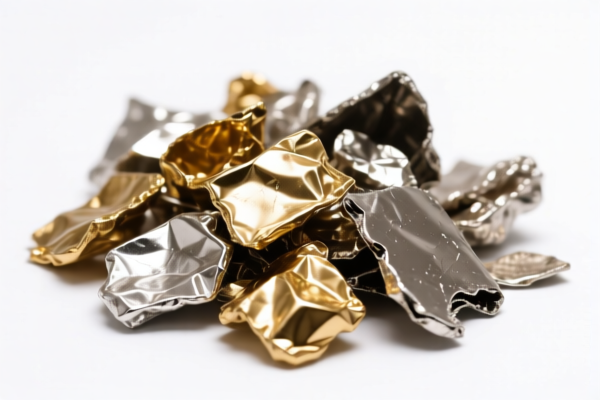
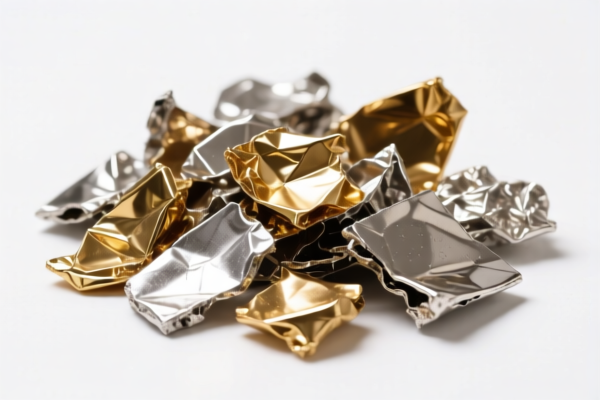


AI Analysis
⚱️ Precious Metal Waste and Scrap: The High-Value Recycling Challenge
🌐 HS Code Reference & Customs Clearance Guide | 2026 Latest Tariff Analysis | Professional Compliance Strategy
📌 I. Product Definition & Classification: What Exactly Is "Precious Metal Waste"?
Precious metal waste and scrap refer to end-of-life materials, industrial by-products, or contaminated items containing gold, silver, platinum, palladium, rhodium, or iridium. In international trade, these are not treated as "standard metals" but as high-value strategic resources subject to strict anti-money laundering (AML), environmental, and tariff regulations.
They are broadly categorized into two streams: 1. Standard Waste/Scrap: Materials where the precious metal is not chemically bound in a compound (e.g., gold-plated jewelry scraps, silver-plated cutlery, electronic waste rich in gold). 2. Compound-Containing Waste: Materials where precious metals are part of chemical compounds (e.g., catalysts, photographic waste, specific alloys), often requiring special recovery licenses.
⚠️ Key Distinction Point:
- If the item is pure scrap (physical mixture or cladding) →归入 Chapter 71 (Nuclear Fuels, precious metals)
- If the item contains precious metal compounds specifically for recovery → May fall under 8549 (Waste and scrap of electrical/electronic equipment) if primarily e-waste, but 7112 if primarily precious metal recovery.
- Critical Rule: The HS Code depends on whether the material is predominantly precious metal scrap or mixed electronic waste.
📦 II. HS Code Classification Matrix (2026 Latest Tariff Authority)
Based on the provided data, here are the specific HS Codes and their corresponding tax treatments for Precious Metal Waste and Scrap.
| HS Code | Product Description | Applicable Scenario | Key Characteristics |
|--------|--------------------------|--------------------------|
| 7108.10.00.00 | Precious metal waste and scrap, not containing precious metal compounds | Gold scraps, gold-plated jewelry waste, gold-filled items | ❌ No chemical compounds; physical scrap only |
| 7108.99.00.00 | Other precious metal waste and scrap | Platinum/Palladium scrap (other than specific compound types), mixed precious metal scraps not covered elsewhere | ❌ No compounds; general "other" category |
| 7112.91.01.00 | Waste and scrap... principally for recovery of precious metal: Of gold, including metal clad with gold | Gold recovery from electronics, industrial gold sludge, gold-clad scrap | ✅ Principal purpose is gold recovery; 25% Additional Tariff |
| 7112.92.01.00 | Waste and scrap... principally for recovery of precious metal: Of platinum | Platinum catalyst waste, platinum-clad industrial scrap | ✅ Principal purpose is platinum recovery; 25% Additional Tariff |
🔍 Important Note:
-7108and7108.99categories show "Error" / "Failed to retrieve" in the provided tax data. This usually indicates they are subject to Variable or Conditional Tariffs (e.g., MFN rates may apply, or they are exempt from the 25% Section 301/IEEPA tariffs depending on specific country of origin rules and trade agreements).
-7112categories explicitly show a 25.0% Total Tax, indicating they are heavily impacted by geopolitical trade measures (likely US-China trade tensions, given the context of "Additional Tariffs").
💰 III. 2026 Latest Tariff Rate Breakdown (With Additional Duties)
✅ Applicable Jurisdiction: United States (US)
✅ Origin: China (CN) (Implied by the "25% Additional Tariff" structure typical of US-China trade policy)
✅ Effective Date: Current policies as of 2026
🎯 1. 7108.10.00.00 & 7108.99.00.00 —— Standard Precious Metal Scrap (Non-Compound)
| Item | Content |
|---|---|
| Base Tariff | 0% (Typically for precious metals under MFN) |
| Additional Tariff | ❓ Unclear/Error (See Note Below) |
| Total Tax | Error / Variable |
| Tax Detail | Failed to retrieve tax information |
📌 Interpretation:
- The "Error" status likely means these items are exempt from the 25% Section 301 tariffs or are subject to a different regulatory framework (e.g., they may be considered "raw materials" rather than "manufactured goods").
- However, importers must verify with a customs broker whether Environmental Protection Agency (EPA) or Customs-Border Protection (CBP) restrictions apply, as "waste" imports are highly regulated.
🎯 2. 7112.91.01.00 & 7112.92.01.00 —— Precious Metal Waste for Recovery (Gold & Platinum)
| Item | Content |
|---|---|
| Base Tariff | 0.0% (Ad valorem) |
| Additional Tariff | +25.0% (Section 301 / IEEPA) |
| Total Tax | 25.0% |
| Tax Calculation | CIF Value × 25% |
| De Minimis Exemption | ❌ Not Applicable (Waste/Scrap is high-value, not low-value package) |
| Legal Basis | HTSUS:7112.91.01.00 / HTSUS:7112.92.01.00 + USITC Footnote for Section 301 |
📌 Explanation:
- Why 25%? These HS codes are explicitly listed in the US Trade Representative (USTR) lists as subject to the 25% additional tariff on Chinese imports.
- Why "Principally for Recovery"? The description specifies goods "used principally for the recovery of precious metal." This distinguishes them from finished goods. Even though the base tariff is 0%, the 25% punitive tariff makes the landed cost significant.
- Compliance Risk: High. These items are scrutinized for Anti-Dumping Duties (ADD) and Countervailing Duties (CVD) in some cases, and environmental smuggling (illegal waste import).
🛠️ IV. Customs Clearance Practical Advice (Pitfall Avoidance Guide)
✅ 1. Required Documentation Checklist (Non-Negotiable)
| Document | Mandatory? | Notes |
|---|---|---|
| ✅ Detailed Composition Report | ✔️ | Must specify % of Gold/Platinum/Silver. Without this, CBP will assess at the highest possible duty. |
| ✅ Material Safety Data Sheet (MSDS) | ✔️ | Required for hazardous components (e.g., cyanide residue in gold plating waste). |
| ✅ Proof of Origin | ✔️ | Critical to determine if 25% tariff applies. Must show CN origin if applicable. |
| ✅ EPA Import Declaration | ✔️ | If classified as "Waste," US EPA (RCRA) approval may be needed. |
| ✅ Commercial Invoice | ✔️ | Must clearly state "Precious Metal Scrap for Recovery," NOT "Finished Goods." |
| ✅ Assay Certificate | ✔️ | Independent lab report verifying precious metal content. |
✅ 2. Declaration Strategies (Key Mnemonics)
🔥 "Declare Content, Not Just 'Scrap'; Prove Recovery, Avoid Waste Label!"
| Scenario | Correct Declaration | Incorrect Practice |
|---|---|---|
| Gold-plated e-waste | 7112.91.01.00 (If principal value is gold recovery) |
"Electronic Waste" → May incur higher duties + EPA violations |
| Pure Gold Filings | 7108.10.00.00 |
"Gold Bar" → Misclassification, fraud risk |
| Platinum Catalyst | 7112.92.01.00 |
"Industrial Chemical" → Wrong HS Code, delayed clearance |
| Mixed Scrap (Unknown %) | DO NOT IMPORT | Requires assay first; unknown composition leads to seizure |
✅ 3. Special Circumstances Handling
| Situation | Handling Advice |
|---|---|
| Environmental Compliance | If scrap contains hazardous materials (e.g., lead, mercury), EPA import permit is mandatory. Failure = Seizure & Fine. |
| Anti-Money Laundering (AML) | High-value precious metal scrap triggers AML checks. Provide source of origin (e.g., recycling facility license). |
| Tariff Engineering | Consider if refining the scrap before export to the US changes the HS Code (e.g., to refined metal 7108.12). This may alter duty status. |
| Trade War Exclusions | Check if the specific product is eligible for Section 301 Exclusions (apply via USTR website). Rare for scrap, but possible for specific industrial components. |
🌍 V. Global Market Comparison (2026)
| Country/Region | Recommended HS Code | Tariff Rate | Certification Requirement | Notes |
|---|---|---|---|---|
| 🇺🇸 United States | 7112.91.01.00 / 7112.92.01.00 |
25% (Additional) + 0% Base | EPA Permit, Assay Report | High scrutiny for "Waste" imports. |
| 🇨🇳 China | 7112.91.00 / 7112.92.00 |
0-5% | N/A | China is a major importer of gold/platinum scrap for refining. |
| 🇪🇺 European Union | 7112.91 / 7112.92 |
0% | REACH Compliance, EPR | Strict environmental laws on waste import. |
| 🇸🇬 Singapore | 7112.91 / 7112.92 |
0% | NEA Permit | Hub for precious metal recycling; low tariffs. |
📌 Conclusion:
- US is the most costly market due to the 25% additional tariff on recovered precious metal scrap from China.
- EU and China are more neutral on tariffs but have stricter environmental regulations.
📌 VI. Common Errors & Pitfalls (Lessons Learned)
❌ Error 1: Declaring "Precious Metal Scrap" as "General Metal Waste"
👉 Consequence: CBP may reclassify to a higher duty rate or flag for environmental violation.
❌ Error 2: Omitting the "Principally for Recovery" intent
👉 Consequence: If not declared as recovery waste, it might be seen as illegal import of hazardous waste, leading to deportation.
❌ Error 3: Ignoring the 25% Additional Tariff on 7112 codes
👉 Consequence: Unexpected cost increase of 25% on CIF value, eroding profit margins completely.
❌ Error 4: Failing to provide an Assay Certificate
👉 Consequence: CBP will estimate value at the highest possible precious metal price, leading to overpayment of duties.
✅ Correct Approach:
"Gold Plated Scrap for Recovery, Assayed at 15% Gold Content, EPA Compliant, HS Code 7112.91.01.00, Origin: China."
🎯 VII. Conclusion: Precision is Profit
🎯 Remember the Mantra:
🔹 "Content dictates Code, Recovery dictates Duty."
🔹 "No Assay, No Entry; No EPA, No Clearance."
🔹 "25% Tariff on Platinum/Gold Scrap – Check Before You Ship!"
📌 Pro Tip:
If your precious metal scrap is from a non-China origin (e.g., Vietnam, India), you may avoid the 25% additional tariff. Always verify Country of Origin rules under USMCA or other FTAs.
📣 Immediate Action:
📞 Hire a licensed customs broker specializing in precious metals.
📄 Prepare Assay Reports and EPA Permits before shipping.
🚀 Minimize Risk, Maximize Recovery Value!
✨ Professional Clearance Starts with Accurate Classification!
💼 Every Percent of Duty Saved is Pure Profit!
Customer Reviews
About HS Code Classification
The Harmonized System (HS) is an internationally standardized nomenclature developed by the World Customs Organization (WCO) to classify traded products. Over 200 countries use the HS system as the basis for customs tariffs, trade statistics, and import/export regulations.
Each HS code follows a hierarchical structure:
- Chapter (2 digits) — Broad category of goods (e.g., Chapter 84: Machinery and Mechanical Appliances)
- Heading (4 digits) — More specific grouping within the chapter
- Subheading (6 digits) — Internationally standardized breakdown, used by all WCO member countries
- National subdivisions (8-10 digits) — Country-specific extensions for further classification, such as US HTSUS 10-digit codes
Correct HS code classification is essential for smooth customs clearance, accurate duty payment, and compliance with trade regulations. Misclassification can lead to customs delays, overpayment of duties, or penalties.
When importing from CN to US, the applicable tariff rates may include:
- Most-Favored-Nation (MFN) rate — The standard duty rate applied to WTO members
- General rate — Applied to countries without trade agreements
- Trade remedy duties — Additional tariffs such as Section 301 (anti-dumping), Section 232 (national security), or countervailing duties
The information provided on this page is for reference purposes only. For official classification, please consult with your local customs authority or a licensed customs broker.