Precision Synchronous Belt
CN → US| HS Code | Tariff Rate | Origin | Destination | Doc |
|---|---|---|---|---|
| 8483901050 | 37.8% | CN | US | Official Doc |
| 8483908080 | 37.8% | CN | US | Official Doc |
| 4010359000 | 38.3% | CN | US | Official Doc |
| 4010369000 | 38.3% | CN | US | Official Doc |
| 5910001020 | 39.0% | CN | US | Official Doc |
| 3926906010 | 39.2% | CN | US | Official Doc |
Product Images
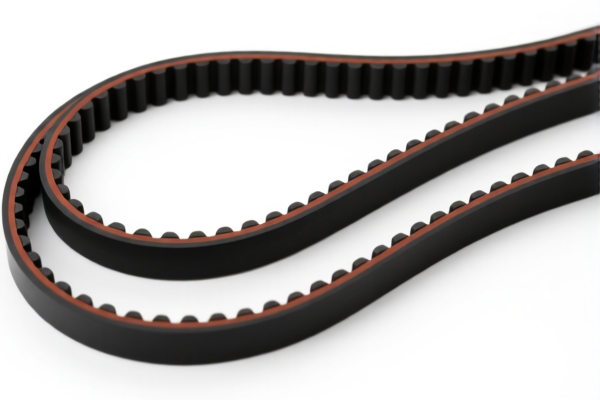
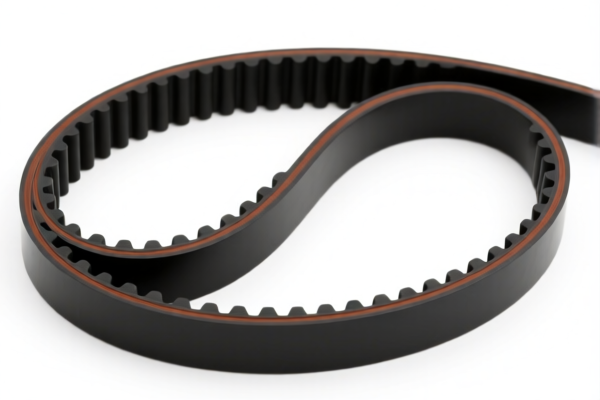
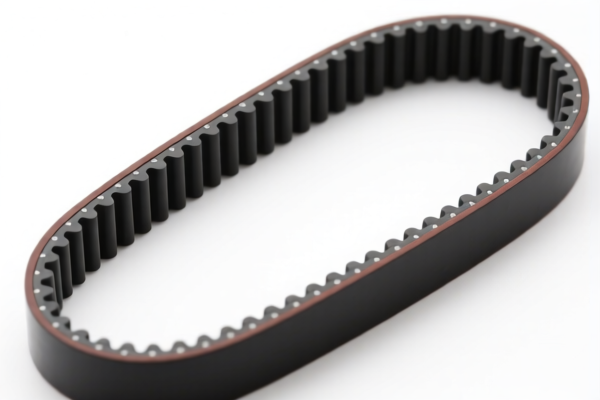
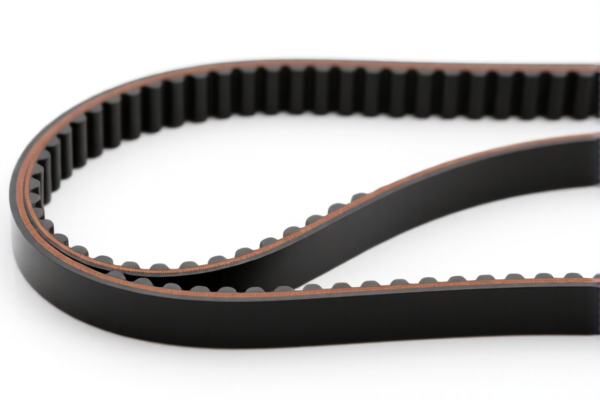
AI Analysis
🔗 Precision Synchronous Belts (Timing Belts)
🌐 HS Code Reference & Customs Clearance Guide | 2026 Latest Tariff Analysis | Professional Clearance Strategy
📌 I. Product Definition & Classification: What is a "Precision Synchronous Belt"?
Precision Synchronous Belts, also known as Timing Belts, are critical transmission components that combine the advantages of belts and gears. They transmit power through the meshing of teeth on the belt with grooves on pulleys, ensuring zero slip and precise synchronization.
In international trade, the classification of these belts depends heavily on their material composition and functional role. They are generally categorized into two main groups:
1. Mechanical Transmission Components (Chapter 84): Belts specifically designed as parts of machines or mechanical appliances, where the primary characteristic is their mechanical transmission function, regardless of material.
2. Material-Specific Categories (Chapters 39, 40, 59, 63): Belts classified primarily by their manufacturing material (Plastic, Rubber, Textile/Fiberglass, etc.), often treated as "parts of general use" or specific material goods rather than pure machine parts.
⚠️ Key Distinction Point:
- If the belt is primarily identified by its mechanical transmission function in industrial machinery → Chapter 84 (8483.90).
- If the belt is identified by its material (e.g., standard rubber drive belts, plastic belts) → Chapter 40 (Rubber), 39 (Plastic), or 59 (Textile).
- Note: "Precision" implies tight tolerances, often leaning towards Chapter 84 if sold as integral machine components, but customs often defaults to material-based codes if the specific "machine part" definition is not strictly met.
📦 II. HS Code Classification Details (2026 Latest Tariff Authority Comparison)
Based on the provided data, here are the 6 possible HS Codes for Precision Synchronous Belts, ranked by logical classification flow:
| HS Code | Product Description | Material/Logic Basis | Total Tax Rate | Applicable Scenario |
|---|---|---|---|---|
8483.90.10.50 |
Other Transmission Elements | Mechanical Function Focus. Classified under "parts of mechanical power transmission appliances." | 37.8% | Industrial machinery belts, high-precision transmission systems. |
8483.90.80.80 |
Parts of Shafts/Cranes/Pulleys | Mechanical Function Focus. Broader category for transmission components like pulleys and related assemblies. | 37.8% | General transmission components, pulley systems, industrial assemblies. |
4010.35.90.00 |
Synchronous Driven Belts, Rubber | Material: Rubber. Shape/Usage matches. Inferred as standard rubber-coated timing belts. | 38.3% | Most common industrial synchronous belts (rubber base with fiberglass/cord). |
4010.36.90.00 |
Other Synchronous Driven Belts, Rubber | Material: Rubber. "Other" category. High-performance or non-standard rubber timing belts. | 38.3% | Specialized rubber timing belts, heavy-duty applications. |
5910.00.10.20 |
Transmission Belts, Textile/Fiberglass | Material: Textile/Fiberglass. Inferred material focus. Belts with fabric or aramid fiber reinforcement. | 39.0% | Belts primarily made of textile materials or fiberglass cords, often for high-speed/heat resistance. |
3926.90.60.10 |
Other Plastic Products | Material: Plastic. High-strength plastic synchronous belts (e.g., Polyurethane/PU without rubber). | 39.2% | Pure plastic belts (PU/PVC), cleanroom applications, lightweight automation. |
🔍 Critical Reminder:
- Chapter 84 (8483) offers the lowest total tax rate (37.8%) but requires proving the item is a "part of a machine" rather than a generic "belt."
- Chapter 40 (Rubber) and Chapter 59 (Textile) are the most common for standard timing belts but carry slightly higher rates (38.3% - 39.0%).
- Chapter 39 (Plastic) has the highest rate (39.2%) and is strictly for plastic-only belts.
💰 III. 2026 Latest Tariff Rate Breakdown (Including Surcharges)
✅ Applicable Country: United States (US)
✅ Country of Origin: China (CN)
✅ Effective Date: 2025年11月10日起 (Including subsequent imports)
🎯 1. 8483.90.10.50 & 8483.90.80.80 —— Mechanical Transmission Parts
| Item | Content |
|---|---|
| Base Tariff | 2.8% (ad valorem) |
| Section 301 Surcharge | +25.0% (USITC Footnote 9903.88.01) |
| Section 122 Tariff | +10.0% (Specific to certain industrial goods) |
| Total Rate | 37.8% |
| Calculation | CIF Value × 37.8% |
| De Minimis Eligibility | ❌ No (Not eligible for Section 321 de minimis) |
| Legal Basis Path | Section 301: 8483.90.10.50 → USITC:9903.88.01 → Section 122: 10% |
📌 Explanation:
- The 2.8% base rate is the standard MFN (Most Favored Nation) rate for mechanical transmission parts.
- The 25% Section 301 tariff is the major surcharge on Chinese goods.
- The 10% Section 122 tariff is an additional penalty applied to specific industrial components, bringing the total to 37.8%.
- This is the most cost-effective classification if you can justify the "mechanical part" status.
🎯 2. 4010.35.90.00 & 4010.36.90.00 —— Rubber Synchronous Belts
| Item | Content |
|---|---|
| Base Tariff | 3.3% (ad valorem) |
| Section 301 Surcharge | +25.0% |
| Section 122 Tariff | +10.0% |
| Total Rate | 38.3% |
| Calculation | CIF Value × 38.3% |
| De Minimis Eligibility | ❌ No |
| Legal Basis Path | Section 301: 4010.35.90.00 → USITC:9903.88.01 → Section 122: 10% |
📌 Note:
- Rubber timing belts are very common. The base rate is slightly higher (3.3% vs 2.8%) than Chapter 84.
- Total tax is 38.3%, which is 0.5% higher than Chapter 84.
- Ensure the product description clearly states "Rubber Base" or "Polyurethane with Fabric Reinforcement" to avoid misclassification.
🎯 3. 5910.00.10.20 —— Textile/Fiberglass Belts
| Item | Content |
|---|---|
| Base Tariff | 4.0% (ad valorem) |
| Section 301 Surcharge | +25.0% |
| Section 122 Tariff | +10.0% |
| Total Rate | 39.0% |
| Calculation | CIF Value × 39.0% |
| De Minimis Eligibility | ❌ No |
| Legal Basis Path | Section 301: 5910.00.10.20 → USITC:9903.88.01 → Section 122: 10% |
📌 Note:
- These belts are made of textile materials or artificial fibers.
- Total tax is 39.0%.
- Common in high-speed printing or packaging machinery where heat resistance is key.
🎯 4. 3926.90.60.10 —— Plastic Synchronous Belts
| Item | Content |
|---|---|
| Base Tariff | 4.2% (ad valorem) |
| Section 301 Surcharge | +25.0% |
| Section 122 Tariff | +10.0% |
| Total Rate | 39.2% |
| Calculation | CIF Value × 39.2% |
| De Minimis Eligibility | ❌ No |
| Legal Basis Path | Section 301: 3926.90.60.10 → USITC:9903.88.01 → Section 122: 10% |
📌 Note:
- This is the highest tax rate (39.2%).
- Applies only to high-strength plastic belts (e.g., pure PU belts without rubber/textile base).
- Used in cleanrooms, food processing, or lightweight automation.
🛠️ IV. Customs Clearance Practical Advice (Real-World Pitfall Guide)
✅ 1. Required Documentation Checklist (Non-Negotiable)
| Document | Must Provide | Explanation |
|---|---|---|
| ✅ Product Specification Sheet | ✔️ | Must include: Material (Rubber/Plastic/Fiberglass), Tooth Profile (GT2, MXL, etc.), Width, Length, Tensile Strength. |
| ✅ Material Composition Report | ✔️ | Crucial for distinguishing between Chapter 40 (Rubber), 39 (Plastic), or 59 (Textile). |
| ✅ Product Photos (Labeled) | ✔️ | Clear view of teeth, cross-section (if possible), and packaging label showing model number. |
| ✅ Commercial Invoice | ✔️ | Must specify "Synchronous Belt" or "Timing Belt," NOT generic "Parts." |
| ✅ Certificate of Origin (CO) | ✔️ | If not China-origin, can apply for preferential rates. |
| ✅ Packaging List | ✔️ | Indicate if sold in sets with pulleys (which might change classification). |
✅ 2. Declaration Tips (Key Mantra)
🔥 “Material First, Function Second, Profile Specific, Tax Optimized!”
| Scenario | Correct Declaration | Wrong Practice |
|---|---|---|
| Standard Industrial Belt | 8483.90.10.50 (Mechanical Part) |
Misdeclare as 4010 (Rubber) → Pay 0.5% more |
| Pure Rubber Timing Belt | 4010.35.90.00 |
Misdeclare as 8483 → Risk of reclassification penalty |
| Pure Plastic (PU) Belt | 3926.90.60.10 |
Misdeclare as 4010 → High risk of audit/fine |
| Belt + Pulley Set | Declare as Assembly | Split declaration → Higher combined tax risk |
| Textile Reinforced Belt | 5910.00.10.20 |
Misdeclare as 3926 (Plastic) → Wrong HS Code |
📌 Strategy:
- If the belt is sold alone and is made of Rubber,8483.90.10.50is often preferred if you can prove it's a "part of a machine." However, if customs disputes,4010is the safer, standard fallback.
- Always declare the exact material. Customs officers frequently check for "Rubber vs. Plastic" misdeclarations.
✅ 3. Special Cases Handling
| Situation | Handling Advice |
|---|---|
| OEM Custom Belts | Provide design drawings showing tooth profile and material layers. Avoid generic descriptions. |
| Belts Sold with Pulleys | If sold as a kit, declare the primary function. If transmission is key, consider 8483. If parts are sold separately, declare individually. |
| High-Temperature Resistant Belts | If made of Aramid/Kevlar, ensure it falls under 5910 (Textile) not 3926. Provide material safety data sheet (MSDS). |
| Food-Grade Plastic Belts | Must declare 3926.90.60.10 and provide FDA compliance certificates. Do not use 8483 to avoid scrutiny. |
🌍 V. Global Market Clearance Comparison (2026 Latest)
| Country/Region | Recommended HS Code | Tariff (China Origin) | Certification Requirements | Notes |
|---|---|---|---|---|
| 🇺🇸 USA | 8483.90.10.50 |
37.8% (Lowest) | None specific | 8483 is best for tax. 4010 is 38.3%. |
| 🇨🇳 China | 8483.90.10.50 |
~10-14% | CCC (if applicable) | Standard import duties apply. |
| 🇪🇺 EU | 8483.90.10.50 |
~4-6% | CE Marking | Lower tariffs, but strict safety standards. |
| 🇬🇧 UK | 8483.90.10.50 |
~3-5% | UKCA Marking | Post-Brexit rules apply. |
| 🇯🇵 Japan | 8483.90.10.50 |
~5-8% | JIS Standards | No Section 301/122 surcharges. |
📌 Conclusion:
- USA is the most expensive market due to Section 301 and 122 tariffs.
- Chapter 84 (8483) is the optimal HS Code for USA imports if legally justifiable, saving 0.5%-1.4% compared to other chapters.
- EU/UK/Japan have much lower base tariffs, so the classification choice matters less for cost, but more for compliance.
📌 VI. Common Errors & Pitfalls (Lessons Learned)
❌ Error 1: Declaring a Rubber Belt as Plastic (3926)
👉 Consequence: Higher tax (39.2% vs 38.3%) + Risk of penalty for misdeclaration.
❌ Error 2: Declaring a Mechanical Part (8483) as a Generic Belt (4010)
👉 Consequence: Pay 0.5% extra tax unnecessarily.
👉 Fix: Provide proof that the belt is integral to a specific machine transmission system.
❌ Error 3: Ignoring Section 122 Tariff
👉 Consequence: All these HS codes carry a 10% Section 122 surcharge for Chinese goods. Do not assume it’s included in standard rates.
❌ Error 4: Vague Description "Timing Belt"
👉 Consequence: Customs may inspect manually, causing delays.
👉 Fix: Use precise terms: "Precision Synchronous Timing Belt, Rubber Base, Fiberglass Cord, 5mm Width, GT2 Profile."
✅ Correct Practice:
"Precision Synchronous Belt, Model GT2-5M-100, Rubber Material with Fiberglass Tensile Cord, for Industrial Conveyor System, Made in China"
🎯 VII. Conclusion: Precise Classification, Cost Optimization!
🎯 Remember the Mantra:
🔹 “Chapter 84 is Cheapest (37.8%), Rubber is Standard (38.3%), Plastic is Most Expensive (39.2%).”
🔹 “Section 301 is 25%, Section 122 is 10%, Base Rate varies. Total = Sum.”
🔹 “Declare Material Accurately! ‘Rubber’ is not ‘Plastic’!”
📌 Pro Tip:
If your synchronous belts are originating from Vietnam, Mexico, or Thailand, you may be eligible for IEEPA Exemptions or lower Section 301 rates.
Recommend Applying for an Advance Ruling with US Customs and Border Protection (CBP) to lock in the 8483.90.10.50 classification and save costs.
📣 Immediate Action:
📞 Contact a professional customs broker.
📄 Provide Material Composition Reports.
🚀 Apply for HS Code Advance Ruling to ensure smooth clearance and maximize profit margins!
✨ Professional Clearance Starts with Accurate Classification!
💼 Every Percentage Point of Tax Savings is Pure Profit!
Customer Reviews
About HS Code Classification
The Harmonized System (HS) is an internationally standardized nomenclature developed by the World Customs Organization (WCO) to classify traded products. Over 200 countries use the HS system as the basis for customs tariffs, trade statistics, and import/export regulations.
Each HS code follows a hierarchical structure:
- Chapter (2 digits) — Broad category of goods (e.g., Chapter 84: Machinery and Mechanical Appliances)
- Heading (4 digits) — More specific grouping within the chapter
- Subheading (6 digits) — Internationally standardized breakdown, used by all WCO member countries
- National subdivisions (8-10 digits) — Country-specific extensions for further classification, such as US HTSUS 10-digit codes
Correct HS code classification is essential for smooth customs clearance, accurate duty payment, and compliance with trade regulations. Misclassification can lead to customs delays, overpayment of duties, or penalties.
When importing from CN to US, the applicable tariff rates may include:
- Most-Favored-Nation (MFN) rate — The standard duty rate applied to WTO members
- General rate — Applied to countries without trade agreements
- Trade remedy duties — Additional tariffs such as Section 301 (anti-dumping), Section 232 (national security), or countervailing duties
The information provided on this page is for reference purposes only. For official classification, please consult with your local customs authority or a licensed customs broker.