Precision Synchronous Belts
CN → US| HS Code | Tariff Rate | Origin | Destination | Doc |
|---|---|---|---|---|
| 8483901050 | 37.8% | CN | US | Official Doc |
| 8483908080 | 37.8% | CN | US | Official Doc |
| 4010359000 | 38.3% | CN | US | Official Doc |
| 4010369000 | 38.3% | CN | US | Official Doc |
| 5910001020 | 39.0% | CN | US | Official Doc |
Product Images
AI Analysis
🛠️ Precision Synchronous Belts (Timings Belts)
🌐 HS Code Reference & Customs Clearance Guide | 2026 Latest Tariff Analysis | Professional Clearance Strategy
📌 I. Product Definition and Classification: What Exactly is a "Synchronous Belt"?
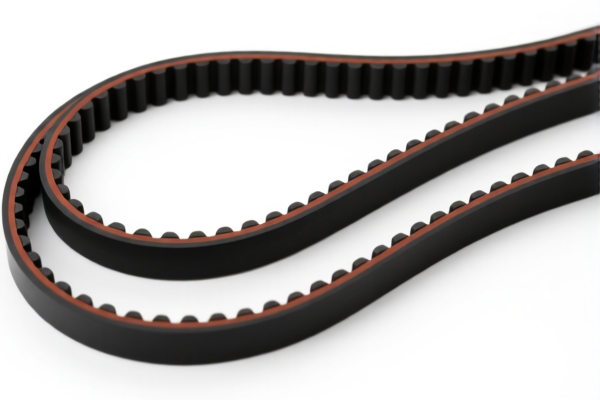
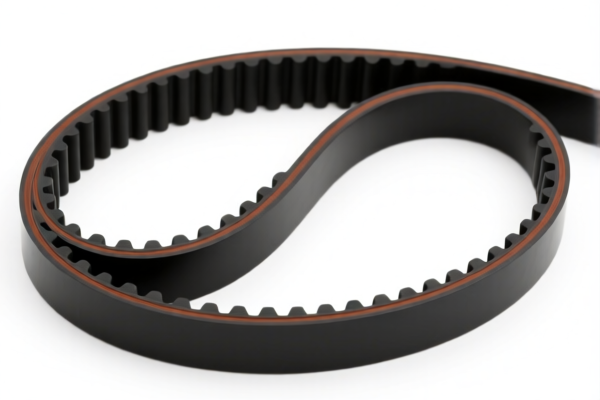
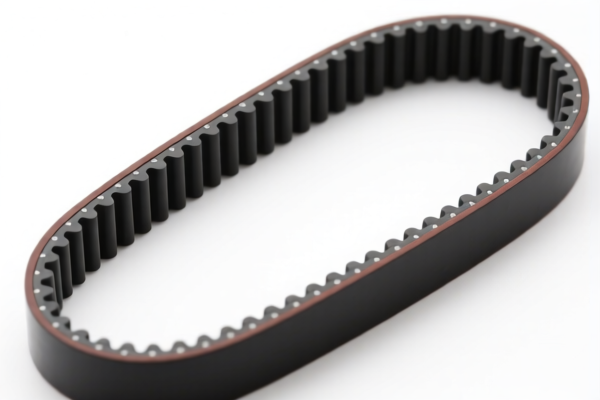
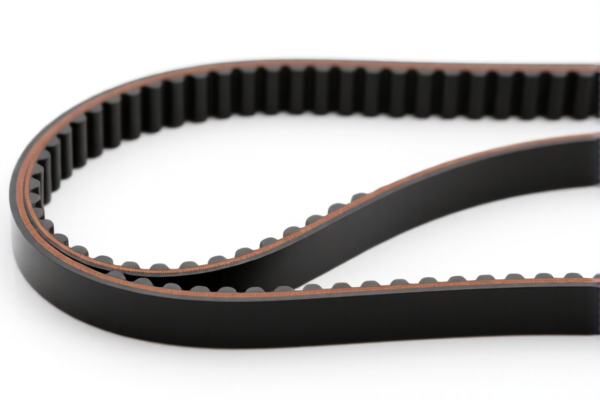
Synchronous belts (also known as timing belts or toothed belts) are flexible mechanical elements used to transmit power and motion between shafts without slip. They feature teeth on the inner surface that mesh with grooves in pulleys.
In international trade, they are categorized based on material composition and functional role:
1. Transmission Components (Mechanical Parts): Viewed as generic machine parts used in various industrial machinery.
2. Rubber/Polyurethane Belts: Viewed as specialized rubber/plastic products due to their elastomeric base.
3. Textile/Composite Belts: Viewed as fabricated textile products if heavily reinforced with fabrics or fibers.
⚠️ Critical Distinction Point:
- If classified as a machine part: Falls under Chapter 84 (Machinery).
- If classified as a rubber article: Falls under Chapter 40 (Rubber).
- If classified as a plastic article: Falls under Chapter 39 (Plastics).
- If classified as a textile article: Falls under Chapter 59 (Imprregnated Textiles).The choice of HS Code drastically affects the "Basic Tariff," which influences the total landed cost.
📦 II. HS Code Classification Details (2026 Latest Tariff Authority Comparison)
Based on the provided data, here are the 6 possible classifications for Precision Synchronous Belts, ranked by logical fit:
| HS Code | Product Description & Logic | Material Inference | Category Type |
|---|---|---|---|
8483.90.10.50 |
Other transmission components; specifically categorized under "Other." | Metal/Hard Plastic/Composite | Machine Part |
8483.90.80.80 |
Parts of transmission devices; "Other" (Catch-all for传动装置配件). | Metal/Hard Plastic/Composite | Machine Part |
4010.35.90.00 |
V-belts & flat belts, toothed/belted. Form matches synchronous belts. | Rubber | Rubber Product |
4010.36.90.00 |
Other V-belts & flat belts, toothed/belted. | Rubber | Rubber Product |
5910.00.10.20 |
Transmission belts, made of textile materials or artificial fibers. | Textile/Fabric | Textile Product |
3926.90.60.10 |
High-strength plastic synchronous belts. | Plastic (PU/PVC) | Plastic Product |
🔍 Key Insight:
- Chapter 84 treats the belt as a mechanical spare part.
- Chapter 40 treats the belt as a rubber article (most common for traditional industrial belts).
- Chapter 59 is rare, applicable only if the belt is primarily textile-reinforced (e.g., fabric-bonded).
- Chapter 39 applies to high-strength plastic variants (e.g., HTD/GT2 belts with plastic cores).
💰 III. 2026 Latest Tariff Rate Breakdown (Including Surtaxes & Policy Add-ons)
✅ Applicable Country: United States (US)
✅ Origin: China (CN)
✅ Effective Time: Post-2025 (Includes Section 301 & IEEPA add-ons)
All listed HS Codes share the same additional tariff structure due to their origin (China). However, the Base Tariff varies, leading to different total costs.
🎯 1. 8483.90.10.50 & 8483.90.80.80 —— Machine Transmission Parts
| Item | Content |
|---|---|
| Base Tariff | 2.8% (Ad Valorem) |
| Section 301 Surtax | +25.0% (USITC Footnote 9903.88.01) |
| IEEPA Surtax | +10.0% (Section 122 Provisions, China-specific) |
| Total Tariff Rate | 37.8% |
| Tax Calculation | CIF Value × 37.8% |
| De Minimis Eligibility | ❌ No (deny_de_minimis) |
| Legal Path | USITC:8483.90 → Section301:9903.88.01 → IEEPA:122 |
📌 Explanation:
- Classified as Machine Parts.
- Lower base tariff (2.8%) compared to rubber/plastic.
- Total 37.8% is the baseline for mechanical classification.
🎯 2. 4010.35.90.00 & 4010.36.90.00 —— Rubber Synchronous Belts
| Item | Content |
|---|---|
| Base Tariff | 3.3% (Ad Valorem) |
| Section 301 Surtax | +25.0% |
| IEEPA Surtax | +10.0% |
| Total Tariff Rate | 38.3% |
| Tax Calculation | CIF Value × 38.3% |
| De Minimis Eligibility | ❌ No |
| Legal Path | USITC:4010.35/36 → Section301 → IEEPA:122 |
📌 Explanation:
- Classified as Rubber Articles.
- Slightly higher base tariff (3.3%) than machine parts.
- Total 38.3% is $0.5\%$ higher than the machine part classification.
🎯 3. 5910.00.10.20 —— Textile-Reinforced Belts
| Item | Content |
|---|---|
| Base Tariff | 4.0% (Ad Valorem) |
| Section 301 Surtax | +25.0% |
| IEEPA Surtax | +10.0% |
| Total Tariff Rate | 39.0% |
| Tax Calculation | CIF Value × 39.0% |
| De Minimis Eligibility | ❌ No |
| Legal Path | USITC:5910.00 → Section301 → IEEPA:122 |
📌 Explanation:
- Classified as Textile Products.
- Higher base tariff (4.0%).
- Total 39.0% is the highest among textile-based classifications.
🎯 4. 3926.90.60.10 —— High-Strength Plastic Belts
| Item | Content |
|---|---|
| Base Tariff | 4.2% (Ad Valorem) |
| Section 301 Surtax | +25.0% |
| IEEPA Surtax | +10.0% |
| Total Tariff Rate | 39.2% |
| Tax Calculation | CIF Value × 39.2% |
| De Minimis Eligibility | ❌ No |
| Legal Path | USITC:3926.90 → Section301 → IEEPA:122 |
📌 Explanation:
- Classified as Plastic Articles.
- Highest base tariff (4.2%).
- Total 39.2% is the most expensive classification in this dataset.
🛠️ IV. Customs Clearance Practical Advice (Pitfall Avoidance Guide)
✅ 1. Documentation Checklist (Essential)
| Document | Required | Description |
|---|---|---|
| ✅ Product Specification Sheet | ✔️ | Must include: Material (Rubber/Plastic/Textile), Tooth Profile (GT2/HTD/T2.5/etc.), Width, Length, Teeth Count. |
| ✅ Material Composition Statement | ✔️ | Crucial for deciding between Ch 40, 39, or 59. Explicitly state % of Rubber vs. Fabric vs. Plastic. |
| ✅ Product Photos (Labeled) | ✔️ | Show the teeth profile, inner surface, and any markings (e.g., "VULCANIZED"). |
| ✅ Commercial Invoice | ✔️ | Clearly describe as "Synchronous Belt" or "Timing Belt." Avoid vague terms like "Machine Part" if it misleads. |
| ✅ Packing List | ✔️ | Ensure weight and dimensions match the invoice. |
✅ 2. Classification Strategy (Key Rules)
🔥 "Material Dictates Code, Not Just Function!"
| Scenario | Correct HS Code Group | Risk if Incorrect |
|---|---|---|
| Standard Industrial Belt (Rubber + Fabric Cord) | 4010.35/36 (Rubber) |
Misclassifying as 8483 (Machine Part) may trigger scrutiny over material composition. |
| Plastic Core Belt (e.g., High-Temp PU) | 3926.90 (Plastic) |
Must prove plastic is the primary structural material. |
| Purely Mechanical Spare (Metal/Composite) | 8483.90 (Machine Part) |
Use only if the belt is not primarily rubber/plastic. |
| Textile-Heavy Belt | 5910.00 (Textile) |
Rare. Only if the belt is essentially woven fabric with rubber coating. |
📌 Note:
- The difference between 37.8% (8483) and 39.2% (3926) is 1.4%. For large shipments, this is significant.
- Always prioritize the actual material composition over the "function" to ensure compliance. Misclassification can lead to penalties.
✅ 3. Special Considerations
| Situation | Handling Advice |
|---|---|
| Mixed Materials | If the belt is 70% rubber, 30% fabric → Classify as Rubber (4010). |
| High-Performance Belts | If made of Aramid (Kevlar) reinforced plastic → Consider 3926 or 8483 based on dominant character. |
| Custom/Non-Standard | Provide detailed drawings. CBP (Customs and Border Protection) may require a Pre-Ruling if the classification is ambiguous. |
| Origin Labeling | Must clearly state "Made in China" to ensure Section 301 and IEEPA taxes are correctly applied (and not erroneously waived). |
🌍 V. Global Market Comparison (2026 Snapshot)
| Country/Region | Recommended HS Code | Base Tariff | Total Tariff (China Origin) | Certification |
|---|---|---|---|---|
| 🇺🇸 USA | 8483.90 / 4010.35 |
2.8% - 4.2% | 37.8% - 39.2% | None specific, but accurate material desc. req. |
| 🇨🇳 China | 4010.35 (Typical) |
~5-10% | ~30-35% (incl. VAT) | CCC (if part of machinery) |
| 🇪🇺 EU | 4010.35 (Typical) |
0% (often) | ~10-15% (incl. VAT) | CE Mark (if part of machine) |
| 🇯🇵 Japan | 4010.35 (Typical) |
0-5% | ~5-10% | JIS Standard |
📌 Conclusion:
- The USA is the most expensive market due to 35%+ in additional tariffs.
- EU and Japan are significantly cheaper for synchronous belts, provided they are not deemed "dual-use" or sensitive technology.
📌 VI. Common Errors & Pitfalls (Lessons Learned)
❌ Error 1: Classifying all belts as 8483 (Machine Parts) regardless of material.
👉 Consequence: Customs may reject the declaration if material analysis shows >50% rubber, leading to reclassification to 4010 and back-taxes + interest.
❌ Error 2: Omitting "Rubber" or "Plastic" in the product description.
👉 Consequence: Ambiguity leads to highest duty assessment or detention for inspection.
❌ Error 3: Ignoring the IEEPA Section 122 surtax.
👉 Consequence: Assuming only Section 301 (25%) applies. The 10% IEEPA is a separate, mandatory levy on many Chinese goods, bringing the total to 35%+.
✅ Correct Practice:
"Synchronous Belt, Rubber Core, Fabric Reinforced, Toothed Profile, Model XYZ, 100% Made in China"
🎯 VII. Conclusion: Precision Classification Saves Money!
🎯 Remember the Golden Rule:
🔹 "Material First, Function Second!"
🔹 "Rubber = 38.3%, Plastic = 39.2%, Machine Part = 37.8%."
🔹 "A 1.4% difference can save thousands on bulk shipments."
📌 Tips:
- If your synchronized belts are high-volume, consider negotiating with suppliers to optimize the material composition (e.g., maximizing mechanical components vs. rubber) to fall under 8483.90 if feasible and compliant.
- Always apply for a Pre-Ruling (ISD) with US CBP if the material blend is complex.
📣 Immediate Action:
📞 Consult a Customs Broker with material spec sheets.
🚀 Declare accurately to avoid 39.2% maximums when 37.8% might apply!
✨ Professional Clearance Starts with Precise Classification!
💼 Every percentage point counts in cross-border trade!
Customer Reviews
About HS Code Classification
The Harmonized System (HS) is an internationally standardized nomenclature developed by the World Customs Organization (WCO) to classify traded products. Over 200 countries use the HS system as the basis for customs tariffs, trade statistics, and import/export regulations.
Each HS code follows a hierarchical structure:
- Chapter (2 digits) — Broad category of goods (e.g., Chapter 84: Machinery and Mechanical Appliances)
- Heading (4 digits) — More specific grouping within the chapter
- Subheading (6 digits) — Internationally standardized breakdown, used by all WCO member countries
- National subdivisions (8-10 digits) — Country-specific extensions for further classification, such as US HTSUS 10-digit codes
Correct HS code classification is essential for smooth customs clearance, accurate duty payment, and compliance with trade regulations. Misclassification can lead to customs delays, overpayment of duties, or penalties.
When importing from CN to US, the applicable tariff rates may include:
- Most-Favored-Nation (MFN) rate — The standard duty rate applied to WTO members
- General rate — Applied to countries without trade agreements
- Trade remedy duties — Additional tariffs such as Section 301 (anti-dumping), Section 232 (national security), or countervailing duties
The information provided on this page is for reference purposes only. For official classification, please consult with your local customs authority or a licensed customs broker.