Prefabricated Wooden Door
CN → US| HS Code | Tariff Rate | Origin | Destination | Doc |
|---|---|---|---|---|
| 4418298060 | 39.8% | CN | US | Official Doc |
| 9403608093 | 35.0% | CN | US | Official Doc |
| 4418298030 | 39.8% | CN | US | Official Doc |
| 4418298030 | 39.8% | CN | US | Official Doc |
| 4418298060 | 39.8% | CN | US | Official Doc |
Product Images
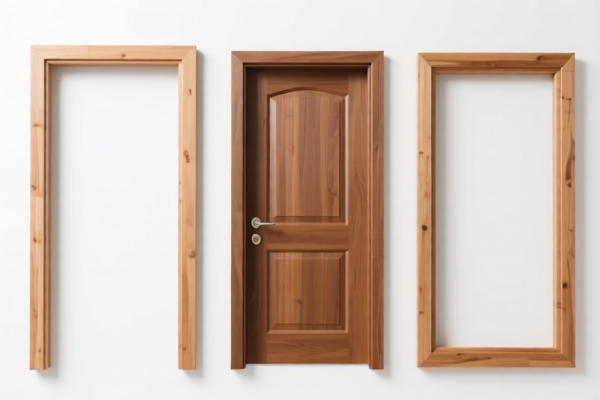
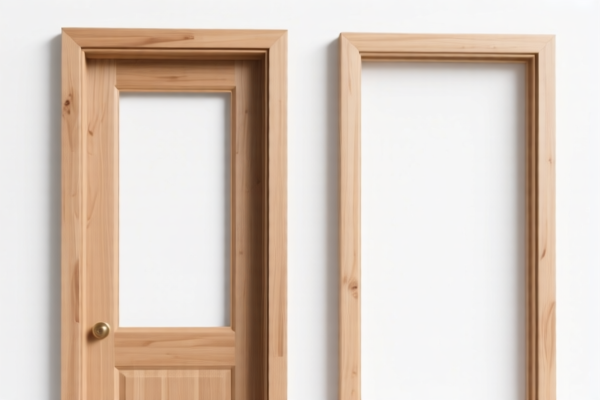
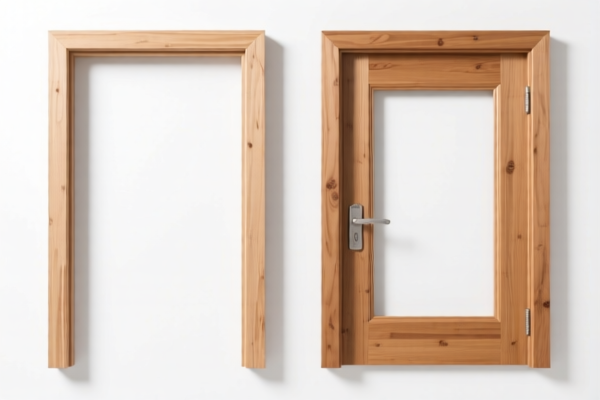
AI Analysis
🚪 Prefabricated Wooden Door (预制木门)
🌐 HS Code Reference & Customs Clearance Guide | 2026 Latest Tariff Analysis | Professional Clearance Strategy
📌 I. Product Definition & Classification: Do You Really Understand "Prefabricated Wooden Doors"?
A Prefabricated Wooden Door is a pre-manufactured door component made primarily of wood or wood-based materials, designed for installation in residential, commercial, or industrial buildings. In international trade, the classification hinges on two key factors: 1. Material: Must be wood (solid, engineered, or veneered). 2. Form/Function: Classified under "Doors, windows, frames, and frames thereof" (Chapter 44) rather than "Furniture" (Chapter 94), unless specific exclusions apply.
⚠️ Key Distinction Point:
- If the door is considered a building component (part of the structure/fitting) → Chapter 44 (HS 4418)
- If the door is considered freestanding furniture (e.g., a cabinet door not attached to a cabinet, or a decorative standalone unit) → Chapter 94 (HS 9403)
- Most "Prefabricated Wooden Doors" for installation in buildings fall under Chapter 44.
📦 II. HS Code Classification Details (2026 Latest Tariff Authoritative Comparison)
Based on the provided data, three potential HS Codes are identified. Note that 4418.29.80.30 appears twice with identical tax details but different summaries.
| HS Code | Product Description | Summary of Matching Criteria | Total Tax Rate |
|---|---|---|---|
4418.29.80.60 |
Other wooden doors (not panel doors) | Prefabricated wooden door, material "wood", form "door/frame/sill", falls under "Other" category. | 39.8% |
9403.60.80.93 |
Other wooden furniture | "Wood" material matches; "Prefabricated door" considered furniture/building component excluded from tables/fences, fits "Other" category. | 35.0% |
4418.29.80.30 |
Wooden doors (panel doors or other) | "Wood" matches material; "Door" matches form/usage; "Prefabricated" fits planar door/woodwork classification logic. | 39.8% |
4418.29.80.30 |
Wooden doors (Panel Doors) | 'Wooden' matches material; 'Door' matches form; fully complies with classification definition for wooden panel doors. | 39.8% |
4418.29.80.60 |
Other wooden doors | Prefabricated wooden door, material and usage match requirements for wooden doors other than panel doors. | 39.8% |
🔍 Key Observation:
- Two main HS Code families:4418...(Woodwork/Building Components) and9403...(Furniture). - Tax Difference:9403.60.80.93has a lower total tax (35.0%) compared to4418...codes (39.8%). - Reason for Difference:9403has 0% Base Duty, while4418has 4.8% Base Duty. Both share the same additional tariffs.
💰 III. 2026 Latest Tariff Rate Breakdown (Including Additional Taxes & Policy Surcharges)
✅ Applicable Country: United States (US)
✅ Origin: China (CN)
✅ Effective Date: 2025-11-10 onwards (for subsequent imports)
🎯 1. 4418.29.80.30 & 4418.29.80.60 —— Wooden Doors (Building Components)
| Item | Details |
|---|---|
| Base Duty Rate | 4.8% (Ad Valorem) |
| USITC Additional Duty | +25.0% (Under Section 301 Tariffs) |
| IEEPA Additional Duty | +10.0% (Targeting China/HK products, effective from 2025-11-10) |
| Total Tax Rate | 39.8% |
| Tax Calculation | CIF Value × 39.8% |
| De Minimis Exemption | ❌ Not Eligible (deny_de_minimis) |
| Legal Basis Path | IEEPA:9903.01.25 → IEEPA:9903.01.24 → USITC:4418.29.80.30/60 → FOOTNOTE:9903.88.01 |
📌 Explanation:
- The 25% USITC duty is imposed under US Trade Law Section 301 against Chinese goods. - The 10% IEEPA duty is an additional surcharge under the International Emergency Economic Powers Act specifically targeting Chinese-origin products. - Base Duty (4.8%) is standard for woodwork products under Chapter 44. - Total 39.8% is a high tariff burden, requiring careful cost planning.
🎯 2. 9403.60.80.93 —— Other Wooden Furniture (Alternative Classification)
| Item | Details |
|---|---|
| Base Duty Rate | 0.0% (Ad Valorem) |
| USITC Additional Duty | +25.0% (Under Section 301 Tariffs) |
| IEEPA Additional Duty | +10.0% (Targeting China/HK products, effective from 2025-11-10) |
| Total Tax Rate | 35.0% |
| Tax Calculation | CIF Value × 35.0% |
| De Minimis Exemption | ❌ Not Eligible (deny_de_minimis) |
| Legal Basis Path | IEEPA:9903.01.25 → IEEPA:9903.01.24 → USITC:9403.60.80.93 → FOOTNOTE:9903.88.01 |
📌 Note:
- If the door is classified as furniture rather than a building component, the base duty drops to 0%. - However, the additional tariffs (25% + 10%) remain unchanged. - Savings: 4.8% lower than the Chapter 44 classification. - Risk: Misclassification risk if the door is strictly a building fixture. Must justify "furniture" status (e.g., standalone, movable, not integrated into structure).
🛠️ IV. Customs Clearance Practical Advice (Real-World Pitfall Guide)
✅ 1. Preparation Checklist (Mandatory Documents)
| Document | Required | Notes |
|---|---|---|
| ✅ Product Specification Sheet | ✔️ | Material composition (solid wood vs. engineered), dimensions, finish type |
| ✅ Photos (Including Label) | ✔️ | Clear view of door, frame, hardware, and any brand/model labels |
| ✅ Commercial Invoice | ✔️ | Accurate description: "Prefabricated Wooden Door, Material: X, Usage: Residential/Commercial" |
| ✅ Packing List | ✔️ | Separate hardware (hinges, handles) if shipped separately, but note if included |
| ✅ Material Declaration | ✔️ | Specify wood type (e.g., Oak, Pine, MDF) and treatment (e.g., untreated, painted) |
| ✅ Country of Origin Certificate | ✔️ | Essential for tariff determination and IEEPA/301 compliance |
✅ 2. Classification Strategy (Key Tips)
🔥 "Material Matters, Form Defines, Furniture vs. Fixture, Choose Wisely!"
| Scenario | Recommended HS Code | Reason |
|---|---|---|
| Standard Installed Door (with frame, for building) | 4418.29.80.30 or 4418.29.80.60 |
Classified as woodwork/building component under Chapter 44 |
| Standalone Decorative Door (not for installation) | 9403.60.80.93 |
Classified as furniture, potentially saving 4.8% base duty |
| Door with Integrated Hardware | 4418... or 9403... |
Hardware value is usually minimal; don't separate unless significant |
| Engineered Wood Door (MDF/Particle Board) | 4418.29.80.30/60 |
Still considered "wood" product under Chapter 44 |
⚠️ Warning:
- Do NOT split the shipment into "door panel" + "frame" + "hardware" if they are sold as a single unit. This may lead to higher combined duties or rejection. - Misclassification Risk: Declaring a building door as "furniture" (9403) may trigger customs audits. Provide evidence of standalone nature if using this code.
✅ 3. Special Cases
| Case | Handling Advice |
|---|---|
| OEM Custom Doors | Provide customer PO and design specs to confirm "prefabricated" status |
| Doors with Glass Panels | Still classified under 4418 if wood is the primary material (>50% by weight) |
| Treated/Anti-Fungal Doors | Declare treatment type; may require phytosanitary certificate for wood origin |
| Sample vs. Commercial Shipment | Samples still subject to duties if value exceeds de minimis threshold (unlikely due to deny_de_minimis) |
🌍 V. Global Market Comparison (2026 Latest)
| Country/Region | Recommended HS Code | Total Tax Rate (China Origin) | Notes |
|---|---|---|---|
| 🇺🇸 USA | 4418.29.80.30 / 9403.60.80.93 |
39.8% / 35.0% | High additional tariffs (301 + IEEPA) |
| 🇨🇳 China | 4418.29.80.30 |
~10-15% | Import duty + VAT; no Section 301 |
| 🇪🇺 EU | 4418.29.80.30 |
~5-10% | No additional punitive tariffs; CE/FSC may apply |
| 🇬🇧 UK | 4418.29.80.30 |
~5-10% | Post-Brexit rules; UKCA marking may be required |
| 🇦🇺 Australia | 4418.29.80.30 |
~5% | Low base duty; no major punitive tariffs |
📌 Conclusion:
- USA is the most challenging market due to 301 and IEEPA tariffs. - Cost Impact: A $10,000 shipment faces $3,500–$3,980 in duties alone. - Strategy: Consider supplier diversification (Vietnam, Thailand, Mexico) for IEEPA exemption if possible.
📌 VI. Common Mistakes & Pitfall Avoidance (Lessons Learned)
❌ Mistake 1: Misclassifying as "Furniture" (9403) without justification
👉 Consequence: Customs audit, potential reclassification to 4418, back taxes + penalties.
❌ Mistake 2: Ignoring IEEPA 10% Surcharge
👉 Consequence: Unexpected cost increase; budget miscalculation.
❌ Mistake 3: Declaring "Wood Door" without material specification
👉 Consequence: Delayed clearance; customs request additional documentation.
❌ Mistake 4: Splitting "Door" and "Frame" for lower duty
👉 Consequence: Customs may view as single article; higher combined duty or rejection.
✅ Correct Approach:
"Prefabricated Wooden Door, Solid Oak, 36"x80", with Frame, for Residential Use, Model XYZ, FCC/RoHS N/A, Origin: China"
🎯 VII. Conclusion: Precision Classification, Cost Efficiency!
🎯 Remember:
🔹 "4418 for Building Doors, 9403 for Furniture, 39.8% vs 35.0%, Justify Your Choice!"
🔹 "Section 301 + IEEPA = 35-40%, Plan Ahead!"
📌 Pro Tip:
- If your product qualifies as furniture, use 9403.60.80.93 to save 4.8% in base duty.
- For building components, stick to 4418.29.80.30 or 4418.29.80.60.
- Consider Origin Diversification: Products from Vietnam, Thailand, or Mexico may be exempt from IEEPA 10% and/or 301 25% tariffs.
📣 Immediate Action:
📞 Contact a licensed customs broker + Provide product photos + Apply for Pre-Ruling if unsure
🚀 Clearance Smooth, Profits Protected, Global Success!
✨ Professional Clearance Starts with Accurate Classification!
💼 Every Percent Saved is Pure Profit!
Customer Reviews
About HS Code Classification
The Harmonized System (HS) is an internationally standardized nomenclature developed by the World Customs Organization (WCO) to classify traded products. Over 200 countries use the HS system as the basis for customs tariffs, trade statistics, and import/export regulations.
Each HS code follows a hierarchical structure:
- Chapter (2 digits) — Broad category of goods (e.g., Chapter 84: Machinery and Mechanical Appliances)
- Heading (4 digits) — More specific grouping within the chapter
- Subheading (6 digits) — Internationally standardized breakdown, used by all WCO member countries
- National subdivisions (8-10 digits) — Country-specific extensions for further classification, such as US HTSUS 10-digit codes
Correct HS code classification is essential for smooth customs clearance, accurate duty payment, and compliance with trade regulations. Misclassification can lead to customs delays, overpayment of duties, or penalties.
When importing from CN to US, the applicable tariff rates may include:
- Most-Favored-Nation (MFN) rate — The standard duty rate applied to WTO members
- General rate — Applied to countries without trade agreements
- Trade remedy duties — Additional tariffs such as Section 301 (anti-dumping), Section 232 (national security), or countervailing duties
The information provided on this page is for reference purposes only. For official classification, please consult with your local customs authority or a licensed customs broker.