Prefabricated buildings
CN → US| HS Code | Tariff Rate | Origin | Destination | Doc |
|---|---|---|---|---|
| 6810910000 | 35.0% | CN | US | Official Doc |
| 9406900190 | 87.9% | CN | US | Official Doc |
| 6810990080 | 35.0% | CN | US | Official Doc |
Product Images
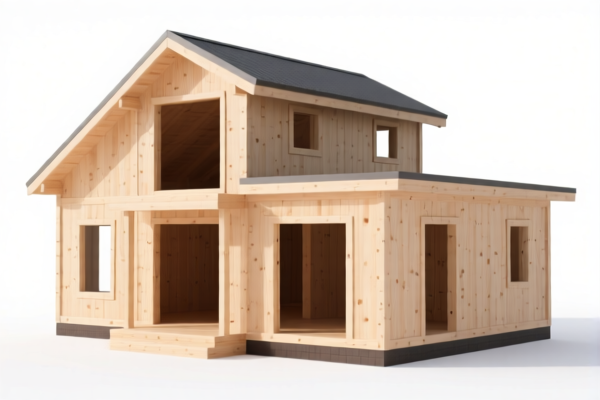
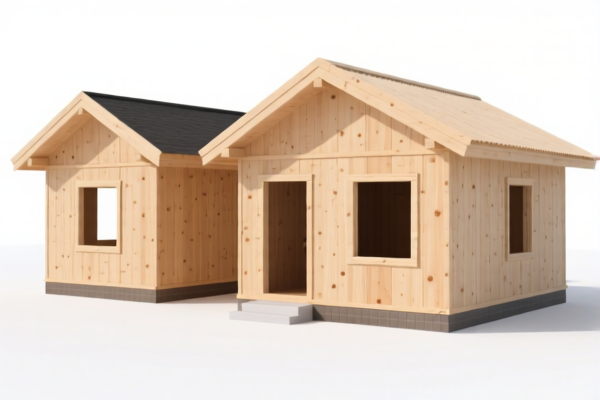
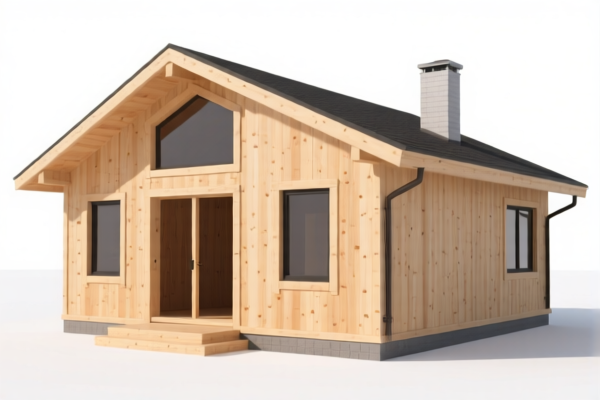
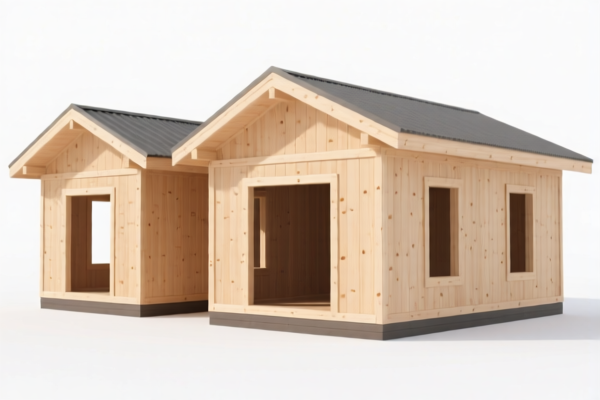
AI Analysis
🏗️ Prefabricated Buildings (预制建筑)
🌐 HS Code Reference & Customs Clearance Guide | 2026 Latest Tariff Breakdown | Professional Import Strategy
📌 One, Product Definition & Classification: Do You Really Understand “Prefabricated Buildings”?
Prefabricated buildings are modular, factory-manufactured structures designed for rapid on-site assembly. Commonly used in temporary housing, modular offices, medical facilities, and industrial sheds, these units are typically made from concrete, cement, or artificial stone, and are engineered for durability, efficiency, and ease of transport.
In international trade, the classification hinges on material composition and functional use. While the name “prefabricated building” may seem generic, its HS code depends on whether it’s made from concrete/cement, other materials (e.g., steel, wood, plastic), or falls under a general category.
⚠️ Key Differentiation Points: - If made from concrete, cement, or artificial stone → 6810.91.00.00 or 6810.99.00.80 - If made from metal, wood, or plastic, but not falling into specific subcategories (e.g., greenhouses, animal shelters) → 9406.90.01.90 - If not clearly defined, but clearly a structural building component → 6810.99.00.80 as a residual category
📦 Two, HS Code Classification Details (2026 Official Tariff Matrix)
| HS Code | Product Description | Applicable Use Case | Material Inference |
|---|---|---|---|
6810.91.00.00 |
Building or civil engineering prefabricated structural components, made of cement, concrete, or artificial stone | Industrial sheds, modular homes, temporary classrooms, warehouse units | ✅ Cement/concrete/artificial stone |
9406.90.01.90 |
Other prefabricated buildings (not metal greenhouses, metal buildings, or plastic animal shelters) | Modular offices, temporary clinics, storage units, non-metallic prefab structures | ❌ Not metal/plastic/wood-specific; general category |
6810.99.00.80 |
Other prefabricated structural components made of cement, concrete, or artificial stone | Custom concrete panels, foundation units, wall systems, non-specific stone-based structures | ✅ Concrete/cement/artificial stone, not covered by specific subheadings |
🔍 Critical Insight:
- “Prefabricated building” is not a standalone HS code — it must be matched to material and function; - No explicit mention of material in the name → must infer from usage and common industry practice; - 6810.99.00.80 is a residual category for non-specific cement/concrete products.
💰 Three, 2026 Latest Tariff Breakdown (Including附加 Taxes & Legal Triggers)
✅ Target Country: United States (US)
✅ Origin: China (CN)
✅ Effective Date: November 10, 2025 (and ongoing)
🎯 1. 6810.91.00.00 — Prefabricated Structural Components (Cement/Concrete)
| Item | Detail |
|---|---|
| Base Tariff | 0% (ad valorem) |
| USITC Section 301 Tariff | +25% (from USITC Footnote 9903.88.01) |
| IEEPA Section 122 Tariff | +10% (for China-origin goods under International Emergency Economic Powers Act) |
| Total Effective Tariff | 35.0% |
| Tax Calculation | CIF Value × 35.0% |
| De Minimis Exemption? | ❌ No (denied under U.S. de minimis rules) |
| Legal Basis Path | IEEPA:9903.01.25 → IEEPA:9903.01.24 → USITC:6810.91.00.00 → FOOTNOTE:9903.88.01 |
📌 Explanation: - 25% USITC tariff: Imposed under Section 301 of the U.S. Trade Act due to unfair trade practices; - 10% IEEPA tariff: Enforced under International Emergency Economic Powers Act (IEEPA), targeting China-origin goods; - Total: 35% — moderate but significant for concrete-based prefab units.
🎯 2. 9406.90.01.90 — Other Prefabricated Buildings (General Category)
| Item | Detail |
|---|---|
| Base Tariff | 2.9% (ad valorem) |
| USITC Section 301 Tariff | +25.0% |
| IEEPA Section 122 Tariff | +10.0% |
| Steel/Aluminum/Copper Additional Tariff | +50.0% (if material contains steel, aluminum, or copper) |
| Total Effective Tariff | 87.9% |
| Tax Calculation | CIF Value × 87.9% |
| De Minimis Exemption? | ❌ No |
| Legal Basis Path | IEEPA:9901.25 → IEEPA:9903.01.24 → USITC:9406.90.01.90 → FOOTNOTE:9903.88.01 + ADD:50% for metal content |
📌 Critical Warning: - Even if the building is not metal, if it contains any steel, aluminum, or copper components (e.g., fasteners, frames, reinforcement bars), the +50% metal tariff applies; - This is a “metal content trap” — even small metal parts can trigger the 50% surcharge; - Total: 87.9% — extremely high, one of the highest tariffs in the prefabricated construction sector.
🎯 3. 6810.99.00.80 — Other Prefabricated Structural Components (Cement/Concrete)
| Item | Detail |
|---|---|
| Base Tariff | 0% |
| USITC Section 301 Tariff | +25.0% |
| IEEPA Section 122 Tariff | +10.0% |
| Total Effective Tariff | 35.0% |
| Tax Calculation | CIF Value × 35.0% |
| De Minimis Exemption? | ❌ No |
| Legal Basis Path | IEEPA:9903.01.25 → IEEPA:9903.01.24 → USITC:6810.99.00.80 → FOOTNOTE:9903.88.01 |
📌 Explanation: - This code applies when the product is clearly made of cement, concrete, or artificial stone, but not covered by a more specific subheading (e.g., 6810.91.00.00); - Same 35% total tariff as
6810.91.00.00; - Best choice for non-specific concrete prefab parts.
🛠️ Four, Customs Clearance Best Practices (Pro Tips to Avoid Penalties)
✅ 1. Essential Documentation (Must-Have Checklist)
| Document | Required? | Purpose |
|---|---|---|
| ✅ Product Specification Sheet | ✔️ | Clearly states material (concrete, cement, etc.) |
| ✅ Material Composition Report | ✔️ | Prove no metal content (if claiming 35% tariff) |
| ✅ High-Resolution Product Photos | ✔️ | Show structure, joints, and material texture |
| ✅ Third-Party Test Report | ✔️ | ASTM, ISO, or CE certification (if applicable) |
| ✅ Commercial Invoice | ✔️ | Must state “Prefabricated Building, Concrete Structural Component” |
| ✅ Certificate of Origin (CO) | ✔️ | Required for tariff eligibility |
| ✅ Packing List | ✔️ | Detail unit count, weight, and internal components |
✅ 2.申报技巧 (Key Rules of Thumb)
🔥 “Material First, Name Second, Metal Avoid, Tax Drop!”
| Scenario | Correct HS Code | Wrong Code | Risk |
|---|---|---|---|
| Concrete wall panel, no metal | 6810.91.00.00 or 6810.99.00.80 |
9406.90.01.90 |
Tax jumps from 35% to 87.9% |
| Metal-framed prefab with steel beams | 9406.90.01.90 + +50% metal tariff |
6810.99.00.80 |
Severe under-declaration → penalties |
| Unknown material, but clearly not metal | 9406.90.01.90 |
6810.91.00.00 |
Incorrect material basis → audit risk |
✅ 3. Special Cases Handling
| Situation | Recommended Action |
|---|---|
| Mixed material (concrete + steel beams) | Declare as 9406.90.01.90 and apply +50% metal tariff — cannot avoid |
| Custom-designed concrete unit | Use 6810.99.00.80 with material proof — best for residual classification |
| Used or recycled prefab building | Still subject to same tariffs — no exemption for used goods |
| Export to non-U.S. markets | Consider Vietnam, Mexico, Thailand, or India for lower tariffs (if origin changes) |
🌍 Five, Global Market Customs Comparison (2026)
| Country/Region | Recommended HS Code | Tariff Rate | Certification Required | Notes |
|---|---|---|---|---|
| 🇺🇸 United States | 6810.91.00.00 / 6810.99.00.80 |
35.0% | FCC, CE, RoHS (if electronics) | +50% if metal content |
| 🇨🇳 China | 6810.99.00.80 |
5% | CCC, ISO | No additional tariffs |
| 🇪🇺 European Union | 6810.99.00.80 |
0% (if CE compliant) | CE, EAC | No 301/IEEPA tariffs |
| 🇦🇺 Australia | 6810.99.00.80 |
5% | RCM | No附加 taxes |
| 🇯🇵 Japan | 6810.99.00.80 |
0% | PSE | No附加 taxes |
📌 Takeaway:
- U.S. is the only market with 35%–87.9% tariffs on prefabs; - China-origin goods face the highest risk; - Shifting origin to Vietnam/Mexico may reduce tariffs.
📌 Six, Common Mistakes & Pitfalls (Avoid These!)
❌ Mistake 1: Declaring a concrete prefab as 9406.90.01.90
👉 Result: 87.9% tariff instead of 35% — massive overpayment
❌ Mistake 2: Failing to prove no metal content
👉 Result: +50% metal tariff applied → tax explosion
❌ Mistake 3: Using vague name like “prefab building” without material detail
👉 Result: Customs may default to metal-based classification → higher tariff
❌ Mistake 4: Not including material test reports
👉 Result: Audit risk, delays, or rejection
✅ Correct Declaration Example:
“Prefabricated Concrete Wall Panel, 2m x 3m, Reinforced Concrete, No Metal Frame, for Industrial Shed, CE & ISO Certified”
🎯 Seven, Conclusion: Precision Matters — Your Profit Depends on It!
🎯 Remember the Mantra:
🔹 “Material First, Metal Avoid, Concrete = 35%, Metal = 87.9%”
🔹 “One wrong code, one extra 50% — that’s your profit gone!”
📌 Pro Tip:
If your product contains any steel, aluminum, or copper, even in fasteners or reinforcement bars, you cannot avoid the +50% metal tariff under
9406.90.01.90.
✅ Best strategy: Prove pure concrete/cement/artificial stone with test reports.
📣 Act Now:
📞 Contact a licensed customs broker + provide product photos + material test report
🚀 Apply for Advance Ruling (Pre-Approval) on HS Code classification
🌐 Consider relocating production to Vietnam/Mexico to bypass U.S. tariffs
✨ Smart Customs, Smart Profit!
💼 Your next shipment starts with the right HS code — get it right the first time!
Customer Reviews
About HS Code Classification
The Harmonized System (HS) is an internationally standardized nomenclature developed by the World Customs Organization (WCO) to classify traded products. Over 200 countries use the HS system as the basis for customs tariffs, trade statistics, and import/export regulations.
Each HS code follows a hierarchical structure:
- Chapter (2 digits) — Broad category of goods (e.g., Chapter 84: Machinery and Mechanical Appliances)
- Heading (4 digits) — More specific grouping within the chapter
- Subheading (6 digits) — Internationally standardized breakdown, used by all WCO member countries
- National subdivisions (8-10 digits) — Country-specific extensions for further classification, such as US HTSUS 10-digit codes
Correct HS code classification is essential for smooth customs clearance, accurate duty payment, and compliance with trade regulations. Misclassification can lead to customs delays, overpayment of duties, or penalties.
When importing from CN to US, the applicable tariff rates may include:
- Most-Favored-Nation (MFN) rate — The standard duty rate applied to WTO members
- General rate — Applied to countries without trade agreements
- Trade remedy duties — Additional tariffs such as Section 301 (anti-dumping), Section 232 (national security), or countervailing duties
The information provided on this page is for reference purposes only. For official classification, please consult with your local customs authority or a licensed customs broker.