Premium Bovine Full Grain Lining Leather
CN → US| HS Code | Tariff Rate | Origin | Destination | Doc |
|---|---|---|---|---|
| 4113903000 | 38.3% | CN | US | Official Doc |
| 4115100000 | 35.0% | CN | US | Official Doc |
| 4113906000 | 36.6% | CN | US | Official Doc |
| 4107191040 | 35.0% | CN | US | Official Doc |
| 4107111040 | 35.0% | CN | US | Official Doc |
Product Images
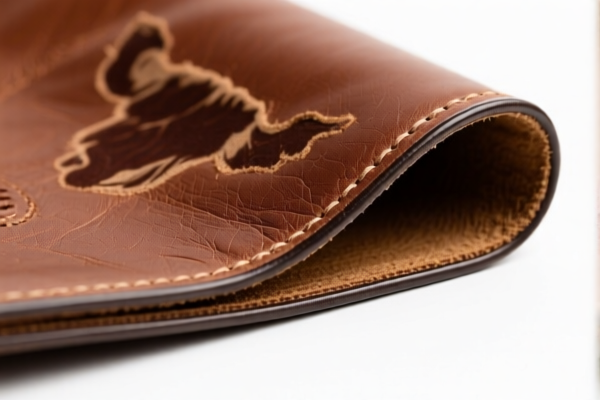
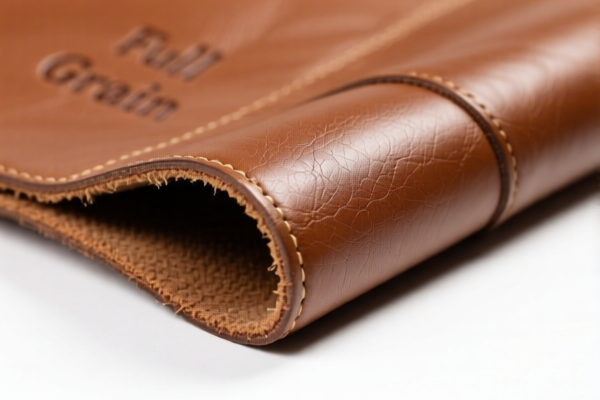
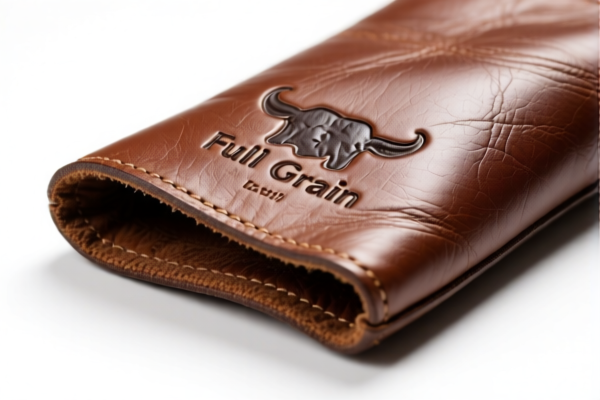
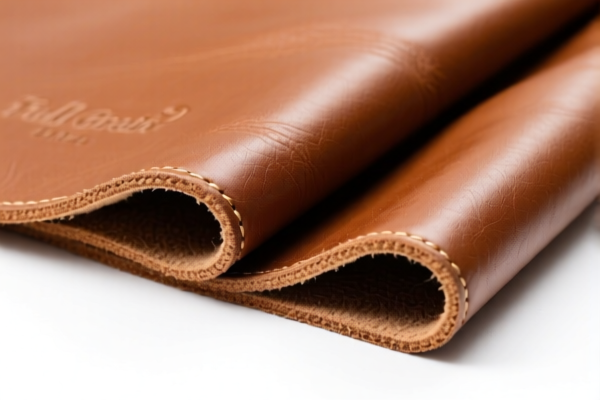
AI Analysis
🐂 Premium Bovine Full Grain Lining Leather
🌐 HS Code Reference & Customs Clearance Guide | 2026 Latest Tariff Analysis | Professional-Level Clearance Strategy
📌 I. Product Definition & Classification: What is "Premium Bovine Full Grain Lining Leather"?
This product refers to bovine leather that has been full-grain processed (surface is intact, natural grain visible) and is specifically designated for use as a lining material (inside of bags, shoes, jackets, or automotive interiors).
In international trade, classification depends heavily on the degree of processing and specific physical form: 1. As a Liner/Insert: If classified primarily by its intended use as a "skin for lining," it falls under heading 4107. 2. As a Composite/Sheet: If it is used as a base material for composite leather, it may fall under heading 4115. 3. As General Tanned Leather: If it does not meet specific "liner" or "composite" definitions but is simply "other tanned leather," it falls under heading 4113.
⚠️ Key Distinction Points:
- Is it a "Liner Skin" (4107)? Yes, if the manufacturer specifically markets/uses it for linings and it meets the customs definition of "skins for lining."
- Is it "Composite Leather Base" (4115)? Yes, if it is a thin sheet intended to be laminated or bonded to other materials to form composite leather.
- Is it "Finished Leather" (4113)? Yes, if it is fully processed, dyed, and finished for general use, potentially including "patterned/floral" finishes.
📦 II. HS Code Classification Matrix (2026 Latest Tariff Authority)
| HS Code | Product Description | Key Classification Criteria | Application Scenario |
|---|---|---|---|
4113.90.30.00 |
Bovine leather, other animal skins, further worked, not floral/patterned | General tanned leather, non-decorative finish | Standard black/brown lining leather, plain finish |
4115.10.00.00 |
Composite Leather (Base/Sheet) | Used as a substrate for composite leather materials | Leather-based fabrics, laminated linings |
4113.90.60.00 |
Bovine leather, floral/patterned finish | Tanned leather with decorative surface patterns | Fashion linings, embossed designs, exotic looks |
4107.19.10.40 |
Skin for Lining, bovine, other | Specifically classified as "lining skin" | Dedicated lining materials for footwear/bags |
4107.11.10.40 |
Full Grain Skin for Lining, bovine | Full-grain structure specifically for lining use | High-end lining with intact natural grain |
🔍 Critical Reminder:
- "Full Grain" does not automatically dictate the HS Code; Usage (Liner vs. General) and Finish (Plain vs. Floral) are the decisive factors.
-4107codes generally apply when the leather is specifically identified as being for linings.
-4113codes apply for general tanned leather where the specific "liner" designation is not the primary customs driver, or if it's a finished product for general use.
💰 III. 2026 Latest Tariff Rate Breakdown (Including Surcharges & Policy Add-ons)
✅ Applicable Country: USA (US)
✅ Country of Origin: China (CN)
✅ Effective Date: November 10, 2025 (and onwards)
🎯 1. 4113.90.30.00 – Bovine Leather, Non-Floral, Further Worked
| Item | Detail |
|---|---|
| Base Tariff | 3.3% (ad valorem) |
| Section 301 Surcharge | +25.0% |
| 122 Provision Surcharge | +10.0% |
| Total Tariff Rate | 38.3% |
| Tax Calculation | CIF Value × 38.3% |
| De Minimis Exemption | ❌ Not Eligible (deny_de_minimis) |
| Legal Basis Path | USITC:4113.90.30.00 → FOOTNOTE:301 → IEEPA:122 |
📌 Explanation:
- This is the standard rate for plain-finish bovine leather used for linings or general purposes.
- The 38.3% total rate is high, driven by the 25% Section 301 tariff and the 10% Section 122 tariff.
🎯 2. 4115.10.00.00 – Composite Leather (Base/Sheet)
| Item | Detail |
|---|---|
| Base Tariff | 0.0% |
| Section 301 Surcharge | +25.0% |
| 122 Provision Surcharge | +10.0% |
| Total Tariff Rate | 35.0% |
| Tax Calculation | CIF Value × 35.0% |
| De Minimis Exemption | ❌ Not Eligible (deny_de_minimis) |
| Legal Basis Path | USITC:4115.10.00.00 → FOOTNOTE:301 → IEEPA:122 |
📌 Note:
- Although the base tariff is 0%, the surcharges still apply.
- This is 3.3% cheaper than4113.90.30.00. Use this if the product is explicitly marketed/used as a substrate for composite leather.
🎯 3. 4113.90.60.00 – Bovine Leather, Floral/Patterned Finish
| Item | Detail |
|---|---|
| Base Tariff | 1.6% |
| Section 301 Surcharge | +25.0% |
| 122 Provision Surcharge | +10.0% |
| Total Tariff Rate | 36.6% |
| Tax Calculation | CIF Value × 36.6% |
| De Minimis Exemption | ❌ Not Eligible (deny_de_minimis) |
| Legal Basis Path | USITC:4113.90.60.00 → FOOTNOTE:301 → IEEPA:122 |
📌 Note:
- The base tariff (1.6%) is slightly higher than plain leather (3.3% is actually higher, wait: 3.3 > 1.6? No, 3.3 > 1.6. So floral has lower base?).
- Correction: Base 3.3% (plain) vs Base 1.6% (floral). Floral has a lower base rate.
- Total: 36.6% vs 38.3%. Floral is cheaper by 1.7%.
🎯 4. 4107.19.10.40 – Skin for Lining, Bovine (Other)
| Item | Detail |
|---|---|
| Base Tariff | 0.0% |
| Section 301 Surcharge | +25.0% |
| 122 Provision Surcharge | +10.0% |
| Total Tariff Rate | 35.0% |
| Tax Calculation | CIF Value × 35.0% |
| De Minimis Exemption | ❌ Not Eligible (deny_de_minimis) |
| Legal Basis Path | USITC:4107.19.10.40 → FOOTNOTE:301 → IEEPA:122 |
📌 Note:
- Lowest Total Rate (tied with4115.10.00.00).
- Use this if the product is strictly defined as "skin for lining" and does not fit the "full grain" specific subheading4107.11.
🎯 5. 4107.11.10.40 – Full Grain Skin for Lining, Bovine
| Item | Detail |
|---|---|
| Base Tariff | 0.0% |
| Section 301 Surcharge | +25.0% |
| 122 Provision Surcharge | +10.0% |
| Total Tariff Rate | 35.0% |
| Tax Calculation | CIF Value × 35.0% |
| De Minimis Exemption | ❌ Not Eligible (deny_de_minimis) |
| Legal Basis Path | USITC:4107.11.10.40 → FOOTNOTE:301 → IEEPA:122 |
📌 Note:
- Best Match for "Full Grain Lining".
- Since it is Full Grain AND For Lining, this code (4107.11.10.40) is the most accurate description.
- Total Rate: 35.0% (Lowest among all options).
🛠️ IV. Customs Clearance Practical Advice (Combat-Avoidance Guide)
✅ 1. Document Preparation Checklist (Non-Negotiable)
| Document | Must Provide | Explanation |
|---|---|---|
| ✅ Product Specification Sheet | ✔️ | Must state: "Bovine, Full Grain, Used for Lining." |
| ✅ Composition & Processing Report | ✔️ | Detail tanning process (vegetable/chrome) and surface treatment. |
| ✅ Product Photos | ✔️ | Show grain texture (full grain) and any lining-specific markings. |
| ✅ Commercial Invoice | ✔️ | Describe as: "Bovine Full Grain Leather for Lining Use" |
| ✅ Bill of Lading | ✔️ | Ensure weight and quantity match invoice. |
| ✅ Origin Certificate | ✔️ | If applicable for other countries, but for US/CN, proof of origin is key for tariffs. |
✅ 2. Declaration Strategy (Key Mantras)
🔥 "Lining is Key, Full Grain Helps, Choose 4107 for Savings!"
| Scenario | Correct HS Code | Incorrect Code | Consequence |
|---|---|---|---|
| Product is Full Grain + For Lining | 4107.11.10.40 (35.0%) |
4113.90.30.00 (38.3%) |
Overpay by 3.3% |
| Product is Lining (Generic) | 4107.19.10.40 (35.0%) |
4113.90.30.00 (38.3%) |
Overpay by 3.3% |
| Product is Composite Base | 4115.10.00.00 (35.0%) |
4113.90.30.00 (38.3%) |
Overpay by 3.3% |
| Product is Floral/Patterned | 4113.90.60.00 (36.6%) |
4113.90.30.00 (38.3%) |
Overpay by 1.7% |
📌 Strategic Insight:
- Always aim for 35.0%. Codes4107.11.10.40,4107.19.10.40, and4115.10.00.00all result in a 35.0% total duty.
- Code4113.90.30.00is the most expensive (38.3%) and should be avoided if the product can be classified under 4107 or 4115.
- Why? The base tariff for 4107 and 4115 is 0%, whereas 4113 has a base of 1.6%–3.3%.
✅ 3. Special Cases Handling
| Case | Recommendation |
|---|---|
| OEM Custom Lining | Provide customer design specs. If it's a specific "liner," use 4107 codes. |
| Mixed Shipments | Declare separately. Do not mix "full grain lining" with "general leather" to avoid misclassification audits. |
| "Full Grain" Dispute | If customs questions "Full Grain," provide microscopic analysis or tannery certification proving grain integrity. |
| 122 Section Tariff | Remember, the 10% 122 tariff applies to all these codes if of Chinese origin. No exemption available. |
🌍 V. Global Market Customs Comparison (2026 Latest)
| Country/Region | Recommended HS Code | Duty Rate | Certification Req. | Note |
|---|---|---|---|---|
| 🇺🇸 USA | 4107.11.10.40 |
35.0% | None specific | High due to 301+122 tariffs |
| 🇨🇳 China | 4107.11.10.40 |
8% (Import) | None | No surcharges |
| 🇪🇺 EU | 4107.11.10.40 |
6.5% | REACH Compliance | No Section 301/122 |
| 🇬🇧 UK | 4107.11.10.40 |
6.5% | UKCA/REACH | Post-Brexit rates similar to EU |
| 🇯🇵 Japan | 4107.11.10.40 |
5.5% | FSC (if applicable) | Moderate rates |
📌 Conclusion:
- The USA is significantly more expensive due to political tariffs (301 + 122).
- Optimize Classification: Use4107.11.10.40for the lowest possible US duty (35%).
📌 VI. Common Mistakes & Pitfalls (Blood Lessons)
❌ Mistake 1: Classifying "Full Grain Lining Leather" under 4113.90.30.00
👉 Result: Pay 38.3% instead of 35.0%.
👉 Loss: 3.3% extra cost on every shipment.
❌ Mistake 2: Ignoring the "Lining" purpose
👉 Result: Customs may force 4113 classification if "Lining" is not declared.
👉 Fix: Clearly state "For Lining Use" on the commercial invoice and packing list.
❌ Mistake 3: Confusing "Full Grain" with "Top Grain"
👉 Result: Misclassification if the surface is corrected (sanded).
👉 Fix: Ensure product is truly Full Grain (unsplit, natural grain intact). If corrected, it may still fall under 4107, but documentation must be precise.
✅ Correct Approach:
"Bovine Full Grain Leather, Tanned, Dyed, Specifically Manufactured for Use as Lining Material in Handbags and Footwear."
🎯 VII. Conclusion: Professional Declaration, Cost Reduction!
🎯 Remember the Mantra:
🔹 "Lining is 35%, Plain is 38%, Floral is 36%, Composite is 35%!"
🔹 "Choose 4107 or 4115 for the best US rates!"
🔹 "Declare 'Lining Use' explicitly to save 3.3%!"
📌 Pro Tip:
If you are exporting to the US, consider applying for an Advance Ruling from CBP if your product is borderline between 4107 and 4113. This guarantees your rate at 35% and avoids post-clearance audits.
📣 Immediate Action:
📞 Contact your customs broker with the Product Specification stating "For Lining Use."
🚀 Declare as4107.11.10.40to achieve the 35.0% tariff.
💼 Save money, ensure compliance, and ship with confidence!
✨ Professional Clearance Starts with Accurate Classification!
💼 Every percentage point saved is profit earned!
Customer Reviews
About HS Code Classification
The Harmonized System (HS) is an internationally standardized nomenclature developed by the World Customs Organization (WCO) to classify traded products. Over 200 countries use the HS system as the basis for customs tariffs, trade statistics, and import/export regulations.
Each HS code follows a hierarchical structure:
- Chapter (2 digits) — Broad category of goods (e.g., Chapter 84: Machinery and Mechanical Appliances)
- Heading (4 digits) — More specific grouping within the chapter
- Subheading (6 digits) — Internationally standardized breakdown, used by all WCO member countries
- National subdivisions (8-10 digits) — Country-specific extensions for further classification, such as US HTSUS 10-digit codes
Correct HS code classification is essential for smooth customs clearance, accurate duty payment, and compliance with trade regulations. Misclassification can lead to customs delays, overpayment of duties, or penalties.
When importing from CN to US, the applicable tariff rates may include:
- Most-Favored-Nation (MFN) rate — The standard duty rate applied to WTO members
- General rate — Applied to countries without trade agreements
- Trade remedy duties — Additional tariffs such as Section 301 (anti-dumping), Section 232 (national security), or countervailing duties
The information provided on this page is for reference purposes only. For official classification, please consult with your local customs authority or a licensed customs broker.