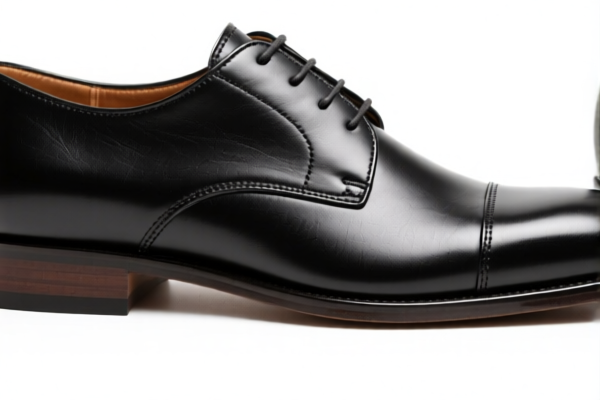
Premium Patent Leather
CN → US| HS Code | Tariff Rate | Origin | Destination | Doc |
|---|---|---|---|---|
| 4114203000 | 37.3% | CN | US | Official Doc |
| 4114207000 | 36.6% | CN | US | Official Doc |
| 4202122120 | 55.0% | CN | US | Official Doc |
| 4202221500 | 51.0% | CN | US | Official Doc |
| 3921125000 | 41.5% | CN | US | Official Doc |
| 3921905010 | 39.8% | CN | US | Official Doc |
Product Images



AI Analysis
👑 Premium Patent Leather & Laminated Materials
🌐 HS Code Reference & Customs Clearance Guide | 2026 Latest Tariff Analysis | Professional Compliance Strategy
📌 I. Product Definition & Classification: What Exactly is "Premium Patent Leather"?
"Premium Patent Leather" is not a single, monolithic category. In international trade, it spans across leather goods, plastics, and metalized finishes. The classification depends entirely on the base material, surface treatment, and final product structure.
1. Leather-Based Patent Leather:
Real or synthetic leather coated with a high-gloss lacquer or plastic film.
2. Metalized/Metallized Leather:
Leather coated with a thin layer of metal (often aluminum or gold) for a shiny, mirror-like finish.
3. Plastic-Based "Patent" Look:
Sheets of PVC, vinyl, or other polymers that mimic the look of patent leather but are technically plastics.
4. Finished Goods:
Handbags, suitcases, and wallets made from these materials.
⚠️ Key Distinction Point:
- If it is leather with a glossy finish → Chapter 41 or 42.
- If it is plastic with a glossy finish → Chapter 39.
- If it is a finished container (bag/box) → Chapter 42.
📦 II. HS Code Classification Details (2026 Latest Tariff Authority Cross-Reference)
| HS Code | Product Description | Application Scenario | Material Basis | Tax Rate (CN Origin to US) |
|---|---|---|---|---|
4114.20.30.00 |
Patent Leather (Leather-based) | Genuine leather with high-gloss lacquer; luxury apparel, accessories | ✅ Leather | 27.3% |
4114.20.70.00 |
Patent Laminated Leather; Metallized Leather (Other) | Leather with plastic lamination or metal coating (not standard patent) | ✅ Leather | 0.0% |
3921.12.50.00 |
Cellular Polymer Plates/Sheets (PVC-based) | Foam vinyl or cellular PVC sheets that look like patent leather but are plastic | ❌ Plastic | 31.5% |
3921.90.50.10 |
High Pressure Paper Reinforced Decorative Laminates | Decorative sheets, often used in furniture or packaging, not apparel | ❌ Plastic/Paper | 29.8% |
4202.12.21.20 |
Structured, Rigid Suitcases/Trunks | Hard-shell luggage with outer surface of plastic/textile (mimicking patent look) | ✅ Plastic/Textile | 0.0% |
4202.22.15.00 |
Handbags with Outer Surface of Plastic Sheeting | Handbags, clutches, wallets made from PVC/vinyl "patent" material | ❌ Plastic (Finished) | 0.0% |
🔍 Key Reminder:
- Real Patent Leather (4114.20.30.00) is taxed at 27.3% due to the 2.3% base + 25% additional tariff.
- Metallized/Laminated Leather (4114.20.70.00) is taxed at 0.0% – a critical distinction for luxury goods!
- Plastic "Patent" Bags (4202.22.15.00) are taxed at 0.0%, making them highly competitive.
💰 III. 2026 Latest Tariff Rate Details (Including Additional Taxes)
✅ Applicable Country: United States (US)
✅ Origin: China (CN)
✅ Effective Date: November 10, 2025 (and subsequent imports)
🎯 1. 4114.20.30.00 — Patent Leather (Leather-Based)
| Item | Content |
|---|---|
| Base Tariff | 2.3% (ad valorem) |
| Section 301 Additional Tariff | +25.0% |
| Total Tax Rate | 27.3% |
| Tax Calculation | CIF Value × 27.3% |
| De Minimis Exemption | ❌ Not Applicable |
| Legal Basis | HTSUS: 4114.20.30.00 → USITC Footnote 9903.88.01 |
📌 Explanation:
- This code applies to genuine leather with a high-gloss patent finish.
- The 25% additional tariff is a heavy burden, making this the most expensive category.
- Cost Impact: For every $1,000 CIF value, you pay $273 in taxes.
🎯 2. 4114.20.70.00 — Patent Laminated / Metallized Leather (Leather-Based)
| Item | Content |
|---|---|
| Base Tariff | 0.0% |
| Section 301 Additional Tariff | 0.0% |
| Total Tax Rate | 0.0% |
| Tax Calculation | $0 |
| De Minimis Exemption | ✅ N/A (0 Tax) |
| Legal Basis | HTSUS: 4114.20.70.00 |
📌 Explanation:
- This code covers leather that is laminated (coated with plastic) or metallized (metal-coated).
- Crucial Strategy: If your "premium patent leather" is technically metallized or laminated (not traditional lacquered patent), it may fall here, saving you 27.3% in taxes.
- Verify Material: Ensure the product description explicitly states "metallized" or "laminated" rather than "patent."
🎯 3. 3921.12.50.00 — Cellular PVC Sheets (Plastic-Based "Patent" Look)
| Item | Content |
|---|---|
| Base Tariff | 6.5% |
| Section 301 Additional Tariff | +25.0% |
| Total Tax Rate | 31.5% |
| Tax Calculation | CIF Value × 31.5% |
| De Minimis Exemption | ❌ Not Applicable |
📌 Explanation:
- If the material is foam PVC (cellular) that mimics patent leather, it is classified as plastic.
- Highest Tax Rate in this list. Avoid if possible.
🎯 4. 4202.12.21.20 & 4202.22.15.00 — Finished Goods (Bags/Luggage)
| Item | Content |
|---|---|
| Base Tariff | 0.0% |
| Section 301 Additional Tariff | 0.0% |
| Total Tax Rate | 0.0% |
| Tax Calculation | $0 |
| De Minimis Exemption | ✅ N/A (0 Tax) |
📌 Explanation:
- Hard-Sided Suitcases (4202.12.21.20) with plastic/outer surface: 0%.
- Handbags/Clutches (4202.22.15.00) with plastic sheeting (PVC/vinyl): 0%.
- Strategic Advantage: Finished goods made from plastic-based "patent" materials are duty-free. This is why many brands use PVC/vinyl instead of real leather for "patent" looks to avoid the 27.3% tax.
🛠️ IV. Customs Clearance Practical Advice (Real-World Pitfall Avoidance)
✅ 1. Documentation Checklist (Non-Negotiable)
| Document | Mandatory? | Description |
|---|---|---|
| ✅ Product Composition Report | ✔️ | Must specify: % Leather, % PVC, % Metal Coating. Critical for 4114.20.30.00 vs 4114.20.70.00. |
| ✅ Technical Data Sheet | ✔️ | Shows surface treatment (lacquer vs. metal coating vs. lamination). |
| ✅ Product Photos | ✔️ | High-res images of texture, cross-section (if possible), and finished product. |
| ✅ Commercial Invoice | ✔️ | Must use precise HS Code descriptions. Avoid vague terms like "Leather Bag." |
| ✅ Certificate of Origin | ✔️ | Proof of Chinese origin triggers Section 301 taxes. |
✅ 2. Declaration Strategy (Key Mantra)
🔥 "Material Defines Code, Finish Dictates Tax!"
| Scenario | Correct Declaration | Incorrect Declaration | Consequence |
|---|---|---|---|
| Real Leather + Glossy Lacquer | 4114.20.30.00 |
"Leather Goods" | 27.3% Tax |
| Leather + Metal Coating | 4114.20.70.00 |
"Patent Leather" | 0% Tax (Savings!) |
| PVC/Vinyl "Patent" Finish | 4202.22.15.00 (Bag) |
"Real Leather Bag" | 0% Tax (But Fraud if mislabeled) |
| Foam PVC Sheet | 3921.12.50.00 |
"Leather Sheet" | 31.5% Tax |
📌 Critical Warning:
- Do NOT misdeclare PVC/vinyl as "Real Leather" to avoid taxes. US Customs (CBP) conducts physical inspections and material testing.
- Misclassification Penalty: Up to 2x the duty evaded + interest.
✅ 3. Special Case Handling
| Situation | Recommendation |
|---|---|
| Metallized Leather Garments | Ensure invoice states "Metallized Leather" not "Patent Leather." Use 4114.20.70.00 for 0% tax. |
| Plastic "Patent" Handbags | Clearly describe as "Polyvinyl Chloride (PVC) Handbag" to use 4202.22.15.00 (0% tax). |
| Mixed Material Bags | If >50% leather, use leather code. If >50% plastic, use plastic code. Weight/Value % matters. |
| Hard-Sided Luggage | Use 4202.12.21.20 for structured, rigid suitcases. 0% tax. |
🌍 V. Global Market Comparison (2026 Latest)
| Country/Region | Recommended HS Code | Tariff (CN Origin) | Notes |
|---|---|---|---|
| 🇺🇸 USA | 4114.20.30.00 / 4114.20.70.00 |
27.3% / 0.0% | Highly Sensitive to Section 301. |
| 🇪🇺 EU | 4106.21.00 (Patent Leather) |
4.7% (Base) | No Section 301. Lower base tariff. |
| 🇨🇳 China | 4114.20.30.00 |
0% (Import Tariff) | Duty-free for imports into China. |
| 🇬🇧 UK | 4114.20.30.00 |
2.7% (Base) | Post-Brexit tariffs apply. |
📌 Conclusion:
- USA is the most expensive market for "Patent Leather" due to 25% additional tariffs.
- Strategy: If exporting to the US, consider using Plastic-Based (PVC/Vinyl) materials for finished goods (4202.22.15.00) to enjoy 0% duty.
- If using Real Leather: Try to classify as Metallized/Laminated (4114.20.70.00) to achieve 0% duty.
📌 VI. Common Errors & Pitfall Guide (Blood & Tears Lessons)
❌ Error 1: Declaring Metallized Leather as "Patent Leather" (4114.20.30.00)
👉 Consequence: Pay 27.3% tax instead of 0%. Missed savings!
❌ Error 2: Declaring PVC Handbags as "Leather Handbags"
👉 Consequence: Customs Fraud. Penalties, seizures, and blacklisting.
❌ Error 3: Using "Luxury Patent Leather" in invoice without material breakdown
👉 Consequence: Customs rejects declaration, requests clarification → Delay + Demurrage Fees.
❌ Error 4: Confusing Plastic Sheets (3921) with Finished Bags (4202)
👉 Consequence: If shipped as sheets but declared as bags, or vice versa → Misclassification Penalty.
✅ Correct Approach:
"Metallized Leather, Aluminum-Coated, 0.8mm Thickness, for Garments, HS 4114.20.70.00"
"PVC Handbag, Shiny Finish, No Leather Content, HS 4202.22.15.00"
🎯 VII. Conclusion: Precise Classification, Maximize Profit!
🎯 Remember the Mantra:
🔹 "Real Patent = 27.3% Tax"
🔹 "Metallized/Laminated = 0% Tax"
🔹 "Plastic 'Patent' Bags = 0% Tax"
🔹 "Foam PVC = 31.5% Tax (Avoid!)"
📌 Pro Tip:
If your product is leather, work with your manufacturer to ensure the finish is documented as "Metallized" or "Laminated" if it fits the definition, to qualify for 0% duty under 4114.20.70.00.
If your product is plastic, always use Finished Goods HS Codes (4202) rather than raw material codes (3921) to benefit from 0% duty.
📣 Immediate Action:
📞 Consult a Customs Broker to verify the exact material composition.
📄 Request a Pre-Ruling from CBP if the product is borderline between "Patent" and "Metallized."
🚀 Optimize Supply Chain: Shift to plastic-based "patent" finishes for US-bound bags to eliminate duty costs.
✨ Professional Clearance Starts with Accurate Classification!
💼 Every Percentage Point Saved is Pure Profit!
Customer Reviews
About HS Code Classification
The Harmonized System (HS) is an internationally standardized nomenclature developed by the World Customs Organization (WCO) to classify traded products. Over 200 countries use the HS system as the basis for customs tariffs, trade statistics, and import/export regulations.
Each HS code follows a hierarchical structure:
- Chapter (2 digits) — Broad category of goods (e.g., Chapter 84: Machinery and Mechanical Appliances)
- Heading (4 digits) — More specific grouping within the chapter
- Subheading (6 digits) — Internationally standardized breakdown, used by all WCO member countries
- National subdivisions (8-10 digits) — Country-specific extensions for further classification, such as US HTSUS 10-digit codes
Correct HS code classification is essential for smooth customs clearance, accurate duty payment, and compliance with trade regulations. Misclassification can lead to customs delays, overpayment of duties, or penalties.
When importing from CN to US, the applicable tariff rates may include:
- Most-Favored-Nation (MFN) rate — The standard duty rate applied to WTO members
- General rate — Applied to countries without trade agreements
- Trade remedy duties — Additional tariffs such as Section 301 (anti-dumping), Section 232 (national security), or countervailing duties
The information provided on this page is for reference purposes only. For official classification, please consult with your local customs authority or a licensed customs broker.