Premium Plastic Clothespins
CN → US| HS Code | Tariff Rate | Origin | Destination | Doc |
|---|---|---|---|---|
| 3926906510 | 14.2% | CN | US | Official Doc |
| 3926907000 | 22.8% | CN | US | Official Doc |
| 3924905650 | 20.9% | CN | US | Official Doc |
| 3924901050 | 13.3% | CN | US | Official Doc |
| 3926908500 | 24.0% | CN | US | Official Doc |
Product Images
AI Analysis
🧺 Premium Plastic Clothespins: The Hidden Tax Trap & HS Code Strategy
🌐 HS Code Reference & Customs Clearance Guide | 2024-2026 Tariff Analysis | Professional Entry Strategy
📌 I. Product Definition & Classification: Are You Classifying "Clips" or "Hangers"?
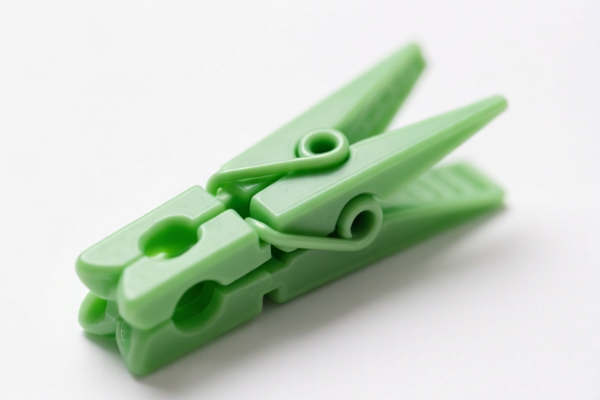
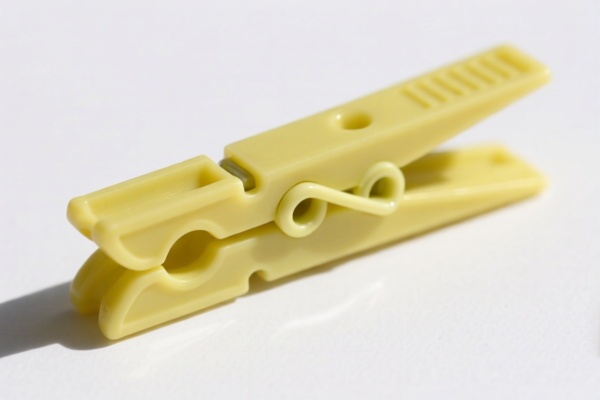
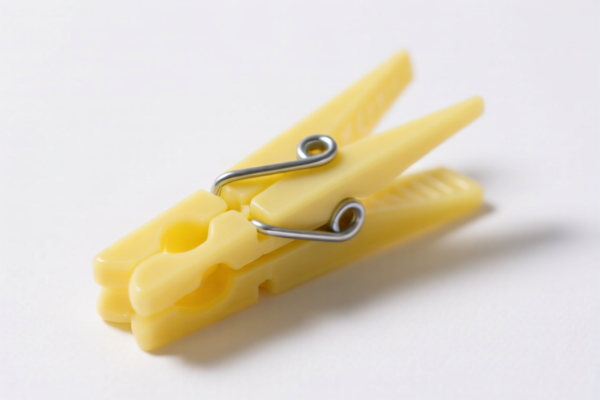
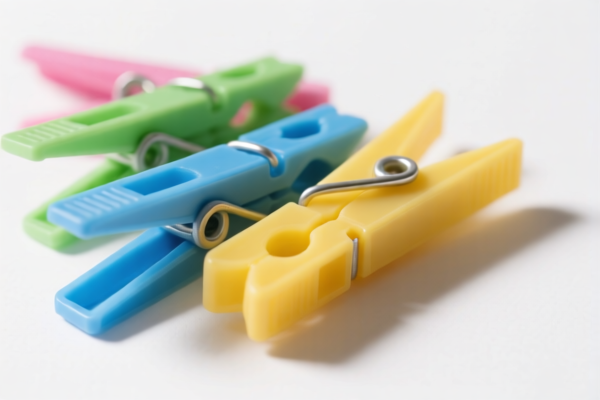
Premium Plastic Clothespins are small, spring-loaded clamping devices used primarily in households for drying laundry. In international trade, the classification often hinges on whether they are viewed as simple clamping fasteners (clips) or as hanger accessories.
- Plastic Clips/Clothespins (Primary Category): Defined by their function as a clamping device. Generally falls under Chapter 39 (Plastics and Articles Thereof).
- Hanger Accessories (Secondary Category): If marketed specifically as "hanger clips" that attach to a standard hanger, customs may scrutinize if they are "parts of hangers" (Chapter 96) or general plastic articles. However, based on the provided data, the dominant classification remains under Plastic Articles (Chapter 39).
⚠️ Critical Distinction:
- If the item is a standalone clothespin (used directly on line): It is a plastic article/clip → HS Code 3926 or 3924.
- If the item is explicitly a hanger hook/clip designed only for hangers: It might be argued as a hanger accessory, but the provided data forces it into Plastic Articles.
- Risk: Misclassifying as a hanger accessory (e.g., 9606) could lead to detention if the product is clearly a laundry clip.
📦 II. HS Code Classification Breakdown (Based on Provided Data)
The provided data presents five distinct HS Codes for "Premium Plastic Clothespins," each with different tax implications. This highlights the ambiguity in customs interpretation between "Clothespins," "Clips," and "Household Goods."
| HS Code | Summary Description | Tax Rate (Total) | Tax Composition Details |
|---|---|---|---|
| 3926.90.65.10 | Plastic Clothespin Clip Material: Plastic. Form: Clothespin. Use/Classification: Consistent with clothespin definition. |
14.2% | Base: 4.2% Add: 0.0% Section 301 (122 Clause): 10% |
| 3926.90.70.00 | Plastic Clothespin (General) Material: Plastic. Use: Clothespin. Fits plastic article & clothespin definition. |
22.8% | Base: 5.3% Add: 7.5% Section 301 (122 Clause): 10% |
| 3924.90.56.50 | Plastic Clothespin (Household) Material: Plastic. Use: Household item. Category: Household small tool. |
20.9% | Base: 3.4% Add: 7.5% Section 301 (122 Clause): 10% |
| 3924.90.10.50 | Plastic Clamp/Household Material: Plastic. Form: Clamp. Category: Household goods. |
13.3% | Base: 3.3% Add: 0.0% Section 301 (122 Clause): 10% |
| 3926.90.85.00 | Plastic Clip (Fastener) Material: Plastic. Form: Clip. Category: Plastic article & clamping fastener. |
24.0% | Base: 6.5% Add: 7.5% Section 301 (122 Clause): 10% |
🔍 Key Insight:
- All codes include a 10% "122 Clause" Tariff (likely referring to U.S. Section 301 tariffs on Chinese goods).
- The Base Tariff varies significantly from 3.3% to 6.5%.
- The "Add-on Tariff" (likely U.S. Section 232 or other retaliatory tariffs) is either 0.0% or 7.5%.
- Best Case Scenario: HS Code3926.90.65.10(14.2%) or3924.90.10.50(13.3%).
- Worst Case Scenario: HS Code3926.90.85.00(24.0%).
💰 III. Tariff Structure Detailed Explanation
🎯 1. Why Is the Tax So Variable? (13.3% vs. 24.0%)
The variation is driven by two factors:
1. Base Tariff: Depends on how "Plastic Articles" are interpreted.
* 3924 (Table/Kitchen/Household articles) often has lower base rates.
* 3926 (Other plastic articles) often has higher base rates.
2. Add-on Tariffs: Likely refers to additional U.S. trade remedies.
* 0.0% Add-on: Seen in 3926.90.65.10 and 3924.90.10.50.
* 7.5% Add-on: Seen in 3926.90.70.00, 3924.90.56.50, and 3926.90.85.00.
🎯 2. The "122 Clause" (Section 301)
- Rate: 10% flat rate on all entries.
- Nature: This is a punitive tariff on Chinese-origin goods.
- Impact: It is non-negotiable and applies to all five HS codes.
- Calculation:
(CIF Value) × 10%.
🎯 3. Total Tax Calculation Example
Let’s assume a CIF value of $1,000 USD.
| HS Code | Base Tariff | Add-on Tariff | 122 Clause (Section 301) | Total Tax Amount | Total Effective Rate |
|---|---|---|---|---|---|
| 3924.90.10.50 | $33 (3.3%) | $0 (0.0%) | $100 (10%) | $133 | 13.3% |
| 3926.90.65.10 | $42 (4.2%) | $0 (0.0%) | $100 (10%) | $142 | 14.2% |
| 3924.90.56.50 | $34 (3.4%) | $75 (7.5%) | $100 (10%) | $209 | 20.9% |
| 3926.90.70.00 | $53 (5.3%) | $75 (7.5%) | $100 (10%) | $228 | 22.8% |
| 3926.90.85.00 | $65 (6.5%) | $75 (7.5%) | $100 (10%) | $240 | 24.0% |
📌 Conclusion: Choosing
3924.90.10.50saves $107 per $1,000 compared to3926.90.85.00.
🛠️ IV. Customs Clearance Practical Advice (Risk Mitigation)
✅ 1. Documentation Strategy
To maximize the chance of being classified under the lower tax codes (13.3% - 14.2%), your documentation must support the "Household" or "Specific Clothespin" narrative.
| Document | Key Information to Include | Why It Matters |
|---|---|---|
| Commercial Invoice | Describe as "Plastic Laundry Clothespins - Household Use". Avoid vague terms like "Plastic Clips" which may trigger 3926.90.85.00. |
Aligns with 3924 (Household) or 3926.90.65.10 (Specific Clothespin). |
| Product Photos | Show the item holding laundry on a line. Do not show it attached to a coat hanger (which might imply "Hanger Accessory"). | Confirms primary use is laundry, not general fastening. |
| Material Spec | Clearly state 100% Plastic (e.g., PP, PE). | Rules out metal-spring mixed classifications. |
| Function Description | "Spring-loaded clamp for drying wet clothes on a line." | Supports 3926.90.65.10 summary. |
✅ 2. Classification Optimization Tips
- Target
3924.90.10.50(13.3%):- Strategy: Emphasize "Household Goods". If customs accepts it as a "Household Plastic Item," it falls under
3924. - Risk: Customs might argue it’s a "Clip/Fastener" (Chapter 3926), but the base rate is lower.
- Strategy: Emphasize "Household Goods". If customs accepts it as a "Household Plastic Item," it falls under
- Target
3926.90.65.10(14.2%):- Strategy: Emphasize "Clothespin" specifically. This code’s summary explicitly matches "Clothespin" (衣夹).
- Advantage: No 7.5% add-on tariff. Very specific.
- Avoid
3926.90.85.00(24.0%):- Reason: This is the "Other" category for plastic clips. It has the highest base rate (6.5%) AND the 7.5% add-on. Only use if no other code fits.
✅ 3. Common Pitfalls
- ❌ Vague Description: "Plastic Clips" → Customs may default to
3926.90.85.00(24%). - ❌ Hanger Association: If marketed as "Hanger Clips," customs may question if it’s a part of a hanger (Chapter 96), causing delays. Stick to "Laundry Clothespins."
- ❌ Ignoring Section 301: The 10% tariff is mandatory. Factor this into your pricing model.
🌍 V. Global Market Context (2026)
| Market | HS Code Trend | Tariff Note |
|---|---|---|
| 🇺🇸 United States | 3926.90.65.10 or 3924.90.10.50 |
High Tariffs: 13.3% - 24%. Section 301 (10%) applies. |
| 🇨🇳 China | 3926.90.00.00 |
Low Tariffs: ~5-7%. No Section 301. |
| 🇪🇺 EU | 3926.90.97 |
Moderate Tariffs: ~4-6%. No major add-ons. |
| 🇬🇧 UK | 3926.90.90 |
Post-Brexit: Check specific UK tariff schedule. |
📌 US Focus: The US market is the most complex due to the layered tariffs. Pre-arrival classification ruling is recommended if shipping large volumes.
📌 VI. Summary & Recommendation
- Best HS Code:
3924.90.10.50(13.3%) if you can convincingly argue it is a "Household Plastic Item." - Safest HS Code:
3926.90.65.10(14.2%) as it explicitly matches "Plastic Clothespin." - Worst HS Code:
3926.90.85.00(24.0%) – Avoid this description. - Action Plan:
- Update product descriptions to "Laundry Clothespins".
- Include photos of laundry usage.
- Calculate landed cost using 13.3%-14.2% for accurate pricing.
- Consult a customs broker to confirm eligibility for
3924vs3926.65.10.
📣 Final Tip:
"Classify as 'Household Clothespin,' not 'Generic Clip.' Save 10.7% in taxes."
✨ Professional customs classification can save you thousands. Don't let ambiguity cost you profit!
💼 For Premium Plastic Clothespins, accuracy is your best competitor.
Customer Reviews
About HS Code Classification
The Harmonized System (HS) is an internationally standardized nomenclature developed by the World Customs Organization (WCO) to classify traded products. Over 200 countries use the HS system as the basis for customs tariffs, trade statistics, and import/export regulations.
Each HS code follows a hierarchical structure:
- Chapter (2 digits) — Broad category of goods (e.g., Chapter 84: Machinery and Mechanical Appliances)
- Heading (4 digits) — More specific grouping within the chapter
- Subheading (6 digits) — Internationally standardized breakdown, used by all WCO member countries
- National subdivisions (8-10 digits) — Country-specific extensions for further classification, such as US HTSUS 10-digit codes
Correct HS code classification is essential for smooth customs clearance, accurate duty payment, and compliance with trade regulations. Misclassification can lead to customs delays, overpayment of duties, or penalties.
When importing from CN to US, the applicable tariff rates may include:
- Most-Favored-Nation (MFN) rate — The standard duty rate applied to WTO members
- General rate — Applied to countries without trade agreements
- Trade remedy duties — Additional tariffs such as Section 301 (anti-dumping), Section 232 (national security), or countervailing duties
The information provided on this page is for reference purposes only. For official classification, please consult with your local customs authority or a licensed customs broker.