Premium Reptile Leather
CN → US| HS Code | Tariff Rate | Origin | Destination | Doc |
|---|---|---|---|---|
| 4106910000 | 38.3% | CN | US | Official Doc |
| 4106400000 | 35.0% | CN | US | Official Doc |
| 4114207000 | 36.6% | CN | US | Official Doc |
| 4114100000 | 38.2% | CN | US | Official Doc |
| 4302196000 | 38.5% | CN | US | Official Doc |
Product Images
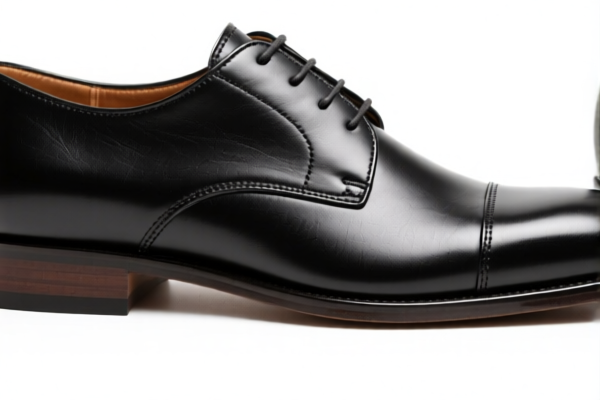


AI Analysis
🐊 Premium Reptile Leather (Raw & Prepared Skins)
🌐 HS Code Reference & Customs Clearance Guide | 2026 Latest Tariff Analysis | Professional Entry Strategy
📌 1. Product Definition & Classification: What is "Premium Reptile Leather"?
"Premium Reptile Leather" in international trade refers to the skins of reptiles (such as crocodile, alligator, lizard, or snake) that have undergone tanning, bleaching, or further preparation but remain in a semi-finished or raw state suitable for manufacturing (e.g., handbags, shoes, watch straps).
In the Harmonized System (HS), reptile leather is strictly categorized under Chapter 41: Animal Skins and Furs, Other than Furskin.
⚠️ Critical Distinction:
- Chapter 41 (Leather): Skins that have been tanned, dressed, or further prepared (e.g., Crust leather, finished leather).
- Chapter 43 (Furskin): Usually applies to fur-bearing mammals. Note: Raw, untanned reptile skins may sometimes be debated, but most commercial "leather" implies tanning/preparation.
📦 2. HS Code Classification Details (Based on Provided Data)
The following HS Codes are derived from the specific dataset provided. They represent different stages of processing or classification fallbacks for reptile leather.
| HS Code | Product Description & Logic | Tax Rate (Total) |
|---|---|---|
| 4106.91.00.00 | Matched Reptile Leather Material. Fits the classification of "Other animal skins," specifically aligning with reptile leather attributes. | 38.3% |
| 4106.40.00.00 | Explicitly Matches Reptile Skin Material. Direct classification for reptile skins, likely referring to specific sub-categories of prepared reptile hides. | 35.0% |
| 4114.20.70.00 | Fits Leather Material Attributes. Based on the "fall-back principle" for other categories where specific reptile codes might not perfectly align with finished goods definitions. | 36.6% |
| 4114.10.00.00 | Fits General Leather Category. Compatible with general leather attributes without material conflict; used as a broader leather classification. | 38.2% |
| 4302.19.60.00 | Inferred as Undyed Whole Skins. Interpreted as un-assembled skin material, possibly falling under un-dyed whole fur skins (less common for "leather" but possible if raw/tanned minimally). | 38.5% |
🔍 Key Insight:
- The primary distinction lies between 4106 (Skins of reptiles, specifically crocodile/alligator/lizard) and 4114 (Leather further prepared or dressed).
- 4302 is a riskier classification as it typically refers to furs, but may apply if the skin is considered "whole" and undyed.
- 4106.40.00.00 offers the lowest total tax rate (35.0%) among the specific reptile matches.
💰 3. 2026 Latest Tariff Rate Breakdown (Including Surtaxes)
✅ Applicable Country: United States (US)
✅ Origin: China (CN)
✅ Effective Date: From November 10, 2025 (including subsequent imports)
🎯 1. 4106.40.00.00 —— Explicit Reptile Leather (Lowest Rate)
| Item | Detail |
|---|---|
| Base Tariff | 0.0% (ad valorem) |
| USITC Surcharge | +25% (Under USITC Footnote provisions) |
| IEEPA Surcharge | +10% (Against Chinese/HK products, effective Nov 10, 2025) |
| Total Rate | 35.0% |
| Tax Calculation | CIF Value × 35.0% |
| De Minimis Eligibility | ❌ Not Eligible (deny_de_minimis) |
| Legal Basis Path | IEEPA:9903.01.25 → IEEPA:9903.01.24 → USITC:4106.40.00.00 → FOOTNOTE |
📌 Explanation:
- "Base 0%": Reptile leather skins often have low base MFN rates.
- "25% Surcharge": Applies under Section 301 tariffs.
- "10% IEEPA": Additional penalty on Chinese-origin goods under the International Emergency Economic Powers Act.
- Total 35% is the most competitive rate among the specific reptile classifications.
🎯 2. 4106.91.00.00 —— Other Reptile Leather (Fall-back Match)
| Item | Detail |
|---|---|
| Base Tariff | 3.3% |
| USITC Surcharge | +25% |
| IEEPA Surcharge | +10% |
| Total Rate | 38.3% |
| Tax Calculation | CIF Value × 38.3% |
| De Minimis Eligibility | ❌ Not Eligible |
| Legal Basis Path | IEEPA:9903.01.25 → IEEPA:9903.01.24 → USITC:4106.91.00.00 → FOOTNOTE |
📌 Note:
- Slightly higher due to the 3.3% base tariff.
- Used when4106.40does not perfectly match the specific type of reptile or preparation method.
🎯 3. 4114.20.70.00 —— Further Prepared Leather (Fallback)
| Item | Detail |
|---|---|
| Base Tariff | 1.6% |
| USITC Surcharge | +25% |
| IEEPA Surcharge | +10% |
| Total Rate | 36.6% |
| Tax Calculation | CIF Value × 36.6% |
| De Minimis Eligibility | ❌ Not Eligible |
| Legal Basis Path | IEEPA:9903.01.25 → IEEPA:9903.01.24 → USITC:4114.20.70.00 → FOOTNOTE |
📌 Note:
- Applied if the leather is considered "further prepared" (e.g., coated, embossed) and doesn't fit the raw/prepared skin categories.
- Base tariff is low (1.6%), but total is higher than4106.40.
🎯 4. 4114.10.00.00 —— General Leather Category
| Item | Detail |
|---|---|
| Base Tariff | 3.2% |
| USITC Surcharge | +25% |
| IEEPA Surcharge | +10% |
| Total Rate | 38.2% |
| Tax Calculation | CIF Value × 38.2% |
| De Minimis Eligibility | ❌ Not Eligible |
| Legal Basis Path | IEEPA:9903.01.25 → IEEPA:9903.01.24 → USITC:4114.10.00.00 → FOOTNOTE |
📌 Note:
- A broader category if specific reptile codes are contested.
- No material conflict, but higher base rate than4106.40.
🎯 5. 4302.19.60.00 —— Un-dyed Whole Skins (Inferred)
| Item | Detail |
|---|---|
| Base Tariff | 3.5% |
| USITC Surcharge | +25% |
| IEEPA Surcharge | +10% |
| Total Rate | 38.5% |
| Tax Calculation | CIF Value × 38.5% |
| De Minimis Eligibility | ❌ Not Eligible |
| Legal Basis Path | IEEPA:9903.01.25 → IEEPA:9903.01.24 → USITC:4302.19.60.00 → FOOTNOTE |
📌 Note:
- This classification assumes the goods are "un-dyed whole skins" rather than tanned leather.
- Highest total rate among the options. Use only if the product is indeed raw/undyed and not chemically tanned.
🛠️ 4. Customs Clearance Practical Advice (Battle-Tested Pitfall Guide)
✅ 1. Documentation Checklist (All Required)
| Document | Mandatory | Description |
|---|---|---|
| ✅ Product Specification Sheet | ✔️ | Must detail reptile species (e.g., Crocodylus niloticus), tanning method (vegetable/chrome), and finish. |
| ✅ Material Composition Statement | ✔️ | Explicitly state "100% Reptile Leather" and confirm no synthetic backing that would change classification. |
| ✅ Photos (Clear & Detailed) | ✔️ | Show texture, grain, and any labels. Must clearly show it is leather, not faux/reptile-pattern plastic. |
| ✅ Commercial Invoice | ✔️ | Must use precise terms like "Tanned Crocodile Skin" not just "Leather". |
| ✅ Packing List | ✔️ | Detail units, weights, and dimensions. |
| ✅ CITES Documentation (If Applicable) | ✔️ | CRITICAL: Many reptiles are CITES-listed. Ensure valid CITES permits are attached if the species is protected. |
| ✅ Country of Origin Certificate | ✔️ | To confirm Chinese origin (triggering surtaxes) or other origins. |
✅ 2. Declaration Tips (Key Mantra)
🔥 "Species Specific, Tanning Method Clear, CITES Ready, Avoid 4302 Trap!"
| Scenario | Correct Declaration | Mistake to Avoid |
|---|---|---|
| Tanned Reptile Leather | 4106.40.00.00 or 4106.91.00.00 |
Misdeclaring as "Fabric" or "Synthetic" → Seizure/Fines |
| Raw/Untanned Skin | 4106.40.00.00 (if prepared) or 4302.19.60.00 (if undyed) |
Declaring as "Finished Leather" → Classification Error |
| CITES Protected Species | Include CITES Permit # in declaration | Missing CITES Permit → Entry Refusal/Confiscation |
| Faux Reptile Leather | 3926.90.99 or 4115.20.00 (Synthetic) |
Declaring as "Real Reptile" → Fraud Charges |
✅ 3. Special Circumstances Handling
| Situation | Handling Advice |
|---|---|
| CITES Restricted Species | Mandatory CITES Permit required for import into the US. Ensure the permit covers the exact HS code and species. |
| Mixed Materials | If leather is backed with textile/synthetic, the essential character determines classification. If leather is dominant, still likely Chapter 41. |
| High-Value Finished Goods | If the leather is already made into bags/shoes, do not declare as raw leather. Use appropriate finished goods HS codes (e.g., 4202) to avoid misdeclaration penalties. |
| Origin Shifting | If tanned in a third country (e.g., Italy) from Chinese raw skins, the origin may be the tanning country. Check rules of origin to potentially avoid IEEPA surtaxes. |
🌍 5. Global Market Clearance Comparison (2026 Latest)
| Country/Region | Recommended HS Code | Tariff Rate (China Origin) | Certification/Regulation | Remarks |
|---|---|---|---|---|
| 🇺🇸 USA | 4106.40.00.00 |
35.0% (Lowest) | CITES + IEEPA Surcharge | High scrutiny on reptile species. |
| 🇨🇳 China | 4106.40.00.00 |
~10-13% | CITES (Export Permit) | Export controls apply. |
| 🇪🇺 EU | 4106.40.00.00 |
0% (Most Favored Nation) | CITES + REACH | No US-style surtaxes, but strict CITES enforcement. |
| 🇬🇧 UK | 4106.40.00.00 |
0% | CITES + UKCA | Post-Brexit alignment with EU standards. |
| 🇯🇵 Japan | 4106.40.00.00 |
8-10% | CITES | Moderate tariffs, strict documentation. |
📌 Conclusion:
- USA is the most expensive market due to 25% + 10% surtaxes.
- EU/UK offer better tariff rates (often 0% base) but have strict CITES and environmental regulations.
- China has export restrictions on certain reptile species.
📌 6. Common Errors & Pitfalls (Lessons Learned)
❌ Error 1: Misdeclaring CITES-listed reptile leather as "generic leather"
👉 Consequence: Immediate seizure by CBP (US Customs) and potential criminal fines.
❌ Error 2: Using HS Code 4302 for tanned leather
👉 Consequence: Classification error. If challenged, may result in higher duties + penalties. 4302 is for furskins, not tanned leather.
❌ Error 3: Ignoring the "10% IEEPA" surcharge
👉 Consequence: Underestimating landed cost by 10%, affecting profit margins.
❌ Error 4: Declaring "Premium Reptile Leather" without species detail
👉 Consequence: Customs may request additional info, causing delays. Specify species (e.g., "Nile Crocodile").
✅ Correct Practice:
"Tanned Crocodile Belly Leather, Chrome Tanned, Dyed Black, 1.2mm Thickness, HS 4106.40.00.00, CITES Permit #XXXXXX Attached"
🎯 7. Conclusion: Precision in Classification Saves Money
🎯 Remember the Mantra:
🔹 "CITES is Key, Species Must Be Clear, 4106 is Best, Avoid 4302 Fear!"
🔹 "HS Code Defines Duty, 35% vs 38% Matters, Declaration Must Match Reality!"
📌 Pro Tip:
If your reptile leather is tanned in Vietnam, Thailand, or Italy before export to the US, apply for a Certificate of Origin from the tanning country. This may help avoid the 10% IEEPA surcharge (depending on specific trade rules) and reduce total cost significantly.
Recommendation: Apply for a Pre-Ruling (Binding Tariff Information) with CBP before first shipment to confirm HS Code and tax liability.
📣 Immediate Action:
📞 Consult a licensed customs broker + Provide CITES Permits + Apply for Pre-Ruling
🚀 Let your reptile leather clear customs smoothly, avoid penalties, and maximize profit!
✨ Professional Clearance Starts with Accurate Classification!
💼 Every percentage point counts in international trade!
Customer Reviews
About HS Code Classification
The Harmonized System (HS) is an internationally standardized nomenclature developed by the World Customs Organization (WCO) to classify traded products. Over 200 countries use the HS system as the basis for customs tariffs, trade statistics, and import/export regulations.
Each HS code follows a hierarchical structure:
- Chapter (2 digits) — Broad category of goods (e.g., Chapter 84: Machinery and Mechanical Appliances)
- Heading (4 digits) — More specific grouping within the chapter
- Subheading (6 digits) — Internationally standardized breakdown, used by all WCO member countries
- National subdivisions (8-10 digits) — Country-specific extensions for further classification, such as US HTSUS 10-digit codes
Correct HS code classification is essential for smooth customs clearance, accurate duty payment, and compliance with trade regulations. Misclassification can lead to customs delays, overpayment of duties, or penalties.
When importing from CN to US, the applicable tariff rates may include:
- Most-Favored-Nation (MFN) rate — The standard duty rate applied to WTO members
- General rate — Applied to countries without trade agreements
- Trade remedy duties — Additional tariffs such as Section 301 (anti-dumping), Section 232 (national security), or countervailing duties
The information provided on this page is for reference purposes only. For official classification, please consult with your local customs authority or a licensed customs broker.