Preserved Coniferous Posts
CN → US| HS Code | Tariff Rate | Origin | Destination | Doc |
|---|---|---|---|---|
| 4407110002 | 35.0% | CN | US | Official Doc |
| 4403210115 | 35.0% | CN | US | Official Doc |
| 4421997040 | 35.0% | CN | US | Official Doc |
| 4403220115 | 35.0% | CN | US | Official Doc |
Product Images
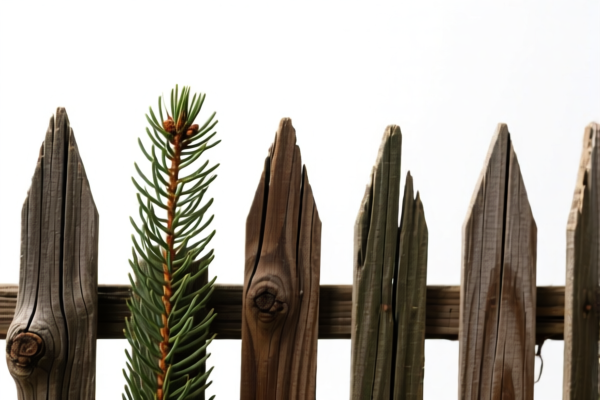
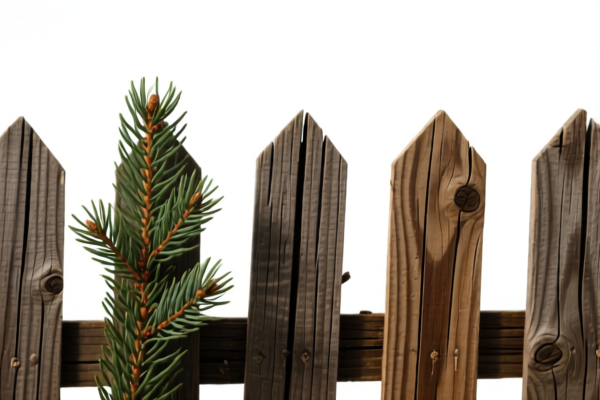
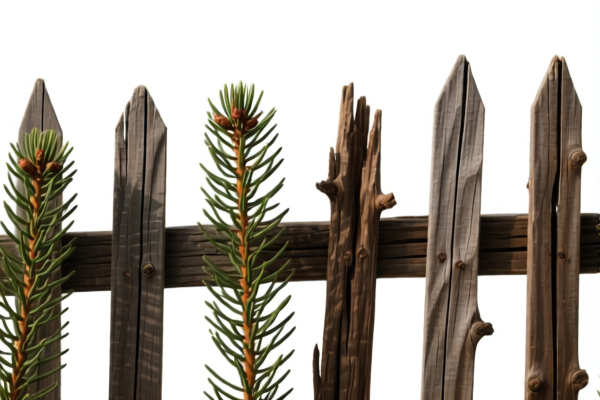

AI Analysis
🌲 Preserved Coniferous Posts (Pine Wood Fence Posts & Pillars)
🌐 HS Code Reference & Customs Clearance Guide | 2026 Latest Tariff Analysis | Professional Clearance Strategy
📌 I. Product Definition & Classification: Do You Really Understand "Preserved Coniferous Posts"?
Preserved coniferous posts, primarily made from pine wood, are treated timber products used for fencing, landscaping, and structural support. In international trade, they are classified based on their processing state (rough/squared) and function (fence posts vs. general poles). The key factor is the preservative treatment, which triggers specific anti-dumping and Section 301 tariff liabilities.
⚠️ Key Distinction Points:
- Rough/Squared Logs with Preservative Treatment: If the wood is simply cut into square or rough shapes and treated for rot resistance, it often falls under 4407.11.00.02.
- Specific Fence Posts: If specifically identified as "fence posts" in commercial documents, customs may classify them under 4403 (Treated Wood) or 4421 (Other Wood Articles), depending on whether they are seen as "semi-manufactured wood" or "finished goods."
- Preservation is Key: All entries in the provided data include "preserved/coniferous" attributes, which directly impacts the tax calculation (adding Section 122 and 301 tariffs).
📦 II. HS Code Classification Details (2026 Latest Tariff Authority Match)
| HS Code | Product Description | Application Scenario | Processing State |
|---|---|---|---|
4407.11.00.02 |
Rough/Squared Preserved Coniferous Posts | Raw timber blocks, squared logs, ready for further cutting or direct use as structural pillars | ✅ Rough/Squared, Treated |
4403.21.01.15 |
Preserved Pine Fence Posts | Specifically labeled as "fence posts," made of pine, treated for outdoor use | ✅ Treated, Specific Use |
4421.99.70.40 |
Wooden Fence Posts (Column Shape) | Classified as "other wood articles" (columns/piles), may include slightly processed posts | ✅ Column/Pole Shape |
4403.22.01.15 |
Preserved Pine Fence Posts (Alternative Subheading) | Similar to 4403.21, but may vary by pine species classification (e.g., Larch vs. Soft Pine nuances in some systems) | ✅ Treated, Specific Use |
🔍 Important Note:
- All four HS codes listed share the same total tax rate (35%) due to the "preserved" nature and US-China trade policies.
- The distinction between4407(sawn wood) and4403/4421lies in whether the item is considered a "semi-finished timber product" (4407) or a "finished article" (4421) or "treated wood for construction" (4403).
- Customs Risk: Misclassifying a "fence post" (4403/4421) as "rough timber" (4407) might be challenged if the product has clear commercial packaging or labeling indicating its end-use.
💰 III. 2026 Latest Tariff Rate Details (Including Surcharges & Policy Add-ons)
✅ Applicable Country: USA (US)
✅ Origin: China (CN)
✅ Effective Date: Current as of 2025/2026 trade regulations
🎯 1. All Listed HS Codes (4407.11.00.02, 4403.21.01.15, 4421.99.70.40, 4403.22.01.15)
| Item | Content |
|---|---|
| Base Tariff | 0.0% (Ad Valorem) – Note: Many wood articles have low base rates, but surcharges dominate. |
| Section 301 Surcharge | +25.0% – Added under US Trade Law Section 301 (China Origin) |
| Section 122 Tariff | +10.0% – Additional surcharge for specific Chinese timber products under Section 122 |
| Total Tax Rate | 35.0% |
| Tax Calculation | CIF Value × 35% |
| De Minimis Exemption | ❌ Not Applicable – Wood products are generally excluded from de minimis thresholds for duty calculation. |
| Legal Basis Path | USITC: [HS Code] → Section 301: Footnote 3 → Section 122: Additional Duty |
📌 Explanation:
- Base 0%: The standard Most Favored Nation (MFN) rate for many treated wood products is 0%, but this is irrelevant due to high surcharges.
- +25% (Section 301): This is the standard retaliatory tariff on Chinese goods, including timber.
- +10% (Section 122): A specific additional duty applied to certain Chinese wood products to protect domestic timber industries.
- Total 35%: This is a fixed, high-cost tariff. Importers must budget for this in their landed cost calculations.
🛠️ IV. Customs Clearance Practical Advice (Avoid Pitfalls)
✅ 1. Document Checklist (Mandatory)
| Document | Required? | Explanation |
|---|---|---|
| ✅ Commercial Invoice | ✔️ | Must clearly state "Preserved Coniferous Posts" and "Pine Wood". Avoid vague terms like "Wooden Sticks." |
| ✅ Packing List | ✔️ | Detail dimensions, quantity, and weight. Specify if posts are "rough/squared" or "finished fence posts." |
| ✅ Treatment Certificate | ✔️ | Proof of preservative treatment (e.g., CCA, ACQ, or organic preservatives). Required for phytosanitary clearance. |
| ✅ ISPM 15 Phytosanitary Certificate | ✔️ | Essential for wood products to prove no pests/diseases. Non-negotiable. |
| ✅ Bill of Lading/Air Waybill | ✔️ | Standard shipping documents. |
| ✅ Country of Origin Certificate | ✔️ | To confirm CN origin and apply correct surcharges. |
✅ 2. Classification Tips (Crucial for Accuracy)
🔥 "Treatments Matter, Use Defines Code!"
| Scenario | Correct HS Code | Reason |
|---|---|---|
| Rough, squared logs treated for rot | 4407.11.00.02 |
Classified as "sawn wood" further than just rough-sawn. |
| Specifically labeled "Fence Posts" | 4403.21.01.15 or 4403.22.01.15 |
Classified as "treated wood" for specific use. |
| Poles/Columns not strictly "fence" posts | 4421.99.70.40 |
Classified as "other wood articles." |
⚠️ Warning: Do not mix classifications in one shipment. If you have both rough posts and finished fence posts, declare them separately to avoid customs scrutiny.
✅ 3. Special Situations
| Situation | Handling Advice |
|---|---|
| Chemical Preservatives | Ensure the preservative is not on the US EPA banned list. Some CCA-treated wood may require additional disclosures. |
| Phytosanitary Inspection | Be prepared for CBP (Customs and Border Protection) to inspect for signs of pest infestation. Delayed release is common if documents are missing. |
| Section 122 Enforcement | The 10% surcharge is strictly enforced for wood products from China. Do not attempt to reclassify to avoid it. |
🌍 V. Global Market Comparison (2026 Latest)
| Country/Region | Recommended HS Code | Total Tariff (China Origin) | Certification Required | Notes |
|---|---|---|---|---|
| 🇺🇸 USA | 4407.11.00.02 / 4403.x1.x1.15 / 4421.99.70.40 |
35% (0% Base + 25% Sec 301 + 10% Sec 122) | ISPM 15, EPA Treatment Proof | Highest cost due to dual surcharges. |
| 🇨🇳 China | 4407.11.00.02 etc. |
0% (Export) | N/A | China exports these products freely. |
| 🇪🇺 EU | 4407.11.00.02 etc. |
~0% + VAT | REACH (if chemically treated) | Lower tariffs, but strict chemical regulations. |
| 🇬🇧 UK | 4407.11.00.02 etc. |
~0% + VAT | UKCA marking for preservatives | Post-Brexit rules align closely with EU. |
📌 Conclusion:
- USA is the most expensive market for Chinese preserved coniferous posts due to the 35% combined tariff.
- EU/UK focus more on chemical compliance (REACH) than tariffs.
- Importers to the US must factor in the 35% duty into their pricing strategy.
📌 VI. Common Mistakes & Pitfalls (Lessons Learned)
❌ Mistake 1: Using generic terms like "Wooden Poles" in the invoice.
👉 Consequence: Customs may classify under a higher duty rate or demand additional documentation.
✅ Fix: Use precise terms: "Preserved Pine Fence Posts" or "Rough Squared Coniferous Timber."
❌ Mistake 2: Forgetting the ISPM 15 Phytosanitary Certificate.
👉 Consequence: Goods held at port, fumigated, or returned. Delays of weeks.
✅ Fix: Ensure the certificate is issued by the national plant protection organization.
❌ Mistake 3: Assuming "Base 0% tax" means low cost.
👉 Consequence: Shock at 35% total duty.
✅ Fix: Always calculate Base + Sec 301 + Sec 122.
❌ Mistake 4: Mixing treated and untreated wood in one container.
👉 Consequence: Phytosanitary rejection for the entire shipment if untreated parts are non-compliant.
✅ Fix: Clearly separate and document treated vs. untreated wood.
🎯 VII. Conclusion: Accurate Classification Saves Costs!
🎯 Remember These Key Points:
🔹 "35% Total Tax for US Imports": Base 0% + 25% (Sec 301) + 10% (Sec 122).
🔹 "ISPM 15 is Mandatory": No certificate, no entry.
🔹 "Specific Description is Key": "Preserved" and "Pine" must be explicit.
📌 Pro Tip:
If your posts are not treated with banned chemicals and you have strong phytosanitary documentation, you can clear US customs smoothly despite the 35% tariff. Consider pre-ruling from CBP if you are unsure about the HS code classification for your specific product design.
📣 Immediate Action:
📞 Contact your customs broker with your product photos and treatment specs.
📄 Prepare ISPM 15 Certificate and Preservative Treatment Reports.
💰 Budget for 35% duty on CIF value for US imports.
✨ Professional clearance starts with precise classification!
💼 Your cost efficiency depends on accurate HS coding and full documentation!
Customer Reviews
About HS Code Classification
The Harmonized System (HS) is an internationally standardized nomenclature developed by the World Customs Organization (WCO) to classify traded products. Over 200 countries use the HS system as the basis for customs tariffs, trade statistics, and import/export regulations.
Each HS code follows a hierarchical structure:
- Chapter (2 digits) — Broad category of goods (e.g., Chapter 84: Machinery and Mechanical Appliances)
- Heading (4 digits) — More specific grouping within the chapter
- Subheading (6 digits) — Internationally standardized breakdown, used by all WCO member countries
- National subdivisions (8-10 digits) — Country-specific extensions for further classification, such as US HTSUS 10-digit codes
Correct HS code classification is essential for smooth customs clearance, accurate duty payment, and compliance with trade regulations. Misclassification can lead to customs delays, overpayment of duties, or penalties.
When importing from CN to US, the applicable tariff rates may include:
- Most-Favored-Nation (MFN) rate — The standard duty rate applied to WTO members
- General rate — Applied to countries without trade agreements
- Trade remedy duties — Additional tariffs such as Section 301 (anti-dumping), Section 232 (national security), or countervailing duties
The information provided on this page is for reference purposes only. For official classification, please consult with your local customs authority or a licensed customs broker.