Preserved Pine Wood Posts
CN → US| HS Code | Tariff Rate | Origin | Destination | Doc |
|---|---|---|---|---|
| 4407110002 | 35.0% | CN | US | Official Doc |
| 4403210115 | 35.0% | CN | US | Official Doc |
| 4421997040 | 35.0% | CN | US | Official Doc |
| 4403220115 | 35.0% | CN | US | Official Doc |
Product Images

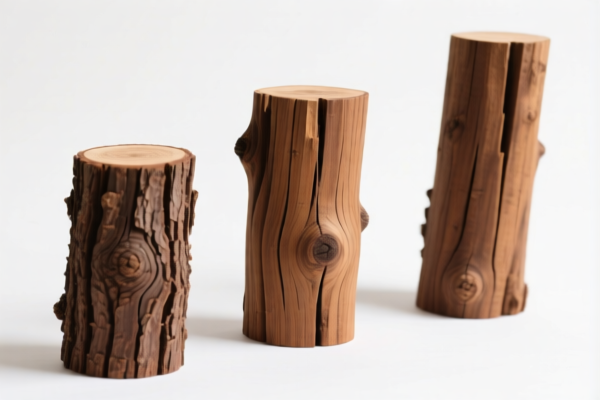
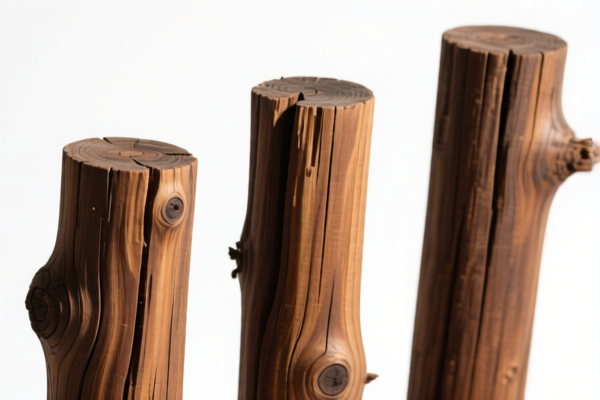
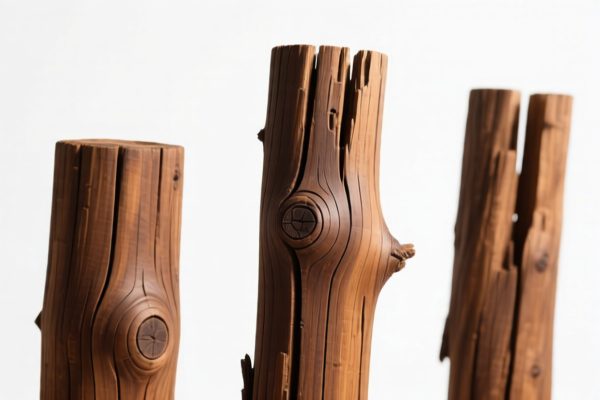
AI Analysis
🌲 Preserved Pine Wood Posts (防腐处理松木柱/松木围栏柱)
🌐 HS Code Reference & Customs Clearance Guide | 2026 Latest Tariff Analysis | Professional Entry Strategy
📌 I. Product Definition & Classification: What Exactly Are "Preserved Pine Wood Posts"?
Preserved Pine Wood Posts are structural timber components primarily used in outdoor construction, landscaping, and fencing. In international trade, they are classified based on their state of processing and specific use.
These posts typically undergo chemical treatment (preservation) to resist rot, insects, and weathering. The key distinction in customs classification lies in whether the wood is classified as "treated timber" (raw/semi-processed) or "wood articles" (finished/semi-finished goods).
⚠️ Key Distinction Point:
- If the wood is primarily treated timber intended for further processing or general structural use (including specific forms like poles/posts), it falls under Chapter 44.03 (Wood prepared for veneering or flooring, etc.) or Chapter 44.07 (Wood sawn or chipped lengthwise).
- If the wood is specifically identified as an "article of wood" (like a fence post or rail) regardless of treatment, it may fall under Chapter 44.21 (Other articles of wood).📌 Critical Note for Pine Posts:
- "Preserved" (防腐处理) adds a layer of complexity. Treated wood often incurs higher additional tariffs due to trade policies targeting Chinese forestry products.
- "Posts" (柱) can be classified under "piles, pickets, and fencing posts" (44.03) or "other articles" (44.21). The summary data provided shows multiple potential codes, reflecting the nuance between "treated sawn wood" and "specific fence articles."
📦 II. HS Code Classification Details (Based on Provided Data)
According to the provided <DATA>, there are four specific HS Codes applicable to Preserved Pine Wood Posts. Note that all carry the same high tax burden.
| HS Code | Product Description & Classification Logic | Tax Summary |
|---|---|---|
4407.11.00.02 |
Rough, square, preserved pine wood posts. Classification: Classified as sawn wood (Chapter 44.07). It is "rough" (not planed) and "square," with explicit preservation treatment. |
35.0% Total Tax |
4403.21.01.15 |
Pine wood fence posts. Classification: Classified as prepared timber (Chapter 44.03). Specifically for fence posts (pickets/posts). The use defines the classification here. |
35.0% Total Tax |
4421.99.70.40 |
Pine wood fence posts. Classification: Classified as Other articles of wood (Chapter 44.21). The description highlights it as a "column/post" falling under sawn piles, fence posts, and rails as articles. |
35.0% Total Tax |
4403.22.01.15 |
Pine wood fence posts. Classification: Similar to 4403.21, classified under prepared timber (Chapter 44.03). Specific to pine and fence posts. |
35.0% Total Tax |
🔍 重点提醒 (Critical Reminder):
- All four codes result in the same 35% total tariff rate.
- The choice between4403(Prepared Timber) and4407(Sawn Wood) often depends on the dimensional specifications and degree of finish (rough vs. planed).
- The choice between4403/4407and4421depends on whether the customs officer views the item primarily as raw material (timber) or a finished article (fencing component).
- Preservation Treatment is a key keyword that triggers stricter scrutiny and applies the additional tariffs.
💰 III. 2026 Latest Tariff Rate Breakdown (Including Surcharges)
✅ Applicable Country: USA (US)
✅ Country of Origin: China (CN)
✅ Total Tax Rate: 35.0%
✅ Effective Date: Current as per data (Includes Section 301 and IEEPA tariffs)
🎯 1. Universal Tax Structure for All Listed HS Codes
| Item | Details |
|---|---|
| Base Tariff (MFN) | 0.0% |
| Section 301 / Additional Tariff | +25.0% |
| Section 122 Tariff (IEEPA) | +10.0% |
| Total Tariff Rate | 35.0% |
| Calculation Base | CIF Value × 35% |
| De Minimis Exemption | ❌ Not Eligible (deny_de_minimis) |
📌 Detailed Explanation of Tax Components:
- Base Tariff (0%): Pine wood products often have a low or zero base Most Favored Nation (MFN) tariff.
- Section 301 Tariff (+25%): This is the standard additional tariff on Chinese imports under U.S. Trade Law Section 301. It applies to most wood products from China.
- Section 122 Tariff (+10%): This refers to tariffs imposed under the International Emergency Economic Powers Act (IEEPA), specifically targeting certain Chinese goods. In the provided data, this is listed as "122条款关税10%".
- Why 35%?: $0\% + 25\% + 10\% = 35\%$. This is a high-cost import category.
🛠️ IV. Customs Clearance Practical Advice (Avoid Pitfalls)
✅ 1. Required Documentation Checklist
| Document | Mandatory? | Purpose |
|---|---|---|
| ✅ Product Specification Sheet | ✔️ | Must detail: Wood type (Pine), dimensions (rough/square), Preservation Treatment Type (e.g., CCA, ACQ, or non-toxic), and usage (fence post). |
| ✅ Certificate of Treatment | ✔️ | Proof of chemical preservation process. Required for phytosanitary and trade policy compliance. |
| ✅ Commercial Invoice | ✔️ | Must clearly state "Preserved Pine Wood Posts" and HS Code. Avoid vague terms like "Wooden Sticks." |
| ✅ Packing List | ✔️ | Must show weight and dimensions. Confirm if posts are bundled or loose. |
| ✅ Phytosanitary Certificate | ✔️ | Critical for Wood Products! Issued by the country of export to prove the wood is free of pests and diseases. |
| ✅ ISPM 15 Mark (if applicable) | ✔️ | If wood packaging is used, it must be heat-treated or fumigated. |
✅ 2. Declaration Tips (Key Mantra)
🔥 "Declare Treatment, Specify Use, Avoid Ambiguity!"
| Scenario | Correct Declaration | Wrong Declaration |
|---|---|---|
| Preserved Posts | "Preserved Pine Wood Fence Posts, Rough Square" | "Wooden Posts" |
| Treatment Type | "Chemically Preserved (ACQ)" | "Treated Wood" (Too vague) |
| HS Code Selection | Use one of the four provided codes consistently | Mix 4403 and 4421 arbitrarily |
✅ 3. Special Handling for Wood Imports
| Issue | Advice |
|---|---|
| Pest Control | Ensure the wood has been treated and documented. Lack of a Phytosanitary Certificate can lead to quarantine destruction or return. |
| Moisture Content | Declare moisture content if it affects the classification (e.g., green vs. dry wood). |
| Origin Proof | Provide clear evidence of Chinese Origin to apply the correct tariff schedule. Misdeclaration of origin can lead to severe penalties. |
🌍 V. Global Market Comparison (2026)
| Country/Region | Recommended HS Code | Estimated Total Tariff | Key Requirement | Notes |
|---|---|---|---|---|
| 🇺🇸 USA | 4403.21.01.15 / 4421.99.70.40 |
35% (301 + IEEPA) | Phytosanitary Cert, ISPM 15 | Highest cost. Strict enforcement on treated wood. |
| 🇨🇳 China (Import) | 4407.11.00.02 |
~0-5% | None | Low duty for domestic processing. |
| 🇪🇺 EU | 4407.10.90 |
~0-6.5% | Fitosanitary Cert, EU Timber Regulation (EUTR) | No Section 301 tariffs, but strict sustainability compliance. |
| 🇯🇵 Japan | 4407.11.00 |
~0-5% | Fitosanitary Cert | No major anti-dumping duties, but strict quality checks. |
📌 Conclusion:
- The USA is the most expensive market for Chinese-preser ved pine wood posts due to the 35% total tariff.
- EU and Japan are more cost-effective but require strict environmental and phytosanitary compliance.
📌 VI. Common Mistakes & Pitfalls (Lessons Learned)
❌ Mistake 1: Using "Wood Posts" instead of "Preserved Pine Wood Fence Posts"
👉 Consequence: Customs may misclassify the item, leading to delayed clearance or incorrect duty assessment. If misclassified as non-treated wood, penalties for false declaration apply.
❌ Mistake 2: Forgetting the Phytosanitary Certificate
👉 Consequence: Quarantine detention, potential destruction of cargo, or return to origin. This is the #1 cause of delays for wood products.
❌ Mistake 3: Not specifying "Preserved" in the declaration
👉 Consequence: If the wood is actually treated but declared as "natural," it may fail pest inspections. If declared as "treated" but not properly documented, it may trigger additional inspections.
❌ Mistake 4: Ignoring the 35% Tariff in Cost Calculation
👉 Consequence: Profit margin erosion. Many importers forget to include Section 301 and IEEPA tariffs, leading to unexpected costs.
✅ Correct Practice:
"Preserved Pine Wood Fence Posts, Rough Square, Chemically Treated, ISPM 15 Compliant, HS Code: 4403.21.01.15"
🎯 VII. Conclusion: Professional Declaration, Cost Control, Smooth Clearance
🎯 Remember the Mantra:
🔹 "Wood Posts, Check Pest, Treat is Key, Tariff is 35%!"
🔹 "HS Code 4403/4407/4421, All 35%, Don't Guess, Get it Right!"
📌 Pro Tip:
- For US Imports, budget for 35% total duty.
- Ensure Phytosanitary Certificate is valid and matches the invoice.
- Consider pre-classification rulings from CBP if the product form (rough vs. finished) is ambiguous.
📣 Immediate Action:
📞 Contact your freight forwarder + Provide Product Photos + Verify Phytosanitary Certificate
🚀 Ensure your Preserved Pine Wood Posts clear customs smoothly, avoid penalties, and maximize your profit margins!
✨ Professional Clearance Starts with Precise Classification!
💼 Every Percent of Duty Counts – Don't Leave Money on the Table!
Customer Reviews
About HS Code Classification
The Harmonized System (HS) is an internationally standardized nomenclature developed by the World Customs Organization (WCO) to classify traded products. Over 200 countries use the HS system as the basis for customs tariffs, trade statistics, and import/export regulations.
Each HS code follows a hierarchical structure:
- Chapter (2 digits) — Broad category of goods (e.g., Chapter 84: Machinery and Mechanical Appliances)
- Heading (4 digits) — More specific grouping within the chapter
- Subheading (6 digits) — Internationally standardized breakdown, used by all WCO member countries
- National subdivisions (8-10 digits) — Country-specific extensions for further classification, such as US HTSUS 10-digit codes
Correct HS code classification is essential for smooth customs clearance, accurate duty payment, and compliance with trade regulations. Misclassification can lead to customs delays, overpayment of duties, or penalties.
When importing from CN to US, the applicable tariff rates may include:
- Most-Favored-Nation (MFN) rate — The standard duty rate applied to WTO members
- General rate — Applied to countries without trade agreements
- Trade remedy duties — Additional tariffs such as Section 301 (anti-dumping), Section 232 (national security), or countervailing duties
The information provided on this page is for reference purposes only. For official classification, please consult with your local customs authority or a licensed customs broker.