Preserved Sheepskin
CN → US| HS Code | Tariff Rate | Origin | Destination | Doc |
|---|---|---|---|---|
| 4102103000 | 12.0% | CN | US | Official Doc |
| 4102293000 | 19.5% | CN | US | Official Doc |
| 4301300000 | 10.0% | CN | US | Official Doc |
| 4301900000 | 10.0% | CN | US | Official Doc |
Product Images
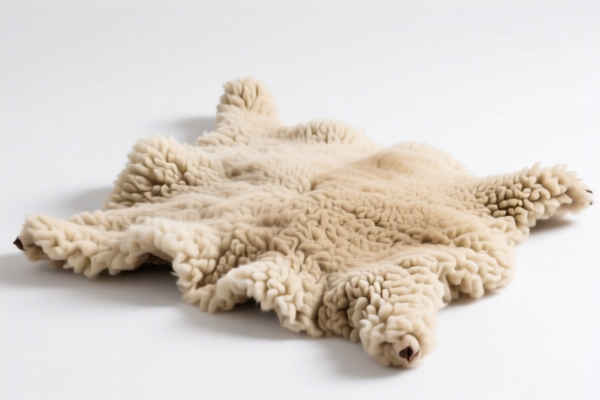
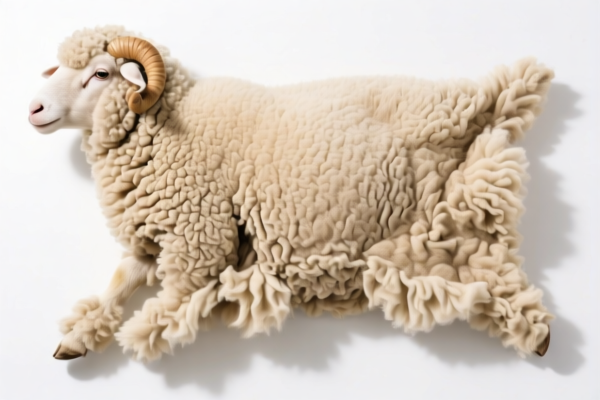
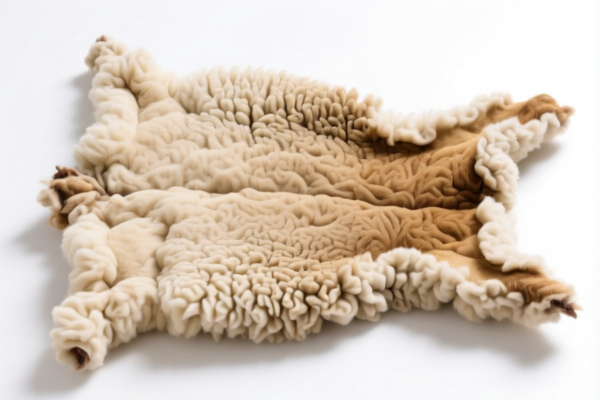
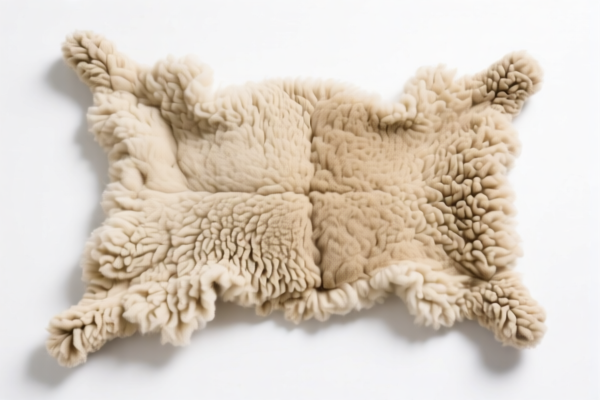
AI Analysis
🐑 Preserved Sheepskin (Raw/Hides)
🌐 HS Code Reference & Customs Clearance Guide | 2026 Latest Tariff Analysis | Professional Entry Strategy
📌 Part 1: Product Definition – What Exactly Is "Preserved Sheepskin"?
Preserved Sheepskin refers to sheep skins or hides that have undergone preservation processes (such as salting, drying, or chemical tanning/pre-tanning) to prevent decay, but are NOT yet fully tanned into leather suitable for direct use as finished goods. In international trade, these are classified under Chapter 41 (Leather) or Chapter 43 (Furskins), depending on the specific processing state and intended use.
⚠️ Key Distinction:
- If the skin is fresh/raw or salted/dried without significant tanning → Typically falls under Chapter 41 (Leather/Hides).
- If the skin is curated for fur (with wool intact) and considered a "fur raw material" → May fall under Chapter 43 (Furskins).
- Crucial Note: The summary data indicates specific classifications based on whether it is considered "raw hide" (Ch 41) or "fur raw skin" (Ch 43).
📦 Part 2: HS Code Classification Details (2026 Latest Tariff Authority)
Based on the provided data, here are the precise HS Code mappings for Preserved Sheepskin:
| HS Code | Product Description | Classification Basis | Total Tax Rate |
|---|---|---|---|
4102.10.30.00 |
Sheepskin (Raw Hide) | Direct match with material name; meets characteristics of raw hide. | 12.0% |
4102.29.30.00 |
Sheepskin (Sheep/Lamb Raw Skin) | Material is sheep/lamb raw skin, untanned. | 19.5% |
4301.30.00.00 |
Sheepskin (Lamb Skin/Fur Raw) | Classified under "Lamb skin/Sheep skin" within raw furskin category. | 10.0% |
4301.90.00.00 |
Sheepskin (Other Fur Raw Skin) | Classified under "Raw furskin category," used as merchant fur material. | 10.0% |
🔍 Key Insight:
- Chapter 41 (4102.x): Focuses on leather/hides. Higher base taxes apply if additional levies are active.
- Chapter 43 (4301.x): Focuses on fur raw materials. Lower base tax (0%) but subject to specific "122 Clause" tariffs.
- Selection Criteria: Depends on whether customs views the product as "hide for leather making" (Ch 41) or "skin for fur products" (Ch 43).
💰 Part 3: 2026 Tariff Rate Breakdown (Including Surtaxes & Policy Levies)
✅ Applicable Country: USA (US)
✅ Origin: China (CN)
✅ Effective Date: 2025 onwards (subject to current trade policies)
🎯 1. 4102.10.30.00 – Sheepskin (Raw Hide)
| Item | Details |
|---|---|
| Base Tariff | 2.0% |
| Surtax (Section 301/Other) | 0.0% |
| "122 Clause" Tariff | +10.0% |
| Total Effective Rate | 12.0% |
| Tax Calculation | CIF Value × 12.0% |
| De Minimis Exemption? | ❌ No (Denied) |
| Legal Basis Path | Base Tariff → 122 Clause: +10% |
📌 Explanation:
- This code assumes standard raw hide classification.
- The 10% "122 Clause" is a significant additional levy.
- No additional Section 301 surtax is listed here in the provided data.
🎯 2. 4102.29.30.00 – Sheepskin (Sheep/Lamb Raw Skin)
| Item | Details |
|---|---|
| Base Tariff | 2.0% |
| Surtax (Section 301/Other) | +7.5% |
| "122 Clause" Tariff | +10.0% |
| Total Effective Rate | 19.5% |
| Tax Calculation | CIF Value × 19.5% |
| De Minimis Exemption? | ❌ No (Denied) |
| Legal Basis Path | Base Tariff → Surtax: +7.5% → 122 Clause: +10% |
📌 Explanation:
- This code applies to specific sheep/lamb raw skins.
- Total rate is high (19.5%) due to the combination of a 7.5% surtax and the 10% 122 Clause.
- This is the most expensive option among the listed codes.
🎯 3. 4301.30.00.00 – Sheepskin (Lamb Skin/Fur Raw)
| Item | Details |
|---|---|
| Base Tariff | 0.0% |
| Surtax (Section 301/Other) | 0.0% |
| "122 Clause" Tariff | +10.0% |
| Total Effective Rate | 10.0% |
| Tax Calculation | CIF Value × 10.0% |
| De Minimis Exemption? | ❌ No (Denied) |
| Legal Basis Path | Base Tariff → 122 Clause: +10% |
📌 Explanation:
- Classified under Furskin (Chapter 43).
- Lower base tax (0%) makes this more competitive than Chapter 41 codes.
- Only the 10% 122 Clause applies.
🎯 4. 4301.90.00.00 – Sheepskin (Other Fur Raw Skin)
| Item | Details |
|---|---|
| Base Tariff | 0.0% |
| Surtax (Section 301/Other) | 0.0% |
| "122 Clause" Tariff | +10.0% |
| Total Effective Rate | 10.0% |
| Tax Calculation | CIF Value × 10.0% |
| De Minimis Exemption? | ❌ No (Denied) |
| Legal Basis Path | Base Tariff → 122 Clause: +10% |
📌 Explanation:
- Same tariff structure as4301.30.00.00.
- Used for sheepskin categorized broadly under "other" fur raw materials.
- Best Option for cost efficiency if the product qualifies as fur raw material.
🛠️ Part 4: Customs Clearance Practical Advice (Avoid Pitfalls)
✅ 1. Documentation Checklist (Non-Negotiable)
| Document | Required? | Notes |
|---|---|---|
| ✅ Commercial Invoice | ✔️ | Must clearly state "Preserved Sheepskin" or "Raw Sheepskin" |
| ✅ Packing List | ✔️ | Include weight, dimensions, and number of skins |
| ✅ Species Declaration | ✔️ | Specify: Sheep vs. Lamb (affects HS code choice) |
| ✅ Processing Status | ✔️ | Confirm: Salting, Drying, or Pre-tanned? |
| ✅ Intended Use | ✔️ | Leather production vs. Fur product manufacturing |
| ✅ Origin Certificate | ✔️ | If claiming preferential treatment (if any) |
✅ 2. HS Code Selection Strategy (Key Decision Points)
| Scenario | Recommended HS Code | Reason |
|---|---|---|
| Product is clearly raw hide for leather | 4102.10.30.00 or 4102.29.30.00 |
Chapter 41 is for leather hides. |
| Product is raw skin with wool intact for fur | 4301.30.00.00 or 4301.90.00.00 |
Chapter 43 is for furskins. |
| Cost Minimization Priority | 4301.30.00.00 or 4301.90.00.00 |
10% total tax vs. 12–19.5% in Chapter 41. |
| Risk Avoidance | Match product description to summary | Ensure the "summary" provided by your broker aligns with physical product. |
🔥 Golden Rule:
"Fur Raw → Chapter 43 (10%) | Hide Raw → Chapter 41 (12–19.5%)"
Misclassification can lead to seizure, fines, or back-taxes.
✅ 3. Special Considerations
| Situation | Advice |
|---|---|
| "122 Clause" Tariff | This is a mandatory 10% levy on all listed codes. Factor this into cost calculations. |
| De Minimis (Section 321) | ❌ Not Applicable. Sheepskin imports cannot use the $800 de minimis exemption. Formal entry required. |
| Biosafety/Phytosanitary | Ensure skins are properly preserved to prevent pest/disease risks. May require vet certificates. |
| Labeling | Clearly mark "Raw Animal Skin" or "Preserved Sheepskin" on packaging. |
🌍 Part 5: Global Market Comparison (2026)
| Country/Region | Recommended HS Code | Approx. Tariff | Notes |
|---|---|---|---|
| 🇺🇸 USA | 4301.30.00.00 |
10% | Best rate via Chapter 43. "122 Clause" applies. |
| 🇺🇸 USA | 4102.10.30.00 |
12% | Alternative if classified as hide. |
| 🇺🇸 USA | 4102.29.30.00 |
19.5% | Highest cost. Avoid if possible. |
| 🇪🇺 EU | 4102.21 |
~10% | Check EU-specific nomenclature. |
| 🇨🇳 China | 4102.21 |
~5–10% | Varies by province and trade policy. |
| 🇬🇧 UK | 4102.21 |
~0–10% | Post-Brexit tariffs may differ. |
📌 Conclusion:
- USA imposes specific surtaxes ("122 Clause") on these goods.
- Chapter 43 (4301.x) is generally more tax-efficient than Chapter 41 for preserved sheepskin.
- Formal Entry is mandatory; de minimis does not apply.
📌 Part 6: Common Errors & Pitfalls (Lessons Learned)
❌ Error 1: Classifying sheepskin as "Finished Leather"
👉 Result: Wrong HS code (e.g., 4107.x), potential penalty.
✅ Fix: Clearly declare as "Preserved/Raw Sheepskin."
❌ Error 2: Ignoring the "122 Clause"
👉 Result: Underpayment of 10% tax → Back taxes + penalties.
✅ Fix: Always include 10% additional duty in cost calculations.
❌ Error 3: Using De Minimis for Bulk Shipments
👉 Result: Shipment held at customs, demurrage fees, return shipment.
✅ Fix: Use formal customs entry for all sheepskin imports.
❌ Error 4: Misidentifying Sheep vs. Lamb
👉 Result: Incorrect HS code subheading, audit risk.
✅ Fix: Provide species details in documentation.
🎯 Part 7: Conclusion – Professional Classification, Cost Efficiency, Smooth Clearance
🎯 Key Takeaways:
🔹 "Chapter 43 for Fur, Chapter 41 for Leather"
🔹 "122 Clause = 10% Extra Duty"
🔹 "No De Minimis for Animal Products"📌 Pro Tip:
If your sheepskin has wool intact and is intended for fur garments or accessories, classify under 4301.30.00.00 or 4301.90.00.00 for the lowest effective tariff (10%).
If it is for leather goods (jackets, shoes), classify under 4102, but expect 12–19.5%.
📣 Immediate Action:
📞 Consult a licensed customs broker to confirm the final HS code based on physical product samples.
📄 Prepare detailed documentation including species, preservation method, and intended use.
💼 Budget for 10–19.5% tariff in your import cost model.
✨ Precise Classification Saves Money!
💼 Every percent matters in global trade.
Customer Reviews
About HS Code Classification
The Harmonized System (HS) is an internationally standardized nomenclature developed by the World Customs Organization (WCO) to classify traded products. Over 200 countries use the HS system as the basis for customs tariffs, trade statistics, and import/export regulations.
Each HS code follows a hierarchical structure:
- Chapter (2 digits) — Broad category of goods (e.g., Chapter 84: Machinery and Mechanical Appliances)
- Heading (4 digits) — More specific grouping within the chapter
- Subheading (6 digits) — Internationally standardized breakdown, used by all WCO member countries
- National subdivisions (8-10 digits) — Country-specific extensions for further classification, such as US HTSUS 10-digit codes
Correct HS code classification is essential for smooth customs clearance, accurate duty payment, and compliance with trade regulations. Misclassification can lead to customs delays, overpayment of duties, or penalties.
When importing from CN to US, the applicable tariff rates may include:
- Most-Favored-Nation (MFN) rate — The standard duty rate applied to WTO members
- General rate — Applied to countries without trade agreements
- Trade remedy duties — Additional tariffs such as Section 301 (anti-dumping), Section 232 (national security), or countervailing duties
The information provided on this page is for reference purposes only. For official classification, please consult with your local customs authority or a licensed customs broker.