Presser Foot Set
CN → US| HS Code | Tariff Rate | Origin | Destination | Doc |
|---|---|---|---|---|
| 8448205010 | 20.8% | CN | US | Official Doc |
| 8448205090 | 20.8% | CN | US | Official Doc |
| 8452902010 | 17.5% | CN | US | Official Doc |
| 8452902090 | 17.5% | CN | US | Official Doc |
| 7326908688 | 87.9% | CN | US | Official Doc |
| 7326908676 | 87.9% | CN | US | Official Doc |
Product Images
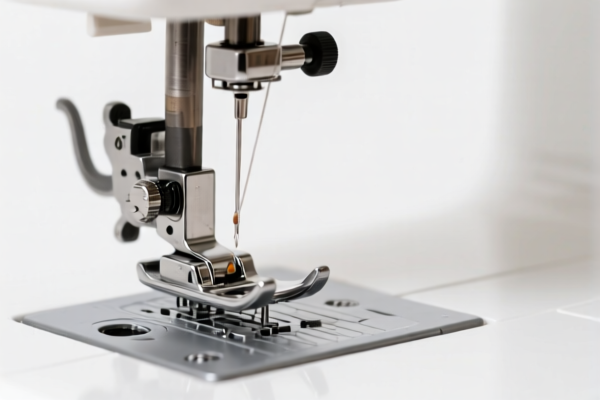
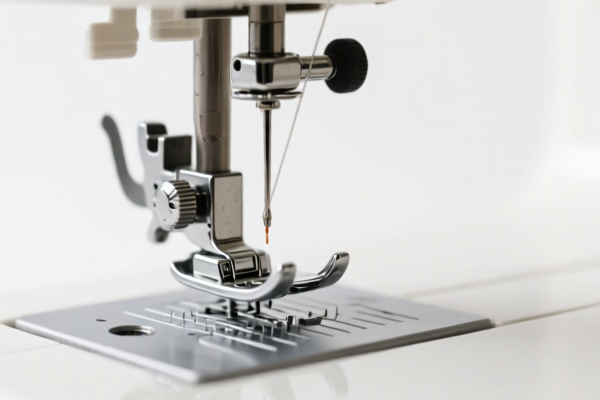
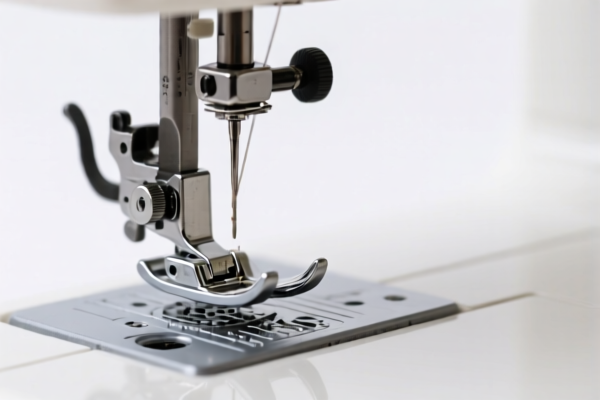
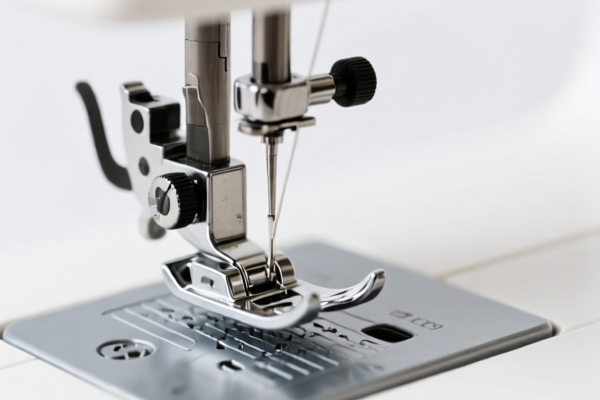
AI Analysis
🧵 Presser Foot Set (Sewing Machine Accessories)
🌐 HS Code Reference & Customs Clearance Guide | 2026 Latest Tariff Analysis | Professional Clearance Strategy
📌 I. Product Definition & Classification: Do You Really Understand "Presser Feet"?
A Presser Foot Set consists of various interchangeable metal or plastic attachments designed to hold fabric in place while sewing. In international trade, these are strictly classified based on their specific design and the type of sewing machine they support.
They are generally divided into two main categories based on their intended use and machine compatibility:
1. Parts for Household Sewing Machines:
Designed for standard domestic sewing machines (often made of metal, plastic, or nylon). These are the most common presser feet used in home tailoring, quilting, and crafts.
2. Parts for Industrial/Textile Machinery (Headings 8444-8447 Auxiliary):
Specialized components used primarily with machines in headings 8444 (Synthetic fiber extrusion), 8445 (Preparation of textile fibers), 8446 (Weaving), or 8447 (Knitting). Note: While some industrial presser feet exist, the vast majority of generic "Presser Foot Sets" sold internationally fall under the general sewing machine parts category unless specifically designated for extrusion/knitting auxiliary machinery.
⚠️ Key Distinction Point:
- If the product is explicitly described as "Parts of sewing machines of heading 8452" (standard sewing machines) →归入 8452.90.20.xx
- If the product is explicitly for "Auxiliary machinery of heading 8444, 8445, 8446, or 8447" (e.g., specific knitting shuttle changes, extrusion nipples/shuttles) → 归入 8448.20.50.xx
- Crucial Note: Most standard presser feet (zigzag, buttonhole, zipper feet) are NOT classified under Heading 8448 unless they are specific auxiliary mechanisms for industrial spinning/weaving/knitting prep. Standard sewing machine feet fall under 8452.
📦 II. HS Code Classification Details (2026 Latest Tariff Authority Match)
Based on the provided data, here are the relevant HS Codes for Presser Foot Sets and related components:
| HS Code | Product Description | Applicable Scenario | Tariff Rate (Total) |
|---|---|---|---|
8452.90.20.10 |
Other parts of sewing machines: Of household machines | Standard presser feet for home sewing machines (metal/plastic sets, zigzag feet, buttonhole feet). | 7.5% |
8452.90.20.90 |
Other parts of sewing machines: Other | Presser feet for industrial sewing machines (non-household) or non-standard specialized feet not for household use. | 7.5% |
8448.20.50.10 |
Parts and accessories: Other of texturing machines | Specifically parts for texturing machines (Heading 8444 auxiliary). Only applies if explicitly for textile extrusion/texturing. | 0.0% |
8448.20.50.90 |
Parts and accessories: Other Other | Other parts for machines of Heading 8444, 8445, 8446, or 8447 (e.g., specific knitting machine combs, shuttles, healds). | 0.0% |
🔍 Critical Clarification:
- Standard Presser Foot Sets (for brands like Singer, Brother, Janome, Juki domestic models) MUST be classified under 8452.90.20.10 (Household) or 8452.90.20.90 (Industrial/Other).
- They do NOT fall under Heading 8448 unless they are specific auxiliary mechanisms for texturing, extrusion, or knitting preparation (e.g., specific knitting machine needles/shuttles/combs). Do NOT misclassify standard sewing feet as "texturing machine parts" to avoid customs rejection.
💰 III. 2026 Latest Tariff Rate Detail (Including Surtaxes & Policy Add-ons)
✅ Applicable Country: United States (US)
✅ Origin: China (CN)
✅ Effective Date: 2025/2026 (Current Policy)
🎯 1. 8452.90.20.10 & 8452.90.20.90 —— Presser Feet (Sewing Machine Parts)
| Item | Content |
|---|---|
| Base Tariff (MFN) | 0.0% (ad valorem) |
| Section 301 Surtax (USITC) | +7.5% (Specific rate for certain sewing machine parts under Section 301) |
| Total Tariff Rate | 7.5% |
| Tax Calculation | CIF Value × 7.5% |
| De Minimis Eligibility | ❌ Not Applicable (For shipments >$800, or if de minimis is restricted for CN origin) |
| Legal Basis Path | USITC:8452.90.20.10 / 8452.90.20.90 → Section 301 Footnote |
📌 Explanation:
- The Base Tariff is 0%, which is favorable.
- However, a 7.5% surtax applies due to US trade policy measures on specific sewing machine components.
- Total Cost Impact: 7.5% is relatively low compared to steel/aluminum products (up to 77.9%).
- Important: This rate is NOT subject to the "Steel, Aluminum, Copper" 50% surtax.
🎯 2. 8448.20.50.10 & 8448.20.50.90 —— If Misclassified as Texturing/Knitting Machine Parts
| Item | Content |
|---|---|
| Base Tariff | 0.0% |
| Surtax | 0.0% |
| Total Tariff | 0.0% |
⚠️ Warning:
- While the rate is 0%, these HS codes are strictly for auxiliary machinery of Heads 8444-8447.
- If you ship a standard "Presser Foot Set for Sewing Machines" under these codes, Customs will likely reject the declaration, demand reclassification, and impose penalties.
- Do not use 0% codes for standard presser feet unless they are explicitly for industrial knitting/extrusion machinery.
🛠️ IV. Customs Clearance Practical Advice (Battle-Tested Tips)
✅ 1. Required Documentation Checklist
| Document | Required? | Notes |
|---|---|---|
| ✅ Product Specification Sheet | ✔️ | Must list: Material (Metal/Plastic), Compatibility (Singer/Brother/etc.), Quantity per set. |
| ✅ Clear Product Name | ✔️ | Use "Presser Foot Set for Household Sewing Machines" or "Industrial Sewing Machine Parts". Avoid vague terms like "Sewing Accessories." |
| ✅ Commercial Invoice | ✔️ | Must match HS Code description. Declare value per set. |
| ✅ Photos of Products | ✔️ | Show the feet clearly labeled with "Sewing Machine Parts." |
| ✅ List of Compatible Machines | ✔️ | Helps customs verify if it’s for household (8452) or industrial auxiliary (8448). |
✅ 2. Declaration Strategy (Key Mnemonic)
🔥 "Household 8452, Industrial 8452, Texturing 8448. Don't mix them!"
| Scenario | Correct HS Code | Incorrect HS Code | Consequence |
|---|---|---|---|
| Standard Presser Feet (Home Use) | 8452.90.20.10 |
8448.20.50.90 |
Rejection: Wrong classification. 7.5% tax owed + penalties. |
| Industrial Sewing Machine Feet | 8452.90.20.90 |
8448.20.50.90 |
Risk: Customs may question if it’s truly for Head 8444-8447 machinery. |
| Knitting Machine Needles/Shuttles | 8448.20.50.90 |
8452.90.20.90 |
High Tax: If misclassified as sewing parts, you might pay 7.5% instead of 0%, or face inspection. |
| Broom Handles (Steel) | 7326.90.86.76 |
8452.90.20.10 |
Severe Penalty: Wrong product entirely. 52.9% tax vs 7.5%. |
✅ 3. Special Considerations
| Situation | Handling Advice |
|---|---|
| Mixed Sets | If a set contains only sewing machine presser feet, use 8452. If it includes knitting machine combs/healds, use 8448. Do not mix categories in one line item. |
| Plastic vs. Metal | Material does not change the HS Code for sewing parts. Both fall under 8452.90.20. |
| OEM/Private Label | Provide the original manufacturer’s catalog to prove compatibility. |
| De Minimis | For shipments under $800, ensure the carrier handles Section 301 duties if required. However, recent rules may require pre-payment of duties for CN origin. |
🌍 V. Global Market Comparison (2026 Update)
| Country/Region | Recommended HS Code | Tariff (CN Origin) | Certification | Remarks |
|---|---|---|---|---|
| 🇺🇸 USA | 8452.90.20.10/90 |
7.5% | N/A | Low tariff, no high surtax. |
| 🇪🇺 EU | 8452.90.90 |
~4-6% | CE (if electric) | Standard low tariff for parts. |
| 🇨🇳 China | 8452.90.90 |
0% | N/A | Imports into China have 0% duty on these parts. |
| 🇬🇧 UK | 8452.90.90 |
~6% | UKCA | Post-Brexit rules apply. |
| 🇨🇦 Canada | 8452.90.90 |
0% (if USMCA eligible) | N/A | Check origin for duty-free status. |
📌 Conclusion:
- The US tariff of 7.5% is very competitive compared to other goods (like steel at 50%+).
- Ensure you do NOT misclassify as "Steel Articles" (7326) which could incur 52.9% - 77.9%.
📌 VI. Common Mistakes & Pitfalls (Lessons Learned)
❌ Mistake 1: Classifying Presser Feet under 7326.90 (Other Articles of Iron/Steel).
👉 Result: 52.9% - 77.9% Tax! (Because they are parts of machines, not general steel articles).
👉 Fix: Always use 8452 for sewing machine parts.
❌ Mistake 2: Using 8448 (Texturing/Knitting Aux) for Standard Sewing Feet.
👉 Result: Customs rejection, audit, and potential fraud allegations.
👉 Fix: Use 8452 for standard sewing machine presser feet. Use 8448 only for knitting/extrusion auxiliary parts.
❌ Mistake 3: Vague Description "Sewing Accessories".
👉 Result: Customs delays, request for additional info.
👉 Fix: Use "Presser Foot Set, Model XYZ, for Household Sewing Machines".
✅ Correct Declaration Example:
"Presser Foot Set, Metal and Plastic, for Household Sewing Machines, Compatible with Singer/Brother, Model PF-100, HS 8452.90.20.10"
🎯 VII. Conclusion: Professional Classification Saves Money!
🎯 Key Takeaways:
🔹 Standard Presser Feet → 8452.90.20.10/90 → 7.5% Total Tariff.
🔹 Industrial Knitting/Extrusion Parts → 8448.20.50.90 → 0% Tariff (But strictly for those machines).
🔹 Never classify presser feet as 7326 (Steel Articles) → Avoid 50%+ Surtax.🚀 Pro Tip:
If you are shipping large volumes of presser feet, consider applying for an Advance Ruling to confirm classification. The 7.5% rate is stable, but correct classification is key to avoiding delays.
📣 Action Required:
📞 Contact your customs broker with the product photos and compatibility list.
📄 Declare accurately: "Sewing Machine Presser Feet, HS 8452.90.20.10."
💰 Budget for 7.5% duty – it’s low, but it’s mandatory.
✨ Precision in Classification = Profit in Your Pocket!
💼 Don’t let a wrong HS Code cost you 50% in extra tariffs!
Customer Reviews
About HS Code Classification
The Harmonized System (HS) is an internationally standardized nomenclature developed by the World Customs Organization (WCO) to classify traded products. Over 200 countries use the HS system as the basis for customs tariffs, trade statistics, and import/export regulations.
Each HS code follows a hierarchical structure:
- Chapter (2 digits) — Broad category of goods (e.g., Chapter 84: Machinery and Mechanical Appliances)
- Heading (4 digits) — More specific grouping within the chapter
- Subheading (6 digits) — Internationally standardized breakdown, used by all WCO member countries
- National subdivisions (8-10 digits) — Country-specific extensions for further classification, such as US HTSUS 10-digit codes
Correct HS code classification is essential for smooth customs clearance, accurate duty payment, and compliance with trade regulations. Misclassification can lead to customs delays, overpayment of duties, or penalties.
When importing from CN to US, the applicable tariff rates may include:
- Most-Favored-Nation (MFN) rate — The standard duty rate applied to WTO members
- General rate — Applied to countries without trade agreements
- Trade remedy duties — Additional tariffs such as Section 301 (anti-dumping), Section 232 (national security), or countervailing duties
The information provided on this page is for reference purposes only. For official classification, please consult with your local customs authority or a licensed customs broker.