Pressure Control Valve
CN → US| HS Code | Tariff Rate | Origin | Destination | Doc |
|---|---|---|---|---|
| 8481100090 | 37.0% | CN | US | Official Doc |
| 8481809015 | 37.0% | CN | US | Official Doc |
| 9032896050 | 36.7% | CN | US | Official Doc |
| 9032810020 | 35.0% | CN | US | Official Doc |
| 8507908000 | 38.4% | CN | US | Official Doc |
Product Images
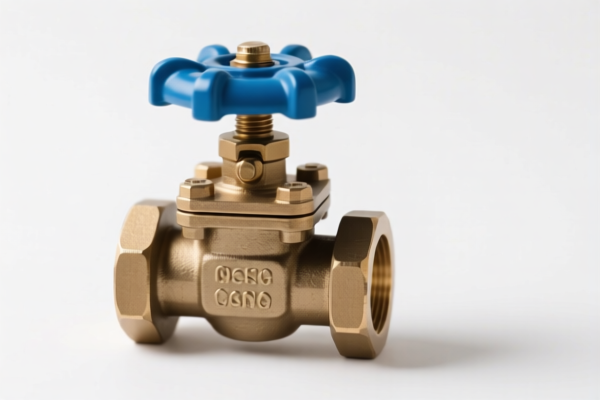
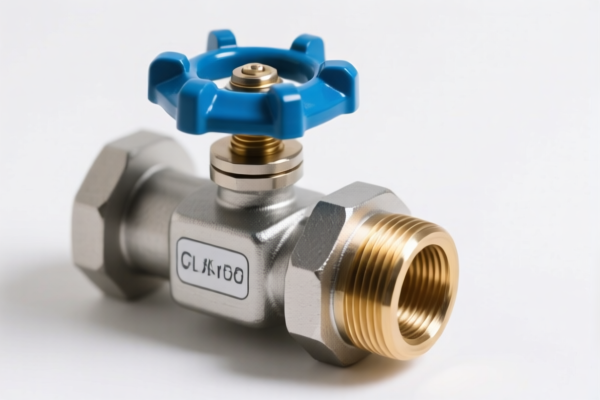
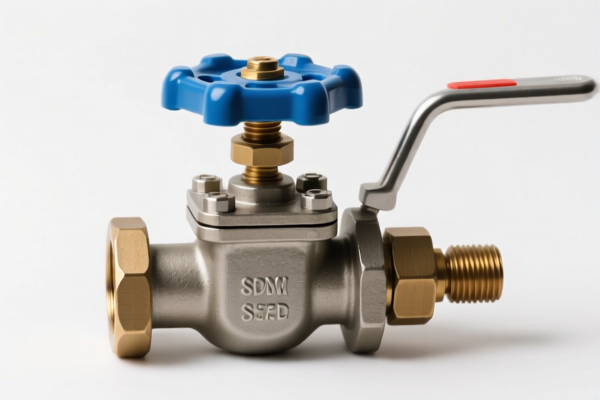

AI Analysis
⚙️ Pressure Control Valves & Water Level Control Valves
🌐 HS Code Reference & Customs Clearance Guide | 2026 Latest Tariff Analysis | Professional Clearance Strategy
📌 I. Product Definition & Classification: Are You Sorting Your Valves Correctly?
Pressure Control Valves (PCVs) and Water Level Control Valves (WLCVs) are critical components in industrial fluid systems. In international trade, they are often confused due to their similar functions. However, their classification depends heavily on whether they are standalone valves or integrated instrumentation/control devices.
Valve-Type Control Units: Devices that mechanically regulate pressure or flow. These fall under Chapter 84 (Nuclear Reactors, Boilers, Machinery and Mechanical Appliances). Instrument-Type Control Units: Devices that sense and automatically adjust pressure/level using electrical or electronic signals. These fall under Chapter 90 (Optical, Photographic, Cinematographic, Measuring, Checking, Precision, Medical or Surgical Instruments and Apparatus).
⚠️ Key Distinction:
- If it’s a mechanical valve (spring-loaded, diaphragm-operated) controlling pressure directly → Chapter 84
- If it’s an automated system with sensors/actuators regulating water/pressure → Chapter 90
📦 II. HS Code Classification Details (2026 Latest Tariff Authority Comparison)
Based on the provided data, here are the specific HS Codes and their logical justifications:
| HS Code | Product Description | Logical Justification from Data | Tax Rate |
|---|---|---|---|
9032.89.60.50 |
Pressure Control Instrument (Other) | Summary: Classified as a pressure control instrument, falling under other categories; Usage Match: Completely matches the purpose of pressure control. | 36.7% |
8481.10.00.90 |
Pressure Regulating Valves (Other) | Summary: Highly consistent with pressure relief valves; belongs to a "catch-all" category for other valves; No Functional Conflict. | 37.0% |
8481.80.90.15 |
Other Valves for Pressure Control | Summary: Fits the definition of "valves/appliances for controlling pressure"; No Material/Shape Conflict. | 37.0% |
9032.81.00.20 |
Water Level Control Valve (Industrial Process) | Summary: Belongs to industrial process control devices; Fits Definition: Meets the definition of automatic regulation or control instruments/apparatus. | 35.0% |
8507.90.80.00 |
Water Level Control Valve (Battery Part) | Summary: Classified as a part of electric storage batteries; Principle: No obvious material conflict in other categories. | 38.4% |
🔍 Critical Note:
-9032.89.60.50is optimal if the device is primarily an instrument for control.
-8481.x0.x0.xxcodes are best if the device is a mechanical valve (e.g., pressure relief, regulating valve).
-9032.81.00.20is specific for automatic water level control in industrial settings.
-8507.90.80.00is a niche classification for valves used specifically as parts of batteries (e.g., in UPS systems or electric vehicle battery cooling/control loops).
💰 III. 2026 Latest Tariff Rate Breakdown (Including Surcharges & Policy Add-ons)
✅ Applicable Country: United States (US)
✅ Origin: China (CN)
✅ Effective Date: Post-2025 (Current Trade War Rates Apply)
🎯 1. Pressure Control Valves (HS Codes: 9032.89.60.50, 8481.10.00.90, 8481.80.90.15)
| Item | Content |
|---|---|
| Base Tariff | 1.7% – 2.0% (ad valorem) |
| USITC Surcharge (Section 301) | +25.0% |
| Section 122 Tariff | +10.0% |
| Total Tax Rate | 36.7% – 37.0% |
| Tax Calculation | CIF Value × 36.7% (or 37.0%) |
| De Minimis Eligibility | ❌ Not Eligible (Deny de_minimis) |
| Legal Basis Path | USITC:9032.89.60.50 → FOOTNOTE:301 → IEEPA:122 |
📌 Explanation:
- The 25% USITC Surcharge is applied to most mechanical valves and industrial instruments from China under Section 301.
- The 10% Section 122 Tariff adds an additional layer of duty on imported goods affecting national security.
- Total Cost Impact: A $10,000 shipment will incur approximately $3,700 in duties/taxes.
🎯 2. Water Level Control Valve – Industrial Process (HS Code: 9032.81.00.20)
| Item | Content |
|---|---|
| Base Tariff | 0.0% |
| USITC Surcharge (Section 301) | +25.0% |
| Section 122 Tariff | +10.0% |
| Total Tax Rate | 35.0% |
| Tax Calculation | CIF Value × 35.0% |
| De Minimis Eligibility | ❌ Not Eligible |
📌 Advantage:
- This code has a 0% base tariff, making it 2.0% cheaper than the mechanical valve options.
- It is ideal if the water level control system includes automated sensing/regulation features.
🎯 3. Water Level Control Valve – Battery Part (HS Code: 8507.90.80.00)
| Item | Content |
|---|---|
| Base Tariff | 3.4% |
| USITC Surcharge (Section 301) | +25.0% |
| Section 122 Tariff | +10.0% |
| Total Tax Rate | 38.4% |
| Tax Calculation | CIF Value × 38.4% |
| De Minimis Eligibility | ❌ Not Eligible |
⚠️ Caution:
- This is the most expensive option.
- Only use this if the valve is explicitly sold as a spare part for electric storage batteries and not as a general industrial valve. Misclassification here can lead to customs audits.
🛠️ IV. Customs Clearance Practical Advice (Real-World Pitfall Guide)
✅ 1. Required Documentation Checklist
| Document | Mandatory? | Description |
|---|---|---|
| ✅ Product Specification Sheet | ✔️ | Must detail type (pressure/level), operating pressure/level range, material (brass, steel, PVC), and connection size. |
| ✅ Function Diagram | ✔️ | Crucial: Show if it’s a purely mechanical valve or has an electronic controller/sensor. This determines Chapter 84 vs. 90. |
| ✅ Product Photos (with Nameplate) | ✔️ | Clear view of model number, brand, and technical specs. |
| ✅ Commercial Invoice | ✔️ | Must describe the item accurately (e.g., "Pressure Regulating Valve" vs. "Automated Level Controller"). |
| ✅ Packing List | ✔️ | Detail individual units vs. kits. |
| ✅ Certificate of Origin (CO) | ✔️ | Required for origin verification. |
✅ 2. Declaration Strategy (Key Mantras)
🔥 "Describe Function, Declare Material, Avoid Ambiguity!"
| Scenario | Correct Declaration | Incorrect Practice |
|---|---|---|
| Mechanical Pressure Valve | "Brass Pressure Regulating Valve, Model XYZ" → 8481.10.00.90 |
"Control Valve" (Too vague) |
| Automated Water Level Controller | "Automatic Water Level Control Unit with Sensor" → 9032.81.00.20 |
"Water Valve" (May be reclassified to higher tax) |
| Battery Part | "Water Level Sensor for Battery System" → 8507.90.80.00 |
"Industrial Valve" (Mismatched function) |
| Mixed Kit (Valve + Controller) | Do Not Split | Declaring parts separately → Risk of higher combined duties |
✅ 3. Special Handling Tips
| Situation | Recommendation |
|---|---|
| OEM Custom Valves | Provide customer PO and design drawings. Ensure the description matches the intended use (industrial vs. battery). |
| Valves with Electrical Components | If it has a solenoid or electronic actuator, prefer 9032 codes (Instruments) over 8481 (Valves) if functionally justified, as base tariff may be 0%. |
| High-Pressure Systems | Provide pressure ratings (PSI/Bar) and temperature specs. |
| Material Specifics | Clearly state material (e.g., "Stainless Steel," "PVC"). Some materials may attract different duties or require specific certifications. |
🌍 V. Global Market Comparison (2026 Latest)
| Country/Region | Recommended HS Code | Est. Tariff (China Origin) | Certification Requirements | Notes |
|---|---|---|---|---|
| 🇺🇸 USA | 8481.10.00.90 / 9032.89.60.50 |
36.7% – 37.0% | None specific for valves, but comply with ASME/ANSI standards | High duties due to Section 301 + 122. |
| 🇨🇳 China | 8481.10.00.90 |
~2.0% | CCC (if applicable) | Low duty for domestic import. |
| 🇪🇺 EU | 8481.10.00.90 |
~1.7% | CE, Pressure Equipment Directive (PED) | No Section 301 surcharge. |
| 🇬🇧 UK | 8481.10.00.90 |
~1.7% | UKCA, Pressure Systems Safety Regulations | Post-Brexit tariffs apply. |
| 🇯🇵 Japan | 8481.10.00.90 |
~1.0% - 2.0% | JIS standards | Favorable tariff rates. |
📌 Conclusion:
- USA is the most expensive market due to layered surcharges.
- EU/UK/Japan offer significantly lower duty rates.
- Strategy: If exporting to the US, ensure precise classification to avoid penalties, and consider if any component can be sourced from non-China origins to mitigate 301 tariffs (if applicable).
📌 VI. Common Mistakes & Pitfall Guide (Lessons Learned)
❌ Mistake 1: Calling all pressure devices "Valves"
👉 Result: If it’s an automated instrument, it should be 9032. Misclassification can lead to underpayment or overpayment of duties.
❌ Mistake 2: Ignoring the "Control" aspect
👉 Result: If the valve has a sensor/controller, 8481 might be incorrect. 9032 might be more appropriate with a 0% base rate.
❌ Mistake 3: Vague Description "Control Valve"
👉 Result: Customs officers will investigate, causing delays, potential detention, and storage fees.
✅ Correct Approach:
"Pressure Regulating Valve, Brass, 1/2" NPT, Spring-Loaded, Model ABC"
OR
"Automatic Water Level Controller, Industrial, with Float Sensor, Model XYZ"
🎯 VII. Conclusion: Precision in Classification Saves Costs!
🎯 Key Takeaways:
🔹 "Mechanical Valve = 8481 (25% + 10% surcharge)"
🔹 "Automated Control = 9032 (0% base + 25% + 10% surcharge)"
🔹 "Battery Part = 8507 (3.4% base + 25% + 10% surcharge)"📌 Pro Tip:
- For Pressure Control, compare9032.89.60.50(36.7%) vs8481.10.00.90(37.0%). The instrument code is slightly cheaper.
- For Water Level Control,9032.81.00.20(35.0%) is the most cost-effective if it’s an industrial automated unit.
📣 Immediate Action:
📞 Contact a Licensed Customs Broker
📂 Provide Technical Drawings & Function Descriptions
📝 Apply for Advance Ruling if possible to lock in the HS Code and tariff rate.
✨ Professional Clearance, From Accurate Classification Onward!
💼 Every Percentage Point Saved is Profit Earned!
Customer Reviews
About HS Code Classification
The Harmonized System (HS) is an internationally standardized nomenclature developed by the World Customs Organization (WCO) to classify traded products. Over 200 countries use the HS system as the basis for customs tariffs, trade statistics, and import/export regulations.
Each HS code follows a hierarchical structure:
- Chapter (2 digits) — Broad category of goods (e.g., Chapter 84: Machinery and Mechanical Appliances)
- Heading (4 digits) — More specific grouping within the chapter
- Subheading (6 digits) — Internationally standardized breakdown, used by all WCO member countries
- National subdivisions (8-10 digits) — Country-specific extensions for further classification, such as US HTSUS 10-digit codes
Correct HS code classification is essential for smooth customs clearance, accurate duty payment, and compliance with trade regulations. Misclassification can lead to customs delays, overpayment of duties, or penalties.
When importing from CN to US, the applicable tariff rates may include:
- Most-Favored-Nation (MFN) rate — The standard duty rate applied to WTO members
- General rate — Applied to countries without trade agreements
- Trade remedy duties — Additional tariffs such as Section 301 (anti-dumping), Section 232 (national security), or countervailing duties
The information provided on this page is for reference purposes only. For official classification, please consult with your local customs authority or a licensed customs broker.