Pressure Gauge
CN → US| HS Code | Tariff Rate | Origin | Destination | Doc |
|---|---|---|---|---|
| 9026204000 | 35.0% | CN | US | Official Doc |
| 9026208000 | 17.5% | CN | US | Official Doc |
| 9026204000 | 35.0% | CN | US | Official Doc |
| 9026208000 | 17.5% | CN | US | Official Doc |
| 9026204000 | 35.0% | CN | US | Official Doc |
Product Images
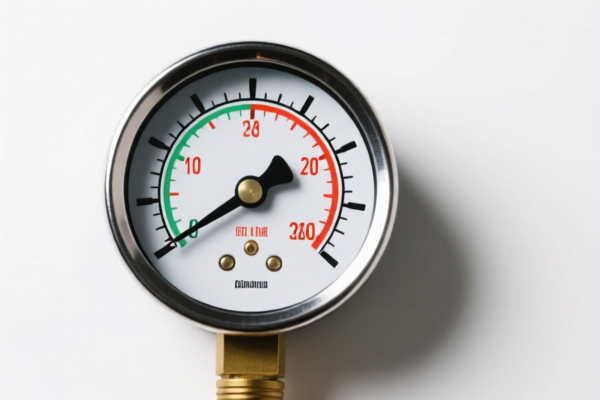


AI Analysis
⚙️ Pressure Gauge: The Ultimate 2026 US Import Compliance Guide
🌐 HS Code Reference & Clearance Strategy | 2026 Tax Regime Breakdown | Professional Customs Protocol
📌 I. Product Definition & Classification: Do You Know Which "Gauge" You Have?
Pressure Gauges are critical instruments used to measure, monitor, or test the pressure of gases and liquids in industries ranging from oil & gas, chemical processing, to medical and HVAC systems.
In US Customs terminology (2026), these devices are NOT a single monolithic category. They are strictly split based on Electrical vs. Mechanical and Function, leading to vastly different tax outcomes.
The Critical Distinction:
Electrical/Smart Gauges: Devices with transducers, digital displays, or electrical output signals (e.g., 4-20mA) → HS Code 9026.20.40.00
Mechanical/Gas Gauges: Analog dial gauges or devices strictly for gas pressure (without specific electrical control functions) → HS Code 9026.20.80.00
⚠️ Key Trap Alert:
- Misclassifying an Electrical gauge as a Mechanical one can lead to a 17.5% tax, but the correct rate is 35%.
- Misclassifying a Mechanical gauge as Electrical can lead to an overpayment or audit flags.
- "Pressure Measurement" is the umbrella term, but the Technology defines the tax.
📦 II. 2026 HS Code Classification Matrix (US Customs)
| HS Code | Product Description (2026 Definition) | Tax Profile | Primary Application |
|---|---|---|---|
| 9026.20.40.00 | Instruments for measuring/pressure of Electrical nature | Total Tax: 35.0% | Electrical pressure sensors, digital transmitters, smart gauges with signal output. |
| 9026.20.80.00 | Instruments for measuring/pressure of Gas or Mechanical nature | Total Tax: 17.5% | Analog dial gas pressure gauges, mechanical liquid pressure indicators, general purpose pressure testers. |
🔍 Deep Dive:
- 9026.20.40.00 covers "Measuring or Checking Pressure, Electrical": This includes devices that convert pressure into an electrical signal. Even if the housing looks like a dial, if it has a circuit board and electrical output, this is the code.
- 9026.20.80.00 covers "Measuring Gas Pressure" or non-electrical instruments: This is the "catch-all" for standard mechanical Bourdon tube gauges used for gas.
💰 III. 2026 Tariff Rate Breakdown (Detailed Policy Analysis)
✅ Applicable Market: United States (US)
✅ Country of Origin: China (CN)
✅ Effective Period: 2026 Current Regime (Including Section 301 & EO 13936 "122 Clause")
🎯 Scenario A: Electrical Pressure Instruments
HS Code: 9026.20.40.00
🔴 Total Tariff: 35.0%
| Tax Component | Rate | Legal Basis / Description |
|---|---|---|
| Base Duty | 0.0% | Standard Most-Favored-Nation (MFN) rate for this category. |
| Section 301 Add-on | +25.0% | "Added Tariff" (Section 301) targeting specific Chinese technology and industrial equipment. |
| "122 Clause" Tariff | +10.0% | Executive Order 13936 (Section 322) specific surcharge on Chinese-origin goods (often referred to as "122 Clause" in trade circles). |
| Effective Total | 35.0% | High Risk / High Cost |
📌 Explanation:
This category is heavily scrutinized. The 25% comes from the "Section 301" investigation into Chinese tech. The additional 10% is a national security/anti-espionage surcharge applied to specific electronic instrumentation.
Result: You pay 35 cents for every $1.00 of CIF value.
🎯 Scenario B: Gas/Mechanical Pressure Instruments
HS Code: 9026.20.80.00
🟡 Total Tariff: 17.5%
| Tax Component | Rate | Legal Basis / Description |
|---|---|---|
| Base Duty | 0.0% | Standard MFN rate. |
| Section 301 Add-on | +7.5% | Lower tier "Added Tariff" (Section 301) for non-electrical/mechanical instruments. |
| "122 Clause" Tariff | +10.0% | Same Executive Order 13936 surcharge applies to this category as well. |
| Effective Total | 17.5% | Moderate Risk / Moderate Cost |
📌 Explanation:
While the 122 Clause (10%) applies equally to both, the "Added Tariff" for non-electrical instruments is significantly lower (7.5% vs 25%).
Result: You pay 17.5 cents for every $1.00 of CIF value.
⚠️ Critical Strategy: If your gauge is mechanical (analog dial), ensure it is NOT mislabeled as electrical to enjoy this 17.5% rate.
🛠️ IV. Customs Clearance实操建议 (Practical Clearance Guide)
✅ 1. Documentation Checklist (Must-Have)
| Document | Requirement | Why It Matters |
|---|---|---|
| Product Spec Sheet | Must Specify: "Analog" vs "Digital" / "Mechanical" vs "Electrical" | Determines the HS Code. A missing "Output Signal" spec can trigger an audit. |
| Technical Diagram | Show internal structure (Bourdon tube vs. Piezoelectric sensor) | Proves if it is a "Gas/Mechanical" gauge or an "Electrical" instrument. |
| Commercial Invoice | Must state: "Pressure Gauge" + Model # + Country of Origin: China | Essential for calculating the 25%/7.5% add-on. |
| Packaging List | Indicate if sold as a set (Gauge + Transmitter) | If split, the transmitter might get a different code. |
✅ 2. Declaration Strategy (The "Golden Rule")
🔥 "Define the Technology First!"
| Scenario | Correct Declaration | Incorrect Declaration | Consequence |
|---|---|---|---|
| Analog Dial Gas Gauge | 9026.20.80.00 (Gas/Mech) |
9026.20.40.00 (Electrical) |
Overpayment (17.5% vs 35%) + Potential Audit. |
| Digital Transmitter (4-20mA) | 9026.20.40.00 (Electrical) |
9026.20.80.00 (Gas/Mech) |
Underpayment (17.5% vs 35%) → Penalties + Back Taxes. |
| Smart Sensor with Display | 9026.20.40.00 (Electrical) |
"General Instrument" | Rejection by CBP (Clearance Denied). |
📌 Pro Tip:
If you are importing Mechanical Gauges, explicitly state in the invoice: "Mechanical Pressure Gauge, Analog Dial, No Electrical Output, for Gas Pressure."
If you are importing Electrical Sensors, state: "Pressure Transmitter, Digital, Electrical Output, 24VDC."
✅ 3. Special Cases & Pitfalls
| Situation | Handling Advice |
|---|---|
| "Smart" Gauges with Batteries | Still 9026.20.40.00. The presence of a circuit board makes it "Electrical" regardless of battery power. |
| Gas vs. Liquid Gauges | Both can fall under 9026.20.80.00 if mechanical. Don't overcomplicate; focus on the "Electrical" distinction. |
| Parts vs. Whole | Do not ship parts (capsules, tubes) separately and assemble later unless you are importing a kit classified under a specific parts code. |
🌍 V. Global Market Context (2026)
| Country | Recommended HS Code | Est. Total Duty | Notes |
|---|---|---|---|
| 🇺🇸 USA | 9026.20.40.00 / 9026.20.80.00 |
35.0% / 17.5% | HIGHEST DUTY due to 122 Clause + Section 301. |
| 🇪🇺 EU | 9026 (General) | ~0% - 2% | No Section 301; standard MFN applies. |
| 🇨🇳 China | 9026 | ~1% | Low duty for domestic production. |
| 🇦🇪 UAE | 9026 | 5% | Free Trade Zone opportunities available. |
📌 Conclusion: The US market is the most expensive for Pressure Gauges due to the dual-layer tariff (Section 301 + 122 Clause). The Electrical variant is double the cost of the Mechanical variant.
📌 VI. Common Mistakes & "Blood-Teaching" Lessons
❌ Mistake 1: Labeling a "Digital Pressure Gauge" as "Mechanical" to save tax.
👉 Consequence: CBP finds the circuit board. Back taxes + 25% penalty.
❌ Mistake 2: Assuming "Gas Pressure" means "Electrical".
👉 Consequence: Overpaying. If it's a dial gauge for gas, use 9026.20.80.00 (17.5%).
❌ Mistake 3: Ignoring the "122 Clause".
👉 Consequence: All Chinese-origin gauges attract the extra 10%, regardless of technology. This is non-negotiable.
❌ Mistake 4: Vague description on Invoice ("Pressure Device").
👉 Consequence: Customs will detain the shipment for classification review. Delay = Storage Fees.
✅ Best Practice:
"Be Specific! 'Mechanical Gas Pressure Gauge, Analog, No Electronics' = 17.5%.
'Electrical Pressure Transmitter, Digital Output, 24VDC' = 35%."
🎯 VII. Final Verdict: Strategic Action Plan
🎯 For Importers: 1. Audit your catalog: Separate Electrical (Digital/Sensors) from Mechanical (Analog/Gauges). 2. Adjust Pricing: Factor in 35% for electrical and 17.5% for mechanical in your US sales pricing. 3. Pre-Arrival Consultation: If you have mixed shipments, consult a US Customs Broker before landing the vessel.
🚀 The Bottom Line:
In 2026, technology determines the tax.
- Electrical = 35% (High Cost)
- Mechanical/Gas = 17.5% (Strategic Low Cost)
🔥 "Know your circuit, save your margin!"
🚫 Don't guess the HS Code—get it wrong, and the 10% + 25% surcharge will kill your profit.
✨ Professional Customs Clearance Starts with Precision Classification!
💼 Your profit margin depends on the difference between 17.5% and 35%.
Customer Reviews
About HS Code Classification
The Harmonized System (HS) is an internationally standardized nomenclature developed by the World Customs Organization (WCO) to classify traded products. Over 200 countries use the HS system as the basis for customs tariffs, trade statistics, and import/export regulations.
Each HS code follows a hierarchical structure:
- Chapter (2 digits) — Broad category of goods (e.g., Chapter 84: Machinery and Mechanical Appliances)
- Heading (4 digits) — More specific grouping within the chapter
- Subheading (6 digits) — Internationally standardized breakdown, used by all WCO member countries
- National subdivisions (8-10 digits) — Country-specific extensions for further classification, such as US HTSUS 10-digit codes
Correct HS code classification is essential for smooth customs clearance, accurate duty payment, and compliance with trade regulations. Misclassification can lead to customs delays, overpayment of duties, or penalties.
When importing from CN to US, the applicable tariff rates may include:
- Most-Favored-Nation (MFN) rate — The standard duty rate applied to WTO members
- General rate — Applied to countries without trade agreements
- Trade remedy duties — Additional tariffs such as Section 301 (anti-dumping), Section 232 (national security), or countervailing duties
The information provided on this page is for reference purposes only. For official classification, please consult with your local customs authority or a licensed customs broker.