Pressure Regulator Pressure Gauge
CN → US| HS Code | Tariff Rate | Origin | Destination | Doc |
|---|---|---|---|---|
| 9026204000 | 35.0% | CN | US | Official Doc |
| 9026208000 | 17.5% | CN | US | Official Doc |
| 9032896050 | 36.7% | CN | US | Official Doc |
| 8481100090 | 37.0% | CN | US | Official Doc |
| 9026204000 | 35.0% | CN | US | Official Doc |
Product Images
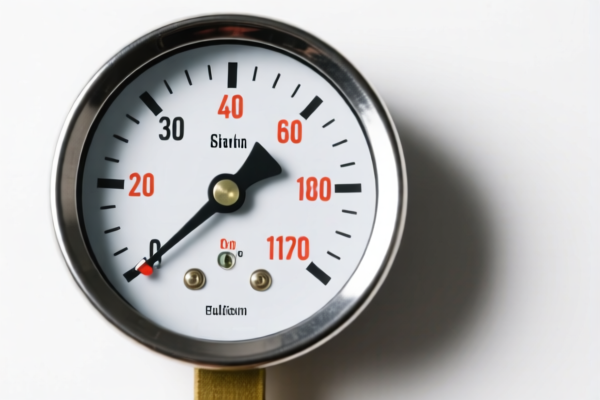
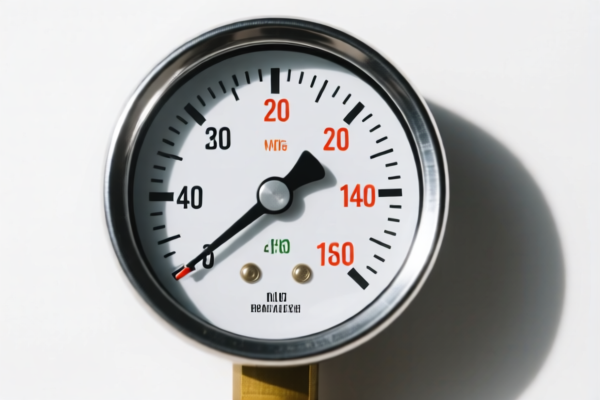
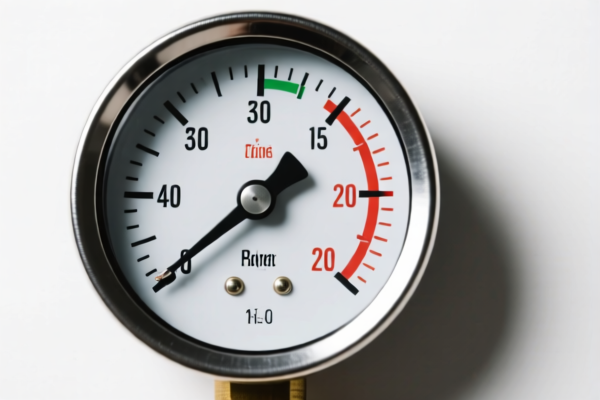
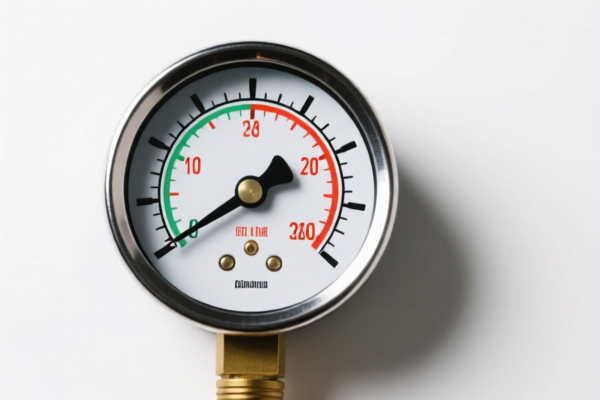
AI Analysis
🎛️ Pressure Regulator & Pressure Gauge (压力调节表/压力表)
🌐 HS Code Reference & Customs Clearance Guide | 2026 Latest Tariff Analysis | Professional Clearance Strategy
📌 I. Product Definition & Classification: Do You Truly Understand "Pressure Instruments"?
Pressure Regulators and Pressure Gauges are critical components in fluid dynamics, industrial automation, and gas supply systems. They serve two distinct but often combined functions: Measuring (Gauge) and Controlling/Reducing (Regulator/Valve). In international trade, precise classification is vital because the tax implications vary significantly based on whether the device is for measurement, control, or mechanical reduction.
Key Distinctions: 1. Pressure Gauges (Measurement): Devices that display the pressure value. Primarily classified under Chapter 90 (Optical/Medical/Technical Instruments). 2. Pressure Regulators/Valves (Control/Mechanical): Devices that adjust or reduce pressure automatically. * If electronic/intelligent → Chapter 90 (9032/9026). * If purely mechanical (simple reducer) → Chapter 84 (8481).
⚠️ Critical Classification Point:
- Is it displaying pressure? → 9026/9032
- Is it adjusting pressure mechanically without electronics? → 8481
- Is it a control valve with sensors/intelligent feedback? → 9032/9026
📦 II. HS Code Classification Details (2026 Latest Tariff Authority Mapping)
Based on the provided data, here are the exact HS Codes, summaries, and tax rates for Pressure Regulators and Gauges.
| HS Code | Summary (Description) | Applicable Application | Total Tax Rate | Tax Composition Detail |
|---|---|---|---|---|
| 9026.20.40.00 | Instruments & apparatus for measuring or checking pressure | Pressure Gauges | 35.0% | Base: 0.0% Additional: 25.0% Section 301 (122): 10% |
| 9026.20.80.00 | Instruments for measuring or checking pressure | Air Pressure Regulators | 17.5% | Base: 0.0% Additional: 7.5% Section 301 (122): 10% |
| 9032.89.60.50 | Pressure control instruments | Pressure Control Valves (Intelligent/Electronic) | 36.7% | Base: 1.7% Additional: 25.0% Section 301 (122): 10% |
| 8481.10.00.90 | Pressure-reduving valves | Pressure Control Valves (Simple/Mechanical Reducers) | 37.0% | Base: 2.0% Additional: 25.0% Section 301 (122): 10% |
| 9026.20.40.00 | Pressure measuring instruments based on use | Pressure Adjustment Tables | 35.0% | Base: 0.0% Additional: 25.0% Section 301 (122): 10% |
🔍 Key Insight:
- 9026.20.40.00 is the standard for standard pressure gauges and adjustment tables (if classified under measurement).
- 9026.20.80.00 applies to air pressure regulators that are classified as measuring/checking instruments (often pneumatic regulators with gauges). Note the lower additional tax (7.5% vs 25%).
- 9032 & 8481 apply to active control valves. 9032 is for intelligent/automatic control; 8481 is for simple mechanical reducers.
💰 III. 2026 Latest Tariff Rate Breakdown (Detailed Tax Clauses)
✅ Applicable Country: United States (US)
✅ Origin: China (CN)
✅ Effective Date: Current 2026 Trade Rules (Section 301 & IEEPA)
🎯 1. 9026.20.40.00 —— Pressure Gauges & Adjustment Tables
Used for: Standard Pressure Gauges, Pressure Adjustment Tables
| Item | Detail |
|---|---|
| Base Duty Rate | 0.0% (Ad Valorem) |
| USITC Additional Duty | +25.0% (Under Section 301) |
| IEEPA Additional Duty | +10.0% (China-specific surcharge) |
| Total Effective Rate | 35.0% |
| Calculation Basis | CIF Value × 35% |
| De Minimis Exemption | ❌ Not Eligible |
| Legal Pathway | USITC:9026.20.40.00 → FOOTNOTE:301 → IEEPA:China |
📌 Explanation:
- The 25% additional duty is the standard Section 301 tariff on Chinese technical instruments.
- The 10% IEEPA is a specific surcharge on Chinese goods.
- Total 35% is high. Ensure you are not misdeclaring a high-tax gauge as a low-tax valve to avoid penalties.
🎯 2. 9026.20.80.00 —— Air Pressure Regulators (Measuring/Checking Type)
Used for: Pneumatic Pressure Regulators with Gauge Function
| Item | Detail |
|---|---|
| Base Duty Rate | 0.0% |
| USITC Additional Duty | +7.5% (Lower tier for specific pneumatic instruments) |
| IEEPA Additional Duty | +10.0% |
| Total Effective Rate | 17.5% |
| Calculation Basis | CIF Value × 17.5% |
| De Minimis Exemption | ❌ Not Eligible |
| Legal Pathway | USITC:9026.20.80.00 → FOOTNOTE:301(Low) → IEEPA:China |
📌 Explanation:
- This is the most favorable rate for pressure instruments in the dataset.
- It applies to air pressure regulators that are considered "instruments for measuring or checking."
- Savings: 17.5% vs 35% = 17.5% tax saving. Proper description is key!
🎯 3. 9032.89.60.50 —— Pressure Control Instruments (Intelligent)
Used for: Smart Pressure Control Valves, Automated Feedback Systems
| Item | Detail |
|---|---|
| Base Duty Rate | 1.7% |
| USITC Additional Duty | +25.0% |
| IEEPA Additional Duty | +10.0% |
| Total Effective Rate | 36.7% |
| Calculation Basis | CIF Value × 36.7% |
| De Minimis Exemption | ❌ Not Eligible |
📌 Explanation:
- Includes a 1.7% base duty (unlike the 0% for gauges).
- Applies to automatic regulating instruments. If your valve has a microcontroller, PID loop, or electronic sensor, it likely falls here.
- Highest total rate in the dataset (36.7%).
🎯 4. 8481.10.00.90 —— Pressure-Reducing Valves (Mechanical)
Used for: Simple Mechanical Pressure Reducing Valves
| Item | Detail |
|---|---|
| Base Duty Rate | 2.0% |
| USITC Additional Duty | +25.0% |
| IEEPA Additional Duty | +10.0% |
| Total Effective Rate | 37.0% |
| Calculation Basis | CIF Value × 37.0% |
| De Minimis Exemption | ❌ Not Eligible |
📌 Explanation:
- Purely mechanical valves without electronic control are classified in Chapter 84.
- Base rate is 2.0%, but the 25% + 10% add-ons make it the highest tax burden (37.0%).
- Do NOT use this for intelligent valves; use 9032. Do NOT use this for simple gauges; use 9026.
🛠️ IV. Customs Clearance Practical Advice (Battle-Tested Guide)
✅ 1. Documentation Checklist (Non-Negotiable)
| Document | Required? | Notes |
|---|---|---|
| ✅ Product Specification Sheet | ✔️ | Must clearly state: Measuring Range, Accuracy, Output Signal (if any), Media (Air/Water/Oil). |
| ✅ Circuit/Control Diagram | ✔️ | Essential to distinguish between 9026 (Instrument), 9032 (Automatic Control), and 8481 (Mechanical Valve). |
| ✅ Product Photos (Clear & Labeled) | ✔️ | Show nameplate, dial face (for gauges), and inlet/outlet configuration. |
| ✅ Commercial Invoice | ✔️ | Description must match HS Code summary exactly (e.g., "Pressure Gauge" vs. "Pressure Regulating Valve"). |
| ✅ Country of Origin Certificate | ✔️ | For IEEPA assessment. If not China, rates may differ. |
| ✅ Packing List | ✔️ | Detail items to avoid partial shipment disputes. |
✅ 2. Classification Strategy & Tips
🔥 Golden Rule: "Function Determines Code, Electronics Determine Chapter"
| Scenario | Correct HS Code | Why? |
|---|---|---|
| Simple Mechanical Gauge (No power, needle dial) | 9026.20.40.00 |
Pure measurement instrument. 35% tax. |
| Pneumatic Regulator with Gauge (Adjusts air pressure, often considered measuring/checking instrument) | 9026.20.80.00 |
Optimal Choice! Lower additional tax (7.5%). 17.5% total. |
| Smart Control Valve (Has PID controller, electronic signal output 4-20mA) | 9032.89.60.50 |
Automatic regulating instrument. 36.7% tax. |
| Simple Brass Reducing Valve (No electronics, just spring/membrane) | 8481.10.00.90 |
Mechanical valve. Highest tax (37.0%). |
| Pressure Adjustment Table (Industrial panel with gauges) | 9026.20.40.00 |
Classified under pressure measuring instruments. 35% tax. |
⚠️ Warning:
- Do not misdeclare a9032intelligent valve as an8481mechanical valve to save 0.3%. CBP (Customs) will detect electronics and issue penalties.
- Do not misdeclare a9026gauge as an8481valve. They are fundamentally different (Measurement vs. Flow Control).
✅ 3. Special Cases & Risk Mitigation
| Situation | Advice |
|---|---|
| Combo Unit (Regulator + Gauge) | If the gauge is integral to the regulator's function, classify as 9026.20.80.00 (if pneumatic/measuring type) for lower tax. If separate, declare separately or as a set under the primary function. |
| High-Precision Lab Gauges | Must be declared with accuracy specs. If >0.1% accuracy, emphasize "Scientific Instrument" to support 9026 classification. |
| Oil/Gas Industry Valves | Ensure material specs (stainless steel, etc.) are clear. If purely mechanical, 8481 applies. If electronic positioner, 9032. |
| EU/China Dual-Market Product | If exporting to EU, HS codes may differ (8-9 digit). US 10-digit HTS is mandatory for clearance. |
🌍 V. Global Market Comparison (2026 Context)
| Market | Recommended HS Code | Est. Tariff (China Origin) | Key Certification |
|---|---|---|---|
| 🇺🇸 USA | 9026.20.40.00 / 9026.20.80.00 |
35% / 17.5% | No specific agency, but CBP scrutiny high on Section 301. |
| 🇨🇳 China | 9026.20.40.00 |
~3-5% (VAT 13%) | CCC (if applicable), Metrology License. |
| 🇪🇺 EU | 9026.80 / 8481.10 |
0-2.5% | CE, Pressure Equipment Directive (PED). |
| 🇬🇧 UK | 9026.80 |
0-2.5% | UKCA, Metrology. |
📌 Conclusion:
- The US market is the most expensive due to Section 301 and IEEPA tariffs.
- Optimization Strategy: If your product is a pneumatic regulator, strive for9026.20.80.00(17.5%) classification rather than9032or8481. This requires clear technical documentation showing it is used for "measuring or checking pressure" in a regulatory function.
📌 VI. Common Mistakes & Pitfalls (Learn from Others' Errors)
❌ Mistake 1: Declaring an Intelligent Control Valve as a Simple Mechanical Valve (8481).
👉 Consequence: CBP detects electronic components. Penalty + Back Taxes (Difference between 37% and 36.7% is small, but the fraud risk is high).
👉 Reality: It’s still high tax, but the classification must be accurate.
❌ Mistake 2: Declaring a Pressure Gauge as a General Machine Part (8481 or 8543).
👉 Consequence: Misclassification. GAuges are Chapter 90. 9026 has specific duties.
👉 Result: Potential audit, delay, and fines.
❌ Mistake 3: Ignoring the IEEPA 10% Surcharge.
👉 Consequence: Underpaying total duty.
👉 Fix: Always add 10% to the base + 301 rate for Chinese origin.
✅ Correct Approach:
"Pneumatic Pressure Regulator with Integrated Gauge, For Air System Use, No Electronic Control, Model XYZ, Made in China"
Code:9026.20.80.00(17.5%)
🎯 VII. Conclusion: Precision in Classification Saves Money!
🎯 Key Takeaways:
🔹 Gauges =
9026.20.40.00(35%)
🔹 Air Regulators (Measuring Type) =9026.20.80.00(17.5%) → SAVE MONEY!
🔹 Smart Control Valves =9032.89.60.50(36.7%)
🔹 Simple Mechanical Valves =8481.10.00.90(37.0%)🔹 HS Code Determines Your Bottom Line. A 17.5% vs 37% difference can double your landed cost!
🔹 Always provide technical specs (electronic vs. mechanical) to CBP to justify your HS Code.
📌 Pro Tip:
If you have a Pneumatic Regulator, argue for 9026.20.80.00 by emphasizing its role in pressure checking/regulation instruments. This is the most cost-effective classification for pressure-related equipment in the provided dataset.
📣 Immediate Action:
📞 Consult a Customs Broker: Provide drawings to confirm if your device is "Instrument" (9026) or "Valve" (8481/9032).
📝 Draft Accurate Descriptions: Use terms like "Pressure Regulating Instrument" for9026.20.80.00.
🚀 Clearance Speed & Cost Optimization Start with the Right Code!
✨ Professional Customs Clearance Starts with Accurate Classification!
💼 Every Point of Tax Percentage Matters!
Customer Reviews
About HS Code Classification
The Harmonized System (HS) is an internationally standardized nomenclature developed by the World Customs Organization (WCO) to classify traded products. Over 200 countries use the HS system as the basis for customs tariffs, trade statistics, and import/export regulations.
Each HS code follows a hierarchical structure:
- Chapter (2 digits) — Broad category of goods (e.g., Chapter 84: Machinery and Mechanical Appliances)
- Heading (4 digits) — More specific grouping within the chapter
- Subheading (6 digits) — Internationally standardized breakdown, used by all WCO member countries
- National subdivisions (8-10 digits) — Country-specific extensions for further classification, such as US HTSUS 10-digit codes
Correct HS code classification is essential for smooth customs clearance, accurate duty payment, and compliance with trade regulations. Misclassification can lead to customs delays, overpayment of duties, or penalties.
When importing from CN to US, the applicable tariff rates may include:
- Most-Favored-Nation (MFN) rate — The standard duty rate applied to WTO members
- General rate — Applied to countries without trade agreements
- Trade remedy duties — Additional tariffs such as Section 301 (anti-dumping), Section 232 (national security), or countervailing duties
The information provided on this page is for reference purposes only. For official classification, please consult with your local customs authority or a licensed customs broker.