Pressure resistant Plastic Pipe Fitting
CN → US| HS Code | Tariff Rate | Origin | Destination | Doc |
|---|---|---|---|---|
| 3926305000 | 22.8% | CN | US | Official Doc |
| 3926909989 | 22.8% | CN | US | Official Doc |
| 3917400080 | 40.3% | CN | US | Official Doc |
| 3917400095 | 40.3% | CN | US | Official Doc |
| 8479896500 | 20.3% | CN | US | Official Doc |
Product Images
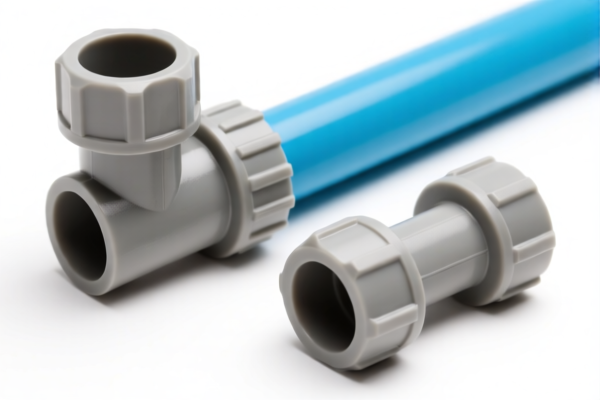
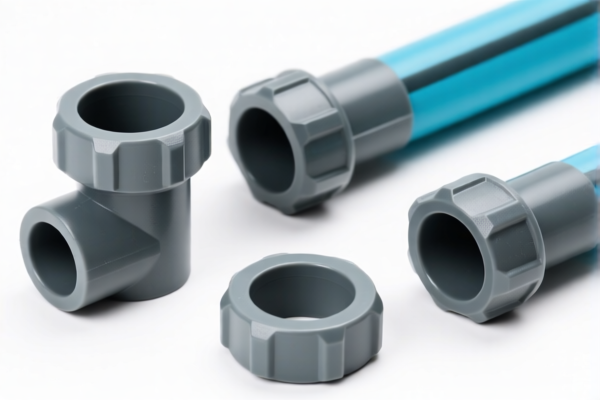
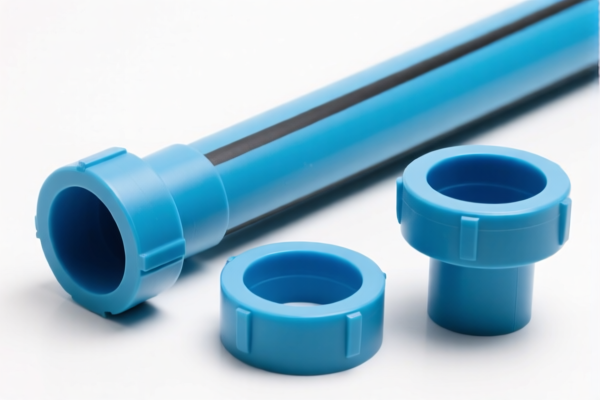
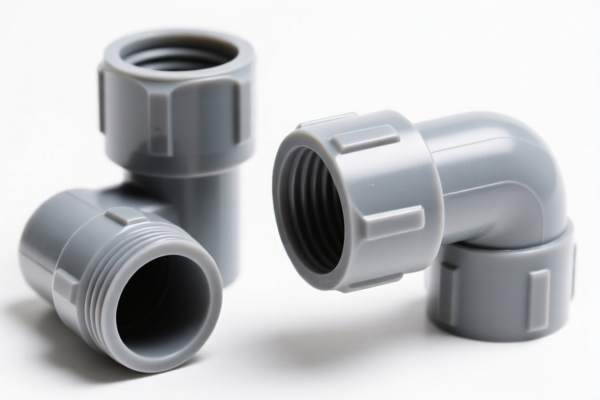
AI Analysis
🛠️ Pressure Resistant Plastic Pipe Fittings (Corrosion-Resistant)
🌐 HS Code Reference & Customs Clearance Guide | 2024/2025 Latest Tariff Analysis | Professional Compliance Strategy
📌 I. Product Definition & Classification: Do You Really Know "Plastic Pipe Fittings"?
Pressure Resistant Plastic Pipe Fittings are critical components used in fluid transportation systems (water, gas, chemicals, industrial pipelines). They are made from corrosion-resistant plastics (e.g., PVC, PP, PE, PVDF) and designed to withstand high internal pressure while connecting pipe segments.
In international trade, these fittings are NOT a single category. Their classification depends on: 1. Functionality: Is it a simple connector, or does it have an active mechanical function (e.g., pressure reduction)? 2. Specific Sub-category: Does it fall under general "parts of machinery" or specific "plastic pipe accessories"? 3. Material & Form: Solid plastic vs. composite; elbow/tee vs. valve-like structure.
⚠️ Key Distinction Point:
- If it is a simple connector (elbow, tee, coupling) without complex mechanisms → Likely 3926.90 or 3917.40.
- If it has an independent mechanical function (e.g., a reducer valve with internal moving parts) → Likely 8479.89.
- Misclassification leads to massive tariff differences (22.8% vs. 40.3%).
📦 II. HS Code Classification Details (2024/2025 Latest Tariff Authority Comparison)
| HS Code | Product Description | Application Scenario | Functional Complexity | Total Tax Rate (US/CN) |
|---|---|---|---|---|
3926.30.50.00 |
Other plastic articles; fittings/connectors not elsewhere specified | General industrial plastic connectors, non-standard shapes | ❌ Low (Simple connector) | 22.8% |
3926.90.99.89 |
Other plastic articles; parts/accessories for other categories | Standard pipe fittings (elbows, tees, unions) classified under "Other" | ❌ Low (Standard part) | 22.8% |
3917.40.00.80 |
Plastic pipes, tubes, hoses, and fittings; other fittings under 3917.40 | Fittings specifically categorized under "Plastic Pipe Accessories" | ⚠️ Medium (Specific pipe accessory) | 40.3% |
3917.40.00.95 |
Plastic pipes, tubes, hoses, and fittings; other fittings (not elsewhere specified) | Complex plastic fittings that don't fit other 3917.40 sub-codes | ⚠️ Medium (Specific pipe accessory) | 40.3% |
8479.89.65.00 |
Machinery and mechanical appliances; pressure reducing devices made of plastic | Plastic pipe pressure reducers with independent mechanical function | ✅ High (Active mechanical device) | 20.3% |
🔍 Critical Reminder:
- Simple Fittings: Most "pressure resistant plastic pipe fittings" are passive connectors. They do NOT regulate flow or pressure actively. Therefore, 8479.89.65.00 is ONLY for active pressure-reducing valves, not simple elbows.
- 3917.40 vs. 3926.90: This is the biggest risk area. If your fitting is explicitly listed under "Plastic Pipe Accessories" (Chapter 3917), it falls under 3917.40 (40.3% tax). If it is considered a "general plastic article" or "part of machinery," it may fall under 3926 (22.8% tax). Clarity in product description is vital.
💰 III. 2024/2025 Latest Tariff Rate Breakdown (Including Additional Duties, Policy Surcharges)
✅ Applicable Country: United States (US)
✅ Country of Origin: China (CN)
✅ Effective Time: Current rates applicable for imports from China (Section 301 & IEEPA measures)
🎯 1. 3926.30.50.00 & 3926.90.99.89 —— General Plastic Fittings/Connectors
| Item | Content |
|---|---|
| Basic Tariff | 5.3% (Ad Valorem) |
| Section 301 Surcharge | +7.5% (From USITC Footnote 9903.02.05) |
| IEEPA Surcharge | +10% (For China/HK products, effective 2025-11-10) |
| Total Tariff Rate | 22.8% |
| Tax Calculation | CIF Value × 22.8% |
| De Minimis Eligibility | ❌ No (deny_de_minimis) |
| Legal Basis Path | IEEPA:9903.01.25 → USITC:3926.30.50.00 / 3926.90.99.89 → FOOTNOTE:301.02.05 |
📌 Explanation:
- These two codes share the same tariff structure (22.8%).
- The 7.5% Section 301 is the standard surcharge for many plastic articles.
- The 10% IEEPA is an additional layer for Chinese-origin goods.
- Strategy: If your fitting is not explicitly a "pipe accessory" under 3917, argue for 3926 to save 17.5% in taxes.
🎯 2. 3917.40.00.80 & 3917.40.00.95 —— Specific Plastic Pipe Fittings
| Item | Content |
|---|---|
| Basic Tariff | 5.3% (Ad Valorem) |
| Section 301 Surcharge | +25.0% (From USITC Footnote 9903.03.05) |
| IEEPA Surcharge | +10% (For China/HK products) |
| Total Tariff Rate | 40.3% |
| Tax Calculation | CIF Value × 40.3% |
| De Minimis Eligibility | ❌ No (deny_de_minimis) |
| Legal Basis Path | IEEPA:9903.01.25 → USITC:3917.40.00.80 / 3917.40.00.95 → FOOTNOTE:301.03.05 |
📌 Warning:
- The 25% Section 301 surcharge applies to many pipes and fittings (Chapter 3917).
- This is 17.5 percentage points higher than the 3926 codes.
- Risk: If you declare "Plastic Pipe Fitting" and customs interprets it as 3917.40, you pay 40.3%. If you argue it's a "General Plastic Article" (3926), you pay 22.8%.
🎯 3. 8479.89.65.00 —— Plastic Pressure Reducing Devices (Mechanical)
| Item | Content |
|---|---|
| Basic Tariff | 2.8% (Ad Valorem) |
| Section 301 Surcharge | +7.5% (From USITC Footnote 9903.02.05) |
| IEEPA Surcharge | +10% (For China/HK products) |
| Total Tariff Rate | 20.3% |
| Tax Calculation | CIF Value × 20.3% |
| De Minimis Eligibility | ❌ No (deny_de_minimis) |
| Legal Basis Path | IEEPA:9903.01.25 → USITC:8479.89.65.00 → FOOTNOTE:301.02.05 |
📌 Special Note:
- ONLY applies if the product is a pressure reducer (e.g., a valve that actively reduces pressure).
- Simple "pressure-resistant" fittings (which just withstand pressure but don't reduce it) DO NOT qualify.
- If misclassified, customs will reclassify to 3917.40 (40.3%), leading to back taxes and penalties.
🛠️ IV. Customs Clearance Practical Advice (实战避坑指南)
✅ 1. Document Checklist (Mandatory)
| Document | Required | Explanation |
|---|---|---|
| ✅ Product Specification Sheet | ✔️ | Must specify: Material (PVC/PP/PE), Pressure Rating (PSI/Bar), Temperature Range, Diameter, Type (Elbow/Tee/Coupling). |
| ✅ Technical Diagram/Structure | ✔️ | Prove it has no moving parts. If it has a valve mechanism, it's likely 8479 or 8481, not a simple fitting. |
| ✅ Product Photos (With Labels) | ✔️ | Clear images of the fitting, brand, model, and any certification marks. |
| ✅ Third-Party Test Report | ✔️ | Pressure test report, material safety (RoHS/REACH if applicable). |
| ✅ Commercial Invoice | ✔️ | Description must be precise: e.g., "Plastic Pipe Fitting, PVC, No Moving Parts, Not a Valve." |
| ✅ Packing List | ✔️ | List all items clearly. Avoid grouping with valves or pumps. |
✅ 2. Declaration Strategy (Key Mnemonics)
🔥 "No Valve, No Gear; Stress Resistance ≠ Pressure Reduction."
| Scenario | Correct Declaration | Wrong Approach |
|---|---|---|
| Simple Elbow/Tee/Coupling | 3926.30.50.00 or 3926.90.99.89 |
Declaring as "Pipe Accessory" (3917.40) → 40.3% Tax |
| Plastic Pipe Fitting (Ambiguous) | Provide proof of "No Mechanical Function" | Ambiguous description → Customs reclassification → Delay + Penalty |
| Pressure Reducing Valve (Plastic Body) | 8479.89.65.00 |
Declaring as "Fitting" → 20.3% Tax (if qualified) vs. 40.3% if misclassified |
| Composite Fitting (Metal + Plastic) | Analyze essential character | If metal is essential, may fall under Chapter 73/74 → Different Tariffs |
✅ 3. Special Handling Cases
| Case | Handling Advice |
|---|---|
| OEM Custom Fittings | Provide client drawings showing no internal mechanisms. Use term "Passive Connector." |
| High-Pressure Fittings | Provide pressure test reports. Emphasize "Resistance" not "Regulation." |
| Fittings for Chemical Piping | Highlight material compatibility (e.g., PVDF for acids). Ensure it's not a "Valve." |
| Mixed Container (Fittings + Valves) | Separate Declarations! Do not mix 3926 (22.8%) with 8481 (Valves) in one line item if possible. |
🌍 V. Global Market Clearance Comparison (2024/2025 Latest)
| Country/Region | Recommended HS Code | Tariff (China Origin) | Certification | Notes |
|---|---|---|---|---|
| 🇺🇸 USA | 3926.90.99.89 |
22.8% (if 3926) / 40.3% (if 3917.40) | None specific | High Risk: Avoid 3917.40 unless explicitly required. |
| 🇨🇳 China | 3917.40.00.00 |
5-6% | None | Lower tariffs than US. |
| 🇪🇺 EU | 3917.29.00 |
0-4% (depending on origin) | CE (if applicable) | Generally lower tariffs than US. |
| 🇦🇺 Australia | 3917.29.00 |
5% | None | Preferable market due to lower tariffs. |
| 🇯🇵 Japan | 3917.29.00 |
0-3.5% | None | Low tariffs, high quality standards. |
📌 Conclusion:
- USA is the most challenging market due to Section 301 and IEEPA surcharges.
- Avoid 3917.40 in US customs declarations unless absolutely necessary. Argue for 3926 (General Plastic Article) to save 17.5% in taxes.
- Ensure your product is not a valve (8481) or pressure reducer (8479) unless you are prepared to declare it as such.
📌 VI. Common Mistakes & Pitfalls (Blood & Tears Lessons)
❌ Mistake 1: Declaring "Plastic Pipe Fitting" as 3917.40.00.95
👉 Consequence: Tax jumps to 40.3% instead of 22.8%.
👉 Fix: Argue it's a "General Plastic Article" under 3926.90.99.89 if it doesn't have specific pipe-standard dimensions.
❌ Mistake 2: Calling a "Pressure Reducing Valve" a "Fitting"
👉 Consequence: If it does have a valve mechanism, it may be reclassified to 8481.80 (Valves) with different tariffs and regulatory requirements.
👉 Fix: Be honest. If it's a valve, declare as 8481.80 or 8479.89.65.00 if it's a reducer.
❌ Mistake 3: Ambiguous Description ("Plastic Part")
👉 Consequence: Customs may assign a default high tariff or hold the shipment for inspection.
👉 Fix: Use precise terms: "PVC Elbow Fitting, Pressure Resistant, No Moving Parts."
❌ Mistake 4: Ignoring IEEPA Surcharge
👉 Consequence: Underestimating total landed cost.
👉 Fix: Always include the 10% IEEPA surcharge in cost calculations for China-origin goods.
✅ Correct Declaration Example:
"Plastic Pipe Fitting, PVC-U, Elbow Type, 2-inch, Pressure Resistant up to 10 Bar, No Moving Parts, Not a Valve, for Water Transportation System"
🎯 VII. Conclusion: Professional Declaration, Save Time, Reduce Costs!
🎯 Remember the Mnemonics:
🔹 "No Valve, No Gear; 3926 Saves 17.5%!"
🔹 "Pressure Resistance ≠ Pressure Reduction. Don't Confuse Fittings with Valves!"
🔹 "HS Code Determines Tariff. 22.8% vs. 40.3% is a Huge Difference!"
📌 Pro Tips:
- If your fittings are originating from Vietnam, Mexico, or Thailand, you may be eligible for IEEPA Exemptions or lower Section 301 rates.
- Consider applying for an Advance Ruling (Ruling Letter) from US Customs (CBP) before shipping high-value containers.
- Pre-classify your products with a licensed customs broker.
📣 Immediate Action:
📞 Contact a Professional Customs Broker + Provide Product Specs + Apply for HS Code Advance Ruling
🚀 Ensure Your Fittings Clear Customs Smoothly, Minimize Costs, and Maximize Profit!
✨ Professional Clearance Starts with Accurate Classification!
💼 Every Dollar Saved in Tariffs is Pure Profit!
Customer Reviews
About HS Code Classification
The Harmonized System (HS) is an internationally standardized nomenclature developed by the World Customs Organization (WCO) to classify traded products. Over 200 countries use the HS system as the basis for customs tariffs, trade statistics, and import/export regulations.
Each HS code follows a hierarchical structure:
- Chapter (2 digits) — Broad category of goods (e.g., Chapter 84: Machinery and Mechanical Appliances)
- Heading (4 digits) — More specific grouping within the chapter
- Subheading (6 digits) — Internationally standardized breakdown, used by all WCO member countries
- National subdivisions (8-10 digits) — Country-specific extensions for further classification, such as US HTSUS 10-digit codes
Correct HS code classification is essential for smooth customs clearance, accurate duty payment, and compliance with trade regulations. Misclassification can lead to customs delays, overpayment of duties, or penalties.
When importing from CN to US, the applicable tariff rates may include:
- Most-Favored-Nation (MFN) rate — The standard duty rate applied to WTO members
- General rate — Applied to countries without trade agreements
- Trade remedy duties — Additional tariffs such as Section 301 (anti-dumping), Section 232 (national security), or countervailing duties
The information provided on this page is for reference purposes only. For official classification, please consult with your local customs authority or a licensed customs broker.