Pressure resistant Plastic Pipe Fittings
CN → US| HS Code | Tariff Rate | Origin | Destination | Doc |
|---|---|---|---|---|
| 3926305000 | 22.8% | CN | US | Official Doc |
| 3926909989 | 22.8% | CN | US | Official Doc |
| 3917400080 | 40.3% | CN | US | Official Doc |
| 3917400095 | 40.3% | CN | US | Official Doc |
| 8479896500 | 20.3% | CN | US | Official Doc |
Product Images
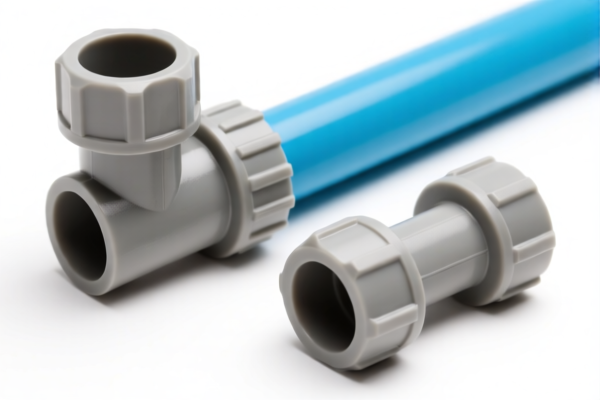
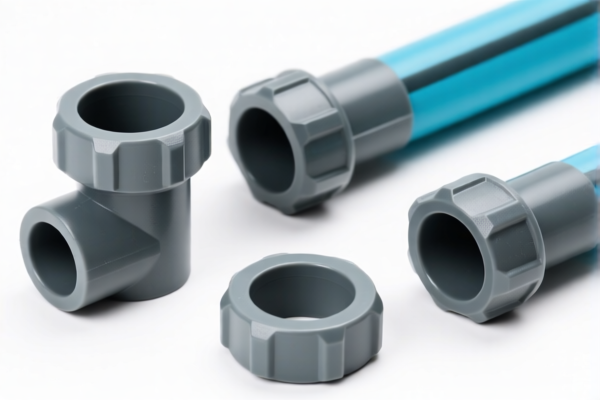
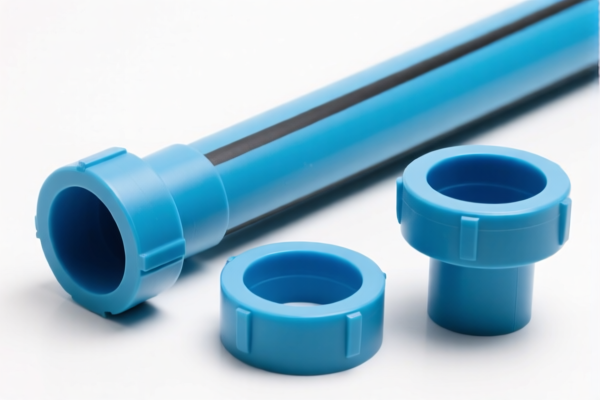
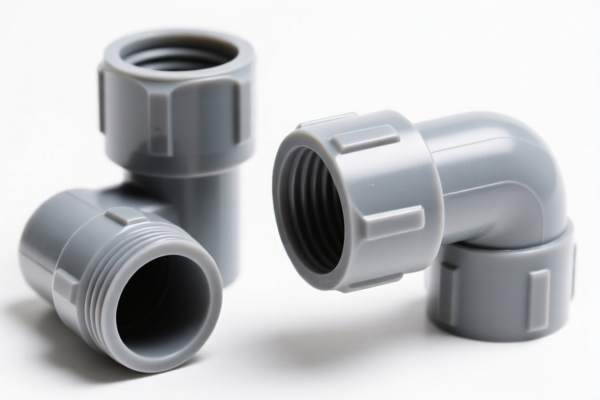
AI Analysis
🏗️ Pressure Resistant Plastic Pipe Fittings
🌐 HS Code Reference & Customs Clearance Guide | 2026 Latest Tariff Analysis | Professional Compliance Strategy
📌 I. Product Definition & Classification: What Exactly Are You Shipping?
"Pressure Resistant Plastic Pipe Fittings" are components used to connect, turn, branch, or cap sections of piping systems. In international trade, their classification depends heavily on their specific function, material composition, and whether they are simple connectors or complex mechanical devices.
⚠️ Key Distinction Point:
- If it is a simple connector (elbow, tee, coupler) made of plastic → Typically falls under Chapter 39 (Plastics) or Chapter 84 (Machinery) depending on complexity.
- If it acts as a regulator, reducer, or has moving/independent mechanical parts → Falls under Chapter 84.
- If it is classified as a generic "accessory" without specific function → Falls under Chapter 39.
📦 II. HS Code Classification Details (2026 Latest Tariff Authority对照)
| HS Code | Product Description | Application Scenario | Key Characteristics |
|---|---|---|---|
3926.30.50.00 |
Plastic Pipe Fittings, Corrosion Resistant | General plumbing, industrial fluid transfer | Simple connector; no mechanical regulation |
3926.90.99.89 |
Other Plastic Fittings | Generic accessories for plastic piping systems | "Other" category; fails specific function tests |
3917.40.00.80 |
Plastic Pipe Accessories | Accessories for pipes under Category 3917 | Classified as "Other" accessories under pipe chapter |
3917.40.00.95 |
Plastic Pipe Fittings (Accessories) | Fittings meeting accessory classification requirements | Standard fittings categorized as pipe accessories |
8479.89.65.00 |
Plastic Pipe Pressure Reducers | Devices with independent mechanical function (e.g., regulators) | Contains mechanical function (reducing pressure); not just a connector |
🔍 Critical Reminder:
- Simple Connectors (Elbows, Tees, Couplings) usually go to 3926 or 3917.
- Mechanical Devices (Regulators, Reducers with moving parts) MUST go to 8479. Misclassifying a reducer as a simple fitting can lead to severe penalties.
💰 III. 2026 Latest Tariff Rate Breakdown (Including Surtaxes & Policy Add-ons)
✅ Applicable Country: United States (US)
✅ Origin: China (CN)
✅ Effective Time: Ongoing (including subsequent imports)
🎯 1. 3926.30.50.00 & 3926.90.99.89 – Simple Plastic Pipe Fittings
| Item | Content |
|---|---|
| Base Tariff Rate | 5.3% (ad valorem) |
| Section 301 Surtax | 7.5% (USITC Footnote 9903.88.01) |
| Section 122 Tariff | 10% (Executive Order on Plastic Imports) |
| Total Tax Rate | 22.8% |
| Tax Calculation | CIF Value × 22.8% |
| De Minimis Exemption | ❌ Not Eligible (deny_de_minimis) |
| Legal Basis Path | Base: 5.3% → 301: 7.5% → 122: 10% |
📌 Explanation:
- These codes apply to static fittings (no moving parts, no regulation).
- The 22.8% total rate is a combination of standard MFN, Section 301, and specific Section 122 tariffs on plastics.
- No low-value exemption applies; all shipments are subject to this full rate.
🎯 2. 3917.40.00.80 & 3917.40.00.95 – Plastic Pipe Accessories (Specific Category)
| Item | Content |
|---|---|
| Base Tariff Rate | 5.3% (ad valorem) |
| Section 301 Surtax | 25.0% (Higher Section 301 tier) |
| Section 122 Tariff | 10% |
| Total Tax Rate | 40.3% |
| Tax Calculation | CIF Value × 40.3% |
| De Minimis Exemption | ❌ Not Eligible |
| Legal Basis Path | Base: 5.3% → 301: 25.0% → 122: 10% |
📌 Note:
- These codes are for fittings classified specifically under Chapter 3917 (Plastic Pipes) accessories.
- The 25% Section 301 surtax applies here, making the total 40.3%.
- This is significantly higher than the 22.8% rate for general plastic articles (3926). Ensure your product description matches the correct code to avoid overpaying or being flagged.
🎯 3. 8479.89.65.00 – Plastic Pipe Pressure Reducers (Mechanical Devices)
| Item | Content |
|---|---|
| Base Tariff Rate | 2.8% (ad valorem) |
| Section 301 Surtax | 7.5% (Standard tier) |
| Section 122 Tariff | 10% |
| Total Tax Rate | 20.3% |
| Tax Calculation | CIF Value × 20.3% |
| De Minimis Exemption | ❌ Not Eligible |
| Legal Basis Path | Base: 2.8% → 301: 7.5% → 122: 10% |
📌 Explanation:
- This code is for mechanical devices like pressure reducers that have an independent function beyond simple connection.
- Despite being more "complex," the base tariff is lower (2.8%) and the Section 301 surtax is lower (7.5%).
- Total 20.3% is the lowest among the options. However, you must prove it is a mechanical device, not just a static fitting.
🛠️ IV. Customs Clearance Practical Advice (Battle-Tested Pitfall Avoidance)
✅ 1. Documentation Checklist (Non-Negotiable)
| Document | Required | Description |
|---|---|---|
| ✅ Product Specifications | ✔️ | Include pressure rating, material type (e.g., PVC, PP, PE), dimensions |
| ✅ Product Photos (Clear Label) | ✔️ | Show model number, brand, and any "Pressure Regulator" markings |
| ✅ Technical Diagram | ✔️ | Crucial for 8479.89.65.00 to prove mechanical function vs. static fitting |
| ✅ Commercial Invoice | ✔️ | Clearly state: "Plastic Pipe Fitting" or "Pressure Reducer" – do not use vague terms |
| ✅ Packing List | ✔️ | List quantities and weights per HS code |
| ✅ Origin Certificate | ✔️ | Required for US-China trade; confirm CN origin |
✅ 2. Declaration Tips (Key Mantra)
🔥 “Function Defines Code, Not Just Material! Static = 3926/3917, Mechanical = 8479.”
| Scenario | Correct Declaration | Incorrect Action |
|---|---|---|
| Simple Elbow/Tee | 3926.30.50.00 |
Misdeclare as 8479 → Risk of fraud investigation |
| Pipe Accessory (Generic) | 3917.40.00.80 |
Use 3926 if it fits Chapter 3917 definition → 40.3% vs 22.8% risk |
| Pressure Reducer | 8479.89.65.00 |
Declare as "Fitting" → Missed 20.3% rate, potential compliance error |
| Kit (Fittings + Reducer) | Separate Declaration | Bundle together → Complex clearance, potential misclassification |
✅ 3. Special Situations
| Situation | Handling Advice |
|---|---|
| High-Pressure Rated Fittings | Provide pressure test reports. If they meet mechanical device criteria, consider 8479 for lower tax. |
| Corrosion-Resistant Materials | Highlight material specs (e.g., "PP-H", "PVDF") in the description to justify "Plastic" classification under Chapter 39. |
| Combined Shipments | If a container has both static fittings and reducers, declare separately. Do not lump them under one code. |
| Customs Inquiry on "Function" | If asked why a reducer is 8479, provide a diagram showing internal mechanism (valves, springs, etc.). |
🌍 V. Global Market Comparison (2026 Latest)
| Country/Region | Recommended HS Code | Total Tax (China Origin) | Certification Required | Notes |
|---|---|---|---|---|
| 🇺🇸 USA | 3926.30.50.00 / 3917.40.00.80 / 8479.89.65.00 |
22.8% / 40.3% / 20.3% | None specific for plastic fittings | Highest complexity due to multiple surtaxes |
| 🇨🇳 China | 3926.30.50.00 / 3917.40.00.80 |
~5-7% | CCC (if applicable) | Lower baseline rates |
| 🇪🇺 EU | 3917.23 / 3917.29 |
0-6% (Varies) | REACH, RoHS | Generally lower tariffs, but strict chemical compliance |
| 🇬🇧 UK | 3917.23 / 3917.29 |
0-6% | UKCA | Post-Brexit rules apply |
| 🇨🇦 Canada | 3926.30.00 / 3917.40.00 |
0-5% | CSAC | FTA benefits possible for some plastics |
📌 Conclusion:
- USA is the most complex market with layered surtaxes (301, 122).
- Mechanical fittings (8479) offer the lowest tax rate (20.3%) but require strict functional proof.
- Static fittings (3926) are safer but face a 22.8% rate.
- Generic accessories (3917) face the highest rate (40.3%) – avoid if possible by classifying under3926.
📌 VI. Common Mistakes & Pitfalls (Lessons Learned)
❌ Mistake 1: Declaring a Pressure Reducer as a simple "Plastic Fitting" under 3926
👉 Consequence: Overpaying tax (22.8% vs 20.3%) OR Customs rejection for misclassification.
✅ Fix: Use 8479.89.65.00 and provide mechanical function proof.
❌ Mistake 2: Using 3917.40.00.80 for standard connectors
👉 Consequence: Unnecessary 40.3% tax instead of 22.8%.
✅ Fix: Classify simple connectors under 3926.30.50.00.
❌ Mistake 3: Ignoring Section 122 Tariff
👉 Consequence: Surprise 10% additional duty on all plastic imports.
✅ Fix: Factor this into cost models for all plastic products.
❌ Mistake 4: Vague Description ("Plastic Part")
👉 Consequence: Customs delay or audits.
✅ Fix: Use precise terms: "PP Plastic Elbow Fitting" or "Mechanical Pressure Reducer".
🎯 VII. Conclusion: Precision Saves Money!
🎯 Remember the Mantra:
🔹 “Static = 22.8%, Mechanical = 20.3%, Accessory = 40.3%!”
🔹 “Prove Function, Avoid 40% Tax!”
📌 Pro Tip:
If your fittings are mechanical reducers, always push for 8479.89.65.00 to save 2.5% vs static fittings.
If they are simple elbows/tees, use 3926.30.50.00 to avoid the 40.3% penalty of generic accessories.
📣 Immediate Action:
📞 Contact a Licensed Customs Broker to validate your HS Code.
📄 Prepare Technical Diagrams for mechanical fittings.
📦 Review Invoices for precise descriptions.
🚀 Optimize Your Tariff Burden with accurate classification!
✨ Professional Clearance Starts with Accurate Classification!
💼 Every Percentage Point Counts in Your Profit Margin!
Customer Reviews
About HS Code Classification
The Harmonized System (HS) is an internationally standardized nomenclature developed by the World Customs Organization (WCO) to classify traded products. Over 200 countries use the HS system as the basis for customs tariffs, trade statistics, and import/export regulations.
Each HS code follows a hierarchical structure:
- Chapter (2 digits) — Broad category of goods (e.g., Chapter 84: Machinery and Mechanical Appliances)
- Heading (4 digits) — More specific grouping within the chapter
- Subheading (6 digits) — Internationally standardized breakdown, used by all WCO member countries
- National subdivisions (8-10 digits) — Country-specific extensions for further classification, such as US HTSUS 10-digit codes
Correct HS code classification is essential for smooth customs clearance, accurate duty payment, and compliance with trade regulations. Misclassification can lead to customs delays, overpayment of duties, or penalties.
When importing from CN to US, the applicable tariff rates may include:
- Most-Favored-Nation (MFN) rate — The standard duty rate applied to WTO members
- General rate — Applied to countries without trade agreements
- Trade remedy duties — Additional tariffs such as Section 301 (anti-dumping), Section 232 (national security), or countervailing duties
The information provided on this page is for reference purposes only. For official classification, please consult with your local customs authority or a licensed customs broker.