Printed Brochure
CN → US| HS Code | Tariff Rate | Origin | Destination | Doc |
|---|---|---|---|---|
| 4901990093 | 17.5% | CN | US | Official Doc |
| 4823908680 | 35.0% | CN | US | Official Doc |
| 4901100040 | 17.5% | CN | US | Official Doc |
| 4911100040 | 10.0% | CN | US | Official Doc |
| 4911100080 | 17.5% | CN | US | Official Doc |
Product Images

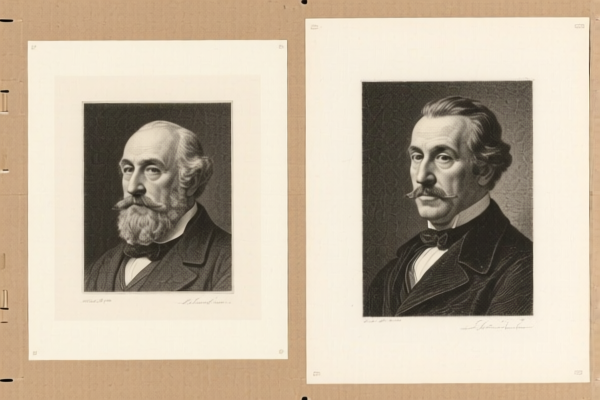


AI Analysis
📚 Printed Brochures: The Ultimate 2026 HS Code & Tariff Master Guide
🌐 Global Trade Intelligence | Precise Classification Strategy | Avoid 45% Tax Traps
📌 Unlocking the Complexity of "Paper Promotional Materials"
A Printed Brochure is the backbone of modern trade marketing, used to showcase products, services, or brand identity. However, in the world of international customs, "brochure" is a deceptive term. One single product type can trigger vastly different tax rates (from 10% to 35%) depending on its physical structure, page count, and specific use case.
⚠️ CRITICAL WARNING:
Misclassifying a folded magazine-style brochure as a simple flyer can result in a double tax burden (17.5% vs 35%) or customs delays. - Is it a single sheet/folded pamphlet? → Check 4901 or 4911. - Is it die-cut, uniquely shaped, or a complex cut-out? → Check 4823.
📦 1. HS Code Classification Matrix (2026 Tax Regime)
Based on current trade data, here is the authoritative breakdown for Printed Brochures. Each code represents a specific physical and functional definition.
| HS Code | Product Definition & Physical Traits | Best Fit Scenario | Tax Complexity |
|---|---|---|---|
| 4901.99.00.93 | Standard Printed Brochures • Generic printed matter • Matches standard paper quality • No page count conflicts |
Most common corporate brochures, multi-page fold-outs, standard marketing kits. | 🟠 Medium (17.5%) |
| 4823.90.86.80 | Cut-to-Shape Paper Products • Not just folded • Die-cut, shaped, or specific dimensions • Excludes standard books/magazines |
Unique shaped brochures, laser-cut designs, promotional items that are "cut" rather than "printed". | 🔴 High (35.0%) |
| 4901.10.00.40 | Single Page or Folded Publications • Non-glossy, non-trial • Includes leaflets, folded pamphlets • Distinct from "books" |
Simple flyers, tri-fold brochures, single-sheet ads. | 🟠 Medium (17.5%) |
| 4911.10.00.40 | Trade Advertising Materials • Specifically for commercial catalogs • Low-risk trade ads • Minimal text/image density |
Simple price lists, basic trade ads, low-cost promotional inserts. | 🟢 Low (10.0%) |
| 4911.10.00.80 | Commercial Catalogs & Directories • High-quality trade ads • Commercial directories • Richer content than 4911.10.00.40 |
High-end product catalogs, industry directories, detailed commercial brochures. | 🟠 Medium (17.5%) |
🔍 The "Shape" Trap:
If your brochure is cut into a specific shape (e.g., a car shape, a company logo shape) rather than a standard rectangle, it MUST be classified under 4823.90.86.80 (Paper products cut to shape). This triggers the 35% tariff, even if it looks like a brochure!
💰 2. 2026 Tariff Rate Deep Dive (China → USA)
✅ Origin: China (CN)
✅ Destination: USA (US)
✅ Effective: 2026 Trade Regime
🚨 Key Drivers: Base Tariff + Section 301 (Additional) + 122 Section (10%)
🎯 Scenario A: The "Standard" Brochure (17.5% Total)
Applicable Codes: 4901.99.00.93, 4901.10.00.40, 4911.10.00.80
| Tax Component | Rate | Legal Basis & Explanation |
|---|---|---|
| Base Tariff | 0.0% | Standard Most-Favored-Nation (MFN) rate for paper goods. |
| Section 301 (Add-on) | +7.5% | Additional Tariff applied to specific Chinese imports (Category 1-4 mix). |
| Section 122 Tariff | +10.0% | 122 Section (often related to specific trade acts/retaliatory measures). |
| TOTAL TAX | 17.5% | Formula: 0 + 7.5 + 10 = 17.5% |
💡 Strategy: If your brochure is a standard folded paper item, this is your "safe harbor" rate.
🎯 Scenario B: The "Premium" Catalog (17.5% Total)
Applicable Code: 4911.10.00.80
- Why 17.5%? Same structure as Scenario A (Base 0% + 7.5% Add-on + 10% 122).
- Risk: While the rate is the same, this code requires proof of commercial intent (e.g., it must be a catalog for sale or trade, not a generic ad). Customs officers may scrutinize if it's actually an advertisement (
4911.10.00.40) to save money.
🎯 Scenario C: The "Cut-Out" Brochure (35.0% Total)
Applicable Code: 4823.90.86.80
| Tax Component | Rate | Legal Basis & Explanation |
|---|---|---|
| Base Tariff | 0.0% | Standard MFN rate for other paper articles. |
| Section 301 (Add-on) | +25.0% | High Penalty Tier. This falls under the "heavy" Section 301 category for specific paper products cut to shape. |
| Section 122 Tariff | +10.0% | Retaliatory or specific trade measure. |
| TOTAL TAX | 35.0% | Formula: 0 + 25 + 10 = 35.0% |
🚨 URGENT ALERT:
This is the highest risk code. If your brochure is die-cut, shaped, or uniquely formed, the tax DOUBLES compared to a standard fold! * Example: A brochure cut into the shape of a smartphone or a company logo. * Consequence: If you declare this as4901(17.5%) and Customs finds it is cut-to-shape, you face back-taxes + penalties.
🎯 Scenario D: The "Basic Trade Ad" (10.0% Total)
Applicable Code: 4911.10.00.40
| Tax Component | Rate | Legal Basis & Explanation |
|---|---|---|
| Base Tariff | 0.0% | MFN Rate. |
| Section 301 (Add-on) | 0.0% | Exempt from Section 301 additional tariffs for this specific sub-category. |
| Section 122 Tariff | +10.0% | Still applies the 122 Section tax. |
| TOTAL TAX | 10.0% | Formula: 0 + 0 + 10 = 10.0% |
💡 Strategy: This is the cheapest route! If your item is a simple trade advertisement (not a detailed catalog), try to justify
4911.10.00.40. * Requirement: Must be clearly labeled as "Trade Advertising Material" and not a "Commercial Catalog".
🛠️ 3.清关实操建议 (Customs Clearance Strategy)
✅ 1. Documentation Checklist (Non-Negotiable)
| Document | Critical Detail | Why It Matters |
|---|---|---|
| ✅ Commercial Invoice | Must explicitly state: "Printed Brochure", "Paper Material", and Page Count. | Determines if it falls under 4901 (Books/Pamphlets) or 4823 (Paper Articles). |
| ✅ Product Photos | Show the shape of the brochure (Is it rectangular? Or die-cut?). | Crucial for proving/disproving 4823.90.86.80 classification. |
| ✅ Content Samples | Provide a copy of the brochure text/images. | Proves it is an advertisement (4911) vs. a book/catalog (4901). |
| ✅ Packing List | Detail the number of pages per brochure. | Prevents confusion with "Books" (which have different rates). |
| ✅ Certificates of Origin | Required for any potential duty exemption claims (rare for China/US, but good practice). |
✅ 2. Declaration Best Practices
🔥 The Golden Rule: "Shape Dictates Tax, Content Dictates Category."
| Situation | Correct HS Code | Risk if Wrong |
|---|---|---|
| Standard Rectangular Brochure (Folded) | 4901.10.00.40 or 4901.99.00.93 |
Low risk (17.5% is standard). |
| Die-Cut / Shaped Brochure (Logo, Car, etc.) | 4823.90.86.80 |
HIGH RISK. Declaring as 4901 leads to 17.5% underpayment + fines. |
| Simple Ad/Flyer (Single page) | 4911.10.00.40 |
Low risk (10.0% is the best rate). |
| Rich Catalog (Many pages, product info) | 4911.10.00.80 |
Medium risk (17.5%). |
💡 Pro Tip: If your brochure is die-cut, do NOT call it a "Brochure" in the description if possible. Call it "Paper Cutout for Promotional Use"? No, be honest but precise: "Paper Product, Die-Cut to Shape, Promotional". This forces the correct 4823 code and avoids "deceptive declaration" charges.
✅ 3. Special Scenarios & Loopholes
| Scenario | Strategy |
|---|---|
| OEM Branded Brochures | If the client owns the IP and pays for the printing, ensure the invoice shows "Client's Brand" to avoid "Commercial Catalog" misclassification. |
| Digital-Printed Brochures | Same rules apply. "Digital" does not change the HS Code (still 4901 or 4911). |
| Free Samples | Even if "Free of Charge," a commercial value must be declared on the invoice. Taxes are calculated on this declared value. |
| Mixed Shipments | If shipping 1000 shaped brochures (4823) with 1000 regular brochures (4901), declare them on separate lines. Do not lump them together! |
🌍 4. Global Context & Comparison
| Market | Typical Rate for Brochures | Key Risk Factor |
|---|---|---|
| 🇺🇸 USA | 10% - 35% | Section 301 & 122 (The "Shape" trap is critical here). |
| 🇪🇺 EU | 0% - 4% | Generally low, but strict on "Paper Waste" and "Recycled Content" rules. |
| 🇨🇦 Canada | 5% - 15% | Similar to US, but fewer Section 301-style penalties. |
| 🇦🇺 Australia | 5% | Generally straightforward classification for paper goods. |
📌 5. Final Verdict & Action Plan
🚀 Your Next Steps:
- Inspect the Shape: Is it a standard rectangle? → Go for 10-17.5%.
- Check the Cut: Is it die-cut, shaped, or non-standard? → Prepare for 35% (
4823.90.86.80). - Analyze Content: Is it a simple ad or a full catalog? → Try to argue for 10% (
4911.10.00.40) if content is minimal. - Declare Precisely: In the commercial invoice, never just write "Brochure". Use the full description:
- Good: "Printed Paper Brochure, Folded, Rectangular, 4 Pages" (
4901.10.00.40) - Bad: "Promotional Material" (Too vague, triggers audit).
- Good: "Printed Paper Brochure, Folded, Rectangular, 4 Pages" (
⚠️ Final Warning:
Do not attempt to "under-classify" a shaped brochure as a standard one. The 17.5% vs 35% difference is massive, and customs AI systems easily flag irregular shapes. Be accurate, save your profit margin!
🎯 Ready to Ship?
📞 Contact your broker with the photo of the brochure shape and page count before submitting the Bill of Lading.
💼 Precision in Paper = Profit in Pocket.
Customer Reviews
About HS Code Classification
The Harmonized System (HS) is an internationally standardized nomenclature developed by the World Customs Organization (WCO) to classify traded products. Over 200 countries use the HS system as the basis for customs tariffs, trade statistics, and import/export regulations.
Each HS code follows a hierarchical structure:
- Chapter (2 digits) — Broad category of goods (e.g., Chapter 84: Machinery and Mechanical Appliances)
- Heading (4 digits) — More specific grouping within the chapter
- Subheading (6 digits) — Internationally standardized breakdown, used by all WCO member countries
- National subdivisions (8-10 digits) — Country-specific extensions for further classification, such as US HTSUS 10-digit codes
Correct HS code classification is essential for smooth customs clearance, accurate duty payment, and compliance with trade regulations. Misclassification can lead to customs delays, overpayment of duties, or penalties.
When importing from CN to US, the applicable tariff rates may include:
- Most-Favored-Nation (MFN) rate — The standard duty rate applied to WTO members
- General rate — Applied to countries without trade agreements
- Trade remedy duties — Additional tariffs such as Section 301 (anti-dumping), Section 232 (national security), or countervailing duties
The information provided on this page is for reference purposes only. For official classification, please consult with your local customs authority or a licensed customs broker.