Printed Circuit Boards
CN → US| HS Code | Tariff Rate | Origin | Destination | Doc |
|---|---|---|---|---|
| 8534000080 | 35.0% | CN | US | Official Doc |
| 8543906800 | 35.0% | CN | US | Official Doc |
| 8543906500 | 35.0% | CN | US | Official Doc |
| 8473302000 | 85.0% | CN | US | Official Doc |
| 8537109170 | 37.7% | CN | US | Official Doc |
Product Images
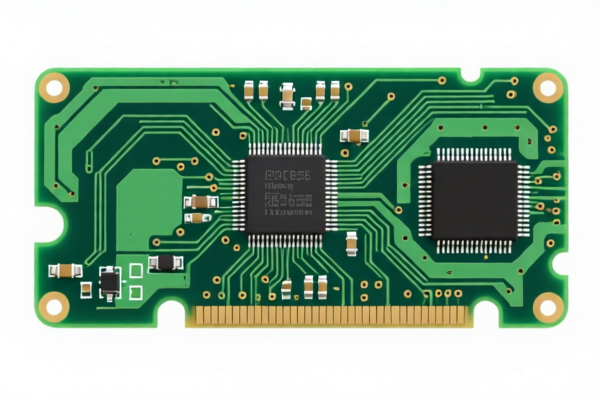


AI Analysis
⚡ Printed Circuit Boards (PCBs)
🌐 HS Code Reference & Customs Clearance Guide | 2026 Latest Tariff Analysis | Strategic Import Strategy
📌 I. Product Definition & Classification: Do You Really Know Your "PCB"?
Printed Circuit Boards (PCBs) are the foundational hardware components of modern electronics, serving as both the mechanical support and electrical connection for electronic components. In international trade, they are not a monolithic category. Their classification depends heavily on their physical form (rigid vs. flexible) and their functional integration (standalone component vs. integrated assembly).
⚠️ Key Distinction Points:
- Standalone Rigid PCBs: Simple circuit traces on rigid substrate, without complex integrated functions → Often falls under "Other Printed Circuits" (8534.00).
- PCB Assemblies/Modules: Boards with attached components, controllers, or specific functional purposes (e.g., power control, data processing support) → Falls under "Electrical Machines & Apparatus" or "Parts of Machines" (8543, 8473, 8537).
📦 II. HS Code Classification Details (2026 Latest Tariff Authority Comparison)
Based on the provided data, here are the five potential classifications for "Printed Circuit Boards," ranging from simple components to functional assemblies.
| HS Code | Product Description | Application Scenario | Key Differentiator |
|---|---|---|---|
8534.00.00.80 |
Other Printed Circuits (General/Bottom-line) | Simple rigid PCBs, generic circuit boards without specific control functions | ✅ No specific function; treated as a basic component. "Other" category used when form (flexible/rigid) is unspecified. |
8543.90.68.00 |
Electrical Machines & Apparatus, Other | PCB Assemblies with specific electrical functions not covered elsewhere | ✅ Functional Assembly; matches "Printed Circuit Assembly" in form and function. |
8543.90.65.00 |
Electrical Machines & Apparatus, Other (Bottom-line) | PCBs with unspecified specific use, relying on "bottom-line" matching | ✅ Form Consistent; matches "Printed Circuit Assembly" morphology. No material/use conflict. |
8473.30.20.00 |
Parts & Accessories for Automatic Data Processing Machines | PCBs that are integral components of machines under Heading 8471 (e.g., server/motherboards) | ✅ Component of 8471 Machine; defined as a "Printed Circuit Assembly" for specific machinery. |
8537.10.91.70 |
Boards, Panels, Consoles for Electric Control | PCBs inferred to have power control or distribution functions | ✅ Inferred Function; classified under voltage control equipment parts. "Other" category due to lack of specific conflict. |
🔍 Critical Reminder:
- 8534.00 is the "safe" bottom-line for simple boards but may attract high tariffs if deemed a basic import.
- 8543.90 and 8537.10 imply functional integration. If your PCB has components attached or serves a control purpose, these are more accurate but come with different tax structures.
- 8473.30 is highly specific to IT/Data Processing machinery. If the PCB is for a computer/server, this is the correct functional path.
💰 III. 2026 Latest Tariff Rate Breakdown (Including Surtaxes & Policy Add-ons)
✅ Applicable Country: United States (US)
✅ Origin: China (CN)
✅ Effective Date: Post-2025 Policies (301 Section + IEEPA)
🎯 1. 8534.00.00.80 & 8543.90.68.00 & 8543.90.65.00
(Simple PCBs & Generic Electrical Assemblies)
| Item | Detail |
|---|---|
| Base Tariff | 0.0% (Ad Valorem) |
| Section 301 Surcharge | +25.0% (USITC Footnote related to Chinese goods) |
| IEEPA Surcharge | +10.0% (Targeting Chinese/HK products, effective Nov 2025) |
| Total Tax Rate | 35.0% |
| Tax Calculation | CIF Value × 35% |
| De Minimis Exemption | ❌ Not Applicable (Deemed high-risk category) |
| Legal Basis Path | Base 0% → USITC 301: +25% → IEEPA: +10% |
📌 Explanation:
- These codes represent the highest efficiency path for simple components.
- The total 35% is significant but lower than the 85% category.
- Risk: Customs may challenge "generic" declarations if the board clearly has a specialized function.
🎯 2. 8473.30.20.00
(Parts of Automatic Data Processing Machines)
| Item | Detail |
|---|---|
| Base Tariff | 0.0% |
| Section 301 Surcharge | +25.0% |
| IEEPA Surcharge | +10.0% |
| Steel/Aluminum/Copper Surcharge | +50.0% (If the board substrate or components contain significant steel/aluminum/copper subject to specific trade measures) |
| Total Tax Rate | 85.0% |
| Tax Calculation | CIF Value × 85% |
| De Minimis Exemption | ❌ Not Applicable |
| Legal Basis Path | Base 0% → USITC 301: +25% → IEEPA: +10% → Metal Surtax: +50% |
📌 Warning:
- This is the most expensive classification at 85%.
- The additional 50% is triggered by the material composition (Steel/Aluminum/Copper products) often associated with industrial IT hardware parts.
- Only use this if the PCB is strictly defined as a part of an 8471 Machine (e.g., server motherboard) AND you are willing to bear the high tax burden.
🎯 3. 8537.10.91.70
(Boards for Electric Control & Distribution)
| Item | Detail |
|---|---|
| Base Tariff | 2.7% |
| Section 301 Surcharge | +25.0% |
| IEEPA Surcharge | +10.0% |
| Total Tax Rate | 37.7% |
| Tax Calculation | CIF Value × 37.7% |
| De Minimis Exemption | ❌ Not Applicable |
| Legal Basis Path | Base 2.7% → USITC 301: +25% → IEEPA: +10% |
📌 Explanation:
- This code assumes the PCB is used for power control or distribution.
- The base rate is 2.7%, which is higher than 0%, but the total 37.7% is still lower than the 85% for IT parts.
- Risk: Requires strong justification that the PCB’s primary function is electrical control/distribution, not just data processing or generic connection.
🛠️ IV. Customs Clearance Practical Advice (Battle-Tested Pitfall Guide)
✅ 1. Documentation Checklist (Non-Negotiable)
| Document | Required? | Purpose |
|---|---|---|
| ✅ Technical Datasheet | ✔️ | Must specify: Substrate type (FR4, Flex, etc.), layers, dimensions, functional purpose. |
| ✅ Circuit Diagram / Schematic | ✔️ | Critical to distinguish between 8534 (simple) and 8543/8537 (functional). |
| ✅ Product Photos (Unpacked) | ✔️ | Show connectors, components, and any labeling (Model/Part Number). |
| ✅ Commercial Invoice | ✔️ | Must use precise HS Code descriptions. Avoid vague terms like "PCB Board" alone. |
| ✅ Bill of Lading / Packing List | ✔️ | Ensure weight/volume matches invoice. |
| ✅ FCC/CE Certifications | (If applicable) | Prove compliance if declared as "Electrical Apparatus" (8543/8537). |
✅ 2. Declaration Strategy (Key Mnemonics)
🔥 "Function Defines Code, Material Dictates Tax, Vague Names Kill Profit!"
| Scenario | Recommended HS Code | Why? |
|---|---|---|
| Simple Rigid PCB (No complex assembly, no specific control) | 8534.00.00.80 |
Lowest risk, 35% total. "Other" category is safe for generic boards. |
| PCB with Attached Components (Functional Assembly) | 8543.90.68.00 |
Matches "Printed Circuit Assembly" definition. 35% total. |
| Server/Computer Motherboard (Part of 8471 Machine) | 8473.30.20.00 |
High accuracy for IT parts, but 85% tax is a major cost driver. |
| Power Control/Management Board | 8537.10.91.70 |
Justify "Control/Distribution" function. 37.7% total. |
| Unspecified Use PCB | 8543.90.65.00 |
Bottom-line match. 35% total. Use if function is unclear but form matches assembly. |
✅ 3. Special Case Handling
| Situation | Actionable Advice |
|---|---|
| Flexible PCBs (FPC) | If the description doesn't specify "Rigid," customs may default to "Other" (8534). If it's FPC, ensure documentation highlights "Flexibility" to avoid misclassification as rigid. |
| PCBs with Copper Content | For 8473.30.20.00, be aware of the +50% Copper/Steel surtax. If possible, argue for 8543.90.68.00 (35%) if the board can be seen as general electrical apparatus. |
| OEM Custom PCBs | Provide the End-User Equipment name. If it goes into a machine, 8473.30.20.00 might be technically correct but tax-heavy. Negotiate with your broker on whether 8543.90.68.00 (as a generic assembly) is defensible. |
| "Other" Category Claims | When using "Other" sub-headings (e.g., 8534.00.80, 8537.10.91), ensure there is no material or functional conflict with more specific codes. |
🌍 V. Global Market Comparison (2026 Overview)
| Market | Recommended HS Code (Simple PCB) | Tariff Impact | Notes |
|---|---|---|---|
| 🇺🇸 USA | 8534.00.00.80 |
35% (0% Base + 25% 301 + 10% IEEPA) | High due to 301/IEEPA. Avoid 8473 if possible due to 85% rate. |
| 🇨🇳 China | 8534.00.00.80 |
~6-10% | Lower base tariffs. No 301/IEEPA surcharges for exports. |
| 🇪🇺 EU | 8534.00.00.80 |
0-2% | Generally low tariffs. Focus on REACH/RoHS compliance. |
| 🇬🇧 UK | 8534.00.00.80 |
0-2% | Post-Brexit tariffs are generally favorable for electronic components. |
| 🇯🇵 Japan | 8534.00.00.80 |
0-3% | Low tariffs. Strong focus on quality documentation. |
📌 Conclusion:
- The USA is the most challenging market due to Section 301 and IEEPA tariffs.
- The 85% rate for8473.30.20.00makes it economically unviable for simple PCBs unless the volume is very high and the margin is exceptional.
-8534.00.00.80(35%) and8543.90.68.00(35%) are the most common and cost-effective choices for general PCB imports.
📌 VI. Common Errors & Pitfalls (Lessons Learned)
❌ Error 1: Declaring a Motherboard as a simple 8534.00.00.80
👉 Consequence: Customs may reclassify it as 8473.30.20.00 → Tax jumps from 35% to 85%.
👉 Fix: If it's a core IT component, consider the 85% cost or consult a trade attorney for a pre-ruling.
❌ Error 2: Ignoring Material Composition for 8473.30.20.00
👉 Consequence: Missing the +50% steel/aluminum/copper surcharge.
👉 Fix: Analyze the BOM (Bill of Materials). If it contains significant metal structures subject to trade measures, factor this in.
❌ Error 3: Using Vague Descriptions like "PCB"
👉 Consequence: High scrutiny, delays, and potential rejection by customs AI.
👉 Fix: Use precise terms: "Rigid Printed Circuit Board, FR4 Substrate, 4-Layer, for Industrial Control" or "Printed Circuit Assembly for Power Distribution."
✅ Best Practice:
"Define Function, Specify Material, Justify Code!"
Example: "Rigid Printed Circuit Board (PCB), FR4, 2-Layer, No Active Components, for use in Household Appliances" → Supports8534.00.00.80.
🎯 VII. Conclusion: Strategic Classification for Cost Efficiency
🎯 Key Takeaway:
🔹 Simple/Generic PCBs →
8534.00.00.80(35% Total)
🔹 Functional Assemblies →8543.90.68.00(35% Total)
🔹 Power Control Boards →8537.10.91.70(37.7% Total)
🔹 IT Machine Parts (Motherboards) →8473.30.20.00(85% Total - AVOID unless necessary)🔹 HS Code Selection is Critical: A 2% difference in base rate can lead to a 50% difference in total tax due to surcharges.
🔹 Documentation is King: Technical specs and functional descriptions are your best defense against reclassification.
📌 Pro Tip:
If your PCBs are exported from third countries (e.g., Vietnam, Malaysia) and meet Substantial Transformation Rules, you may qualify for IEEPA Exemptions.
👉 Action: Apply for an Advance Ruling from US Customs and Border Protection (CBP) if you are importing high volumes.
📣 Immediate Action Plan:
📞 Engage a Licensed Customs Broker: Provide schematics and BOM.
🚀 Request a Pre-Ruling: Especially if considering8473.30.20.00or8537.10.91.70.
💼 Optimize for Profit: Choose the lowest compliant HS Code (8534or8543) to save ~50% on taxes compared to IT parts.
✨ Professional Clearance Starts with Precise Classification!
💼 Every Percent in Tax is a Percent Less in Margin!
Customer Reviews
About HS Code Classification
The Harmonized System (HS) is an internationally standardized nomenclature developed by the World Customs Organization (WCO) to classify traded products. Over 200 countries use the HS system as the basis for customs tariffs, trade statistics, and import/export regulations.
Each HS code follows a hierarchical structure:
- Chapter (2 digits) — Broad category of goods (e.g., Chapter 84: Machinery and Mechanical Appliances)
- Heading (4 digits) — More specific grouping within the chapter
- Subheading (6 digits) — Internationally standardized breakdown, used by all WCO member countries
- National subdivisions (8-10 digits) — Country-specific extensions for further classification, such as US HTSUS 10-digit codes
Correct HS code classification is essential for smooth customs clearance, accurate duty payment, and compliance with trade regulations. Misclassification can lead to customs delays, overpayment of duties, or penalties.
When importing from CN to US, the applicable tariff rates may include:
- Most-Favored-Nation (MFN) rate — The standard duty rate applied to WTO members
- General rate — Applied to countries without trade agreements
- Trade remedy duties — Additional tariffs such as Section 301 (anti-dumping), Section 232 (national security), or countervailing duties
The information provided on this page is for reference purposes only. For official classification, please consult with your local customs authority or a licensed customs broker.