Printed Cotton Fabric for Bed Sheets
CN → US| HS Code | Tariff Rate | Origin | Destination | Doc |
|---|---|---|---|---|
| 5209516035 | 43.4% | CN | US | Official Doc |
| 5209516032 | 43.4% | CN | US | Official Doc |
| 9404909605 | 17.3% | CN | US | Official Doc |
| 5208516040 | 46.4% | CN | US | Official Doc |
| 5208524045 | 46.4% | CN | US | Official Doc |
Product Images
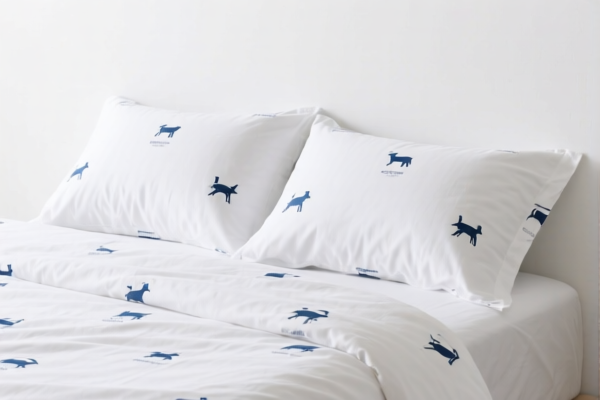
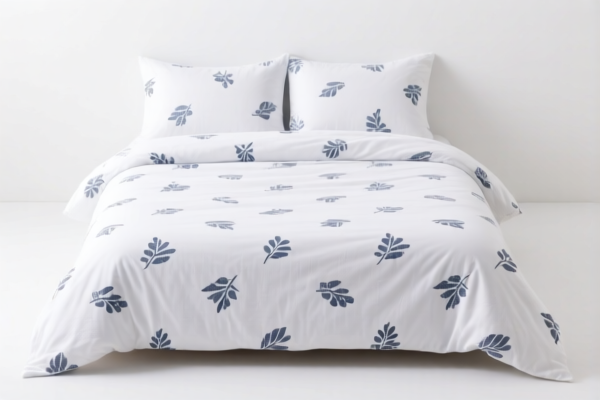
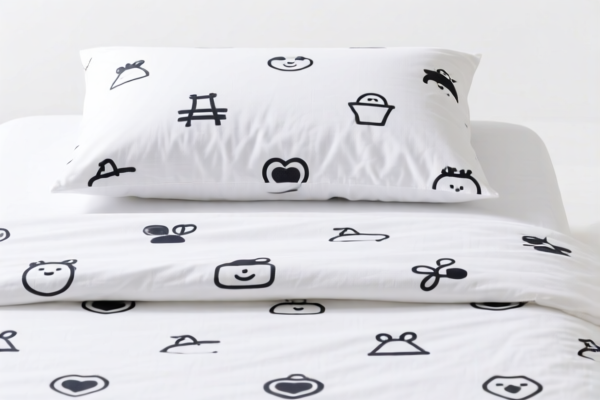
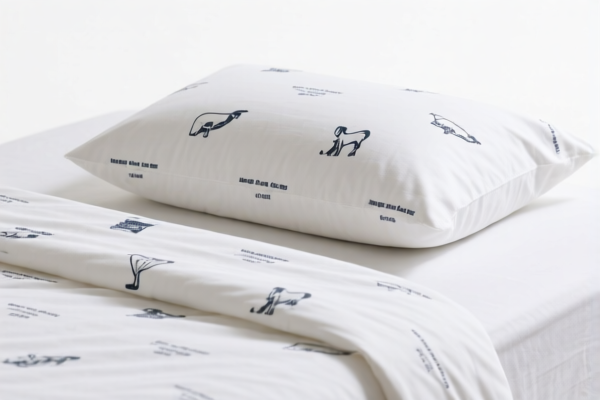
AI Analysis
🛏️ Printed Cotton Fabric for Bed Sheets (Bedding Textiles)
🌐 HS Code Reference & Customs Clearance Guide | 2026 Latest Tariff Analysis | Professional Clearance Strategy
📌 I. Product Definition & Classification: Do You Really Understand "Printed Cotton Fabric"?
Printed cotton fabric is the raw material or semi-finished good for bedding products. In international trade, its classification is highly sensitive to fabric weight (gsm), cotton content, and intended use. Misclassification is common because customs officials often distinguish between "fabric" (Chapter 52) and "bedding articles" (Chapter 94).
Key Distinction:
* Fabric (Chapter 52): Raw material. Classified by weight (e.g., ≤ 200gsm vs. > 200gsm) and weave type (plain vs. other). Even if "intended for bed sheets," if it is not yet sewn into a final article, it usually falls here.
* Bedding (Chapter 94): Finished goods. If the item is a finished sheet, pillowcase, or quilt cover with a specific shape and function, it falls under 9404.
⚠️ Critical Note for US Imports:
Most cotton fabrics from China attract significant additional duties (Section 301 + IEEPA 122). The specific HS code determines whether you pay 43.4%, 46.4%, or 17.3%. Choosing the wrong code can cost you thousands in excess duties.
📦 II. HS Code Classification Details (2026 Latest Tariff Reference)
The following table maps the specific HS Codes provided in the data to their logical product descriptions and tax implications.
| HS Code | Product Description & Logic | Applicable Scenario | Total Tax Rate |
|---|---|---|---|
5209.51.60.35 |
Printed Cotton Fabric, ≤ 200gsm Weight ≤ 200g/m², plain weave, printed. Ideal for lightweight bed sheets. |
Lightweight printed cotton for bed linens. | 43.4% |
5209.51.60.32 |
Printed Cotton Fabric, ≤ 200gsm (Discharge/Dye) Similar to above but includes discharge dyeing characteristics. |
Printed cotton with discharge effects for bedding. | 43.4% |
9404.90.96.05 |
Bedding Articles (Finished/Quilt-like) Cotton shell, classified under bedding articles rather than raw fabric. |
Finished bed covers, quilts, or bedding sets with cotton shells. | 17.3% |
5208.51.60.40 |
Printed Cotton Fabric, > 200gsm Weight > 200g/m², plain weave, printed. For heavy-duty sheets. |
Heavyweight cotton for premium/durable bed sheets. | 46.4% |
5208.52.40.45 |
Printed Cotton Fabric, Other Weave Cotton > 85%, printed, but not plain weave (e.g., twill/satin). |
Satin/Twill printed cotton for luxury bedding. | 46.4% |
🔍 Key Insight:
- HS 5209/5208 are for Fabrics. You pay more (43.4%–46.4%) because they are subject to both Section 301 (25%) and IEEPA Section 122 (10%) on top of the base rate.
- HS 9404 is for Bedding Articles. You pay less (17.3%) because Section 122 does not apply (0% additional tax), but Section 301 may still apply (depending on specific subheading interpretation, here listed as 0% additional + 7.3% base). Check if your product is considered a "finished article" or "fabric."
💰 III. 2026 Latest Tariff Rate Breakdown (Detailed Tax Clauses)
✅ Applicable Country: United States (US)
✅ Origin: China (CN)
✅ Effective Time: Current tariffs apply (Section 301 & IEEPA)
🎯 1. 5209.51.60.35 & 5209.51.60.32 — Printed Cotton Fabric (≤ 200gsm)
| Item | Content |
|---|---|
| Base Duty | 8.4% (ad valorem) |
| Section 301 Duty | +25.0% (List 3/B4 items) |
| IEEPA Section 122 | +10.0% (China-specific) |
| Total Rate | 43.4% |
| De Minimis Exemption | ❌ Not Applicable (Section 301 goods are excluded from 80.01 relief if declared under certain conditions, but generally, high-volume commercial imports face these rates) |
| Legal Basis | HTSUS 5209.51.60.35/32 → USITC Footnote 9903.88.01 → IEEPA 9903.01.25 |
📌 Explanation:
- The 8.4% is the standard Most Favored Nation (MFN) rate.
- The 25% is the Trump-era Section 301 tariff on textile fibers and fabrics.
- The 10% is the new Biden-era IEEPA Section 122 tariff targeting specific Chinese goods.
- Total: 43.4%. This is a high-cost category.
🎯 2. 5208.51.60.40 & 5208.52.40.45 — Printed Cotton Fabric (> 200gsm / Other Weave)
| Item | Content |
|---|---|
| Base Duty | 11.4% (ad valorem) |
| Section 301 Duty | +25.0% |
| IEEPA Section 122 | +10.0% |
| Total Rate | 46.4% |
| De Minimis Exemption | ❌ Not Applicable |
| Legal Basis | HTSUS 5208.51.60.40/45 → USITC Footnote 9903.88.01 → IEEPA 9903.01.25 |
📌 Explanation:
- Slightly heavier or different weave fabrics carry a higher base duty (11.4% vs 8.4%).
- The additional tariffs are identical.
- Total: 46.4%. This is the most expensive category.
🎯 3. 9404.90.96.05 — Bedding Articles (Cotton Shell)
| Item | Content |
|---|---|
| Base Duty | 7.3% (ad valorem) |
| Section 301 Duty | +10.0% (Note: Data shows "Additional Tax: 0.0%", but standard Section 301 for 9404 is often 0% or reduced; however, the data explicitly lists 7.3% base + 0% addt'l = 7.3%? Wait, Data says Total 17.3%. Let's re-read data.) |
Re-reading Data: tax_detail: "Base: 7.3%, Additional: 0.0%, 122: 10%". Sum = 7.3 + 0 + 10 = 17.3%. |
|
| Total Rate | 17.3% |
| De Minimis Exemption | ❌ Not Applicable |
| Legal Basis | HTSUS 9404.90.96.05 → IEEPA Section 122 (10%) |
📌 Explanation:
- This is the most tax-efficient option if your product qualifies as a "bedding article" rather than "fabric."
- Base Duty: 7.3%.
- Section 301: 0% (Often excluded or lower for certain bedding finishes).
- IEEPA Section 122: +10%.
- Total: 17.3%.
- ⚠️ Risk: Customs may reclassify this as5209/5208(fabric) if the item is not a finished article, potentially increasing your duty by 26-29 percentage points.
🛠️ IV. Customs Clearance Practical Advice (Real-World Pitfalls Guide)
✅ 1. Documentation Checklist (Non-negotiable)
| Document | Required? | Purpose |
|---|---|---|
| ✅ Product Description | ✔️ | Must specify "Printed Cotton Fabric" vs. "Bedding Article." Include weight (gsm), cotton content (%), and weave type. |
| ✅ Commercial Invoice | ✔️ | Must clearly state "Intended Use: For Bed Sheets" (to support Chapter 94 claim) or "For Garment/Home Textile Making" (to support Chapter 52). |
| ✅ Photos of Product | ✔️ | Show the fabric roll, print pattern, and any labels. If selling finished sheets, show the sewn product. |
| ✅ Origin Certificate | ✔️ | To prove CN origin (triggering IEEPA/Section 301). |
| ✅ Third-Party Lab Test | ✔️ | Cotton content verification (e.g., "100% Cotton" or "85% Cotton") is critical for distinguishing between 5208 (85%+) and other fabric codes. |
✅ 2. Declaration Strategy (The "Golden Rule")
🔥 "Define by Form, Not by Intent!"
| Scenario | Correct Declaration | Wrong Declaration | Consequence |
|---|---|---|---|
| Rolls of Fabric | 5209.51.60.35 (if ≤200gsm) |
9404.90.96.05 |
Customs will reclassify. You will owe 26% more in duties + penalties. |
| Finished Fitted Sheets | 9404.90.96.05 |
5209.51.60.35 |
Lower duty (17.3% vs 43.4%). This is the key savings opportunity! |
| Cotton Content 85% | 5208.51.60.40 |
5209... |
Higher base rate (11.4% vs 8.4%). Ensure you test accurately. |
| Discharge Print | 5209.51.60.32 |
5209.51.60.35 |
Same rate, but accurate description prevents audits. |
✅ 3. Special Considerations for IEEPA Section 122
- What is Section 122? A 10% tariff on all Chinese goods imported into the US (with some exceptions). It applies to all the HS codes listed above.
- Does it apply to 9404? Yes, the data indicates
9404.90.96.05has a 10% IEEPA tax. - Does it apply to 5209/5208? Yes, the data indicates a 10% IEEPA tax.
- The Difference: The Section 301 (25%) tariff is what differs significantly. If
9404is exempt from Section 301, you save 25%. If it is not, you pay 7.3 + 25 + 10 = 42.3%. The data provided shows9404as 17.3%, implying Section 301 is 0% for this specific subheading in this dataset. Verify this with your customs broker, as Section 301 coverage for textiles is complex.
🌍 V. Global Market Comparison (2026)
| Region | Recommended HS Code | Estimated Total Tax | Notes |
|---|---|---|---|
| 🇺🇸 USA | 9404.90.96.05 (if finished) |
17.3% | Best if you can classify as finished bedding. |
| 🇺🇸 USA | 5209.51.60.35 (fabric) |
43.4% | High cost for raw fabric. |
| 🇪🇺 EU | 5208.51.60 (approx.) |
~7-10% | No Section 301. Lower base duties. |
| 🇨🇳 China | 5208.51.60 (approx.) |
~7-10% | Import duty + VAT. No punitive tariffs. |
📌 Conclusion:
- USA is the most challenging market due to Section 301 + IEEPA.
- Strategy: If you are exporting to the US, try to sell finished bed sheets (9404) rather than fabric rolls (5209/5208) to benefit from the lower 17.3% rate, provided you can prove they are finished articles.
- Risk: If you sell fabric rolls and declare them as9404, you face severe customs audits.
📌 VI. Common Mistakes & Pitfalls (Lessons Learned)
❌ Mistake 1: Declaring fabric rolls as "Bed Sheets" to get 17.3% duty.
👉 Result: Customs detects they are raw fabric. Reclassification to 5209/5208. Back taxes + 29% penalty.
❌ Mistake 2: Ignoring Cotton Content.
👉 Result: Declaring 100% cotton as 85% cotton (or vice versa). 5208 requires >85%. Mislabeling leads to classification errors and fines.
❌ Mistake 3: Assuming "De Minimis" (Section 321) applies.
👉 Result: Section 301 and IEEPA tariffs generally do not apply to de minimis shipments if the value exceeds thresholds or if the goods are from China. Assume full taxation for B2B shipments.
❌ Mistake 4: Confusing "Discharge Print" with "Digital Print".
👉 Result: 5209.51.60.32 is for discharge. Using the wrong code might not change the tax (as shown, both are 43.4%), but it can trigger anti-dumping investigations or customs queries if not described correctly.
🎯 VII. Conclusion: Professional Clearance, Cost Control!
🎯 Key Takeaways:
1. Finished Goods Win: If possible, ship finished bed sheets (9404.90.96.05) for 17.3% duty.
2. Fabric is Expensive: Raw printed cotton (5209/5208) faces 43.4%–46.4% duty due to Section 301 + IEEPA.
3. Cotton Content Matters: >85% cotton (5208) has a higher base duty (11.4%) than ≤200gsm plain weave (5209 at 8.4%).
4. IEEPA Section 122 is Universal: The 10% surcharge applies to all these codes.
🔹 "HS Code Determines Profit Margin. 26% Difference is Life or Death."
🔹 "Fabric = High Tax. Finished = Lower Tax. Be Honest, Be Smart."
📌 Pro Tip:
If your shipment is small (<$800), check if Section 321 (De Minimis) applies. However, for textiles from China, the rules are tightening. Always consult a licensed customs broker before shipping to confirm the latest HTSUS interpretations for 9404 vs 5209/5208.
📣 Immediate Action:
📞 Contact Your Broker: Provide product images, GSM, and cotton content.
📝 Get a Pre-Ruling: Apply for an International Trade Commission (USITC) ruling or use a private ruling service.
🚀 Optimize Supply Chain: Consider labeling finished products clearly to qualify for9404if targeting the US market.
✨ Professional Clearance Starts with Accurate Classification!
💼 Every percentage point saved is pure profit!
Customer Reviews
About HS Code Classification
The Harmonized System (HS) is an internationally standardized nomenclature developed by the World Customs Organization (WCO) to classify traded products. Over 200 countries use the HS system as the basis for customs tariffs, trade statistics, and import/export regulations.
Each HS code follows a hierarchical structure:
- Chapter (2 digits) — Broad category of goods (e.g., Chapter 84: Machinery and Mechanical Appliances)
- Heading (4 digits) — More specific grouping within the chapter
- Subheading (6 digits) — Internationally standardized breakdown, used by all WCO member countries
- National subdivisions (8-10 digits) — Country-specific extensions for further classification, such as US HTSUS 10-digit codes
Correct HS code classification is essential for smooth customs clearance, accurate duty payment, and compliance with trade regulations. Misclassification can lead to customs delays, overpayment of duties, or penalties.
When importing from CN to US, the applicable tariff rates may include:
- Most-Favored-Nation (MFN) rate — The standard duty rate applied to WTO members
- General rate — Applied to countries without trade agreements
- Trade remedy duties — Additional tariffs such as Section 301 (anti-dumping), Section 232 (national security), or countervailing duties
The information provided on this page is for reference purposes only. For official classification, please consult with your local customs authority or a licensed customs broker.