Printed Dyed Satin Fabric
CN → US| HS Code | Tariff Rate | Origin | Destination | Doc |
|---|---|---|---|---|
| 5407922050 | 49.9% | CN | US | Official Doc |
| 5407820040 | 49.9% | CN | US | Official Doc |
| 5407840040 | 49.9% | CN | US | Official Doc |
| 5407942050 | 49.9% | CN | US | Official Doc |
Product Images
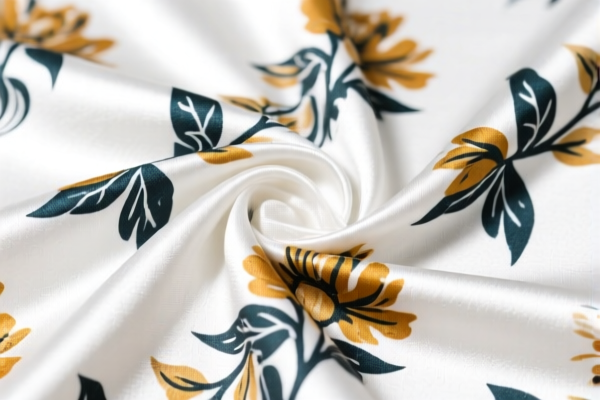
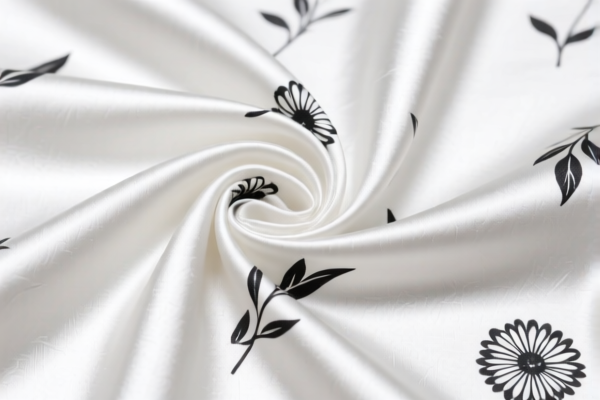
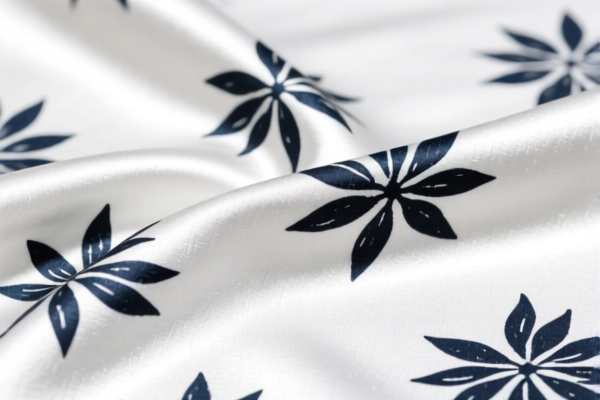
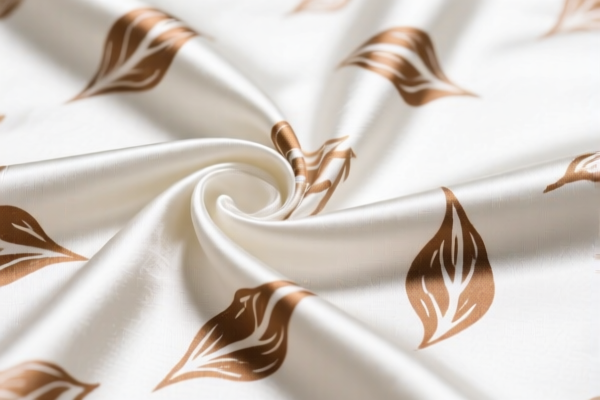
AI Analysis
🧵 Printed Dyed Satin Fabric (印花染色缎纹面料)
🌐 HS Code Reference & Clearance Guide | 2026 Latest Tariff Analysis | Professional Entry Strategy
📌 I. Product Definition & Classification: What is "Printed Dyed Satin Fabric"?
"Printed Dyed Satin Fabric" is a broad category of textiles characterized by a satin weave structure (smooth surface, dull back), finished with both dyeing (uniform color penetration) and printing (pattern application). In international trade, the HS Code classification hinges heavily on the fiber composition (Synthetic vs. Natural/Cotton blend) and the weave type.
⚠️ Key Distinction Points:
- Satin Weave Structure: All codes below (5407) imply a satin or sateen weave.
- Synthetic Fibers (Polyester, Nylon, etc.): Generally fall under5407.92or5407.94if synthetic, or5407.82/84if blends.
- Processing Method: "Printed AND Dyed" means the fabric undergoes both processes. In many tariff schedules, if a fabric is printed, it takes precedence over simpler "dyed only" codes, but specific subheadings differentiate by material.
📦 II. HS Code Classification Details (2026 Latest Tariff Authority Comparison)
Based on the provided data, the product falls into four specific HS Codes, all sharing the same tax structure. The differentiation lies in the specific material inference and application.
| HS Code | Product Description & Inference | Applicable Scenario | Material Inference |
|---|---|---|---|
5407.92.20.50 |
Printed Dyed Satin Fabric | Standard synthetic satin fabrics | Synthetic fibers or related fiber fabrics |
5407.82.00.40 |
Printed Dyed Satin Fabric | General woven satin fabrics | Possibly synthetic filament or cotton-blend fabrics |
5407.84.00.40 |
Printed Satin Home Textile Fabric | Bedding, curtains, upholstery | Synthetic fiber and cotton blend woven fabric |
5407.94.20.50 |
Printed Satin Home Textile Fabric | High-end home textiles | Synthetic or natural fiber fabrics |
🔍 Key Reminder:
- All four codes fall under Heading 5407 (Woven fabrics of synthetic filament yarn, of 85% or more by weight of synthetic filament yarn, and other woven fabrics of synthetic filament yarn).
- The suffixes.20.50and.00.40often indicate specific sub-regulations or duty rates in certain national tariffs (like the US HTS).
- Crucial Note: Despite different subheadings, the Total Tax Rate is identical (49.9%) for all listed codes in this dataset. This suggests that for this specific product entry, the material nuance does not alter the final duty burden under the current tariff snapshot.
💰 III. 2026 Latest Tariff Rate Details (Including Surcharges, Policy Add-ons)
✅ Applicable Country: United States (US)
✅ Country of Origin: China (CN)
✅ Effective Date: 2025/2026 (Current Trade Policy)
🎯 1. General Tax Structure for All Listed HS Codes
(Applies to: 5407.92.20.50, 5407.82.00.40, 5407.84.00.40, 5407.94.20.50)
| Item | Content |
|---|---|
| Base Tariff Rate | 14.9% (Most Favored Nation / General Rate) |
| Section 301 Surcharge | +25.0% (Added tariff on Chinese goods under US Trade Act) |
| Section 122 Tariff | +10.0% (Specific policy tariff, likely related to recent executive orders or trade adjustments) |
| Total Tax Rate | 49.9% |
| Tax Calculation | CIF Value × 49.9% |
| De Minimis Exemption | ❌ Not Applicable (Textiles generally do not qualify for $800 de minimis under current enforcement) |
| Legal Basis Path | HTSUS:5407.xxxx → USITC:301 → Executive Order:122 |
📌 Explanation:
- "Base Tariff 14.9%": This is the standard duty for woven synthetic fabrics.
- "Section 301 Surcharge 25%": This is the major penalty for Chinese origin goods, significantly increasing costs.
- "Section 122 Tariff 10%": This additional layer reflects ongoing trade tensions or specific safeguard measures.
- Total 49.9%: This is a very high tariff rate. Importers must account for this in pricing strategies.
🛠️ IV. Customs Clearance Practical Advice (Real-World Pitfall Avoidance)
✅ 1. Preparation Checklist (Non-negotiable)
| Material | Must Provide | Description |
|---|---|---|
| ✅ Product Composition Label | ✔️ | Must state % of synthetic vs. natural fibers (e.g., "100% Polyester" or "65% Poly/35% Cotton") |
| ✅ Fabric Swatch | ✔️ | Physical sample for customs verification of weave (satin) and print/dye |
| ✅ Commercial Invoice | ✔️ | Clearly state "Printed Dyed Satin Fabric" + HS Code + Country of Origin |
| ✅ Certificate of Origin | ✔️ | Prove Chinese origin (or preferential origin if applicable, though unlikely for US) |
| ✅ Packing List | ✔️ | Detail weight, dimensions, and number of bales/rolls |
| ✅ Supply Chain Documentation | ✔️ | Proof of manufacturing process (dyeing + printing location) to verify origin |
✅ 2. Declaration Tips (Key Mantras)
🔥 "Accurate Composition, Precise Weave, Full Transparency!"
| Scenario | Correct Declaration | Error to Avoid |
|---|---|---|
| 100% Polyester Satin | 5407.92.20.50 |
Misdeclaring as "Cotton Satin" (lower duty but high fraud risk) |
| Poly-Cotton Blend Satin | 5407.82.00.40 or 5407.84.00.40 |
Ignoring blend ratio; customs will reclassify based on predominant fiber |
| Printed vs. Dyed Only | State "Printed AND Dyed" | Declaring as "Dyed Only" (different HS code, potential penalty) |
| Home Textile vs. Apparel | Specify end-use if relevant | Ambiguous description leading to delays |
✅ 3. Special Circumstances Handling
| Situation | Handling Advice |
|---|---|
| OEM Custom Prints | Provide design authorization and print recipes to prove value and origin |
| Small Sample Shipments | Still subject to full duty; do not rely on de minimis for textiles |
| Mixed Containers | Clearly separate fabric types; mixed declarations can lead to full container audits |
| Origin Verification | Ensure no transshipment through Vietnam/Malaysia without substantial transformation; US scrutinizes circumvention |
🌍 V. Global Market Clearance Comparison (2026 Latest)
| Country/Region | Recommended HS Code | Tariff Rate | Certification Requirements | Remarks |
|---|---|---|---|---|
| 🇺🇸 USA | 5407.92.20.50 etc. |
49.9% (China Origin) | None specific, but rigorous origin checks | Highest cost due to 301 + 122 tariffs |
| 🇨🇳 China | 5407.92.20.50 etc. |
~8-15% | GB Standards (if applicable) | Lower entry barrier |
| 🇪🇺 EU | 5407.92 etc. |
~6-12% | REACH Compliance (Chemicals in dye/print) | Strict chemical regulations |
| 🇬🇧 UK | 5407.92 etc. |
~6-12% | UKCA Marking (if finished goods) | Post-Brexit rules apply |
| 🇦🇺 Australia | 5407.92 etc. |
~5% | No specific textile certs | Low barrier |
📌 Conclusion:
- USA is the most challenging market for Chinese-origin satin fabrics due to the 49.9% total tariff.
- EU/UK focus heavily on chemical compliance (REACH) for dyes and prints.
- Diversification Strategy: Consider sourcing from Vietnam/India to avoid Section 301 tariffs, though EU/UK may still require strict origin proof.
📌 VI. Common Errors & Pitfall Guide (Lessons Learned)
❌ Error 1: Misdeclaring "Synthetic" as "Cotton" to lower base duty
👉 Consequence: Customs inspection reveals polyester content → 49.9% + Penalties + Potential Blacklist
❌ Error 2: Ignoring "Printed" status
👉 Consequence: If declared as "Dyed Only", customs may reclassify to a different (possibly higher) duty code or flag for fraud
❌ Error 3: Inaccurate Composition Label
👉 Consequence: If label says "100% Silk" but is "Polyester Satin", Confiscation + Severe Fines
❌ Error 4: Assuming De Minimis ($800) applies
👉 Consequence: Textiles are excluded from many de minimis exemptions in the US → Full Duty Charged
✅ Correct Practice:
"Printed Dyed Satin Fabric, 100% Polyester, 45gsm, Width 60", Made in China. HS Code: 5407.92.20.50"
🎯 VII. Conclusion: Professional Declaration, Cost Control, Risk Mitigation
🎯 Remember the Mantra:
🔹 "Composition is King, Print/Dye is Key, 49.9% is Real!"
🔹 "HS Code Determines Duty, Origin Determines Surcharge!"
📌 Pro Tip:
- For Section 301 (25%) mitigation, explore if your product qualifies for any exclusions (though rare for textiles).
- For Section 122 (10%), verify if this is a temporary measure or permanent; plan supply chain accordingly.
- Pre-ruling Application: Submit an Advance Ruling Request to US Customs for your specific fabric samples to confirm the HS Code and avoid post-entry audits.
📣 Immediate Action:
📞 Consult a Customs Broker + Provide Fabric Swatch + Verify Fiber Content
🚀 Navigate the 49.9% Tariff Wall with Precision!
✨ Professional Clearance Starts with Accurate Classification!
💼 Every Dollar of Duty Saved is Pure Profit!
Customer Reviews
About HS Code Classification
The Harmonized System (HS) is an internationally standardized nomenclature developed by the World Customs Organization (WCO) to classify traded products. Over 200 countries use the HS system as the basis for customs tariffs, trade statistics, and import/export regulations.
Each HS code follows a hierarchical structure:
- Chapter (2 digits) — Broad category of goods (e.g., Chapter 84: Machinery and Mechanical Appliances)
- Heading (4 digits) — More specific grouping within the chapter
- Subheading (6 digits) — Internationally standardized breakdown, used by all WCO member countries
- National subdivisions (8-10 digits) — Country-specific extensions for further classification, such as US HTSUS 10-digit codes
Correct HS code classification is essential for smooth customs clearance, accurate duty payment, and compliance with trade regulations. Misclassification can lead to customs delays, overpayment of duties, or penalties.
When importing from CN to US, the applicable tariff rates may include:
- Most-Favored-Nation (MFN) rate — The standard duty rate applied to WTO members
- General rate — Applied to countries without trade agreements
- Trade remedy duties — Additional tariffs such as Section 301 (anti-dumping), Section 232 (national security), or countervailing duties
The information provided on this page is for reference purposes only. For official classification, please consult with your local customs authority or a licensed customs broker.