Printed Music
CN → US| HS Code | Tariff Rate | Origin | Destination | Doc |
|---|---|---|---|---|
| 4909004000 | 10.0% | CN | US | Official Doc |
| 4901990092 | 17.5% | CN | US | Official Doc |
| 4901990093 | 17.5% | CN | US | Official Doc |
| 4904000020 | 17.5% | CN | US | Official Doc |
| 4904000040 | 17.5% | CN | US | Official Doc |
Product Images
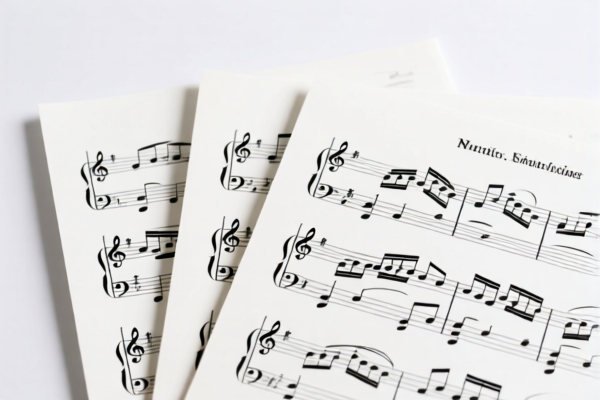
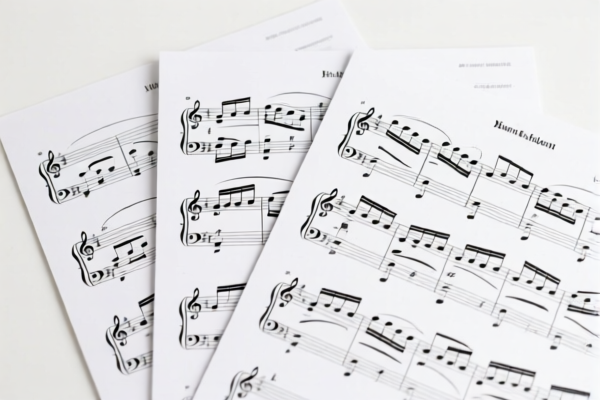
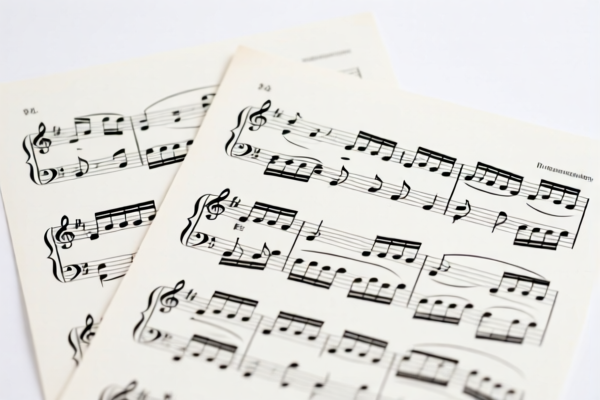
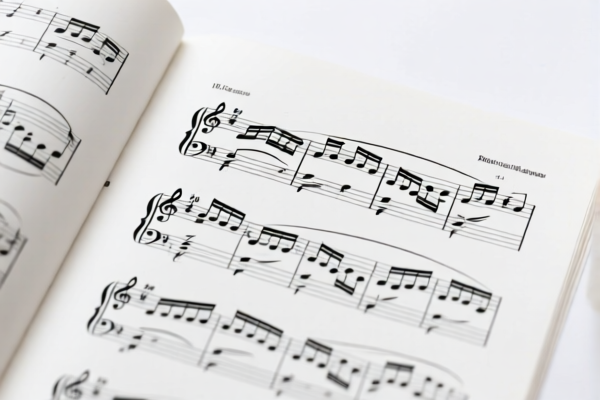
AI Analysis
🎼 Printed Music (Sheet Music / Musical Scores)
🌐 HS Code Reference & Customs Clearance Guide | 2026 Latest Tariff Analysis | Professional Entry Strategy
📌 Part 1: Product Definition & Classification: Do You Truly Understand "Printed Music"?
Printed music, commonly referred to as sheet music or musical scores, is a physical medium containing musical notation. In international trade, it is primarily classified under Chapter 49 (Printed Books, Newspapers, Pictures, and Other Products of the Printing Industry). Its classification hinges on whether it is treated as a general printed publication or a specific printed card/announcement.
Core Characteristics: * Format: Paper-based, folded or bound. * Content: Musical notes, lyrics, tablature, or instructional diagrams. * Function: Used for performance, learning, or archival purposes.
⚠️ Key Distinction Point:
- If the item is a general booklet/brochure containing music → Generally falls under 4901.99.00 categories.
- If the item is strictly printed cards/announcements or fits the specific "under other" category for printed music → Falls under 4904.00.00 or 4909.00.40.00.
📦 Part 2: HS Code Classification Details (2026 Latest Tariff Authority Comparison)
Based on the provided data analysis, here are the four potential HS Codes for "Printed Music" and the logical reasoning for each:
| HS Code | Product Description | Application Scenario | Logic for Classification |
|---|---|---|---|
4901.99.00.92 |
Printed books, pamphlets, and similar printed matter, other than those in sub-headings 4901.10 to 4901.90 | General sheet music books, bound scores | Summary: "Sheet music belongs to printed books/printing categories; inferred as printed matter based on common sense." |
4901.99.00.93 |
Printed books, pamphlets, and similar printed matter, other than those in sub-headings 4901.10 to 4901.90 | General sheet music, paper-based | Summary: "Sheet music belongs to printed items, conforming to attributes of printed books/booklets, usually composed of paper." |
4904.00.00.20 |
Printed music (specific sub-category) | Specific printed scores matching usage/form | Summary: "The product name 'Sheet Music' is completely consistent with the usage and form in the classification explanation." |
4904.00.00.40 |
Printed music (Other/Bottom-tier category) | Generic sheet music | Summary: "The product name 'Sheet Music' is completely consistent with the usage in the classification, fitting the bottom-tier matching principle." |
4909.00.40.00 |
Printed cards, blank or printed, for announcements, postcards, correspondence cards, and similar items | Printed music cards/flyers | Summary: "Sheet music can be inferred to be made of paper, used as printed matter, conforming to the form characteristics of 'printed cards/announcements' regarding printed information." |
🔍 Key Reminder:
- Codes 4901.99.00.92 and 4901.99.00.93 treat music as general printed books/pamphlets.
- Codes 4904.00.00.20 and 4904.00.00.40 treat music as specific printed music items, using a "catch-all" or direct match logic.
- Code 4909.00.40.00 is unique, treating it as printed cards/announcements, which results in a lower base tariff structure (see below).
💰 Part 3: 2026 Latest Tariff Rate Details (Including Surcharges & Policy Add-ons)
✅ Applicable Country: United States (US)
✅ Origin: China (CN)
✅ Effective Date: Includes imports after 2025/11/10 (based on 122 Clause and Section 301 implications in data)
🎯 1. 4901.99.00.92 & 4901.99.00.93 —— General Printed Music (Booklet Format)
| Item | Content |
|---|---|
| Base Tariff | 0.0% (ad valorem) |
| Section 301 Surcharge | +7.5% |
| Section 122 Surcharge | +10% |
| Total Effective Rate | 17.5% |
| Tax Calculation | CIF Value × 17.5% |
| De Minimis Exemption | ❌ Not Applicable (Assumed based on high total rate context) |
| Legal Basis Path | Base Tariff 0% + 301 Clause 7.5% + Section 122 Clause 10% |
📌 Explanation:
- These codes are treated as general printed matter.
- Section 301 (7.5%) applies to many Chinese printed goods.
- Section 122 (10%) is a significant additional levy, bringing the total to 17.5%.
- This is a moderate-high tariff compared to standard books (which are often 0%).
🎯 2. 4904.00.00.20 & 4904.00.00.40 —— Specific Printed Music
| Item | Content |
|---|---|
| Base Tariff | 0.0% |
| Section 301 Surcharge | +7.5% |
| Section 122 Surcharge | +10% |
| Total Effective Rate | 17.5% |
| Tax Calculation | CIF Value × 17.5% |
| De Minimis Exemption | ❌ Not Applicable |
| Legal Basis Path | Base Tariff 0% + 301 Clause 7.5% + Section 122 Clause 10% |
📌 Note:
- Even though these are specifically "Printed Music," they are subject to the same 17.5% total rate as the general booklets.
- The distinction between.20and.40is administrative/usage-based, not tariff-based in this data set.
🎯 3. 4909.00.40.00 —— Printed Music as Cards/Announcements
| Item | Content |
|---|---|
| Base Tariff | 0.0% |
| Section 301 Surcharge | 0.0% |
| Section 122 Surcharge | +10% |
| Total Effective Rate | 10.0% |
| Tax Calculation | CIF Value × 10.0% |
| De Minimis Exemption | ❌ Not Applicable (Typically Section 122 items are excluded from de minimis) |
| Legal Basis Path | Base Tariff 0% + 301 Clause 0% + Section 122 Clause 10% |
📌 Critical Advantage:
- This is the LOWEST RATE (10%) among all options.
- It avoids the 7.5% Section 301 surcharge.
- Strategy: If the printed music can be classified as "printed cards" or "announcements" (e.g., loose-leaf flyers, card-based scores, or specific format matches), this code offers significant cost savings.
🛠️ Part 4: Customs Clearance Practical Advice (Real-World Pitfall Guide)
✅ 1. Preparation Checklist (Essential)
| Document | Required | Explanation |
|---|---|---|
| ✅ Product Description | ✔️ | Must specify "Printed Music" / "Sheet Music" |
| ✅ Physical Samples | ✔️ | To prove format (booklet vs. card) |
| ✅ Content List | ✔️ | List of compositions, publishers, ISBN/ISMN if available |
| ✅ Material Spec | ✔️ | Paper weight, binding type (staple, glue, spiral) |
| ✅ Commercial Invoice | ✔️ | Clearly state "Printed Matter" or "Sheet Music" |
| ✅ Packing List | ✔️ | Weight and dimensions are critical for CIF calculation |
✅ 2. Declaration Strategy (Key Mantras)
🔥 "Format Dictates Code, Code Dictates Cost!"
| Scenario | Recommended HS Code | Risk if Misdeclared |
|---|---|---|
| Bound Booklets | 4901.99.00.92 / .93 |
Low risk, but 17.5% tax. |
| Loose Sheets/Printed Scores | 4904.00.00.20 / .40 |
Low risk, 17.5% tax. |
| Card-style Music/Flyers | 4909.00.40.00 |
HIGH SAVINGS (10%). Ensure it looks like a card/announcement. |
| Digital Music CDs/DVDs | ❌ Do Not Use Above Codes | These are for physical paper. Digital media go to Chapter 85 or 96. |
✅ 3. Special Handling Tips
| Situation | Advice |
|---|---|
| Mixed Shipments | If the shipment contains both books and cards, consider splitting the declaration if possible to optimize the 10% rate for card portions. |
| Customs Inquiry | If asked "What is printed music?", answer: "Physical paper product containing musical notation, used for performance/learning." |
| Section 122 Focus | Since all these codes include the 10% Section 122 surcharge, ensure your invoice value is accurate. There are no exemptions for small values (de minimis) typically for Section 122 items. |
🌍 Part 5: Global Market Comparison (2026 Latest)
| Country/Region | Recommended HS Code | Estimated Duty | Notes |
|---|---|---|---|
| 🇺🇸 USA | 4909.00.40.00 |
10% | Best option if format allows. |
| 🇺🇸 USA | 4901.99.00.92 |
17.5% | Standard for booklets. |
| 🇨🇳 China | 4904.00.00 |
0-2% | Generally lower tariffs for imports into China. |
| 🇪🇺 EU | 4904.00 |
0% | Standard duty is often 0% for printed music in EU. |
| 🇬🇧 UK | 4904.00 |
0% | Post-Brexit, generally favorable for printed goods. |
📌 Conclusion:
- The USA is the most expensive market due to Section 301 (7.5%) and Section 122 (10%).
- EU and UK are tax-friendly for printed music.
- Optimization Tip: In the US, try to justify classification under 4909.00.40.00 to save 7.5% (avoiding Section 301).
📌 Part 6: Common Errors & Pitfalls (Lessons Learned)
❌ Mistake 1: Declaring "Digital Music" as "Printed Music"
👉 Consequence: Goods rejected, returned, or fined. Digital files are not Chapter 49.
❌ Mistake 2: Using a generic "Books" code without specifying "Printed"
👉 Consequence: Customs may question the content. Must specify "Printed Music" or "Sheet Music."
❌ Mistake 3: Ignoring Section 122 Implications
👉 Consequence: Underestimating costs. All listed HS codes in the data include a 10% Section 122 surcharge. Total cost is not just base tariff.
❌ Mistake 4: Misclassifying Card-Style Music as Books
👉 Consequence: Paying 17.5% instead of 10%. If the music is on stiff cardstock or formatted as announcements, use 4909.00.40.00.
✅ Correct Approach:
"Sheet Music, Printed, Paper Format, Bound/Loose, For Musical Performance, Origin China"
🎯 Part 7: Conclusion: Precise Classification, Maximized Profit!
🎯 Remember the Mantra:
🔹 "Cards save 7.5%, Books pay 17.5%. Format is King!"
🔹 "Section 122 is always 10%—watch out for the total 17.5% on books!"
📌 Pro Tip:
If you are shipping large volumes of loose-leaf scores or music cards, consult a customs broker to see if 4909.00.40.00 is applicable. It can reduce your duty burden by 43% (from 17.5% to 10%).
📣 Immediate Action:
📞 Contact a licensed customs broker
📄 Provide physical samples of your printed music
🚀 Optimize your HS Code selection to lower clearance costs!
✨ Professional Clearance Starts with Accurate Classification!
💼 Every percentage point of duty saved is pure profit!
Customer Reviews
About HS Code Classification
The Harmonized System (HS) is an internationally standardized nomenclature developed by the World Customs Organization (WCO) to classify traded products. Over 200 countries use the HS system as the basis for customs tariffs, trade statistics, and import/export regulations.
Each HS code follows a hierarchical structure:
- Chapter (2 digits) — Broad category of goods (e.g., Chapter 84: Machinery and Mechanical Appliances)
- Heading (4 digits) — More specific grouping within the chapter
- Subheading (6 digits) — Internationally standardized breakdown, used by all WCO member countries
- National subdivisions (8-10 digits) — Country-specific extensions for further classification, such as US HTSUS 10-digit codes
Correct HS code classification is essential for smooth customs clearance, accurate duty payment, and compliance with trade regulations. Misclassification can lead to customs delays, overpayment of duties, or penalties.
When importing from CN to US, the applicable tariff rates may include:
- Most-Favored-Nation (MFN) rate — The standard duty rate applied to WTO members
- General rate — Applied to countries without trade agreements
- Trade remedy duties — Additional tariffs such as Section 301 (anti-dumping), Section 232 (national security), or countervailing duties
The information provided on this page is for reference purposes only. For official classification, please consult with your local customs authority or a licensed customs broker.