Printer Film
CN → US| HS Code | Tariff Rate | Origin | Destination | Doc |
|---|---|---|---|---|
| 3701200030 | 38.7% | CN | US | Official Doc |
| 3703103090 | 38.7% | CN | US | Official Doc |
| 3701200060 | 38.7% | CN | US | Official Doc |
| 3702100060 | 38.7% | CN | US | Official Doc |
| 3703103060 | 38.7% | CN | US | Official Doc |
Product Images
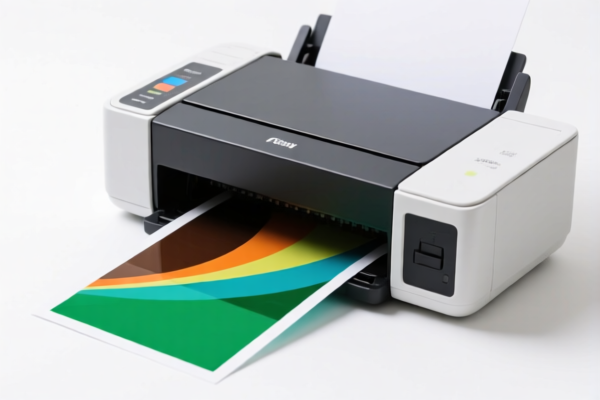
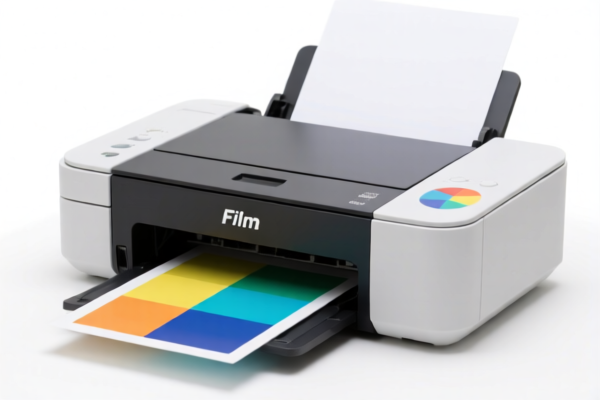
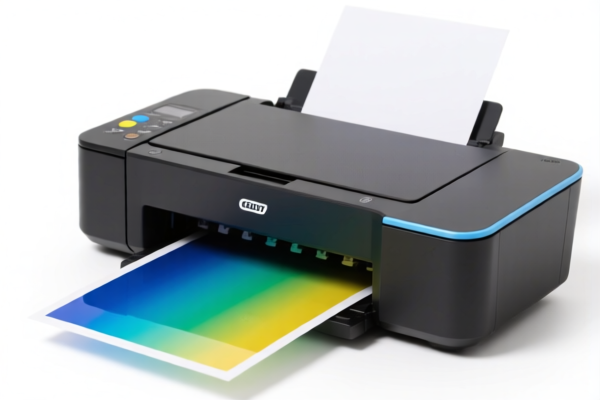

AI Analysis
📸 Instant Print Film (Printer Film)
🌐 HS Code Reference & Clearance Guide | 2026 Latest Tariff Analysis | Professional Customs Strategy
📌 I. Product Definition: What Exactly is "Instant Print Film"?
Instant print film, often referred to as "printer film" or "instant photo paper," is a specialized light-sensitive material used in photo printers, instant cameras (like Polaroid-style devices), and thermal printers. Unlike traditional roll film, these are typically sheet-based or cartridge-based media containing chemical layers for image development.
In international trade, classification hinges on physical form (sheet vs. roll), material composition (silver halide vs. thermal dye), and usage scenario (consumer vs. industrial). Misclassification can lead to severe penalties, as many instant print films are subject to high US tariffs.
⚠️ Critical Distinction:
- Sheets/Cards: Usually classified under 3701 or 3703 (Photographic plates/film/paper).
- Rolls/Strips: May fall under 3702 (Photographic film in rolls).
- Material: If it contains silver halides, it’s strictly a "light-sensitive material." If it’s thermal/dye-sublimation without silver halides, it might still fall under 3702/3703 depending on the base.
📦 II. HS Code Classification Details (2026 Latest Tariff Authority Mapping)
Based on the provided data, here are the specific HS Codes for Instant Print Film, categorized by form and material.
| HS Code | Product Description | Form/Material Characteristics | Application Scenario |
|---|---|---|---|
3701.20.00.30 |
Instant Print Film Sheets | Form: Sheet-like film. Material: Non-paper, non-textile. Use: Color photography (instant print). | Consumer instant photo cards, high-end inkjet photo sheets. |
3703.10.30.90 |
Instant Print Film Sheets | Material: Light-sensitive material (Silver Halide). Form: Sheet-like light-sensitive paper. Use: Instant printing. | Traditional silver halide instant photo packs. |
3701.20.00.60 |
Instant Print Film Sheets | Form/Use: Fits instant imaging film classification. Material: Inferred non-paper, non-textile light-sensitive material. | General instant imaging film cartridges or sheets. |
3702.10.00.60 |
Instant Print Film Rolls/Strips | Form: Roll-mounted or strip-shaped. Material: Non-paper, non-textile light-sensitive material. Use: Instant printing. | Continuous feed instant photo paper for dedicated printers. |
3703.10.30.60 |
Instant Print Film Sheets (Paper Base) | Material: Halide paper/Paper-based. Form: Unexposed photographic paper/board. Category: Light-sensitive material. | Dye-sublimation or thermal transfer media on paper base (if classified as photographic). |
🔍 Key Insight:
- Codes3701and3703generally cover sheets/plates. - Code3702covers rolls/strips. - The distinction between3701.20(non-paper base) and3703.10(paper/halide base) is critical for material declaration. - All listed HS Codes share the same total tax rate structure.
💰 III. 2026 Latest Tariff Rate Breakdown (Including Additional Duties)
✅ Applicable Country: United States (US)
✅ Origin: China (CN)
✅ Effective Date: November 10, 2025 (and subsequent imports)
🎯 1. All Listed HS Codes (3701.20.00.30, 3703.10.30.90, 3701.20.00.60, 3702.10.00.60, 3703.10.30.60)
| Item | Content |
|---|---|
| Base Tariff Rate | 3.7% (Ad Valorem) |
| Section 301 Additional Tariff | +25.0% (USITC Section 301 Duties) |
| Section 122 Tariff | +10.0% (Specific to certain Chinese-origin consumer goods/light-sensitive materials) |
| Total Effective Tax Rate | 38.7% |
| Tax Calculation Basis | CIF Value (Cost + Insurance + Freight) × 38.7% |
| De Minimis Exemption Eligible? | ❌ NO (deny_de_minimis applies to these codes under Section 301/122) |
| Legal Basis Path | Section 301: 3.7% + 25% → Section 122: 10% → Total 38.7% |
📌 Explanation:
- Base 3.7%: Standard MFN (Most Favored Nation) tariff for photographic goods. - Section 301 (+25%): Imposed by the US Trade Representative on specific Chinese imports, including many photographic and printing media. - Section 122 (+10%): A separate provision often applied to consumer goods and specific industrial materials from China. - Combined Impact: The 38.7% rate is substantial. Importers must factor this into landed cost calculations immediately.
🛠️ IV. Customs Clearance Practical Advice (Battle-Tested Pitfall Guide)
✅ 1. Required Documentation Checklist (Non-Negotiable)
| Document | Required? | Notes |
|---|---|---|
| ✅ Product Specification Sheet | ✔️ | Must specify: Film type (Silver Halide vs. Dye-Sub), Base material (Paper vs. Polymer), Dimensions, Pack size. |
| ✅ Material Declaration | ✔️ | Explicitly state: "Light-sensitive material, contains no silver halides" OR "Contains silver halide emulsion." |
| ✅ Product Photos | ✔️ | Show packaging, individual film sheets/rolls, and any branding. Clear view of "Instant Print" label. |
| ✅ Commercial Invoice | ✔️ | Must accurately describe goods as "Instant Print Film" or "Photographic Film Sheets," NOT generic "Paper" or "Plastic Sheets." |
| ✅ Certificate of Origin | ✔️ | Essential for verifying Chinese origin to apply correct Section 301/122 rates. |
| ✅ Packing List | ✔️ | Detail weight and dimensions. Ensure no mixed shipments with unrelated goods. |
✅ 2. Declaration Strategy (Key Mnemonics)
🔥 "Shape Matters, Material Defines, Name Precise, Tax Avoids Fines!"
| Scenario | Correct Declaration | Wrong Practice |
|---|---|---|
| Sheet Format | Use 3701 or 3703 codes. Declare as "Photographic Film Sheets." |
Declare as "Plastic Sheets" or "Paper" → Misclassification Penalty + Back Taxes. |
| Roll Format | Use 3702 code. Declare as "Photographic Film in Rolls." |
Declare as "Printing Paper Rolls" → Wrong Duty Rate. |
| Material Type | Specify "Silver Halide" or "Non-Silver Halide (Dye-Sub)." | Vague description "Photo Paper" → Customs Query/Delay. |
| Packaging | Declare as "Ready for Instant Printing." | Separate declaration for "Printer + Film" if sold together → Complex Valuation. |
✅ 3. Special Case Handling
| Situation | Handling Advice |
|---|---|
| Mixed Cartridges | If film is inside a printer cartridge, declare as a complete cartridge if it’s a single functional unit. If separate, declare film independently. |
| Thermal vs. Silver Halide | Thermal films (without light sensitivity) might be classified differently (e.g., 4801/4802) if not strictly "photographic." However, instant print films usually fall under 37xx due to their light/chemical development process. Verify with a ruling. |
| Sample Shipments | Even samples of instant print film are subject to 38.7% duty. Do not assume "commercial sample" exemptions apply if they are commercially viable goods. |
| Section 122 Nuance | Ensure the product falls under the specific list for Section 122. If it’s an industrial-grade film, it might be exempt from Section 122 but still liable for Section 301. |
🌍 V. Global Market Comparison (2026 Latest)
| Country/Region | Recommended HS Code | Tariff Rate | Certification Requirements | Notes |
|---|---|---|---|---|
| 🇺🇸 USA | 3701.20.00.30 etc. |
38.7% | None specific (FDA not usually required for dry film) | High cost due to Sec 301/122. |
| 🇨🇳 China | 3701.20.00.30 etc. |
~6-10% | None | Lower import duty, but exports face US tariffs. |
| 🇪🇺 EU | 3701.20.00 etc. |
~0-6.5% | REACH Compliance (Chemical ingredients) | No US-style retaliatory tariffs. Much cheaper for EU market. |
| 🇬🇧 UK | 3701.20.00 etc. |
~0-6.5% | UKCA Marking (if applicable) | Post-Brexit alignment with EU rates for many goods. |
| 🇨🇦 Canada | 3701.20.00 etc. |
~0-5% | Various | No major Section 301 equivalent. |
📌 Conclusion:
- The US market is the most expensive for importing instant print film due to cumulative Section 301 and Section 122 duties. - EU and other markets offer significantly lower tariff barriers, making them more attractive for distributors if the US market is too costly. - Supply Chain Strategy: Consider sourcing from non-China origins (e.g., Japan, Korea, or Southeast Asia) to avoid Section 301/122 tariffs entirely if shipping to the US.
📌 VI. Common Errors & Pitfall Guide (Lessons Learned)
❌ Error 1: Classifying Instant Print Film as "Plain Paper" (HS 4802/4810)
👉 Consequence: Lower base duty (0-5%), but Customs will detect light-sensitive properties or chemical coating → Back Taxes + Penalties + Potential Fraud Charges.
❌ Error 2: Ignoring Section 122 in US Declaration
👉 Consequence: If the product is listed under Section 122, failing to declare it results in underpayment of 10% and potential seizure.
❌ Error 3: Declaring "Photo Paper" instead of "Light-Sensitive Material"
👉 Consequence: Customs may classify it incorrectly as non-photographic paper, leading to audits and reclassification.
❌ Error 4: Assuming De Minimis ($800) Applies
👉 Consequence: Section 301 and 122 goods are explicitly excluded from de minimis. Even small shipments pay full 38.7%.
✅ Correct Approach:
"Instant Print Film, Sheet Form, Light-Sensitive, Silver Halide Emulsion, 100 Sheets/Pack, For Consumer Photo Printers, HS 3703.10.30.90"
🎯 VII. Conclusion: Professional Declaration, Cost Control, Compliance!
🎯 Remember These Key Points:
🔹 "Sheet vs. Roll Determines HS Code, Material Determines Sub-Heading."
🔹 "38.7% is the US Reality: Base 3.7% + 301 25% + 122 10%."
🔹 "No De Minimis for Light-Sensitive Materials from China."
📌 Pro Tip:
If you are importing into the US, consider:
1. Advance Ruling: Request a CBP Advance Ruling to confirm the exact HS Code and duty applicability.
2. Sourcing: Look for film manufactured in Japan, South Korea, or Malaysia to avoid Section 301/122 tariffs.
3. Pricing: Build the 38.7% duty into your landed cost model to maintain margins.
📣 Immediate Action:
📞 Consult with a licensed customs broker.
📄 Provide detailed material composition.
🚀 Clear Customs Smoothly, Avoid Delays, Maximize Profit!
✨ Professional Customs Clearance Starts with Accurate Classification!
💼 Every percent of duty counts!
Customer Reviews
About HS Code Classification
The Harmonized System (HS) is an internationally standardized nomenclature developed by the World Customs Organization (WCO) to classify traded products. Over 200 countries use the HS system as the basis for customs tariffs, trade statistics, and import/export regulations.
Each HS code follows a hierarchical structure:
- Chapter (2 digits) — Broad category of goods (e.g., Chapter 84: Machinery and Mechanical Appliances)
- Heading (4 digits) — More specific grouping within the chapter
- Subheading (6 digits) — Internationally standardized breakdown, used by all WCO member countries
- National subdivisions (8-10 digits) — Country-specific extensions for further classification, such as US HTSUS 10-digit codes
Correct HS code classification is essential for smooth customs clearance, accurate duty payment, and compliance with trade regulations. Misclassification can lead to customs delays, overpayment of duties, or penalties.
When importing from CN to US, the applicable tariff rates may include:
- Most-Favored-Nation (MFN) rate — The standard duty rate applied to WTO members
- General rate — Applied to countries without trade agreements
- Trade remedy duties — Additional tariffs such as Section 301 (anti-dumping), Section 232 (national security), or countervailing duties
The information provided on this page is for reference purposes only. For official classification, please consult with your local customs authority or a licensed customs broker.