Printing Machinery Parts
CN → US| HS Code | Tariff Rate | Origin | Destination | Doc |
|---|---|---|---|---|
| 8443911000 | 35.0% | CN | US | Official Doc |
| 8479904100 | 17.5% | CN | US | Official Doc |
| 8479909596 | 85.0% | CN | US | Official Doc |
| 8443912000 | 17.5% | CN | US | Official Doc |
| 8473509000 | 35.0% | CN | US | Official Doc |
Product Images
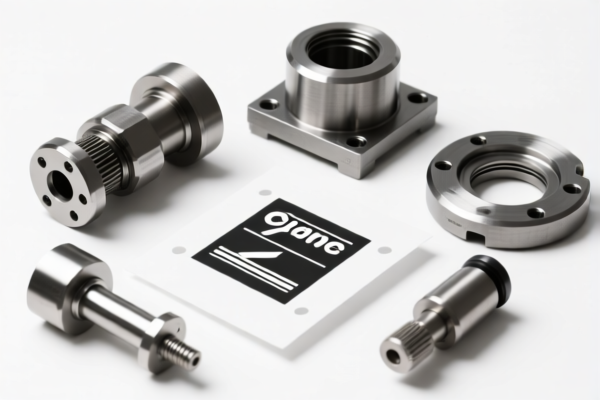
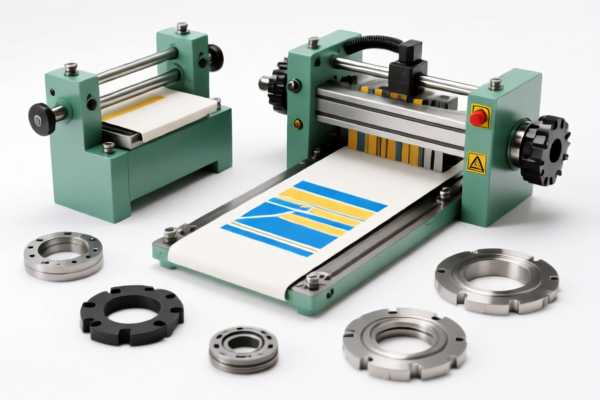
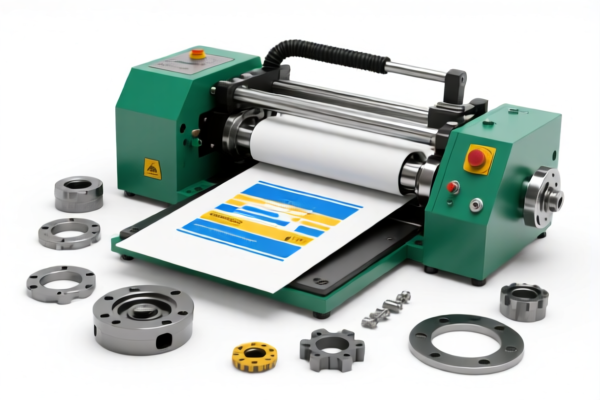
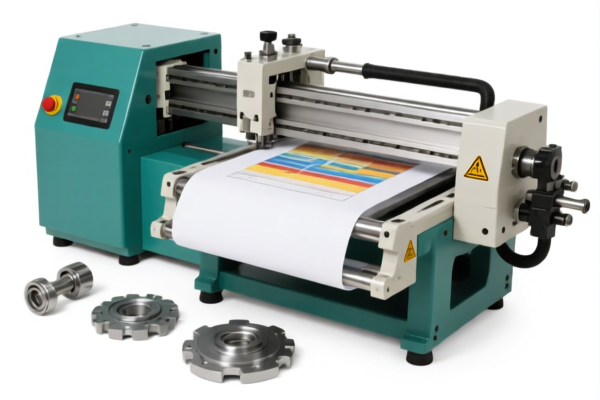
AI Analysis
🖨️ Printing Machinery Parts (Screen & Offset)
🌐 HS Code Reference & Customs Clearance Guide | 2026 Latest Tariff Analysis | Professional Clearance Strategy
📌 I. Product Definition & Classification: What Exactly Are "Printing Machinery Parts"?
Printing machinery parts are not a monolithic category. In international trade, they are strictly differentiated based on their function, compatibility, and specific machinery type (e.g., screen printing, offset printing, textile printing). Misclassification leads to severe tariff penalties, especially under current US trade policies.
There are three core scenarios for "Printing Machinery Parts":
- Screen Printing Specific Parts (Particularly for Printing Operations): Components specifically matched to the printing scope and auxiliary machinery (e.g., squeegees, frames, specific rollers).
- Classification Focus: Often linked to 8443 (Printing machinery).
- General Purpose Mechanical Parts (Independent Function): Parts that serve a specific mechanical function independent of the printing process itself or belong to general industrial machinery.
- Classification Focus: Often linked to 8479 (Machines and mechanical appliances having individual functions).
- Office/Typewriter Parts: Parts for duplicating machines, spirit duplicators, or stenciling machines (often confused with screen printing).
- Classification Focus: Linked to 8473 (Parts and accessories suitable for use solely or principally with the machines of heading 8471, 8472, 8473, etc.).
⚠️ Key Distinction Point:
- If the part is specifically designed for screen printing and falls under the "printing machinery" definition → 8443
- If the part is a general mechanical component with independent functionality → 8479
- If it is a spirit duplicator/stencil machine part → 8473
📦 II. HS Code Classification Details (2026 Latest Tariff Authority Mapping)
Based on the provided data, here are the specific HS Codes, their summaries, and applicable tax rates for US imports from China.
| HS Code | Product Description & Summary | Applicable Scenario | Total Tax Rate* |
|---|---|---|---|
8443.91.10.00 |
Screen Printing Machine Parts: Matched to printing scope and auxiliary machinery parts definition. | Specific screen printing auxiliaries, squeegees, or printing-specific attachments. | 35.0% |
8479.90.41.00 |
Screen Printing Machine Specific Parts: Conforms to the purpose of parts for machines with individual functions. | Dedicated components for screen printers that function as independent mechanical units. | 17.5% |
8479.90.95.96 |
Screen Printing Parts (Other): Other machines and mechanical appliances having individual functions (not elsewhere specified). | General mechanical parts for screen printers not fitting other specific subheadings. | 85.0% |
8443.91.20.00 |
Screen Printing Parts: Corresponds to textile printing machinery parts and accessories. | Parts specifically for textile printing applications (often a subset of screen printing). | 17.5% |
8473.50.90.00 |
Spirit Duplicator Parts: Conforms to the description of parts and accessories for office printing-type machinery. | Parts for spirit duplicators, stencil machines, or old-style office copying devices. | 35.0% |
🔍 Important Note:
- The tax burden varies dramatically (from 17.5% to 85%) depending on how precisely the part's function is described in the customs declaration. - Section 301 / IEEPA Tariffs are heavily applied here, making accurate classification critical for cost control.
💰 III. 2026 Latest Tariff Rate Breakdown (Including Surcharges & Policy Add-ons)
✅ Applicable Country: United States (US)
✅ Origin: China (CN)
✅ Effective Time: Current active tariffs (including Section 301 and IEEPA provisions)
🎯 1. 8443.91.10.00 & 8473.50.90.00 —— Printing Parts & Duplicator Parts
| Item | Content |
|---|---|
| Base Tariff | 0.0% (ad valorem) |
| Section 301 Surcharge | +25.0% |
| 122 Clause Tariff (IEEPA) | +10.0% |
| Total Effective Rate | 35.0% |
| Calculation Basis | CIF Value × 35% |
| De Minimis Exemption | ❌ Not Eligible (Deny de minimis for Section 301 goods) |
| Legal Basis Path | USITC:8443.91.10.00 → SECTION301:25% → IEEPA:10% |
📌 Explanation:
- This category applies to parts specifically defined under printing machinery scopes or office duplicators. - Combined Rate: 25% (Section 301) + 10% (IEEPA/122 Clause) = 35%.
🎯 2. 8479.90.41.00 & 8443.91.20.00 —— Specific Screen/Textile Printing Parts
| Item | Content |
|---|---|
| Base Tariff | 0.0% (ad valorem) |
| Section 301 Surcharge | +7.5% |
| 122 Clause Tariff (IEEPA) | +10.0% |
| Total Effective Rate | 17.5% |
| Calculation Basis | CIF Value × 17.5% |
| De Minimis Exemption | ❌ Not Eligible |
| Legal Basis Path | USITC:8479.90.41.00 or 8443.91.20.00 → SECTION301:7.5% → IEEPA:10% |
📌 Note:
- These codes represent a lower tariff bracket within the printing sector. -8443.91.20.00is specific to textile printing parts, which often enjoys a lower Section 301 surcharge (7.5%) compared to general printing parts. -8479.90.41.00covers screen printing parts that qualify as "machines with individual functions" under this specific subheading.
🎯 3. 8479.90.95.96 —— General Mechanical Parts (Highest Risk)
| Item | Content |
|---|---|
| Base Tariff | 0.0% (ad valorem) |
| Section 301 Surcharge | +25.0% |
| 122 Clause Tariff (IEEPA) | +10.0% |
| Steel/Aluminum/Copper Surcharge | +50.0% (If made of steel, aluminum, or copper) |
| Total Effective Rate | 85.0% (Standard) or 135.0% (Metallic Parts) |
| Calculation Basis | CIF Value × 85% (or 135% for metals) |
| De Minimis Exemption | ❌ Not Eligible |
| Legal Basis Path | USITC:8479.90.95.96 → SECTION301:25% → IEEPA:10% → METAL_TARIFF:50% |
📌 Critical Warning:
- This is the highest tariff category for printing parts. - It applies to "other" mechanical parts not specifically listed in other subheadings. - Material Trap: If these parts are made of steel, aluminum, or copper, an additional 50% is added on top of the 35%, resulting in a staggering 85% (standard) to 135% (metallic) total tax rate. - Action: Avoid classifying generic mechanical components here if a more specific printing-related code (like 8443 or 8479.41) is applicable.
🛠️ IV. Customs Clearance Practical Advice (Real-World Pitfall Avoidance)
✅ 1. Documentation Checklist (Mandatory)
| Document | Required? | Description |
|---|---|---|
| ✅ Product Specification Sheet | ✔️ | Must detail the part's function, compatibility model, and material. |
| ✅ Technical Diagrams | ✔️ | Crucial to prove if the part is "specific to printing" (8443) or "general mechanical" (8479). |
| ✅ Clear Photos | ✔️ | Show the part installed in the machine if possible; show brand/model numbers. |
| ✅ Commercial Invoice | ✔️ | Must explicitly state "Parts for Screen Printing Machine" or "Textile Printing Parts" to justify 8443/8479.41. |
| ✅ Material Declaration | ✔️ | Critical for 8479.90.95.96. Clearly state if steel/aluminum/copper is used to avoid unexpected 50% surcharges. |
✅ 2. Declaration Strategy (Key Mnemonic)
🔥 "Specify Function, Justify Code, Watch the Metal!"
| Scenario | Correct Declaration Strategy | Consequence of Error |
|---|---|---|
| Screen Printing Squeegee/Frame | Classify as 8443.91.10.00 or 8479.90.41.00 |
Misclassifying as general parts (8479.95) → Tax jumps from 17.5% to 85% |
| Textile Printing Roller | Classify as 8443.91.20.00 |
Misclassifying → Tax jumps from 17.5% to 35% or 85% |
| General Bearing/Gear in Printer | Check if it can be 8479.90.41.00 |
If generic, might fall to 8479.90.95.96 → Tax 85% |
| Steel/Aluminum Part in Generic Category | Declare material explicitly | If hidden → Unexpected 50% surcharge → 135% Total Tax! |
✅ 3. Special Handling Tips
| Situation | Recommendation |
|---|---|
| OEM Custom Parts | Provide customer design drawings proving specific use in screen printing machinery to support 8443 classification. |
| Mixed Containers | Separate "specific printing parts" from "general mechanical parts" in the manifest to avoid blanket high-risk classification. |
| Metallic Components | If parts are steel/aluminum, try to justify classification under 8479.90.41.00 (7.5% + 10% = 17.5%) rather than 8479.90.95.96 (25% + 10% + 50% = 85%). |
| Office Duplicators | Ensure the machine is indeed a "spirit duplicator" (stencil) and not a modern digital printer, which would fall under different codes (e.g., 8443.32). |
🌍 V. Global Market Comparison (2026 Update)
| Country/Region | Recommended HS Code | Est. Tariff (China Origin) | Remarks |
|---|---|---|---|
| 🇺🇸 USA | 8443.91.10.00 |
35.0% | High Section 301 + IEEPA. |
| 🇺🇸 USA | 8479.90.41.00 |
17.5% | Optimal if functionally justifiable. |
| 🇺🇸 USA | 8479.90.95.96 |
85.0% - 135.0% | Avoid unless necessary. |
| 🇨🇳 China | 8443.91 |
5% - 10% | No additional punitive tariffs. |
| 🇪🇺 EU | 8443.91 |
0% - 4% | No Section 301 equivalents. |
| 🇬🇧 UK | 8443.91 |
0% - 4% | Post-Brexit tariffs generally favorable. |
📌 Conclusion:
- The US market is the most challenging due to layered tariffs (Base + Section 301 + IEEPA + Metal Surcharges). - Cost Saving Tip: Investigate if your parts can be classified under8479.90.41.00or8443.91.20.00(17.5% total) instead of8443.91.10.00(35%) or8479.90.95.96(85%). - Pre-Import Advice: Apply for a Customs Ruling if the classification of "independent function" vs. "printing-specific" is ambiguous.
📌 VI. Common Errors & Pitfalls (Lessons Learned)
❌ Error 1: Declaring all parts as "General Machinery Parts" (8479.90.95.96)
👉 Consequence: Tariff skyrockets to 85% (or 135% for metals).
✅ Fix: Prove the part's specific utility in printing.
❌ Error 2: Ignoring Material Composition for Steel/Aluminum Parts
👉 Consequence: Unexpected 50% additional surcharge on top of existing tariffs.
✅ Fix: Explicitly declare material and seek lower-rate classifications.
❌ Error 3: Confusing "Screen Printing" with "Digital Printing"
👉 Consequence: Misclassification under digital printer parts (different codes/tariffs).
✅ Fix: Clearly distinguish "Screen" (mesh/ink) from "Digital" (toner/inkjet).
❌ Error 4: Overlooking the 122 Clause (IEEPA) 10%
👉 Consequence: Underestimating landed cost.
✅ Fix: Always add 10% to Section 301 rates for Chinese origin.
🎯 VII. Conclusion: Precision in Classification Saves Millions
🎯 Remember the Mnemonic:
🔹 "Specific Printing? 17.5% or 35%."
🔹 "General Part? 85% - 135%!"
🔹 "Metal + General = Financial Disaster."📌 Pro Tip:
If your parts are made of steel or aluminum, fight for classification under8479.90.41.00(17.5%) rather than8479.90.95.96(85%+). The technical justification must show the part has a specific "individual function" related to the printing process.
📣 Immediate Action:
📞 Consult a Trade Compliance Expert to review part technical drawings.
📝 Request an Advance Ruling from CBP if classification is uncertain.
🚀 Optimize Supply Chain: Consider sourcing non-metallic parts from Vietnam or Mexico to avoid Section 301 and IEEPA surcharges.
✨ Professional Customs Clearance Starts with Accurate Classification!
💼 Every Percentage Point Saved is Pure Profit!
Customer Reviews
About HS Code Classification
The Harmonized System (HS) is an internationally standardized nomenclature developed by the World Customs Organization (WCO) to classify traded products. Over 200 countries use the HS system as the basis for customs tariffs, trade statistics, and import/export regulations.
Each HS code follows a hierarchical structure:
- Chapter (2 digits) — Broad category of goods (e.g., Chapter 84: Machinery and Mechanical Appliances)
- Heading (4 digits) — More specific grouping within the chapter
- Subheading (6 digits) — Internationally standardized breakdown, used by all WCO member countries
- National subdivisions (8-10 digits) — Country-specific extensions for further classification, such as US HTSUS 10-digit codes
Correct HS code classification is essential for smooth customs clearance, accurate duty payment, and compliance with trade regulations. Misclassification can lead to customs delays, overpayment of duties, or penalties.
When importing from CN to US, the applicable tariff rates may include:
- Most-Favored-Nation (MFN) rate — The standard duty rate applied to WTO members
- General rate — Applied to countries without trade agreements
- Trade remedy duties — Additional tariffs such as Section 301 (anti-dumping), Section 232 (national security), or countervailing duties
The information provided on this page is for reference purposes only. For official classification, please consult with your local customs authority or a licensed customs broker.