Processed Chinese Hemp Fiber
CN → US| HS Code | Tariff Rate | Origin | Destination | Doc |
|---|---|---|---|---|
| 5302100000 | 35.0% | CN | US | Official Doc |
| 5302900000 | 35.0% | CN | US | Official Doc |
| 1404901000 | 0.0% | CN | US | Official Doc |
| 1404909090 | 35.0% | CN | US | Official Doc |
| 5308200000 | 35.0% | CN | US | Official Doc |
Product Images
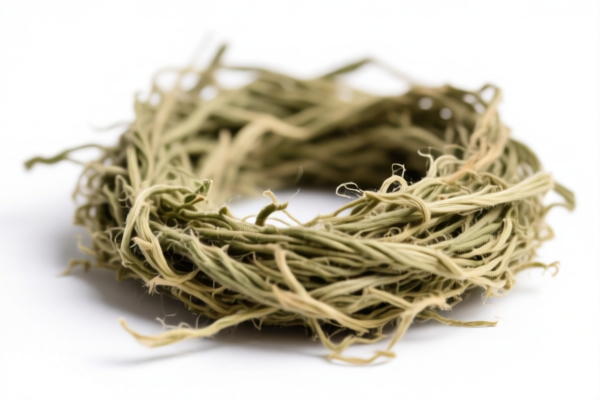
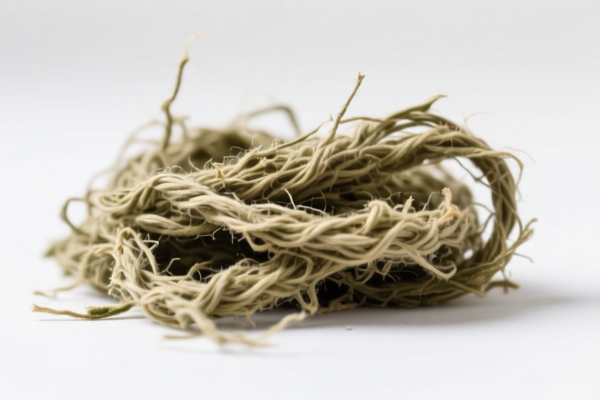
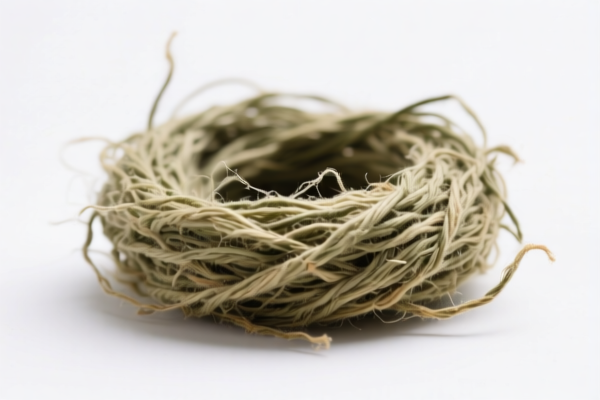
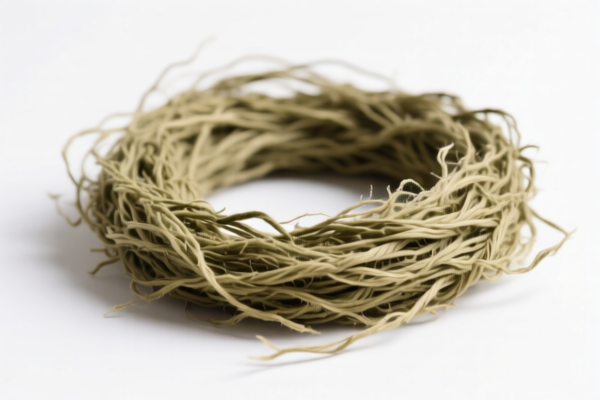
AI Analysis
🌿 Processed Chinese Hemp Fiber
🌐 HS Code Reference & Customs Clearance Guide | 2026 Latest Tariff Analysis | Professional Clearance Strategy
📌 I. Product Definition & Classification: Do You Really Understand "Hemp Fiber"?
Hemp fiber, derived from Cannabis sativa L., is a versatile natural plant fiber widely used in textiles, construction, automotive, and composite materials. In international trade, its classification depends heavily on its state of processing and material composition.
Raw/Semi-Processed Fibers (Uncarded, Unspun): Fibers that have been extracted, decorticated, or retted but not yet spun into yarn or woven into fabric.
Processed/Finished Fibers: Fibers that have undergone significant processing, potentially falling under general "other plant products" if they don't fit specific textile definitions.
⚠️ Key Distinction Point:
- If the fiber is in a raw, semi-processed state (uncarded, unspun), it typically falls under Chapter 53 (Vegetable Textile Fibers).
- If the fiber is considered a general "plant product" due to specific processing or lack of specific textile classification, it may fall under Chapter 14 (Other Vegetable Products).
📦 II. HS Code Classification Details (2026 Latest Tariff Authority Comparison)
| HS Code | Product Description | Applicability | Material Conflict? |
|---|---|---|---|
5302.10.00.00 |
Hemp fiber, not carded or combed (Raw/Semi-Processed) | Raw hemp, retted hemp, unspun hemp fiber | ❌ No (Matches material & form) |
5302.90.00.00 |
Other vegetable textile fibers, including those not elsewhere specified | Processed hemp fibers not in raw state | ❌ No (Matches material & form) |
1404.90.10.00 |
Other plant fibers (specific tariff: 0.5¢/kg + 35%) | General plant fiber category if textile classification fails | ❌ No (Matches material) |
1404.90.90.90 |
Other plant products (General fallback) | Hemp fiber classified under general plant products | ❌ No (Matches material) |
5308.20.00.00 |
Woven fabrics of other vegetable textile fibers | Note: This code is for FABRIC, not fiber. Listed for comparison only. | ❌ N/A (Incorrect for fiber) |
🔍 Key Reminder:
- Chapters 53 are for vegetable textile fibers (e.g., hemp, flax, jute).
- Chapter 14 is for other vegetable products (e.g., straw, husks, general plant fibers not suited for textile use).
- Crucial Check: If the hemp is unspun and uncarded,5302.10.00.00is the most precise match. If it’s processed beyond raw state but not spun,5302.90.00.00may apply.1404.xxcodes are fallbacks if specific textile criteria aren’t met.
💰 III. 2026 Latest Tariff Rate Breakdown (Including Add-Ons, Policy Surcharges)
✅ Applicable Country: United States (US)
✅ Origin: China (CN)
✅ Effective Date: November 10, 2025 onwards
🎯 1. 5302.10.00.00 & 5302.90.00.00 — Hemp Fibers (Chapter 53)
| Item | Content |
|---|---|
| Base Duty Rate | 0.0% (ad valorem) |
| USITC Add-On Duty | +25% (Section 301, Footnote 9903.88.01) |
| IEEPA Add-On Duty | +10% (Against China/Hong Kong products, effective Nov 10, 2025) |
| Total Rate | 35.0% |
| Tax Calculation | CIF Value × 35% |
| De Minimis Exemption | ❌ Not Eligible (deny_de_minimis) |
| Legal Basis Path | IEEPA:9903.01.25 → IEEPA:9903.01.24 → USITC:5302.10.00.00 → FOOTNOTE:9903.88.01 |
📌 Explanation:
- The 25% USITC duty is part of the Section 301 tariffs on Chinese goods.
- The 10% IEEPA duty is an additional sanction-based tariff on Chinese products.
- Total 35% is a high tariff rate. Pre-calculation is essential for cost planning!
🎯 2. 1404.90.10.00 — Other Plant Fibers (Chapter 14 Specific)
| Item | Content |
|---|---|
| Base Duty Rate | 0.5¢/kg (Specific duty) |
| USITC Add-On Duty | +25% (Ad valorem surcharge) |
| IEEPA Add-On Duty | +10% (Against China/Hong Kong products) |
| Total Rate | 0.5¢/kg + 35.0% |
| Tax Calculation | (Weight in kg × $0.005) + (CIF Value × 35%) |
| De Minimis Exemption | ❌ Not Eligible (deny_de_minimis) |
| Legal Basis Path | IEEPA:9901.25 → IEEPA:9903.01.24 → USITC:1404.90.10.00 |
📌 Note:
- If classified under Chapter 14, there is a specific duty of 0.5 cents per kilogram plus the ad valorem rates.
- This can be cheaper or more expensive depending on the value-to-weight ratio of the hemp fiber.
🎯 3. 1404.90.90.90 — Other Plant Products (Chapter 14 General)
| Item | Content |
|---|---|
| Base Duty Rate | 0.0% |
| USITC Add-On Duty | +25% |
| IEEPA Add-On Duty | +10% |
| Total Rate | 35.0% |
| Tax Calculation | CIF Value × 35% |
| De Minimis Exemption | ❌ Not Eligible (deny_de_minimis) |
| Legal Basis Path | IEEPA:9903.01.25 → IEEPA:9903.01.24 → USITC:1404.90.90.90 |
📌 Note:
- Same ad valorem rates as Chapter 53.
- Use only if the product doesn’t fit Chapter 53 criteria.
🎯 4. 5308.20.00.00 — Woven Fabrics of Other Vegetable Textile Fibers
| Item | Content |
|---|---|
| Base Duty Rate | 0.0% |
| USITC Add-On Duty | +25% |
| IEEPA Add-On Duty | +10% |
| Total Rate | 35.0% |
| Tax Calculation | CIF Value × 35% |
| De Minimis Exemption | ❌ Not Eligible (deny_de_minimis) |
| Legal Basis Path | IEEPA:9903.01.25 → IEEPA:9903.01.24 → USITC:5308.20.00.00 |
📌 Critical Warning:
-5308.20.00.00is for WOVEN FABRICS, not raw fiber.
- If you are importing raw or semi-processed hemp fiber, do NOT use this code. It is a common misclassification error that can lead to audits or penalties.
🛠️ IV. Customs Clearance Practical Advice (Battle-Proven Pitfall Guide)
✅ 1. Required Documentation Checklist (No Exceptions)
| Document | Mandatory? | Notes |
|---|---|---|
| ✅ Product Specification Sheet | ✔️ | Include fiber length, fineness, moisture content, processing method (retted, decorticated, etc.) |
| ✅ Technical Data Sheet (TDS) | ✔️ | Prove whether it is "uncarded/unspun" (for Chapter 53) or processed (Chapter 14) |
| ✅ Product Photos (Clear Labels) | ✔️ | Show raw state vs. processed state; label must match description |
| ✅ Third-Party Test Report | ✔️ | Confirm material is Cannabis sativa L. (industrial hemp, not marijuana) |
| ✅ Commercial Invoice | ✔️ | Clearly state: "Hemp Fiber, Not Carded/Combed" or "Processed Plant Fiber" |
| ✅ Certificate of Origin (CO) | ✔️ | If non-Chinese origin, apply for preferential rates |
| ✅ Packing List | ✔️ | Detail weight and volume for specific duty calculation (if applicable) |
✅ 2. Declaration Tips (Key Mantra)
🔥 “Raw is 53, Processed is 14, Fabric is 5308, Don’t Mix Them Up!”
| Scenario | Correct Declaration | Wrong Practice |
|---|---|---|
| Raw, unspun, uncarded hemp | 5302.10.00.00 |
Misdeclare as "fabric" → Audit risk |
| Processed hemp fiber (not spun) | 5302.90.00.00 or 1404.90.10.00 |
Use wrong Chapter → Penalty |
| Hemp fabric/woven material | 5308.20.00.00 |
Declare as "fiber" → Incorrect classification |
| General plant fiber | 1404.90.90.90 |
Force into Chapter 53 → Rejection |
✅ 3. Special Case Handling
| Scenario | Handling Advice |
|---|---|
| Industrial Hemp vs. Marijuana | Must provide THC content report (<0.3% dry weight) to prove it’s legal industrial hemp |
| Baled vs. Loose Fiber | Baled fiber may have different volume/weight declarations; ensure accuracy for specific duties |
| Mixed with Synthetic Fibers | If blended, classify based on predominant material or specific blend rules |
| OEM Custom Processing | Provide client specs + processing instructions to justify Chapter 53 vs. 14 |
🌍 V. Global Market Clearance Comparison (2026 Latest)
| Country/Region | Recommended HS Code | Tariff (China Origin) | Certification Requirements | Notes |
|---|---|---|---|---|
| 🇺🇸 USA | 5302.10.00.00 |
35% (25% + 10%) | None specific, but THC proof required | High tariff; no de minimis |
| 🇨🇳 China | 5302.10.00.00 |
0-5% | None | Low tariff for import/export |
| 🇪🇺 EU | 5302.10.00.00 |
0% | REACH, Ecolabel (if applicable) | No additional duties |
| 🇬🇧 UK | 5302.10.00.00 |
0% | UKCA (if applicable) | Post-Brexit rules apply |
| 🇨🇦 Canada | 5302.10.00.00 |
0% | None | CUSMA eligible if originating |
📌 Conclusion:
- USA is the highest-cost market for hemp fiber due to 35% total duties.
- EU/UK/Canada offer 0% base rates, making them more attractive for non-US markets.
- THC compliance is a universal critical checkpoint for legal hemp imports.
📌 VI. Common Mistakes & Pitfall Guide (Lessons from Experience)
❌ Mistake 1: Declaring raw hemp fiber as 5308.20.00.00 (Woven Fabric)
👉 Consequence: Customs may reject shipment or impose penalties for misclassification.
❌ Mistake 2: Ignoring THC content documentation
👉 Consequence: Shipment held for drug testing; potential seizure if THC >0.3%.
❌ Mistake 3: Not distinguishing between Chapter 53 and Chapter 14
👉 Consequence: Wrong duty rate application; potential audit for under/overpayment.
❌ Mistake 4: Assuming de minimis exemption applies
👉 Consequence: Packages under $800 are not exempt due to Section 301/IEEPA rules.
✅ Correct Approach:
“Industrial Hemp Fiber, Cannabis sativa L., THC <0.3%, Uncarded, Unspun, Decorticated, for Textile Use, Model XYZ”
🎯 VII. Conclusion: Precise Classification Saves Money!
🎯 Remember the Mantra:
🔹 “Raw is 53, Processed is 14, Fabric is 5308, Don’t Mix Them Up!”
🔹 “35% Duty in US, 0% in EU, THC proof is Key!”
📌 Pro Tip:
If your hemp fiber originates from Vietnam, Mexico, Thailand, or Malaysia, you may apply for IEEPA Exemption, reducing the tariff to 0%~5%.
Recommend applying for an Advance Ruling (Pre-classification) from CBP to avoid clearance risks.
📣 Act Now:
📞 Contact a licensed customs broker + Provide Product Photos + Apply for HS Code Pre-classification
🚀 Let your hemp fiber clear smoothly, boost exports, and maximize profits!
✨ Professional Clearance Starts with Accurate Classification!
💼 Every Cent of Cost Deserves Precise Calculation!
Customer Reviews
About HS Code Classification
The Harmonized System (HS) is an internationally standardized nomenclature developed by the World Customs Organization (WCO) to classify traded products. Over 200 countries use the HS system as the basis for customs tariffs, trade statistics, and import/export regulations.
Each HS code follows a hierarchical structure:
- Chapter (2 digits) — Broad category of goods (e.g., Chapter 84: Machinery and Mechanical Appliances)
- Heading (4 digits) — More specific grouping within the chapter
- Subheading (6 digits) — Internationally standardized breakdown, used by all WCO member countries
- National subdivisions (8-10 digits) — Country-specific extensions for further classification, such as US HTSUS 10-digit codes
Correct HS code classification is essential for smooth customs clearance, accurate duty payment, and compliance with trade regulations. Misclassification can lead to customs delays, overpayment of duties, or penalties.
When importing from CN to US, the applicable tariff rates may include:
- Most-Favored-Nation (MFN) rate — The standard duty rate applied to WTO members
- General rate — Applied to countries without trade agreements
- Trade remedy duties — Additional tariffs such as Section 301 (anti-dumping), Section 232 (national security), or countervailing duties
The information provided on this page is for reference purposes only. For official classification, please consult with your local customs authority or a licensed customs broker.