Processed Sheep or Lamb Skin (Hairless) for Bags
CN → USProduct Images
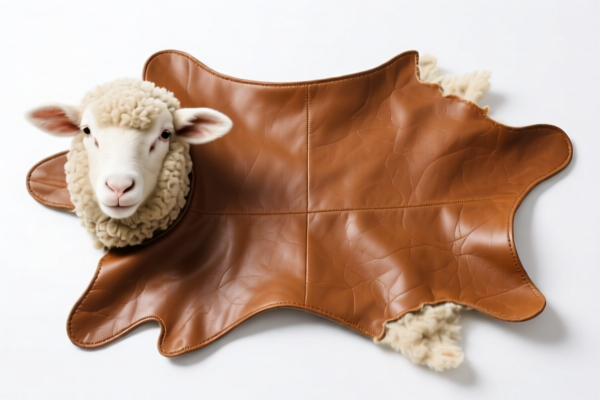
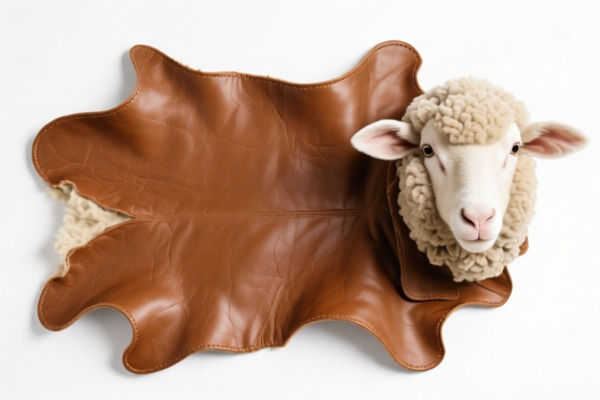
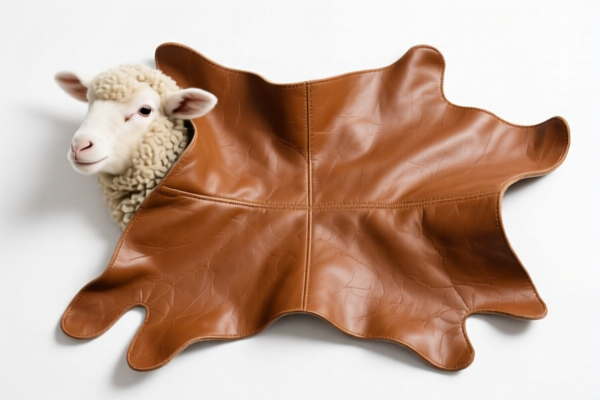
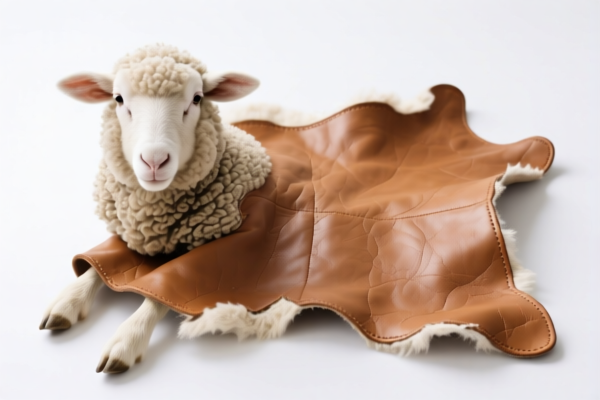
AI Analysis
👜 Processed Sheep or Lamb Skin (Hairless) for Bags (Crust or Finished Leather)
🌐 HS Code Reference & Customs Clearance Guide | 2026 Latest Tariff Analysis | Professional Level Strategies
📌 1. Product Definition & Classification: Do You Really Know "Hairless Lamb Skin"?
Processed sheep or lamb skin (hairless) refers to animal hides that have undergone tanning, splitting, dyeing, or finishing processes, specifically intended for use in the manufacture of handbags, wallets, luggage, and other leather goods. In international trade, the classification heavily depends on the state of processing (crust vs. finished) and the specific type of leather.
Key Distinctions: * Crust Leather (未上色皮革): Tanned but not dyed, finished, or coated with a surface treatment. * Finished Leather (已鞣制皮革): Tanned, dyed, and/or surface-treated (painted, polished, embossed).
⚠️ Critical Classification Point:
- If the leather is chamois-dressed or heavily finished for specific uses, it might fall under different subheadings. - Sheep/Lamb skin generally falls under Heading 4104 (Cow/Bovine) is incorrect; Sheep/Lamb falls under 4105 (Sheep or Lamb). - Hairless implies the hair has been removed during the tanning process (bating).
📦 2. HS Code Classification Details (2026 Latest Tariff Authority Reference)
| HS Code | Product Description | Application Scenario | State of Processing |
|---|---|---|---|
4105.30.50.00 |
Sheep or lamb leather, further processed or crust, not chamois-dressed | Most common "finished" or "crust" leather for bags | ✅ Tanned + Dyed/Finished OR Unfinished (Crust) |
4105.30.55.00 |
Sheep or lamb leather, chamois-dressed | Suede-like, napped finish, high-end fashion | ✅ Chamois-dressed |
4105.30.60.00 |
Sheep or lamb leather, patent leather or patent lacquered | High-gloss, shiny finish for luxury bags | ✅ Patent/Lacquered |
🔍 Important Note:
- The vast majority of "processed sheep/lamb skin for bags" that is dyed and finished (even if just lightly coated) is classified under 4105.30.50.00. - If it is crust (undyed, just tanned and split), it still falls under 4105.30.50.00 in many jurisdictions, unless specifically defined as "other" in local tariffs. - Do NOT classify under 4104 (Cowhide); this is a common error that leads to misclassification penalties.
💰 3. 2026 Latest Tariff Rate Details (Including Additional Taxes & Policy Surcharges)
✅ Applicable Country: United States (US)
✅ Country of Origin: China (CN)
✅ Effective Date: From November 10, 2025 (including subsequent imports)
🎯 1. 4105.30.50.00 —— Sheep or Lamb Leather, Further Processed or Crust
| Item | Content |
|---|---|
| Basic Tariff Rate | 3.2% (ad valorem) |
| USITC Additional Tax | +25% (from USITC Footnote 9903.88.01) |
| IEEPA Additional Tax | +10% (Targeting China/Hong Kong products, effective Nov 10, 2025) |
| Total Tariff Rate | 38.2% |
| Tax Calculation | CIF Value × 38.2% |
| De Minimis Eligibility | ❌ Not Eligible (deny_de_minimis) |
| Legal Basis Path | IEEPA:9903.01.25 → IEEPA:9903.01.24 → USITC:4105.30.50.00 → FOOTNOTE:9903.88.01 |
📌 Explanation:
- The 25% USITC tax is part of the Section 301 tariffs. - The 10% IEEPA tax is a new surcharge applied to Chinese-origin leather goods starting in late 2025. - Total 38.2% is significant for low-margin leather goods. Proper classification is crucial to avoid overpayment or underpayment.
🎯 2. 4105.30.55.00 —— Chamois-Dressed Sheep/Lamb Leather
| Item | Content |
|---|---|
| Basic Tariff Rate | 3.2% |
| USITC Additional Tax | +25% |
| IEEPA Additional Tax | +10% |
| Total Tariff Rate | 38.2% |
| Tax Calculation | CIF × 38.2% |
| De Minimis Eligibility | ❌ Not Eligible |
| Legal Basis Path | IEEPA:9901.25 → IEEPA:9903.01.24 → USITC:4105.30.55.00 → FOOTNOTE:9903.88.01 |
📌 Note:
- Chamois-dressed leather (suede/napped) faces the same high tariffs. - Even if labeled as "suede" or "nubuck," it falls under this heading and incurs the same tax burden.
🛠️ 4. Customs Clearance Practical Advice (Practical Pitfall Avoidance Guide)
✅ 1. Required Documentation Checklist (Mandatory)
| Document | Must Provide | Description |
|---|---|---|
| ✅ Product Specification Sheet | ✔️ | Tanning method (vegetable/chrome), dye type, finish type, thickness |
| ✅ Leather Processing Flow | ✔️ | Detailed steps: soaking → bating → tanning → splitting → dyeing → finishing |
| ✅ Product Photos (with labels) | ✔️ | Clear view of the grain, backing, and any certifications |
| ✅ Third-Party Test Report | ✔️ | REACH, CPSIA, Prop 65 (if applicable), Chemical compliance |
| ✅ Commercial Invoice | ✔️ | Clearly state "Processed Sheep/Lamb Leather, HS 4105.30.50" |
| ✅ Certificate of Origin (CO) | ✔️ | To verify origin and apply potential FTA benefits (if any) |
| ✅ Packing List | ✔️ | Specify if leather is rolled, folded, or bundled |
✅ 2. Declaration Tips (Key Mantras)
🔥 "Correct Species, Correct Process, Avoid Misclassification!"
| Scenario | Correct Declaration | Wrong Practice |
|---|---|---|
| Dyed & Finished Sheep Skin | 4105.30.50.00 |
Misclassified as "Cowhide" (4104) → Higher duty risk |
| Chamois/Suede Lamb Skin | 4105.30.55.00 |
Declared as "Finished Leather" → Potential penalty |
| Crust (Undyed) Leather | 4105.30.50.00 |
Not declared as "Crust" → May trigger inspection |
| Leather Accessories (Cut Pieces) | 4105.30.50.00 |
Declared as "Bags" (4202) → Incorrect, should be material |
✅ 3. Special Situation Handling
| Situation | Handling Advice |
|---|---|
| OEM Custom Leather | Provide customer PO and design specs to prove it's for bags, not automotive |
| Mixed Batches (Sheep + Goat) | Must separate and declare correctly. Sheep (4105) vs Goat (4106) have different rates |
| Leather Scraps/Shavings | May fall under 4115 (Scrap/Offal), which has lower duties (0% base, but subject to same surcharges if applicable) |
| Recycled Leather | If reconstituted, it may fall under 3921 (Plastics) or 4115 depending on composition |
🌍 5. Global Major Market Clearance Comparison (2026 Latest)
| Country/Region | Recommended HS Code | Tariff | Certification Requirements | Notes |
|---|---|---|---|---|
| 🇺🇸 USA | 4105.30.50.00 |
38.2% (China Origin) | REACH, CPSIA (if contact with kids) | High surcharges due to Section 301 + IEEPA |
| 🇨🇳 China | 4105.30.50.00 |
5-10% | None for import (if raw material) | Low duty for processing trade |
| 🇪🇺 EU | 4105.30.50 |
4.7% | REACH Compliance | No Section 301 equivalent |
| 🇬🇧 UK | 4105.30.50 |
4.7% | UKCA/REACH | Post-Brexit rules apply |
| 🇯🇵 Japan | 4105.30.50 |
3.2% | FSC (Formaldehyde) | No additional surcharges |
📌 Conclusion:
- The USA remains the most expensive market for Chinese-origin sheep/lamb leather due to the combined 35% surcharges. - EU and Japan offer much lower tariff barriers, making them more attractive for high-value leather goods. - Cost Optimization: Consider shifting final assembly to Vietnam or Mexico to leverage IEEPA exemptions (if rules of origin are met).
📌 6. Common Errors & Pitfall Guide (Lessons Learned)
❌ Error 1: Declaring "Sheep Leather" as "Cow Leather" (4104)
👉 Consequence: Misclassification penalty, potential seizure, and back-taxes.
👉 Reality: Sheep leather is softer and thinner; customs inspectors check grain pattern and fiber structure.
❌ Error 2: Omitting "Chamois-Dressed" for Suede
👉 Consequence: Wrong HS Code (4105.30.50 vs 4105.30.55). While rates are similar, inconsistency raises red flags.
❌ Error 3: Failing to Declare Chemical Compliance
👉 Consequence: Rejection at US Customs for non-compliance with EPA/REACH standards. Leather chemicals are heavily regulated.
✅ Correct Declaration Example:
"Processed Sheep Leather, Chrome-Tanned, Dyed Black, Finished for Handbag Manufacturing, HS 4105.30.50.00"
🎯 7. Conclusion: Professional Declaration, Cost Efficiency, Risk Mitigation
🎯 Remember the Mantras:
🔹 "Sheep ≠ Cow, Process Matters, Tariffs Vary by Finish."
🔹 "US Market = High Tax, EU/Japan = Lower Cost, Choose Wisely."
🔹 "Documentation is Key, Compliance Saves Money."
📌 Pro Tip:
If your leather is shipped from Vietnam, Thailand, or Malaysia (with substantial transformation), you may exempt from IEEPA/Section 301 surcharges.
Suggest Applying for a Customs Ruling before shipment to confirm the final HS Code and tariff liability.
📣 Immediate Action:
📞 Contact a Licensed Customs Broker + Provide Leather Swatches + Request HS Code Pre-Ruling
🚀 Ensure your leather goods clear US Customs Smoothly, Avoid Delays, and Maximize Profit Margins!
✨ Professional Clearance Starts with Accurate Classification!
💼 Every Percent Saved is Pure Profit!
Customer Reviews
About HS Code Classification
The Harmonized System (HS) is an internationally standardized nomenclature developed by the World Customs Organization (WCO) to classify traded products. Over 200 countries use the HS system as the basis for customs tariffs, trade statistics, and import/export regulations.
Each HS code follows a hierarchical structure:
- Chapter (2 digits) — Broad category of goods (e.g., Chapter 84: Machinery and Mechanical Appliances)
- Heading (4 digits) — More specific grouping within the chapter
- Subheading (6 digits) — Internationally standardized breakdown, used by all WCO member countries
- National subdivisions (8-10 digits) — Country-specific extensions for further classification, such as US HTSUS 10-digit codes
Correct HS code classification is essential for smooth customs clearance, accurate duty payment, and compliance with trade regulations. Misclassification can lead to customs delays, overpayment of duties, or penalties.
When importing from CN to US, the applicable tariff rates may include:
- Most-Favored-Nation (MFN) rate — The standard duty rate applied to WTO members
- General rate — Applied to countries without trade agreements
- Trade remedy duties — Additional tariffs such as Section 301 (anti-dumping), Section 232 (national security), or countervailing duties
The information provided on this page is for reference purposes only. For official classification, please consult with your local customs authority or a licensed customs broker.