Processed Wood
CN → US| HS Code | Tariff Rate | Origin | Destination | Doc |
|---|---|---|---|---|
| 4409299100 | 35.0% | CN | US | Official Doc |
| 4410110060 | 35.0% | CN | US | Official Doc |
Product Images
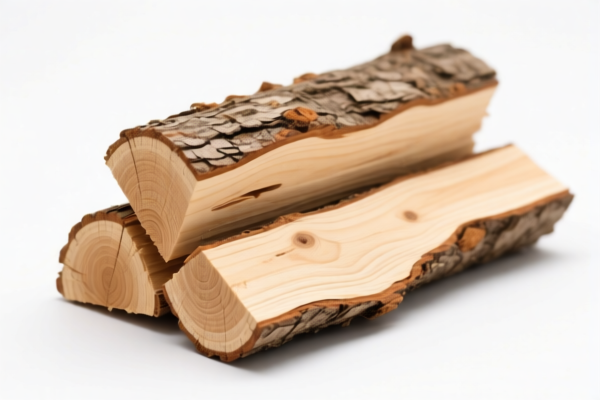
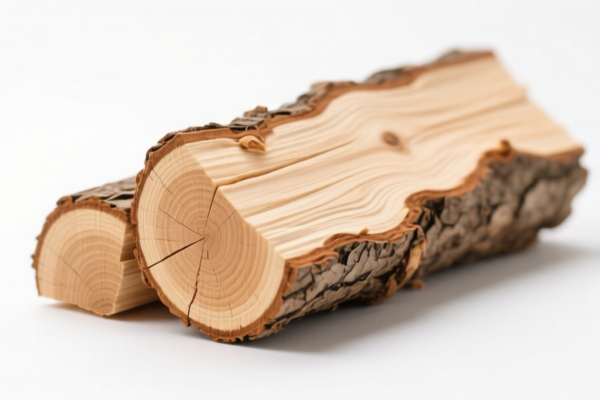
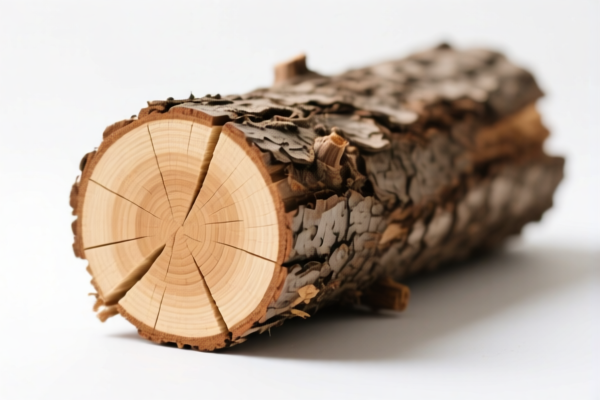

AI Analysis
🪵 Processed Wood (Engineered & Shaped)
🌐 HS Code Reference & Customs Clearance Guide | 2026 Latest Tariff Analysis | Professional Entry Strategy
📌 One, Product Definition & Classification: Do You Truly Understand "Processed Wood"?
In international trade, "Processed Wood" is not a single product but a category encompassing engineered boards (agglomerated wood) and continuously shaped solid wood. The critical distinction lies in the manufacturing process:
1. Engineered Boards (Particle Board, OSB, Waferboard):
Wood fibers, flakes, or wafers are bonded together with resins or organic binding substances under heat and pressure. These are not solid wood but composites.
2. Continuously Shaped Wood (Tongued, Grooved, Rebated):
Solid wood (coniferous or non-coniferous) that has been mechanically profiled along its edges, ends, or faces. This includes parquet flooring strips, moldings, and joinery components.
⚠️ Key Classification Point:
- If the product is agglomerated (glued wood chips/strands) →归入 Chapter 44, Heading 44.10 (Particle Board/OSB).
- If the product is solid wood that has been profiled/shaped (tongued/grooved) →归入 Chapter 44, Heading 44.09.
📦 Two, HS Code Classification Details (2026 Latest Tariff Authority Cross-Reference)
| HS Code | Product Description | Application Scenario | Material Type |
|---|---|---|---|
4410.11.00.60 |
Particle board, oriented strand board (OSB) and similar board...: Of wood: Particle board: Other | Standard particle board for furniture, cabinets, construction; OSB for sheathing | Agglomerated wood fibers/strands |
4409.29.91.00 |
Wood... continuously shaped...: Nonconiferous: Other: Other: Other | Non-coniferous (hardwood) strips, tongue-and-groove panels, parquet strips, molded wood profiles | Solid non-coniferous wood |
🔍 Crucial Distinction:
-4410.11.00.60applies to agglomerated wood (particle board/OSB). Even if it looks like a board, if it's made from bonded chips, it belongs here.
-4409.29.91.00applies to solid non-coniferous wood that has been mechanically shaped (e.g., grooved, tongued). If it’s solid hardwood that has been profiled, it belongs here.
- Do not mix: Solid wood shaped wood cannot be classified as particle board, and vice versa.
💰 Three, 2026 Latest Tariff Rate Details (Including Additional Duties)
✅ Applicable Country: United States (US)
✅ Origin: China (CN)
✅ Effective Time: Current as of latest USITC listings (2025-2026)
🎯 1. 4410.11.00.60 —— Particle Board, Oriented Strand Board (OSB), etc.
| Item | Content |
|---|---|
| Base Duty Rate | 0.0% (ad valorem) |
| Section 301 Additional Duty | +25.0% |
| Total Duty Rate | 25.0% |
| Tax Calculation | CIF Value × 25% |
| De Minimis Exemption | ❌ Not Applicable (Section 301 duties apply regardless of value) |
| Legal Basis Path | HTSUS:4410.11.00.60 → Section 301 Footnote 9903.88.01 |
📌 Explanation:
- Particle boards and OSBs are major construction and furniture materials.
- The 25% additional duty is a Section 301 tariff imposed on Chinese-origin engineered wood products.
- This rate is significant and must be factored into cost models for furniture exports to the US.
🎯 2. 4409.29.91.00 —— Continuously Shaped Non-Coniferous Wood
| Item | Content |
|---|---|
| Base Duty Rate | 0.0% (ad valorem) |
| Section 301 Additional Duty | +25.0% |
| Total Duty Rate | 25.0% |
| Tax Calculation | CIF Value × 25% |
| De Minimis Exemption | ❌ Not Applicable |
| Legal Basis Path | HTSUS:4409.29.91.00 → Section 301 Footnote 9903.88.01 |
📌 Note:
- Non-coniferous (hardwood) profiles, such as oak or maple tongued-and-grooved strips for flooring or paneling, are subject to the same 25% additional duty.
- Even if the base rate is 0%, the 25% surcharge makes the total landed cost high.
🛠️ Four, Customs Clearance Practical Advice (Battle-Tested Pitfall Guide)
✅ 1. Document Checklist (Essential)
| Document | Required | Description |
|---|---|---|
| ✅ Product Specification Sheet | ✔️ | Clearly state: "Particle Board" vs. "Shaped Solid Wood"; dimensions, density, formaldehyde emission levels |
| ✅ Material Composition Proof | ✔️ | For 4410: Provide resin type, wood species origin. For 4409: Confirm non-coniferous species (e.g., Oak, Maple, not Pine) |
| ✅ Product Photos | ✔️ | Show cross-section (to prove agglomeration for particle board) or edge profile (to prove shaping for solid wood) |
| ✅ Commercial Invoice | ✔️ | Use precise HS code descriptions; avoid generic "Wood" |
| ✅ Packing List | ✔️ | Indicate gross/net weight; ensure consistency with invoice |
| ✅ Certificate of Origin (CO) | ✔️ | Mandatory for proving Chinese origin (triggering Section 301) |
✅ 2. Declaration Tips (Key Mantras)
🔥 “Shape vs. Bond: Identify the Process, Avoid the Penalty!”
| Scenario | Correct Declaration | Wrong Practice |
|---|---|---|
| Furniture-grade Particle Board | 4410.11.00.60 - "Particle board of wood, agglomerated with resins" |
Misdeclare as "Solid Wood" → Risk of classification error penalty |
| OSB Sheathing | 4410.11.00.60 - "Oriented strand board" |
Misdeclare as "Plastic boards" or "Non-wood" → Customs hold |
| Hardwood Tongued-and-Groove Strips | 4409.29.91.00 - "Continuously shaped non-coniferous wood" |
Misdeclare as "Unworked wood" → Underpayment of duties |
| Coniferous Shaped Wood (e.g., Pine molding) | 4409.19.00.60 or similar |
Misdeclare as non-coniferous → Classification Error |
✅ 3. Special Situations Handling
| Situation | Handling Advice |
|---|---|
| Mixed Containers | If a container has both particle board and shaped wood, declare separately. Do not lump into one HS code. |
| Formaldehyde Emissions | US Customs may require CARB (California Air Resources Board) or EPA TSCA Title VI compliance docs. Ensure your EPA/CARB certificates are ready. |
| Origin Transshipment | If wood is processed in Vietnam/Malaysia from Chinese raw materials, ensure substantial transformation is documented. Otherwise, US Customs may still attribute origin to China and apply 25% duty. |
| Sample Imports | No de minimis exemption for Section 301 goods. Even samples incur 25% duty. Factor this into R&D budgets. |
🌍 Five, Global Market Comparison (2026 Latest)
| Country/Region | Recommended HS Code | Tariff (China Origin) | Certification Requirements | Notes |
|---|---|---|---|---|
| 🇺🇸 USA | 4410.11.00.60 / 4409.29.91.00 |
25% (Additional) | CARB Phase 2 / EPA TSCA Title VI | High tariff burden; strict formaldehyde limits |
| 🇨🇳 China | 4410.11.00.60 / 4409.29.91.00 |
5% - 10% (Import) | GB 18580 (Formaldehyde) | Domestic market focuses on emission standards |
| 🇪🇺 EU | 4410.31.00 / 4409.29 |
0% - 6% (General) | E1/E2 Formaldehyde Standards | No Section 301; focus on REACH and Ecodesign |
| 🇦🇺 Australia | 4410.31.00 / 4409.29 |
5% | AS/NZS 2685 (VOC) | Moderate duties; clear labeling required |
📌 Conclusion:
- The US market is the most challenging due to the 25% additional duty.
- Formaldehyde compliance (EPA/CARB) is as critical as HS classification. Non-compliance leads to detention and destruction.
📌 Six, Common Errors & Pitfall Guide (Lessons Learned)
❌ Error 1: Declaring "Wood Boards" generically
👉 Consequence: Customs assigns highest default duty or delays inspection → 10-30 day delay
❌ Error 2: Confusing "Particle Board" with "Solid Wood"
👉 Consequence: Misclassification penalty + potential fraud allegations → Fines up to 100% of duty value
❌ Error 3: Ignoring Formaldehyde Certificates
👉 Consequence: CBP holds cargo for EPA/CARB check → Demurrage fees + potential return
❌ Error 4: Using "Wood Products" without specifying "Processed" or "Shaped"
👉 Consequence: Duty assessment error → Underpayment penalty
✅ Correct Approach:
"Particle Board, 18mm, E0 Grade, Formaldehyde Compliant, Made of Eucalyptus Chips with Urea-Formaldehyde Resin, Model PB-18E0"
🎯 Seven, Conclusion: Precision in Classification, Profit in Clearance!
🎯 Remember the Mantra:
🔹 "Agglomerated = 4410, Shaped Solid = 4409. Both carry 25% US Duty. Formaldehyde Certs are Mandatory."
🔹 "HS Code is King, Tariff is Queen, Compliance is the Crown."
📌 Pro Tip:
If your wood products are originating from Vietnam, Malaysia, or Thailand with sufficient local processing, apply for preferential treatment or verify if Section 301 duties can be excluded.
Recommend obtaining an Advance Ruling from US CBP if you are unsure about the agglomeration vs. shaping distinction.
📣 Immediate Action:
📞 Engage a licensed customs broker + Provide technical datasheets + Submit EPA/CARB compliance docs
🚀 Ensure your "Processed Wood" clears customs efficiently, legally, and profitably!
✨ Professional clearance begins with accurate classification!
💼 Every percentage point of duty impacts your bottom line!
Customer Reviews
About HS Code Classification
The Harmonized System (HS) is an internationally standardized nomenclature developed by the World Customs Organization (WCO) to classify traded products. Over 200 countries use the HS system as the basis for customs tariffs, trade statistics, and import/export regulations.
Each HS code follows a hierarchical structure:
- Chapter (2 digits) — Broad category of goods (e.g., Chapter 84: Machinery and Mechanical Appliances)
- Heading (4 digits) — More specific grouping within the chapter
- Subheading (6 digits) — Internationally standardized breakdown, used by all WCO member countries
- National subdivisions (8-10 digits) — Country-specific extensions for further classification, such as US HTSUS 10-digit codes
Correct HS code classification is essential for smooth customs clearance, accurate duty payment, and compliance with trade regulations. Misclassification can lead to customs delays, overpayment of duties, or penalties.
When importing from CN to US, the applicable tariff rates may include:
- Most-Favored-Nation (MFN) rate — The standard duty rate applied to WTO members
- General rate — Applied to countries without trade agreements
- Trade remedy duties — Additional tariffs such as Section 301 (anti-dumping), Section 232 (national security), or countervailing duties
The information provided on this page is for reference purposes only. For official classification, please consult with your local customs authority or a licensed customs broker.