Product Instruction Manual
CN → US| HS Code | Tariff Rate | Origin | Destination | Doc |
|---|---|---|---|---|
| 4911998000 | 17.5% | CN | US | Official Doc |
| 4911996000 | 17.5% | CN | US | Official Doc |
| 4901990091 | 17.5% | CN | US | Official Doc |
| 4901990092 | 17.5% | CN | US | Official Doc |
Product Images
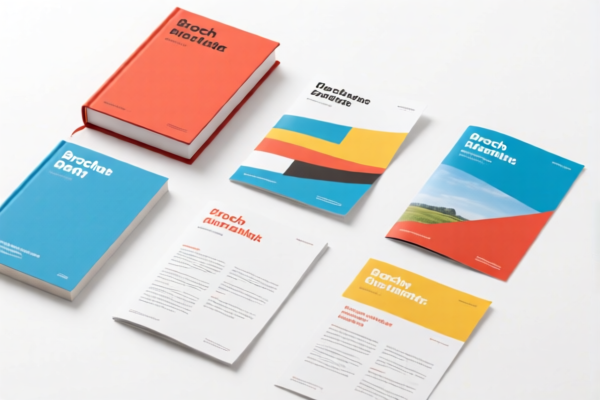
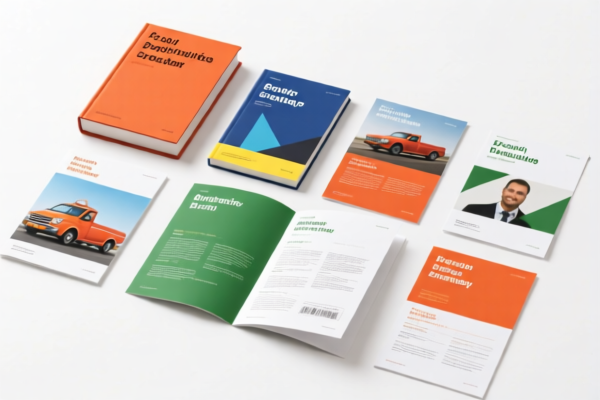
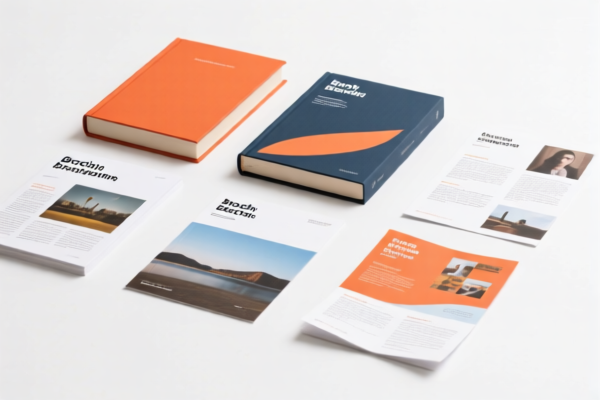
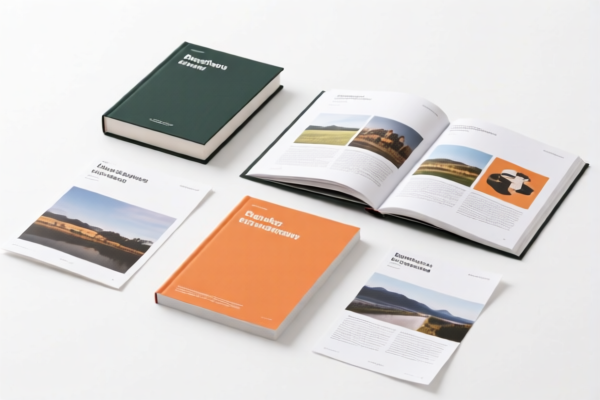
AI Analysis
📖 Product Instruction Manual (说明书)
🌐 HS Code Reference & Customs Clearance Guide | 2026 Latest Tariff Analysis | Professional Entry Strategy
📌 Part 1: Product Definition & Classification: What Exactly Is an "Instruction Manual"?
An Instruction Manual is a printed document providing operational, safety, or maintenance guidance for a specific product. In international trade, it is classified strictly under Chapter 49 (Printed Books, Newspapers, Pictures, and Other Products of the Printing Industry).
Key characteristics for classification: * Material: Primarily paper-based. * Form: Printed text/graphics, bound or unbound (leaflets, booklets). * Function: Informational, non-electronic, non-media (unless it contains embedded chips, which changes the code entirely).
⚠️ Critical Distinction:
- If it is a standard paper booklet → It falls under 4901 or 4911.
- If it is a USB drive or DVD containing the manual → It falls under 8523 (Recording Media), NOT Chapter 49.
- If it is a digital file provided via QR code with no physical copy → It may be exempt from physical customs duties but requires careful declaration as "No Physical Goods."
📦 Part 2: HS Code Classification Details (2026 Latest Tariff Authority Comparison)
Based on the provided data, the instruction manual can be classified into four specific HS Codes depending on the precise format (booklet vs. loose leaf) and page count interpretations. All listed codes share the same tax structure for US imports from China.
| HS Code | Product Description | Applicable Scenario | Key Feature |
|---|---|---|---|
4911.99.80.00 |
Other printed matter, not elsewhere specified | General manuals, technical booklets | Broad category for "Other Printed Matters" |
4911.99.60.00 |
Other printed products | Standard paper instruction guides | Emphasizes "product printed on paper" |
4901.99.00.91 |
Printed books, pamphlets, leaflets (Similar) | Formal user manuals, booklets | Fits "Pamphlets/Leaflets" definition |
4901.99.00.92 |
Printed books, pamphlets, leaflets (Similar) | Multi-page instruction booklets | Also fits "Pamphlets/Leaflets" definition |
🔍 Key Insight:
- All four codes are treated identically for tax purposes in the provided data.
- The choice between4901(books/pamphlets) and4911(other printed matter) often depends on binding and page count conventions.
- Do not misclassify as "Paper Products" (4811); printing adds significant value and shifts it to Chapter 49.
💰 Part 3: 2026 Latest Tariff Rate Breakdown (Including Surtaxes & Policy Add-ons)
✅ Applicable Country: United States (US)
✅ Origin: China (CN)
✅ Effective Date: Current rates apply to imports post-2025 policy adjustments
🎯 1. All Codes (4911.99.80.00, 4911.99.60.00, 4901.99.00.91, 4901.99.00.92)
| Item | Details |
|---|---|
| Base Tariff Rate | 0.0% (Ad Valorem) |
| Section 301 Surtax | +7.5% (Additional duty on Chinese goods) |
| Section 122 Surtax | +10.0% (Specific additional duty, often related to trade remedy actions) |
| Total Tax Rate | 17.5% |
| Tax Calculation | CIF Value × 17.5% |
| De Minimis Exemption | ❌ Not Applicable (Usually, Section 301/122 duties apply regardless of value if declared as formal entry; check specific 80/87/321 rules) |
| Legal Basis Path | HTSUS:4911.99 / 4901.99 → USITC Footnotes → Section 301 List → Section 122 Actions |
📌 Explanation:
- "Base 0%": The standard Most Favored Nation (MFN) rate for printed matter is zero.
- "Section 301 +7.5%": Reflects ongoing trade tensions and specific exclusions/expansions for Chinese imports.
- "Section 122 +10%": A specific administrative tariff measure.
- Total 17.5%: This is the total landed cost impact on the declared value of the manuals. While 17.5% seems high for paper, remember the CIF value of a manual is very low (often <$1 per unit).
🛠️ Part 4: Practical Customs Clearance Advice (Pitfall Avoidance Guide)
✅ 1. Required Documentation Checklist
| Document | Required? | Notes |
|---|---|---|
| ✅ Commercial Invoice | ✔️ | Must clearly state "Instruction Manual" or "User Guide." Avoid vague terms like "Paper." |
| ✅ Packing List | ✔️ | Show quantity. If included with the main product, declare as "Included." |
| ✅ Product Photos | ✔️ | Show cover text, language, and binding type (stapled, bound, folded). |
| ✅ Origin Declaration | ✔️ | Confirm country of origin (China). |
| ✅ Content Description | ✔️ | Briefly describe content (e.g., "English safety instructions for electric toaster"). |
📌 Pro Tip:
- If the manual is bundled with the product, ensure the main product’s HS Code is declared correctly. The manual’s value is often immaterial but must not be omitted if separately invoiced.
- Language Matters: If printed in multiple languages, still classified under one HS Code, but specify "Multi-language" to avoid confusion.
✅ 2. Declaration Strategy
| Scenario | Correct Declaration | Incorrect Practice |
|---|---|---|
| Manual shipped with product | Declare as part of the set or separate line item at low value | Omitting it entirely → Risk of "undervaluation" |
| Manual shipped separately | Declare under 4911.99.80.00 or 4901.99.00.91 with accurate CIF value |
Declaring as "Samples" to avoid duty → Fraud Risk |
| Digital-only manual | Declare as "Electronic Delivery - No Physical Goods" | Shipping physical PDFs on USB without proper code |
🔥 Key Rule:
"Honest Valuation Saves Penalties!"
Even if the manual is worth $0.50, declaring it truthfully prevents audits. If bundled, ensure the main product’s duty base is not artificially inflated by high manual costs.
✅ 3. Special Cases
| Case | Handling Advice |
|---|---|
| Manual embedded in Product | If the manual is integral to the product’s use (e.g., legal requirement), it may be included in the main product’s value. |
| Large Technical Manuals | If thick and bound like a book, prefer 4901 codes. If thin and folded, 4911 is safer. |
| Multi-lingual Versions | One HS Code per shipment is sufficient. No need to split by language. |
| Reprints | If importing bulk reprints, ensure content hasn’t changed significantly (no new copyrighted material). |
🌍 Part 5: Global Market Comparison (2026 Latest)
| Country/Region | Recommended HS Code | Tariff Rate (China Origin) | Notes |
|---|---|---|---|
| 🇺🇸 USA | 4911.99.80.00 or 4901.99.00.91 |
17.5% | Includes Section 301 + 122 surcharges |
| 🇨🇳 China | 4911.99.80.00 |
0% - 5% | Low import duty, VAT applies |
| 🇪🇺 EU | 4901.99.00.00 |
0% | Generally duty-free for printed matter |
| 🇬🇧 UK | 4901.99.00.00 |
0% | Post-Brexit, still low for printed goods |
| 🇨🇦 Canada | 4911.99.00.00 |
0% | No major surcharges on printed matter |
📌 Conclusion:
- USA is the most expensive market for importing printed materials from China due to 17.5% effective tariff.
- For other major markets, the tariff burden is minimal (0-5%).
- Strategy: Consider printing manuals in-country (e.g., EU/US) if volume is high to avoid the 17.5% US duty.
📌 Part 6: Common Errors & Pitfalls (Lessons Learned)
❌ Error 1: Declaring "Paper" instead of "Printed Matter"
👉 Consequence: Misclassification → Potential penalty + delay.
✅ Fix: Always use "Instruction Manual" or "Printed Brochure."
❌ Error 2: Ignoring Section 122 & 301 Surtaxes
👉 Consequence: Underpayment → Audit and back taxes + interest.
✅ Fix: Calculate total landed cost including 17.5%.
❌ Error 3: Bundling Manual Value Incorrectly
👉 Consequence: Main product’s HS Code may be challenged if value ratio is skewed.
✅ Fix: Keep manual value minimal and transparent in the invoice.
❌ Error 4: Using "Sample" Declaration for Commercial Goods
👉 Consequence: Customs rejection + fine.
✅ Fix: Declare as "Commercial Goods" even if low value.
🎯 Part 7: Conclusion: Smart Clearance, Cost Control
🎯 Remember the Formula:
🔹 "Printed Matter = 0% Base + 7.5% (301) + 10% (122) = 17.5% Total"
🔹 "Low Value, High Compliance: Never under-invoice!"
📌 Pro Tip:
If you import thousands of manuals, consider:
1. Printing Locally: In the US/EU to avoid 17.5% tariff.
2. Digital Manuals: Offer QR codes for digital versions to reduce physical import volume.
3. Pre-Ruling: Apply for a US Customs Pre-Ruling to confirm HS Code if unsure between 4901 and 4911.
📣 Immediate Action:
📞 Consult a Customs Broker + Provide Sample Manual + Verify Section 122 Applicability
🚀 Ensure Smooth Clearance, Avoid Delays, Optimize Costs!
✨ Professional Clearance Starts with Accurate Classification!
💼 Every Cent Saved on Misclassification is Profit Earned!
Customer Reviews
About HS Code Classification
The Harmonized System (HS) is an internationally standardized nomenclature developed by the World Customs Organization (WCO) to classify traded products. Over 200 countries use the HS system as the basis for customs tariffs, trade statistics, and import/export regulations.
Each HS code follows a hierarchical structure:
- Chapter (2 digits) — Broad category of goods (e.g., Chapter 84: Machinery and Mechanical Appliances)
- Heading (4 digits) — More specific grouping within the chapter
- Subheading (6 digits) — Internationally standardized breakdown, used by all WCO member countries
- National subdivisions (8-10 digits) — Country-specific extensions for further classification, such as US HTSUS 10-digit codes
Correct HS code classification is essential for smooth customs clearance, accurate duty payment, and compliance with trade regulations. Misclassification can lead to customs delays, overpayment of duties, or penalties.
When importing from CN to US, the applicable tariff rates may include:
- Most-Favored-Nation (MFN) rate — The standard duty rate applied to WTO members
- General rate — Applied to countries without trade agreements
- Trade remedy duties — Additional tariffs such as Section 301 (anti-dumping), Section 232 (national security), or countervailing duties
The information provided on this page is for reference purposes only. For official classification, please consult with your local customs authority or a licensed customs broker.