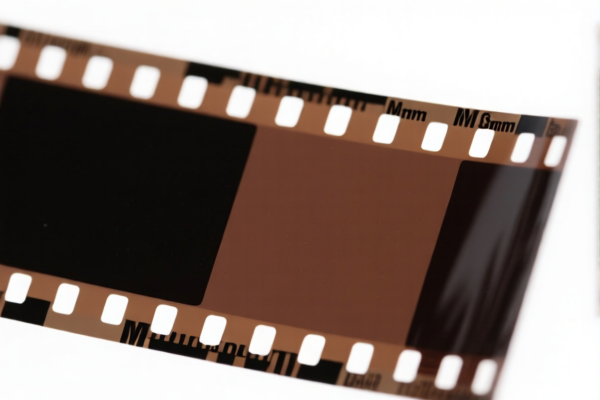
Professional 35mm Wide Film (Exposed and Developed)
CN → US| HS Code | Tariff Rate | Origin | Destination | Doc |
|---|---|---|---|---|
| 3706106060 | 35.0% | CN | US | Official Doc |
| 3706106090 | 35.0% | CN | US | Official Doc |
| 3705000000 | 35.0% | CN | US | Official Doc |
Product Images



AI Analysis
🎞️ 35mm Wide Film (Exposed and Developed)
🌐 HS Code Reference & Customs Clearance Guide | 2026 Latest Tariff Analysis | Professional Clearance Strategy
📌 I. Product Definition and Classification: What is "Exposed and Developed" Film?
Professional 35mm Wide Film (Exposed and Developed) refers to photographic or cinematographic film that has already undergone the chemical processes of exposure to light and development to create a visible image. Unlike "raw" or "unexposed" film, this product is a finished media format where the latent image has been fixed.
In international trade, the classification hinges on two critical factors: 1. Width: Specifically 35mm (or wider, though 35mm is the standard for this query). 2. State: Exposed and Developed (已曝光并显影). This disqualifies it from raw film categories (like HS 3702) and places it under developed photographic/cinematic goods.
⚠️ Key Distinction:
- Unexposed/Undeveloped Film: Falls under HS 3702 (Raw film).
- Exposed & Developed 35mm: Falls under HS 3706.10 (Photographic film, exposed/developed, width ≥ 35mm).
- Movie Film (Exposed/Developed): Can fall under HS 3705.00 if strictly categorized as cinematic, but often competes with HS 3706 depending on specific national interpretations of "Movie Film" vs. "Photographic Film." However, per the provided data, both are considered valid matches based on the "Exposed and Developed" attribute.
📦 II. HS Code Classification Details (2026 Latest Tariff Authority对照)
Based on the provided data, three HS Codes are identified as matching the product description. The classification logic depends on the specific nature (photographic vs. cinematic) and sub-category within the "Exposed/Developed" umbrella.
| HS Code | Product Description | Applicability & Logic |
|---|---|---|
3706.10.60.60 |
Photographic film, exposed and developed, width 35mm or more (Specific Type) | Match Success. The name explicitly contains "exposed and developed" and "35mm." Fits the material and form requirements perfectly. |
3706.10.60.90 |
Photographic film, exposed and developed, width 35mm or more (Other) | Match Success. "Exposed and developed" corresponds to the state, and "35mm" meets the width requirement. Classified as "Other" types under this code. |
3705.00.00.00 |
Movie film, exposed and developed | Match Success. Although titled "Movie Film," the core attribute "Exposed and Developed" aligns with the category's material/state requirements. Since the exclusion clause is for unexposed or undeveloped film, this product fits the scope. |
🔍 Key Reminder:
- All three codes carry the same tax rate (35%).
- The choice between3706(Photographic) and3705(Movie) often depends on the primary intended use or specific national customs interpretation of "Movie Film" vs. "Photographic Film."
- Do not confuse with HS 3702 (Unexposed film), which has a base tariff of 0% but is subject to the same additional tariffs. However,3706and3705are for finished media.
💰 III. 2026 Latest Tariff Rate Breakdown (Including Surcharges & Policy Add-ons)
✅ Applicable Country: United States (US)
✅ Origin: China (CN)
✅ Effective Date: From November 10, 2025 (including subsequent imports)
🎯 1. 3706.10.60.60 & 3706.10.60.90 —— Exposed/Developed Photographic Film (≥35mm)
| Item | Content |
|---|---|
| Base Tariff | 0.0% (ad valorem) |
| Section 301 Tariff (USITC) | +25.0% (From USITC Footnote related to Chinese goods) |
| Section 122 Tariff | +10.0% (Specific policy surcharge for Chinese origin) |
| Total Tariff Rate | 35.0% |
| Tax Calculation | CIF Value × 35% |
| De Minimis Eligibility | ❌ No (Denied) |
| Legal Basis Path | Base: 3706.10.60 → Section 301: 25% → Section 122: 10% |
📌 Explanation:
- Base Tariff (0%): The Harmonized Tariff Schedule (HTSUS) base rate for developed film is generally low or zero.
- Section 301 Tariff (+25%): This is the standard "Trump Tax" or "301 Tariff" applied to a wide range of Chinese imports, including photographic materials.
- Section 122 Tariff (+10%): An additional surcharge applicable to certain Chinese goods, adding to the total cost.
- Total (35%): A significant cost burden that must be factored into landed cost calculations.
🎯 2. 3705.00.00.00 —— Movie Film (Exposed and Developed)
| Item | Content |
|---|---|
| Base Tariff | 0.0% |
| Section 301 Tariff (USITC) | +25.0% |
| Section 122 Tariff | +10.0% |
| Total Tariff Rate | 35.0% |
| Tax Calculation | CIF Value × 35% |
| De Minimis Eligibility | ❌ No |
| Legal Basis Path | Base: 3705.00.00 → Section 301: 25% → Section 122: 10% |
📌 Note:
- Despite being categorized as "Movie Film," the tariff structure is identical to the photographic film categories in this context.
- The "Exposed and Developed" state triggers the same trade remedies regardless of whether it is used for photography or cinema.
🛠️ IV. Customs Clearance Practical Advice (Battle-Tested Pitfall Avoidance)
✅ 1. Document Checklist (Essential)
| Document | Required | Description |
|---|---|---|
| ✅ Product Description | ✔️ | Must explicitly state "Exposed and Developed," "35mm," and "Photographic/Movie Film." |
| ✅ Commercial Invoice | ✔️ | Clearly declare the value per roll/box. Avoid vague terms like "Camera Accessories." |
| ✅ Packing List | ✔️ | Detail the number of rolls, length, and format (e.g., 100ft, 400ft). |
| ✅ Proof of Development | ✔️ | If possible, provide evidence or a statement confirming the film is not raw. This prevents reclassification under HS 3702 (which might have different trade implications or seizure risks if misdeclared). |
| ✅ Origin Certificate | ✔️ | To confirm Chinese origin and ensure correct application of Section 301/122 tariffs. |
✅ 2. Declaration Tips (Key Mnemonics)
🔥 “State is Key: Exposed/Developed = 35%. Raw = Different Path!”
| Scenario | Correct Declaration | Incorrect Practice |
|---|---|---|
| Film is already developed | Declare as "Exposed and Developed Film" under 3706 or 3705. |
Declaring as "Camera Rolls" or "Photo Supplies" → Risk of penalty. |
| Film is UNexposed/Raw | DO NOT use 3706. Use HS 3702 (if applicable) or other raw film codes. |
Using 3706 for raw film → Misdeclaration, leads to seizure or fines. |
| Width is less than 35mm | Use HS 3706.20 or other subheadings for narrower film. |
Using 3706.10 (≥35mm) → HS Code Error. |
| Movie Film vs. Photo Film | Specify "Movie Film" if it fits 3705.00.00.00. |
Using generic "Film" → Ambiguity, potential delay. |
✅ 3. Special Considerations
| Situation | Handling Advice |
|---|---|
| Mixed Shipments | If the shipment contains both raw and developed film, they must be declared separately. Mixed declarations can lead to holds. |
| Artistic/Experimental Film | If the film is unique (e.g., single-use art pieces), ensure the commercial value is declared accurately. Customs may assess value based on similar goods if no commercial price exists. |
| Section 301 Exclusions | Check if the specific HS Code was subject to exclusions during the relevant period. Generally, photographic film is not excluded. |
🌍 V. Global Market Comparison (2026 Latest)
| Country/Region | Recommended HS Code | Tariff (China Origin) | Notes |
|---|---|---|---|
| 🇺🇸 United States | 3706.10.60.60 / 3705.00.00.00 |
35% (0% Base + 25% Sec 301 + 10% Sec 122) | High tariff burden. Critical for cost planning. |
| 🇨🇳 China | 3706.10.60 / 3705.00 |
Varies (Import Duty) | No Section 301/122 surcharges. Lower entry cost for re-export. |
| 🇪🇺 European Union | 3706.10 / 3705.00 |
0-4% | No US-style punitive tariffs. Easier clearance. |
| 🇬🇧 United Kingdom | 3706.10 / 3705.00 |
0-4% | Post-Brexit tariff regime applies. |
📌 Conclusion:
- The United States imposes the highest cost on Chinese-origin developed film due to Section 301 and Section 122 tariffs.
- For cost optimization, consider sourcing from non-China origins if possible, or factor the 35% duty into the pricing model.
- Ensure the state (Exposed/Developed) is clearly documented to avoid customs classification disputes.
📌 VI. Common Errors & Pitfalls (Lessons Learned)
❌ Error 1: Declaring "Developed Film" as "Raw Film"
👉 Consequence: If customs tests the film and finds it developed, it may be rejected or reclassified, leading to retroactive tariff changes or seizure.
❌ Error 2: Ignoring the "35mm" Width Specification
👉 Consequence: Using 3706.10 for film <35mm is a HS Code error. Must use 3706.20 or narrower film codes.
❌ Error 3: Vague Description ("Camera Film")
👉 Consequence: Customs lacks clarity on "Exposed/Developed" status. Leads to additional duties for risk assessment or delays.
✅ Correct Practice:
"Photographic Film, 35mm Width, Exposed and Developed, for Professional Use, HS Code 3706.10.60.60"
🎯 VII. Conclusion: Professional Declaration, Smooth Clearance, Cost Control!
🎯 Remember the Mnemonic:
🔹 “State Determines Code: Exposed/Developed = 3706/3705. Raw = 3702.”
🔹 “US Tariff = 35% (0+25+10). Plan your margins accordingly.”
🔹 “Be Specific: ‘Exposed and Developed’ saves you from customs headaches.”
📌 Pro Tip:
If your film is exposed but NOT developed (e.g., user-developed at home), the classification might differ or require additional declaration. Ensure the product status matches the HS Code precisely.
For US imports, consider applying for a Binding Tariff Information (BTI) or Pre-Ruling if dealing with high volumes to secure clarity on the 3706 vs. 3705 distinction.
📣 Immediate Action:
📞 Contact a Licensed Customs Broker + Provide Product Photos + Confirm HS Code 3706.10.60.60 / 3705.00.00.00
🚀 Ensure Smooth Clearance, Accurate Costing, and Efficient Export!
✨ Professional Customs Clearance Starts with Accurate Classification!
💼 Every Percent of Duty Matters! Calculate Precisely!
Customer Reviews
About HS Code Classification
The Harmonized System (HS) is an internationally standardized nomenclature developed by the World Customs Organization (WCO) to classify traded products. Over 200 countries use the HS system as the basis for customs tariffs, trade statistics, and import/export regulations.
Each HS code follows a hierarchical structure:
- Chapter (2 digits) — Broad category of goods (e.g., Chapter 84: Machinery and Mechanical Appliances)
- Heading (4 digits) — More specific grouping within the chapter
- Subheading (6 digits) — Internationally standardized breakdown, used by all WCO member countries
- National subdivisions (8-10 digits) — Country-specific extensions for further classification, such as US HTSUS 10-digit codes
Correct HS code classification is essential for smooth customs clearance, accurate duty payment, and compliance with trade regulations. Misclassification can lead to customs delays, overpayment of duties, or penalties.
When importing from CN to US, the applicable tariff rates may include:
- Most-Favored-Nation (MFN) rate — The standard duty rate applied to WTO members
- General rate — Applied to countries without trade agreements
- Trade remedy duties — Additional tariffs such as Section 301 (anti-dumping), Section 232 (national security), or countervailing duties
The information provided on this page is for reference purposes only. For official classification, please consult with your local customs authority or a licensed customs broker.