Professional Grade Color Film Scanner
CN → USProduct Images
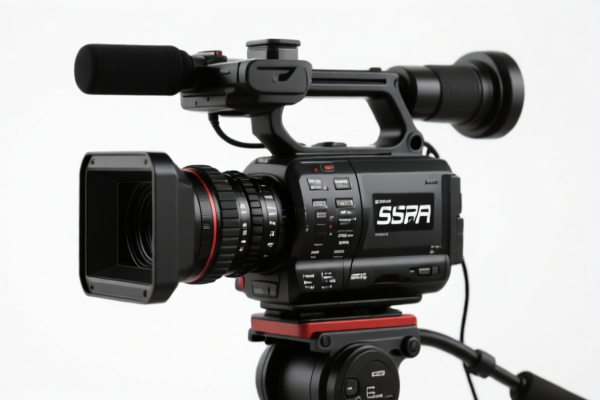
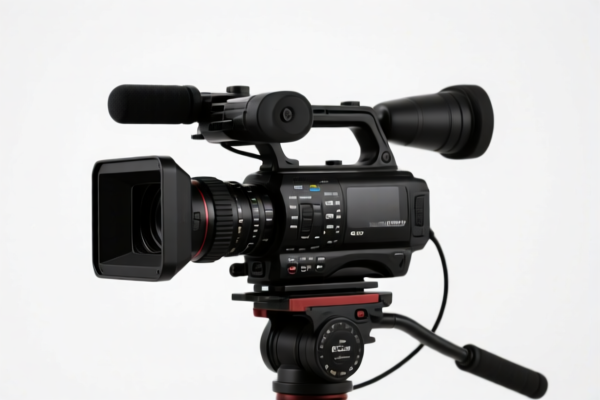
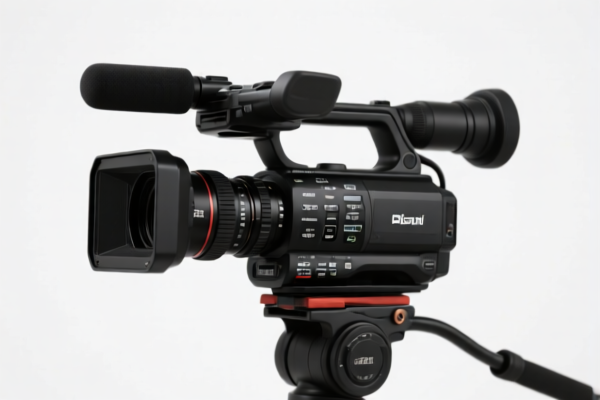
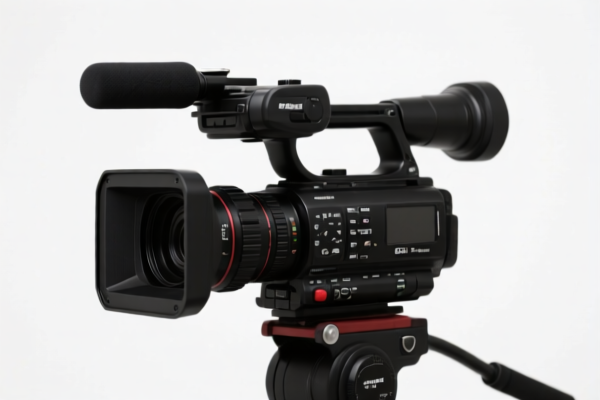
AI Analysis
🎞️ Professional Grade Color Film Scanner
🌐 HS Code Reference & Clearance Guide | 2026 Latest Tariff Full Analysis | Professional-Level Customs Strategy
📌 I. Product Definition & Classification: Do You Really Understand "Professional Film Scanners"?
A Professional Grade Color Film Scanner is a high-precision optical-electronic device designed to digitize analog photographic film (negatives, slides, cine film) into digital data. In international trade, these devices are classified not merely as "scanners" but specifically as equipment for processing photographic film and plates, distinguishing them from general-purpose document scanners.
The critical distinction lies in the primary function and the target medium: * Film Scanners: Designed exclusively or primarily for converting photographic film into digital images. → Group 90 (Optical/Medical Instruments) * Document Scanners: Designed for paper documents. → Group 84 (Machinery)
⚠️ Key Distinction Point:
- If the device is a dedicated film scanner (even if it connects via USB/Network for data transfer) → Classify under 9001.50 or 9013.80.
- If the device is a general-purpose flatbed scanner with a film holder attachment → Classify under 8443.32.
- Crucial Note: "Professional Grade" often implies high-end CCD/CMOS sensors and specialized lighting, which solidify its classification under optical instruments (Group 90) rather than general machinery (Group 84).
📦 II. HS Code Classification Details (2026 Latest Tariff Authority Comparison)
| HS Code | Product Description | Application Scenario | Primary Function |
|---|---|---|---|
9001.50.00.00 |
Photographic film, plates and other imaging media, recorded | Film rolls, raw imaging media (Not applicable for scanners) | ❌ N/A (Media Only) |
9002.20.00.00 |
Lenses, objective lenses and other optical elements, of any material | Camera lenses, projector lenses | ❌ N/A (Components Only) |
9002.90.00.00 |
Parts and accessories of lenses, etc. | Mounts, calibration tools for optical systems | ❌ N/A |
9013.80.91.00 |
Other devices, instruments and appliances, optical, not specified elsewhere | Dedicated Film Scanners, Laser projectors, Spectrometers | ✅ Yes (Film Digitization) |
9013.90.80.00 |
Parts and accessories of other devices (not telescopes/periscopes) | Scanner heads, film transport mechanisms, cooling fans for scanners | ✅ Yes |
8443.32.00.00 |
MFPs (Multifunction Printers), capable of printing | Document Scanners with film holders | ⚠️ Only if primarily for paper |
🔍 Critical Reminder:
- Dedicated Film Scanners (like Hasselblad Flextight, Noritsu QSS, professional flatbeds like Epson Perfection Pro series when used primarily for film) are typically classified under 9013.80 as "Other Optical Devices" because their core value is in the optical imaging system (lenses + sensor + lighting) rather than mechanical scanning.
- Do NOT classify dedicated film scanners under 8443 (Machines for printing/photocopying) unless they are explicitly multifunction devices designed primarily for paper documents. Misclassification here can lead to significant tariff differences and customs delays.
💰 III. 2026 Latest Tariff Rate Detail (Including Surcharges & Policy Additions)
✅ Applicable Country: United States (US)
✅ Origin: China (CN)
✅ Effective Date: November 10, 2025 onwards (including subsequent imports)
🎯 1. 9013.80.91.00 —— Professional Color Film Scanner (Dedicated Optical Device)
| Item | Content |
|---|---|
| Base Rate | 0% (ad valorem) |
| USITC Surcharge | +25% (from USITC Footnote 9903.88.01, Section 301 Tariff) |
| IEEPA Surcharge | +10% (China-specific, effective Nov 10, 2025) |
| Total Tariff Rate | 35% |
| Tax Calculation | CIF Value × 35% |
| De Minimis Eligibility | ❌ No (deny_de_minimis) |
| Legal Path | IEEPA:9903.01.25 → IEEPA:9903.01.24 → USITC:9013.80.91.00 → FOOTNOTE:9903.88.01 |
📌 Explanation:
- "USITC 25% Surcharge" is part of the Section 301 tariffs on Chinese goods; - "IEEPA 10%" is the additional tariff on Chinese products under the International Emergency Economic Powers Act; - Total 35% is a high tariff for high-tech optical equipment. Must be factored into cost structures!
🎯 2. 8443.32.00.00 —— If Misclassified as a Multifunction Document Scanner (Common Error)
| Item | Content |
|---|---|
| Base Rate | 0% |
| USITC Surcharge | +25% |
| IEEPA Surcharge | +10% |
| Total Tariff Rate | 35% |
| Tax Calculation | CIF × 35% |
| De Minimis Eligibility | ❌ No |
📌 Note:
- Even if misclassified under Group 84, the 301 Tariffs still apply.
- Risk: Customs may reclassify the goods upon inspection if the primary function is determined to be film digitization, potentially leading to penalties for misdeclaration plus interest.
- Advantage of 9013: Proper classification under 9013 aligns with the technical nature of the device (high-precision optics), reducing the risk of dispute over "primary function."
🛠️ IV. Clearance Practical Advice (Battle-Tested Pitfall Avoidance Guide)
✅ 1. Required Documentation Checklist (Non-Negotiable)
| Document | Mandatory | Description |
|---|---|---|
| ✅ Product Specification Sheet | ✔️ | Must specify: Resolution (dpi), Sensor Type (CCD/CMOS), Film Formats Supported (35mm, Medium Format, 4K Cine), Color Depth (16-bit). |
| ✅ Circuit Diagram / Optical Path Diagram | ✔️ | Proves the device is a dedicated optical imaging system, not a general-purpose document scanner. |
| ✅ Product Photos (Including Label) | ✔️ | Clear view of model number, brand, input/output ports. |
| ✅ Third-Party Test Report | ✔️ | FCC (for US), CE (for EU), RoHS. Optical calibration certificates add credibility. |
| ✅ Commercial Invoice | ✔️ | Must explicitly state "Dedicated Color Film Scanner for Photographic Media" NOT "General Scanner." |
| ✅ Packing List | ✔️ | Detail the contents: Scanner unit, film holders, calibration targets, software dongles. |
✅ 2. Declaration Tips (Key Mantra)
🔥 "Optical Core, Film Target, Name Precise, Tariff Safe!"
| Scenario | Correct Declaration | Wrong Practice |
|---|---|---|
| Dedicated Film Scanner (e.g., Flextight) | 9013.80.91.00 "Professional Film Scanner" |
"Document Scanner" → Risk of reclassification |
| Flatbed Scanner with Film Adapter | 8443.32.00.00 "Multifunction Printer/Scanner" |
9013 → May be rejected if primary use is paper |
| Scanning Software Only | 9013.90.80.00 or 8523.49.00.00 (Software) |
Declared as hardware → Duty evasion suspicion |
| Parts for Film Scanner | 9013.90.80.00 |
Declared as generic parts → Delays |
✅ 3. Special Situation Handling
| Situation | Handling Advice |
|---|---|
| Bundled Software | Declare hardware separately. Software can be declared separately or included in the hardware value, but ensure the HS code reflects the physical device. |
| Calibration Targets Included | Pack as accessories. Do not declare as separate "test equipment" to avoid confusion. |
| OEM Custom Scanners | Provide design drawings and client agreements to prove the specific optical configuration. |
| Used/Refurbished Scanners | Additional inspections may apply. Ensure all serial numbers match and provide proof of origin for components. |
🌍 V. Global Major Market Clearance Comparison (2026 Latest)
| Country/Region | Recommended HS Code | Tariff (China Origin) | Certification Requirements | Notes |
|---|---|---|---|---|
| 🇺🇸 United States | 9013.80.91.00 |
35% (25% + 10%) | FCC + RoHS | High tariff due to Section 301 & IEEPA |
| 🇨🇳 China | 9013.80.91.00 |
0% (Import) | CCC (if applicable) | Preferential rates for R&D equipment |
| 🇪🇺 European Union | 9013.80.99 |
0% (if CE Certified) | CE + WEEE + RoHS | Low tariff, strict environmental rules |
| 🇦🇺 Australia | 9013.80.91 |
5% | RCM | Moderate tariff |
| 🇯🇵 Japan | 9013.80.00 |
0% | PSE | Free trade agreement benefits possible |
📌 Conclusion:
- The US market is the most expensive for importing Chinese-made professional film scanners due to layered surcharges.
- Europe and Asia offer more favorable tariff environments, provided CE/RCM/PSE certifications are in order.
- Strategy: If targeting the US, consider supply chain diversification (e.g., assembly in Vietnam or Malaysia) to potentially avoid IEEPA surcharges, subject to rules of origin compliance.
📌 VI. Common Mistakes & Pitfall Avoidance (Blood & Tears Lessons)
❌ Mistake 1: Declaring a Film Scanner as "Document Scanner" to avoid scrutiny
👉 Consequence: Customs may reclassify it under 9013, leading to retroactive tariff adjustments and potential fraud penalties.
❌ Mistake 2: Omitting "Film" in the product name
👉 Consequence: Ambiguity leads to customs hold while agents verify the primary function. Delays cost money.
❌ Mistake 3: Including proprietary software on the same invoice as hardware without distinction
👉 Consequence: While software may have different duties, mixing them can complicate valuation and audit trails.
❌ Mistake 4: Assuming "High-End" means "Higher Tariff"
👉 Consequence: Tariffs are based on HS Code, not price. A $5,000 scanner and a $500 scanner under 9013.80 face the same 35% rate (plus potential additional duties for high-value items if thresholds are crossed, but generally ad valorem).
✅ Correct Approach:
"Professional Color Film Scanner, Model XYZ, CCD Sensor, 48-bit Color, Includes 35mm/120mm Holders, FCC Certified, US Plug"
🎯 VII. Conclusion: Professional Declaration, Save Time, Money, and Stress!
🎯 Remember the Mantra:
🔹 "Optical Core, Film Target, 9013 is the Key."
🔹 "Don't call it a Document Scanner, or you'll Pay More in Stress!"
🔹 "35% is the Price of Precision in the US Market."
📌 Pro Tip:
If your scanner is assembled in Vietnam, Mexico, or Malaysia with significant transformation, you may qualify for IEEPA exemption.
Recommendation: Apply for an Advance Ruling (CBP Form 5345) before shipping to the US to secure certainty on the HS Code and tariff rate.
📣 Take Action Now:
📞 Contact a Licensed Customs Broker + Provide Technical Specs + Apply for Pre-Ruling
🚀 Ensure your Professional Film Scanners Clear Customs Smoothly, Maximize Profit Margins!
✨ Professional Clearance Starts with Accurate Classification!
💼 Every Percent of Tariff Saved is Pure Profit!
Customer Reviews
About HS Code Classification
The Harmonized System (HS) is an internationally standardized nomenclature developed by the World Customs Organization (WCO) to classify traded products. Over 200 countries use the HS system as the basis for customs tariffs, trade statistics, and import/export regulations.
Each HS code follows a hierarchical structure:
- Chapter (2 digits) — Broad category of goods (e.g., Chapter 84: Machinery and Mechanical Appliances)
- Heading (4 digits) — More specific grouping within the chapter
- Subheading (6 digits) — Internationally standardized breakdown, used by all WCO member countries
- National subdivisions (8-10 digits) — Country-specific extensions for further classification, such as US HTSUS 10-digit codes
Correct HS code classification is essential for smooth customs clearance, accurate duty payment, and compliance with trade regulations. Misclassification can lead to customs delays, overpayment of duties, or penalties.
When importing from CN to US, the applicable tariff rates may include:
- Most-Favored-Nation (MFN) rate — The standard duty rate applied to WTO members
- General rate — Applied to countries without trade agreements
- Trade remedy duties — Additional tariffs such as Section 301 (anti-dumping), Section 232 (national security), or countervailing duties
The information provided on this page is for reference purposes only. For official classification, please consult with your local customs authority or a licensed customs broker.