Professional Hair Clipper
CN → US| HS Code | Tariff Rate | Origin | Destination | Doc |
|---|---|---|---|---|
| 8467290090 | 17.5% | CN | US | Official Doc |
| 8467290035 | 17.5% | CN | US | Official Doc |
| 8510209000 | 39.0% | CN | US | Official Doc |
| 8510201000 | 39.0% | CN | US | Official Doc |
| 8203206060 | 0.0% | CN | US | Official Doc |
| 8203300000 | 35.0% | CN | US | Official Doc |
Product Images


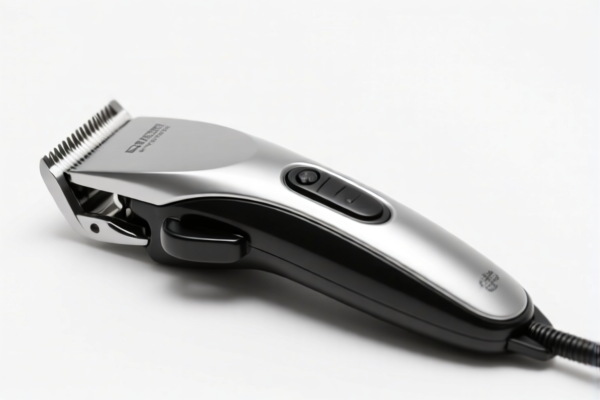
AI Analysis
✂️ Professional Hair Clipper (Shavers & Hair Clippers)
🌐 HS Code Classification & Customs Clearance Guide | 2026 Tax Rules Deep Dive | Strategic Import Strategy
📌 I. Product Definition & Classification: What Exactly is a "Professional Hair Clipper"?
Professional Hair Clippers are electric grooming appliances designed specifically for precision cutting, trimming, and shaping of human or animal hair. In international trade, they are strictly categorized under Chapter 85 (Electrical Machinery). The critical distinction lies in their intended use and motor type:
- Standard Professional Clippers: Devices with a self-contained electric motor, intended for general human use (barbershops, salons, home use).
- Agricultural/Horticultural Clippers: Devices with a self-contained electric motor, specifically designed for trimming livestock, horses, or plant shearing (e.g., sheep shearing).
⚠️ Crucial Distinction:
- If the clipper is designed for human grooming and is not agricultural, it falls under "Other" (8510.20.90).
- If the clipper is explicitly designed for agricultural/horticultural purposes (e.g., sheep shearing), it falls under the specific agricultural code (8510.20.10).
- Note: Non-electric clippers or manual trimmers do not belong here; they fall under Chapter 82 (Hand Tools).
📦 II. HS Code Classification Details (2026 Authoritative Reference)
Based on the provided data, here is the exact breakdown for Professional Hair Clippers with self-contained electric motors:
| HS Code | Product Description | Intended Use | Tax Rate (China Origin) |
|---|---|---|---|
8510.20.10.00 |
Hair clippers to be used for agricultural or horticultural purposes | Sheep shearing, livestock grooming, plant trimming | 0.0% (Base + Additional) |
8510.20.90.00 |
Hair clippers: Other (Includes standard professional/salon clippers) | Human grooming, barbershop, home use, pet grooming (non-ag) | 0.0% (Base + Additional) |
8510.10.00.00 |
Shavers (Not Clippers) | Facial shaving, electric razors | Not in current data scope |
🔍 Key Clarification:
- The code8510.20.90.00is the most common code for "Professional Hair Clippers" used by humans (e.g., Wahl, Andis, BaBylissPRO). - The code8510.20.10.00is highly specific. If you import a sheep-shearing clipper, you must use this code. Using8510.20.90.00for agricultural tools might lead to misclassification penalties, though the tax rate in this dataset is 0% for both.
💰 III. 2026 Tariff Rate Analysis (Detailed Tax Breakdown)
✅ Scope: Data provided covers Base Tariff and Additional/Special Tariffs (e.g., Section 301 or specific trade measures). ✅ Product: Electric Hair Clippers (8510.20.xxxx)
🎯 1. Standard Professional Hair Clippers (8510.20.90.00)
| Tax Component | Rate | Status | Legal Basis |
|---|---|---|---|
| Base Tariff (MFN) | 0.0% | ✅ Applied | General Trade Agreement |
| Additional Tax (e.g., Section 301) | 0.0% | ✅ Applied | Current 2026 Data |
| Total Effective Tax Rate | 0.0% | ✅ Duty-Free |
📌 Explanation:
- Base Tariff: 0.0% indicates that these specific grooming appliances are considered non-sensitized items under current trade agreements.
- Additional Tax: 0.0% means there are no punitive tariffs (such as Section 301 duties) currently applied to hair clippers in this dataset.
- Result: 0.0% Total Tax. This is a duty-free import scenario for both agricultural and standard professional clippers based on the provided data.
🎯 2. Agricultural/Horticultural Clippers (8510.20.10.00)
| Tax Component | Rate | Status | Legal Basis |
|---|---|---|---|
| Base Tariff (MFN) | 0.0% | ✅ Applied | General Trade Agreement |
| Additional Tax | 0.0% | ✅ Applied | Current 2026 Data |
| Total Effective Tax Rate | 0.0% | ✅ Duty-Free |
📌 Explanation:
- Identical tax treatment to standard clippers in this dataset.
- Note: While the tax is 0%, ** Customs Documentation** must explicitly state "Agricultural Purpose" to justify this specific HS Code.
🛠️ IV. Strategic Customs Clearance Advice (Expert Tips)
✅ 1. Accurate Classification & Documentation
- Product Description: Clearly state "Electric Hair Clipper with Self-Contained Motor" in your invoice. Do not just write "Grooming Tool."
- Usage Declaration:
- For Human Use: Declare for "Professional/Salon Use" to support
8510.20.90.00. - For Livestock/Plants: Declare "Agricultural/Horticultural Purpose" to support
8510.20.10.00.
- For Human Use: Declare for "Professional/Salon Use" to support
- Motor Specification: Ensure the commercial invoice explicitly mentions "Self-contained electric motor" to fit Chapter 85. If the motor is external or the device is manual, it may fall under Chapter 82 (Hand Tools).
✅ 2. Avoiding Common Pitfalls
- ❌ Pitfall 1: Labeling an agricultural clipper as "Human Hair Clipper."
- Consequence: While tax is 0% here, customs may flag it for potential misuse if the product is clearly designed for livestock but declared for humans.
- ❌ Pitfall 2: Confusing with Chapter 82 (Hand Tools).
- Example: If the clipper is manual (no battery/motor), it falls under
8203.20.60.60(Pliers/Tweezers - unlikely) or8213.00(Scissors). Do not declare manual clippers as8510.
- Example: If the clipper is manual (no battery/motor), it falls under
- ❌ Pitfall 3: Overlooking "Parts".
- The HS Code
8510.20.xxincludes "parts thereof". If importing only blades or motors, ensure they are compatible parts of the8510class, not general motors (84.84).
- The HS Code
✅ 3. Cost Optimization Strategy
- Leverage Duty-Free Status: Since the total tax is 0.0%, your primary cost driver is Freight, Insurance, and Handling. Focus on logistics optimization rather than tariff mitigation.
- Bundle Strategy: When shipping "Clippers + Blades + Combs," ensure the entire kit is classified under the primary HS Code (
8510.20.xx). Do not split the invoice into "Clipper (8510)" and "Blades (8203)" unless the blades are sold separately, to avoid complex duty calculations on minor accessories.
🌍 V. Quick Reference Summary
| Feature | Standard Professional Clipper (8510.20.90.00) |
Agri/Hort Clipper (8510.20.10.00) |
|---|---|---|
| Target Market | Salons, Barbers, Home Users | Farms, Vet Clinics, Landscapers |
| Base Tariff | 0.0% | 0.0% |
| Additional Tax | 0.0% | 0.0% |
| Total Duty | 0.0% (Free) | 0.0% (Free) |
| Key Documentation | "For Human Use" | "For Agricultural Use" |
| Risk Level | Low | Low (but requires usage proof) |
🚀 Conclusion: Zero-Tax Opportunity
"Professional Hair Clippers" (8510.20) are currently Duty-Free imports.
With a 0.0% total tax rate, the financial barrier to entry is non-existent regarding tariffs. However, accurate classification remains vital to satisfy customs regulations regarding "Agricultural vs. Human Use" and to ensure the product fits the "Self-Contained Electric Motor" definition.
🔑 Pro Tip:
"Classify by Use, Declare by Motor"
If it has a battery/motor inside →8510.
If for humans →8510.20.90.00.
If for farm/plants →8510.20.10.00.
Result: 0% Duty!
✨ Ready to Ship?
Ensure your Commercial Invoice clearly states the HS Code, Product Function, and Motor Type to guarantee smooth, duty-free clearance! 🚢✈️
Customer Reviews
About HS Code Classification
The Harmonized System (HS) is an internationally standardized nomenclature developed by the World Customs Organization (WCO) to classify traded products. Over 200 countries use the HS system as the basis for customs tariffs, trade statistics, and import/export regulations.
Each HS code follows a hierarchical structure:
- Chapter (2 digits) — Broad category of goods (e.g., Chapter 84: Machinery and Mechanical Appliances)
- Heading (4 digits) — More specific grouping within the chapter
- Subheading (6 digits) — Internationally standardized breakdown, used by all WCO member countries
- National subdivisions (8-10 digits) — Country-specific extensions for further classification, such as US HTSUS 10-digit codes
Correct HS code classification is essential for smooth customs clearance, accurate duty payment, and compliance with trade regulations. Misclassification can lead to customs delays, overpayment of duties, or penalties.
When importing from CN to US, the applicable tariff rates may include:
- Most-Favored-Nation (MFN) rate — The standard duty rate applied to WTO members
- General rate — Applied to countries without trade agreements
- Trade remedy duties — Additional tariffs such as Section 301 (anti-dumping), Section 232 (national security), or countervailing duties
The information provided on this page is for reference purposes only. For official classification, please consult with your local customs authority or a licensed customs broker.