Professional Hairdressing Scissors
CN → US| HS Code | Tariff Rate | Origin | Destination | Doc |
|---|---|---|---|---|
| 8213003000 | 0.0% | CN | US | Official Doc |
| 8214906000 | 0.0% | CN | US | Official Doc |
| 8214909000 | 0.0% | CN | US | Official Doc |
| 8203300000 | 35.0% | CN | US | Official Doc |
| 8203206060 | 0.0% | CN | US | Official Doc |
| 8213009000 | 0.0% | CN | US | Official Doc |
Product Images
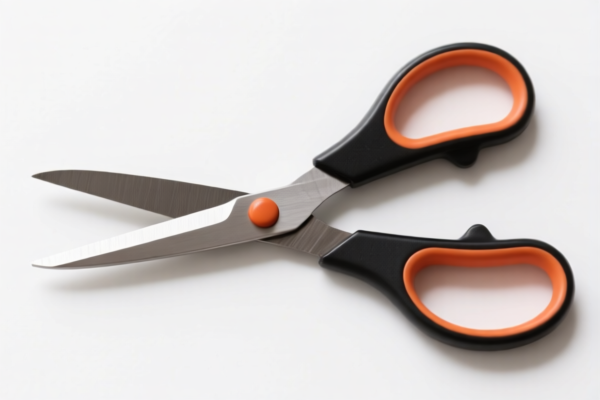
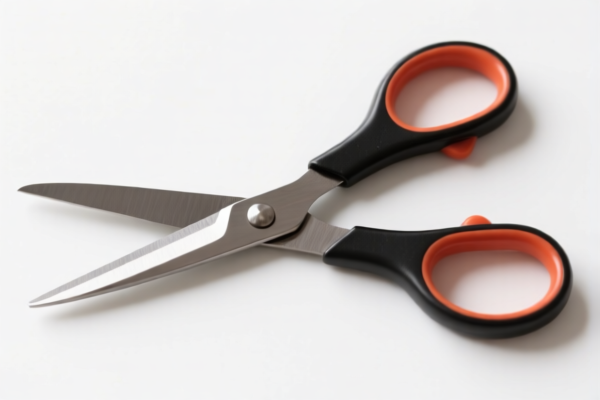
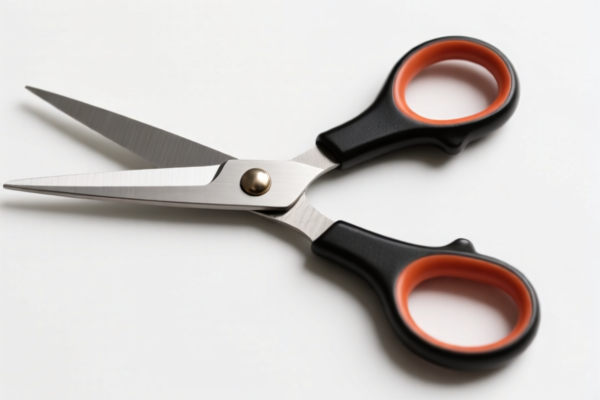
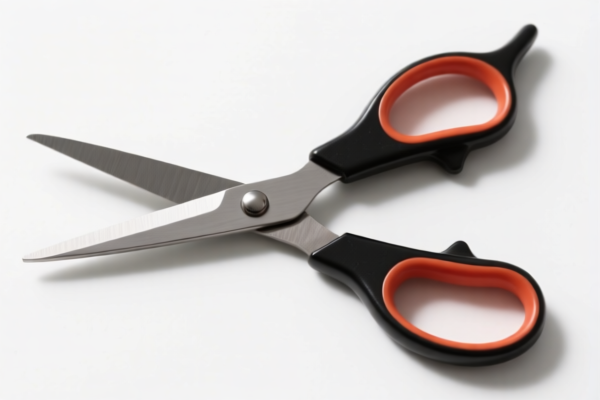
AI Analysis
✂️ Professional Hairdressing Scissors: HS Code Classification & US Customs Clearance Guide 2026
🌐 HS Code Reference & Customs Clearance Guide | 2026 Latest Tariff Analysis | Professional-Grade Strategy
📌 I. Product Definition & Classification: Do You Really Understand "Hairdressing Scissors"?
Professional hairdressing scissors (often referred to as barber shears, styling scissors, or thinning scissors) are precision cutting tools used in the beauty and personal care industry. In international trade, their classification depends heavily on material composition, mechanism, and specific usage.
While generally categorized under Chapter 82 ("Tools, Implements... of Base Metal"), the specific HS Code varies based on whether they are classified as general scissors, specialized cutting tools, or other metal tools.
⚠️ Key Classification Distinction: - General Purpose/Standard Scissors: Often fall under 8213 ("Scissors, shears..."). - Specialized/Barbering Tools: May fall under 8214 ("Articles of cutlery... other than those of heading 82.08"). - Metal Shears/Clippers: If viewed as mechanical or specific metal cutting implements, they might overlap with 8203 ("Tools... for cutting...").
📦 II. HS Code Classification Details (2026 Latest Tariff Authority Comparison)
Based on the provided data, here are the five potential HS Codes for Professional Hairdressing Scissors, with detailed reasoning and tax implications.
| HS Code | Product Description | Classification Logic (Why this code?) | Total Tax Rate (Est.) |
|---|---|---|---|
| 8213.00.30.00 | Scissors / Shears (General) | The item name "Scissors" falls under the category of "Scissors, tailor's shears, and similar shears." The usage matches "similar shears." | 1.7¢ each + 4.3% + 10% |
| 8214.90.60.00 | Barber Scissors (Cutting Tools) | Classified as "Cutting tools (e.g., barber scissors)." Material is reasonably inferred as metal, fitting the residual logic for "other axes and similar items." | 0.2¢ each + 3.1% + 10% |
| 8214.90.90.00 | Barber Scissors (Other) | Explicitly listed under "Barber scissors" in classification explanations. Material is metal (consistent with blade characteristics). No material conflict. | 1.4¢ each + 3.2% + 10% |
| 8203.30.00.00 | Metal Shears & Similar Tools | "Scissors" aligns with "Metal cutters and similar tools" in usage (cutting). Material is assumed metal. | 35.0% |
| 8203.20.60.60 | Metal Cutting Shears | Considered a metal hand tool. Fits "metal cutting shears" in usage and material inference. | 12¢/doz. + 5.5% + 35% |
| 8213.00.90.00 | Other Scissors | General "Scissors" category. Material inferred as metal, meeting the classification requirements for scissors. | 3¢ each + 3% + 10% |
🔍 Critical Note: - 8214 vs. 8213: Codes under 8214 (Barber/Manicure tools) often have lower base duties (0.2¢–1.4¢ per unit) compared to 8213 (General Scissors, 3¢ per unit) or 8203 (Metal Tools, up to 35%). - 8203 Risk: Codes 8203.30.00.00 and 8203.20.60.60 carry very high additional tariffs (25% Section 301 + 10% Section 122 = 35% total effective rate). These are generally less favorable for hairdressing scissors unless they are specifically defined as industrial metal cutters.
💰 III. 2026 Latest Tariff Rate Details (Including Surcharges & Policy Add-ons)
✅ Applicable Country: United States (US)
✅ Country of Origin: China (CN) (Implied by Section 122 & 301 tariffs)
✅ Effective Time: Current regulations apply (Section 301 & 122 in effect)
🎯 1. 8214.90.60.00 —— Barber Scissors (Cutting Tools) [MOST COST-EFFICIENT]
| Item | Content |
|---|---|
| Base Duty | 0.2¢ per unit + 3.1% ad valorem |
| Section 301 Surcharge | 0.0% (Note: Data shows 0.0% for this specific subcode in the provided text, implying exemption or lower tier) |
| Section 122 Surcharge | +10% |
| Total Effective Tax | ~3.1% + 10% + minimal unit fee |
| Tax Calculation | (CIF Value × 3.1%) + (0.002 × Qty) + (CIF Value × 10%) |
| De Minimis Eligibility | ❌ No (Generally, hand tools from China under 301/122 are not eligible for $800 de minimis unless specific exclusions apply, but data suggests high scrutiny) |
| Legal Basis Path | HS:8214.90.60.00 → Section 122: 10% |
📌 Explanation:
- This code is highly favorable because it has a very low base duty (0.2¢) and no Section 301 tariff (0.0%) according to the provided data.
- Only the 10% Section 122 tariff applies.
- Ideal for: High-volume, low-cost hairdressing scissors.
🎯 2. 8214.90.90.00 —— Other Barber Scissors
| Item | Content |
|---|---|
| Base Duty | 1.4¢ per unit + 3.2% ad valorem |
| Section 301 Surcharge | 0.0% |
| Section 122 Surcharge | +10% |
| Total Effective Tax | ~3.2% + 10% + minimal unit fee |
| Tax Calculation | (CIF Value × 3.2%) + (0.014 × Qty) + (CIF Value × 10%) |
| De Minimis Eligibility | ❌ No |
| Legal Basis Path | HS:8214.90.90.00 → Section 122: 10% |
📌 Explanation:
- Similar to8214.90.60.00, this code avoids the 25% Section 301 tariff.
- Slightly higher base duty (1.4¢ vs 0.2¢) but still very competitive.
- Ideal for: Premium or specialized barber scissors not covered under.60.
🎯 3. 8213.00.30.00 & 8213.00.90.00 —— General Scissors
| Item | Content |
|---|---|
| Base Duty | 1.7¢/3.0¢ per unit + 4.3%/3.0% ad valorem |
| Section 301 Surcharge | 0.0% (Per provided data) |
| Section 122 Surcharge | +10% |
| Total Effective Tax | ~4.3%/3.0% + 10% + unit fee |
| Tax Calculation | (CIF Value × Rate) + (Unit Fee) + (CIF Value × 10%) |
| De Minimis Eligibility | ❌ No |
| Legal Basis Path | HS:8213... → Section 122: 10% |
📌 Explanation:
- These codes are categorized as general "Scissors."
- They also avoid the 25% Section 301 tariff (0.0% in provided data).
- Ideal for: Standard salon scissors, thinner scissors, etc.
🚫 4. 8203.30.00.00 & 8203.20.60.60 —— Metal Shears / Metal Cutting Tools [AVOID IF POSSIBLE]
| Item | Content |
|---|---|
| Base Duty | 0.0% / 5.5% ad valorem + 35¢/doz |
| Section 301 Surcharge | +25% |
| Section 122 Surcharge | +10% |
| Total Effective Tax | 35.0% (Flat rate or mixed) |
| Tax Calculation | CIF Value × 35% |
| De Minimis Eligibility | ❌ No |
| Legal Basis Path | HS:8203... → Section 301: 25% → Section 122: 10% |
📌 Warning:
- These codes attract the full 25% Section 301 tariff PLUS 10% Section 122 tariff.
- Total tax burden: 35%.
- Reason for Misclassification: If customs views your hairdressing scissors as "metal cutting tools" (industrial use) rather than "barbering implements" (personal care), they may assign these higher-duty codes.
- Avoid: Do not use "Metal Shears" or "Industrial Cutters" in your product description if they are for hairdressing.
🛠️ IV. Customs Clearance Practical Advice (Avoiding Pitfalls)
✅ 1. Essential Documentation Checklist
| Document | Required? | Purpose |
|---|---|---|
| Product Specification Sheet | ✅ Yes | Clearly state: "Hairdressing Scissors," "Barber Shears," "Styling Scissors." Specify material (e.g., Stainless Steel 440C, Japanese Steel). |
| Product Photos | ✅ Yes | Show the scissors with any branding, model number, and typical usage (e.g., on a salon stand). |
| Commercial Invoice | ✅ Yes | Crucial: Use precise terminology: "Professional Hairdressing Scissors" or "Barber Shears." Avoid generic terms like "Metal Cutters" or "Scissors" without context. |
| Packing List | ✅ Yes | Detail quantity, weight, and packaging type. |
| Certificate of Origin | ✅ Yes | To prove origin (China) and apply correct tariffs. |
✅ 2. Declaration Strategy (Key Tips)
🔥 "Be Specific: Barber, Not Metal Cutter!"
| Scenario | Recommended Description | HS Code Suggestion | Why? |
|---|---|---|---|
| Standard Hair Scissors | "Professional Hairdressing Scissors, Stainless Steel, Blade Length 5.5", for Salon Use" | 8214.90.60.00 or 8214.90.90.00 |
Explicitly links to "Barber" category, avoiding 301 tariffs. |
| Thinning/Texturizing Scissors | "Hair Thinning Scissors (Shaving Shears), Barber Tool, Stainless Steel" | 8214.90.60.00 |
Clearly a barbering implement. |
| Scissors with Case/Pouch | "Hairdressing Scissors Kit, includes Case" | 8214.90.60.00 |
Kit doesn't change classification if primary item is scissors. |
| Industrial Metal Snips | "Tin Snips, Metal Cutting" | 8203.30.00.00 |
Incorrect for hairdressing. Avoid unless truly industrial. |
✅ 3. Special Circumstances
| Situation | Handling Advice |
|---|---|
| OEM Custom Scissors | Provide client order + design specs. Ensure marketing materials emphasize "Hairdressing/Beauty Use." |
| Scissors with Ceramic Blades | Confirm material. If non-metal, HS Code may change entirely (Chapter 69). The provided data assumes Metal. |
| Electric Hair Clippers | Different Category! Electric clippers fall under 8510 (Shavers, Hair Clippers). Do not mix with manual scissors. |
| Blunt/Child-Safe Scissors | Still hand tools, but may require additional safety certifications. |
🌍 V. Global Market Comparison (2026)
| Market | Recommended HS Code | Est. Tariff (China Origin) | Notes |
|---|---|---|---|
| 🇺🇸 USA | 8214.90.60.00 |
~13.1% (3.1% + 10% + 0.2¢) | Avoid 8203 (35% tax). |
| 🇪🇺 EU | 8214.90.90 |
~6% | No Section 122/301. |
| 🇨🇳 China | 8214.90.90 |
~6% | Import duties for foreign goods. |
| 🇬🇧 UK | 8214.90.90 |
~6% | Post-Brexit tariff. |
📌 Conclusion:
- The USA is the most complex due to Section 301 (25%) and Section 122 (10%) tariffs.
- Correct HS Code selection (8214 vs. 8203) can save you 25% in tariffs!
📌 VI. Common Errors & Pitfalls (Lessons Learned)
❌ Error 1: Describing "Hairdressing Scissors" as "Metal Shears" or "Cutting Tools"
👉 Consequence: Customs assigns 8203.30.00.00 → 35% Tax instead of ~13%.
✅ Fix: Always use "Barber Shears" or "Hairdressing Scissors."
❌ Error 2: Using "Scissors" as the only description
👉 Consequence: May be assigned to 8213 or 8203 depending on officer interpretation. Risk of audit.
✅ Fix: Add "Professional Hairdressing" or "For Salon Use."
❌ Error 3: Missing Material Specification
👉 Consequence: Customs may assume non-metal or higher-duty alloy.
✅ Fix: Specify "Stainless Steel" or "Japanese Steel."
🎯 VII. Conclusion: Precision Declaration, Profit Protection
🎯 Key Takeaway:
🔹 "Barber" = 8214 = Low Tax (~13%)
🔹 "Metal Cutter" = 8203 = High Tax (35%)
🔹 "Scissors" = 8213 = Moderate Tax (~13-15%)
📌 Pro Tip:
If your hairdressing scissors are high-value or high-volume, consult a customs broker to apply for an Advance Ruling to lock in the 8214 classification. This ensures no surprise 25% Section 301 tariffs.
📣 Immediate Action:
📞 Contact your freight forwarder with this guide.
📄 Update your commercial invoice to read: "Professional Hairdressing Scissors, Barber Shears, Stainless Steel."
🚀 Clear customs smoothly, keep costs low, and grow your beauty brand!
✨ Professional Classification Saves Money!
💼 Every percentage point counts in cross-border e-commerce!
Customer Reviews
About HS Code Classification
The Harmonized System (HS) is an internationally standardized nomenclature developed by the World Customs Organization (WCO) to classify traded products. Over 200 countries use the HS system as the basis for customs tariffs, trade statistics, and import/export regulations.
Each HS code follows a hierarchical structure:
- Chapter (2 digits) — Broad category of goods (e.g., Chapter 84: Machinery and Mechanical Appliances)
- Heading (4 digits) — More specific grouping within the chapter
- Subheading (6 digits) — Internationally standardized breakdown, used by all WCO member countries
- National subdivisions (8-10 digits) — Country-specific extensions for further classification, such as US HTSUS 10-digit codes
Correct HS code classification is essential for smooth customs clearance, accurate duty payment, and compliance with trade regulations. Misclassification can lead to customs delays, overpayment of duties, or penalties.
When importing from CN to US, the applicable tariff rates may include:
- Most-Favored-Nation (MFN) rate — The standard duty rate applied to WTO members
- General rate — Applied to countries without trade agreements
- Trade remedy duties — Additional tariffs such as Section 301 (anti-dumping), Section 232 (national security), or countervailing duties
The information provided on this page is for reference purposes only. For official classification, please consult with your local customs authority or a licensed customs broker.