Professional Large Format Color Film for Photography
CN → US| HS Code | Tariff Rate | Origin | Destination | Doc |
|---|---|---|---|---|
| 3704000000 | 35.0% | CN | US | Official Doc |
| 3702310100 | 38.7% | CN | US | Official Doc |
| 3702520130 | 38.7% | CN | US | Official Doc |
| 3921905050 | 39.8% | CN | US | Official Doc |
| 3921904090 | 39.2% | CN | US | Official Doc |
| 3702440160 | 38.7% | CN | US | Official Doc |
Product Images


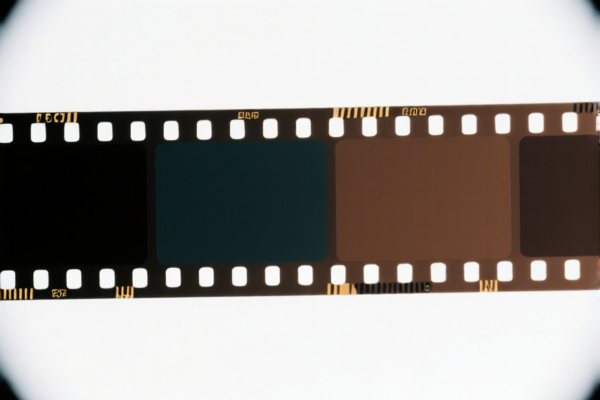
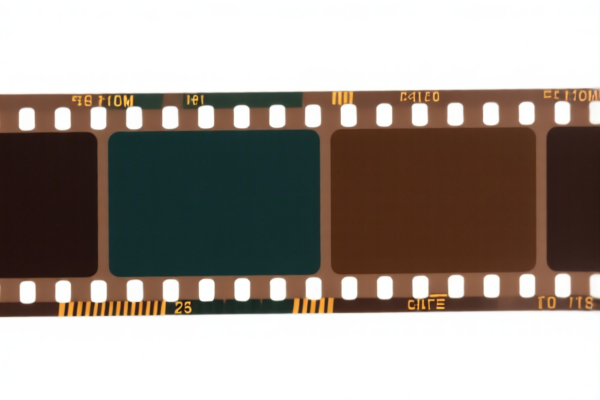
AI Analysis
🎞️ Professional Large Format Color Film for Photography
🌐 HS Code Reference & Customs Clearance Guide | 2026 Latest Tariff Analysis | Professional Clearance Strategy
📌 I. Product Definition & Classification: Do You Really Understand "Photographic Film"?
Professional Large Format Color Film is a specialized photosensitive medium used in high-end photography, architectural imaging, and studio work. In international trade, it is strictly categorized based on its material state, format, and processing status.
Key Distinctions: * Exposure Status: The product is unexposed and undeveloped (raw film stock). * Material Nature: It is a photosensitive medium, not merely a plastic film or industrial sheet. * Format: "Large Format" implies specific dimensions (often exceeding 105mm in width), but the core identity remains a photographic carrier.
⚠️ Critical Classification Point:
- If the film is color, non-paper base, and unexposed → It falls under Chapter 37 (Photographic Goods).
- If classified incorrectly as a generic plastic film (Chapter 39) → High Risk of Misdeclaration & Penalties.
📦 II. HS Code Classification Details (2026 Latest Tariff Authority Comparison)
Based on the provided data, here are the matched HS Codes, their logical justification, and applicable tax rates.
| HS Code | Classification Logic & Match Summary | Total Tax Rate | Tax Detail Breakdown |
|---|---|---|---|
| 3704.00.00.00 | Logic: Matches Material (Film) and Form (Photographic Carrier). Fits the characteristics of exposed/unexposed film used for photography. | 35.0% | Base Duty: 0.0% Additional Duty: 25.0% Section 122 Duty: 10% |
| 3702.31.01.00 | Logic: Successful Match. "Color" matches the Use Characteristic; "Film" belongs to the category of photosensitive rolls. Although width/perforation is not specified, it is inferred as a non-paper/plastic photosensitive medium based on common sense. No conflict in material or use. | 38.7% | Base Duty: 3.7% Additional Duty: 25.0% Section 122 Duty: 10% |
| 3702.52.01.30 | Logic: Matches Material (Color) and Form (Film). Since width and base material are unspecified, it is inferred as Color Reversal Film (Slide Film) based on common sense. No conflict in material or use. | 38.7% | Base Duty: 3.7% Additional Duty: 25.0% Section 122 Duty: 10% |
| 3921.90.50.50 | Logic: Matches Material (Plastic/Gelatin) and Form (Film/Film). Based on common sense, photographic film is a plastic-based thin film product, fitting the "Other Plastic Films" definition under this code. | 39.8% | Base Duty: 4.8% Additional Duty: 25.0% Section 122 Duty: 10% |
| 3921.90.40.90 | Logic: Successful Match. Form: "Film" (Film); Material: "Plastic" (Inferred from photographic film common sense). Fits the description of "Other Plastic Sheets, Films, Foils, and Strips." | 39.2% | Base Duty: 4.2% Additional Duty: 25.0% Section 122 Duty: 10% |
| 3702.44.01.60 | Logic: "Large Format" matches "Width > 105 mm"; "Photographic Film" matches "Light-sensitive Unexposed Film". Inferred that the material is non-paper/non-textile, fitting the "Other" category. | 38.7% | Base Duty: 3.7% Additional Duty: 25.0% Section 122 Duty: 10% |
🔍 Key Insight:
- The most accurate classifications for professional photography film are within Chapter 37 (3702 or 3704) because they specifically address photosensitive goods.
- Classifications under Chapter 39 (Plastic Films) are technically less precise and may be challenged by customs if the product's primary function is photographic, not just physical barrier/film. However, they are present in the data due to the physical composition (plastic base).
- Tax Rates Vary: From 35.0% to 39.8%, depending on the specific sub-category and how "base material" vs. "function" is interpreted.
💰 III. 2026 Latest Tariff Rate Detail (Including Surcharges & Policy Add-ons)
✅ Applicable Country: United States (US)
✅ Origin: China (CN)
✅ Effective Date: November 10, 2025 (and subsequent imports)
🎯 1. 3704.00.00.00 —— General Photographic Film (Unexposed/Undeveloped)
| Item | Content |
|---|---|
| Base Duty | 0.0% |
| USITC Additional Duty | +25% (from USITC Footnote 9903.88.01) |
| IEEPA Additional Duty | +10% (Against China/HK products, from Nov 10, 2025) |
| Total Rate | 35.0% |
| Tax Calculation | CIF Value × 35% |
| De Minimis Exemption | ❌ Not Available (deny_de_minimis) |
| Legal Basis Path | IEEPA:9903.01.25 → IEEPA:9903.01.24 → USITC:3704.00.00.00 → FOOTNOTE:9903.88.01 |
📌 Explanation:
- "USITC Additional Duty 25%" is the Section 301 tariff;
- "IEEPA 10%" is the emergency tariff against China;
- Total 35% is the lowest among the options, making this a cost-effective classification if technically justified.
🎯 2. 3702.31.01.00 / 3702.52.01.30 / 3702.44.01.60 —— Specific Color Photosensitive Films
| Item | Content |
|---|---|
| Base Duty | 3.7% |
| USITC Additional Duty | +25% |
| IEEPA Additional Duty | +10% |
| Total Rate | 38.7% |
| Tax Calculation | CIF Value × 38.7% |
| De Minimis Exemption | ❌ Not Available |
| Legal Basis Path | Similar to above, but linked to specific sub-headings in 3702 |
📌 Note:
- These codes apply to color films with specific widths or types (e.g., reversal film, large format).
- The 3.7% base duty adds to the total, making it 3.7% more expensive than the 0% base duty code (3704).
- Requires detailed specification of width and film type (negative vs. reversal).
🎯 3. 3921.90.50.50 / 3921.90.40.90 —— Other Plastic Films
| Item | Content |
|---|---|
| Base Duty | 4.2% ~ 4.8% |
| USITC Additional Duty | +25% |
| IEEPA Additional Duty | +10% |
| Total Rate | 39.2% ~ 39.8% |
| Tax Calculation | CIF Value × 39.2%~39.8% |
| De Minimis Exemption | ❌ Not Available |
📌 Warning:
- These codes treat the product as a general plastic film, ignoring its photosensitive function.
- Highest Tax Rate (up to 39.8%).
- High Risk: Customs may reject this classification because it misses the primary function (photography), leading to delays, reclassification, and potential penalties.
🛠️ IV. Customs Clearance Practical Advice (Battle-Tested Pitfall Guide)
✅ 1. Required Documentation Checklist (None Can Be Missing)
| Document | Mandatory | Description |
|---|---|---|
| ✅ Product Specification Sheet | ✔️ | Must include: Size (width/length), Speed (ISO), Base Type (Cellulose Triacetate/Polyester), Color Process (E-6 for reversal, C-41 for negative). |
| ✅ Product Photos | ✔️ | Clear images of the canister, packaging label showing "Color Negative/Reversal Film," and the product itself. |
| ✅ Commercial Invoice | ✔️ | Must state: "Professional Large Format Color Photographic Film, Unexposed, Not for Commercial Printing." |
| ✅ Packing List | ✔️ | Detail number of rolls, weight, and dimensions. |
| ✅ Origin Certificate (CO) | ✔️ | To confirm China origin (triggers 25%+10% tariffs). |
✅ 2. Declaration Tips (Key Mantra)
🔥 "Function First, Material Second. Declare as Photographic Goods, Not Plastic Rolls!"
| Scenario | Correct Declaration | Wrong Practice |
|---|---|---|
| Standard Color Film | HS Code 3702.xxxx (Specify type) | Misdeclare as 3921 (Plastic Film) → Higher Tax + Risk |
| Large Format Roll | Specify Width > 105mm in description | Vague description "Film" → Customs Query |
| Unexposed vs. Exposed | Clearly state "Unexposed/Undeveloped" | Omit status → Possible misclassification as "Photographic Print" |
| Professional Use | Mention "For Professional Photography" | Omit use → May be confused with industrial film |
✅ 3. Special Situation Handling
| Situation | Handling Advice |
|---|---|
| Mixed Sizes | Declare separately if possible. Large format (3702.44) vs. Standard (3702.31) have different base duties. |
| E-6 vs. C-41 | Explicitly state the development process. E-6 (Reversal) often falls under 3702.52; C-41 (Negative) under 3702.31. |
| Customs Query on Plastic Base | Provide Material Safety Data Sheet (MSDS) or technical data showing it is a photosensitive emulsion on a plastic base, not a plain plastic film. |
| High Value Shipment | Consider Advance Ruling to lock in the HS Code (preferably 3704.00.00.00 or specific 3702 codes) and avoid post-clearance audits. |
🌍 V. Global Market Clearance Comparison (2026 Latest)
| Country/Region | Recommended HS Code | Tariff | Certification | Notes |
|---|---|---|---|---|
| 🇺🇸 USA | 3702.xxxx or 3704.00 |
35.0% - 39.8% | None Specific | High tariff due to Section 301 + IEEPA. |
| 🇨🇳 China | 3702.xxxx |
~3.7% - 6% | CCC (if applicable) | Lower base duty. |
| 🇪🇺 EU | 3702.xxxx |
0% - 3% | None Specific | No Section 301 tariffs. |
| 🇬🇧 UK | 3702.xxxx |
0% - 3% | None Specific | Post-Brexit trade deals may apply. |
| 🇦🇺 Australia | 3702.xxxx |
5% | None Specific | Standard MFN rates. |
📌 Conclusion:
- USA is the most expensive market due to 35-40% total tariffs.
- EU/UK/Australia are more favorable with low or zero base duties.
- Recommendation: For US imports, optimize the HS Code choice (aim for 3704.00.00.00 at 35% if broadly applicable) and ensure perfect documentation to avoid delays.
📌 VI. Common Errors & Pitfall Guide (Lessons Learned)
❌ Error 1: Declaring as "Plastic Film" (HS 3921)
👉 Consequence: 39.2%-39.8% tax + High risk of customs rejection because the primary function (photosensitivity) is ignored.
❌ Error 2: Vague Description "Photographic Film"
👉 Consequence: Customs cannot determine if it's negative, reversal, or large format. Delay for additional info.
❌ Error 3: Ignoring "Large Format" Width
👉 Consequence: If width > 105mm, it should be classified under 3702.44, not general film. Misclassification leads to incorrect tax calculation.
❌ Error 4: Not Stating "Unexposed"
👉 Consequence: Could be mistaken for "Photographic Prints" (Chapter 3705) or "Developed Film," which have different tax rates and regulations.
✅ Correct Practice:
"Professional Large Format Color Negative Film, Unexposed, Width 120mm, ISO 400, C-41 Process, for Photographic Use Only."
🎯 VII. Conclusion: Precise Classification, Cost Efficiency, Smooth Clearance
🎯 Remember the Mantra:
🔹 "Photosensitive First, Plastic Second. Declare as 37xx, Not 39xx."
🔹 "Base Duty 0% is King, 3.7% is Queen. Avoid 4% Base if Possible."
🔹 "Total Tax 35% vs 40%: Every Percent Counts!"
📌 Pro Tip:
If your film is exclusively for professional large format and you can justify the broad category 3704.00.00.00, you save 3.7% base duty. However, if you have specific width/type data, use the specific 3702 codes to ensure compliance.
Always include technical specifications in the invoice to support your HS Code choice.
📣 Immediate Action:
📞 Contact a Professional Customs Broker + Provide Product Specs + Request Advance Ruling (if high volume).
🚀 Ensure Smooth Clearance, Avoid Penalties, Maximize Profit Margins!
✨ Professional Clearance Starts with Accurate Classification!
💼 Every Cent Saved is a Cent Earned!
Customer Reviews
About HS Code Classification
The Harmonized System (HS) is an internationally standardized nomenclature developed by the World Customs Organization (WCO) to classify traded products. Over 200 countries use the HS system as the basis for customs tariffs, trade statistics, and import/export regulations.
Each HS code follows a hierarchical structure:
- Chapter (2 digits) — Broad category of goods (e.g., Chapter 84: Machinery and Mechanical Appliances)
- Heading (4 digits) — More specific grouping within the chapter
- Subheading (6 digits) — Internationally standardized breakdown, used by all WCO member countries
- National subdivisions (8-10 digits) — Country-specific extensions for further classification, such as US HTSUS 10-digit codes
Correct HS code classification is essential for smooth customs clearance, accurate duty payment, and compliance with trade regulations. Misclassification can lead to customs delays, overpayment of duties, or penalties.
When importing from CN to US, the applicable tariff rates may include:
- Most-Favored-Nation (MFN) rate — The standard duty rate applied to WTO members
- General rate — Applied to countries without trade agreements
- Trade remedy duties — Additional tariffs such as Section 301 (anti-dumping), Section 232 (national security), or countervailing duties
The information provided on this page is for reference purposes only. For official classification, please consult with your local customs authority or a licensed customs broker.