Programming Card
CN → US| HS Code | Tariff Rate | Origin | Destination | Doc |
|---|---|---|---|---|
| 8471609030 | 35.0% | CN | US | Official Doc |
| 8542310075 | 10.0% | CN | US | Official Doc |
| 8523520090 | 35.0% | CN | US | Official Doc |
| 8523520010 | 35.0% | CN | US | Official Doc |
| 8471801000 | 35.0% | CN | US | Official Doc |
| 8542390090 | 60.0% | CN | US | Official Doc |
Product Images
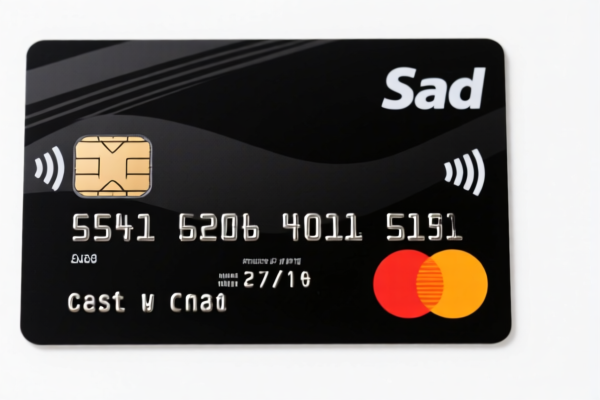
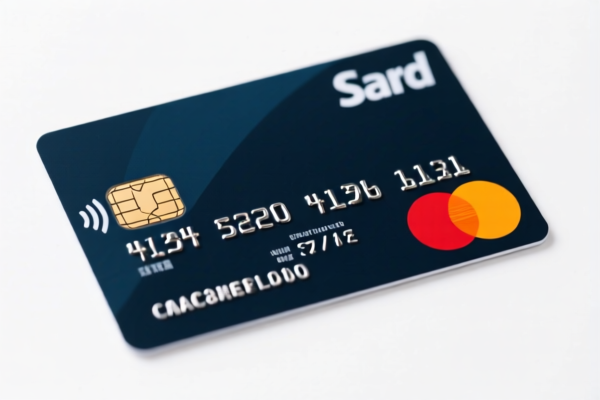
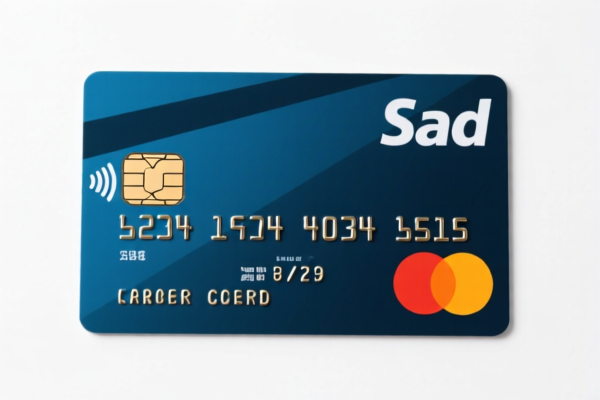
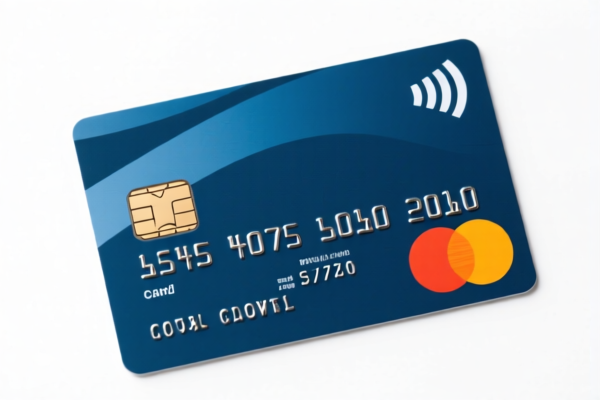
AI Analysis
💳 Programming Card (Programming Cards for Data Equipment)
🌐 HS Code Reference & Customs Clearance Guide | 2026 Latest Tariff Analysis | Professional Clearance Strategy
📌 I. Product Definition & Classification: Do You Really Understand "Programming Cards"?
A "Programming Card" is a generic trade term that typically refers to media or devices used to input, store, or configure data for electronic equipment. In international trade, its classification is highly ambiguous and depends entirely on its internal structure, material, and specific function. It can range from simple memory media to complex integrated circuits or input devices.
Key Ambiguity Points: * Is it a Storage Medium? (e.g., Smart Card, Semiconductor Media) → Chapter 8523 * Is it an Input Device? (e.g., Key/Magnetic Input Device for Computers) → Chapter 8471 * Is it an Integrated Circuit/Chip? (e.g., Logic Processor, Core Component) → Chapter 8542
⚠️ Critical Distinction:
- If it is a plug-in card for a computer to input data or act as a peripheral → 8471
- If it is a smart card/chip for data storage/programming → 8523
- If it is a standalone chip/IC functioning as a processor/controller → 8542
📦 II. HS Code Classification Details (2026 Latest Tariff Authoritative Mapping)
| HS Code | Product Description | Matching Logic & Summary | Total Tax Rate |
|---|---|---|---|
8471.60.90.30 |
Input/Media Devices for Automatic Data Processing Machines | Match Basis: The "Programming Card" functionally belongs to input/storage media for data processing equipment. It fits the specific attribute of "Card Keys & Magnetic Media Input Devices" with no material conflict. | 35.0% |
8542.31.00.75 |
Processors and Controllers (Other) | Inference: Based on the name "Programming Card," it is inferred to belong to electronic integrated circuits. Its function involves application logic for processors/controllers. In the absence of clear material conflicts, it fits the "Other" category's default matching principle. | 10.0% |
8523.52.00.90 |
Smart Cards & Other Media (Semiconductor) | Match Basis: Inferred material is semiconductor media, and the form is a medium for recording information. It fits the category of "Smart Cards" and other media, aligning with the "Other" category's default attribute. | 35.0% |
8523.52.00.10 |
Smart Cards (Semiconductor Media) | Match Basis: The "Programming Card" falls within the form scope of "Smart Cards." It is inferred to be semiconductor media (material match), and its use involves data programming, fitting the characteristics of unrecorded or recordable media. | 35.0% |
8471.80.10.00 |
Other Units of Automatic Data Processing Machines | Inference: The programming card is inferred to be a control or adaptation unit within an ADP machine, fitting its use attribute as a control/adaptation function for data processing equipment. | 35.0% |
8542.39.00.90 |
Other Integrated Circuits | Inference: Inferred to belong to the electronic integrated circuit field. Since it belongs to the "Other" category, and the programming card (core component of a programmer) has no obvious conflict in material and function with the integrated circuit field, it fits the default category matching principle. | 60.0% |
🔍 Key Reminder:
- The tax rate varies significantly (10% to 60%) depending on the exact functional definition. - 8542.39.00.90 carries the highest burden due to specific "Other IC" classifications often attracting higher punitive tariffs. - 8523 codes relate to the physical card/media itself, while 8471 relates to computer peripherals.
💰 III. 2026 Latest Tariff Rate Breakdown (Including Surcharges & Policy Add-ons)
✅ Applicable Country: United States (US)
✅ Origin: China (CN)
✅ Effective Time: From November 10, 2025 (including subsequent imports)
🎯 1. 8471.60.90.30 & 8471.80.10.00 — ADP Input Units & Other Units
| Item | Content |
|---|---|
| Base Tariff | 0.0% (ad valorem) |
| Section 301 Surcharge | +25.0% |
| IEEPA Surcharge (Section 122) | +10.0% |
| Total Tax Rate | 35.0% |
| Tax Calculation | CIF Value × 35% |
| De Minimis Exemption | ❌ Not Applicable (deny_de_minimis) |
| Legal Basis Path | USITC:8471.60.90.30 / 8471.80.10.00 + 301 Tariff: 25% + IEEPA: 10% |
📌 Explanation:
- These codes classify the card as a computer peripheral or ADP unit. - The 35% rate is a standard punitive combination for Chinese-origin tech hardware imported into the US.
🎯 2. 8523.52.00.10 & 8523.52.00.90 — Smart Cards / Semiconductor Media
| Item | Content |
|---|---|
| Base Tariff | 0.0% |
| Section 301 Surcharge | +25.0% |
| IEEPA Surcharge (Section 122) | +10.0% |
| Total Tax Rate | 35.0% |
| Tax Calculation | CIF Value × 35% |
| De Minimis Exemption | ❌ Not Applicable |
| Legal Basis Path | USITC:8523.52.00.x0 + 301 Tariff: 25% + IEEPA: 10% |
📌 Explanation:
- If the card is classified as smart media (like a SIM card, RFID, or programmable memory card), it falls here. - Despite being "media," it is still subject to the same 35% punitive tariff as computer hardware.
🎯 3. 8542.31.00.75 — Processors and Controllers (Specific)
| Item | Content |
|---|---|
| Base Tariff | 0.0% |
| Section 301 Surcharge | 0.0% |
| IEEPA Surcharge (Section 122) | +10.0% |
| Total Tax Rate | 10.0% |
| Tax Calculation | CIF Value × 10% |
| De Minimis Exemption | ❌ Not Applicable |
| Legal Basis Path | USITC:8542.31.00.75 + IEEPA: 10% |
📌 Explanation:
- This is the LOWEST rate. - If the "Programming Card" can be technically argued to be a Processor or Controller IC (specifically 8542.31), it avoids the 25% Section 301 tariff, retaining only the 10% IEEPA surcharge. - Strategy: This requires strong technical documentation proving it is an IC, not a peripheral or simple media.
🎯 4. 8542.39.00.90 — Other Integrated Circuits
| Item | Content |
|---|---|
| Base Tariff | 0.0% |
| Section 301 Surcharge | +50.0% |
| IEEPA Surcharge (Section 122) | +10.0% |
| Total Tax Rate | 60.0% |
| Tax Calculation | CIF Value × 60% |
| De Minimis Exemption | ❌ Not Applicable |
| Legal Basis Path | USITC:8542.39.00.90 + 301 Tariff: 50% + IEEPA: 10% |
📌 Explanation:
- This is the HIGHEST rate. - "Other" integrated circuits often face higher punitive tariffs (50% vs 25%) under specific trade enforcement actions. - Warning: Avoid this classification if possible. It makes the import cost prohibitive.
🛠️ IV. Customs Clearance Practical Advice (Combat Avoidance Guide)
✅ 1. Preparation Checklist (Essential)
| Document | Required | Description |
|---|---|---|
| ✅ Technical Datasheet | ✔️ | Must detail internal architecture: Is it a chip? A magnetic stripe? A microprocessor? |
| ✅ Block Diagram/Circuit Scheme | ✔️ | Crucial for proving if it is an Integrated Circuit (8542) vs. Peripheral (8471) or Media (8523). |
| ✅ Product Photos | ✔️ | Clear images of connectors, PCB layout, and labeling. |
| ✅ Commercial Invoice | ✔️ | Use precise terminology. Avoid vague "Card." Use "Programmable Logic Controller IC" or "Memory Media Card." |
| ✅ Origin Certificate | ✔️ | To confirm CN origin (triggering surcharges) or eligible free-trade origins. |
✅ 2. Declaration Strategy (Key Mantras)
🔥 "Define Function, Not Just Name: IC is Cheaper, Media is Middle, Peripheral is Standard."
| Scenario | Recommended HS Code | Risk Level | Reason |
|---|---|---|---|
| It's a Chip/Processor | 8542.31.00.75 |
🟢 Low Cost (10%) | If it can be proven to be a logic controller IC. |
| It's a Peripheral/Input Card | 8471.60.90.30 |
🟡 Medium Cost (35%) | Standard classification for computer add-ons. |
| It's a Memory/Smart Card | 8523.52.00.10 |
🟡 Medium Cost (35%) | Standard for smart media. |
| It's "Other" IC | 8542.39.00.90 |
🔴 High Cost (60%) | Avoid this "catch-all" for ICs; it attracts max penalties. |
✅ 3. Special Situations
| Situation | Handling Advice |
|---|---|
| OEM/Custom Design | Provide the client’s design specs. If the design is proprietary logic, argue for 8542.31 to get the 10% rate. |
| Mixed Shipment | If a box contains cards and other electronics, declare them separately. Do not lump them under one code to avoid misclassification audits. |
| Pre-Ruling | Highly Recommended. Apply for an Advance Ruling (APA) from US CBP before shipping. This locks in the HS Code and tax rate, preventing surprise audits. |
🌍 V. Global Market Comparison (2026 Latest)
| Country/Region | Recommended HS Code | Tariff (CN Origin) | Certification | Notes |
|---|---|---|---|---|
| 🇺🇸 USA | 8542.31.00.75 |
10% | FCC (if radio/complex) | Best Rate. Aim for IC classification. |
| 🇺🇸 USA | 8471.60.90.30 |
35% | FCC | Standard peripheral rate. |
| 🇺🇸 USA | 8542.39.00.90 |
60% | FCC | Avoid. |
| 🇨🇳 China | 8542.31.00.00 |
~5-10% | CCC | Lower domestic/import tax. |
| 🇪🇺 EU | 8542.31.00 |
0-4% | CE/RoHS | No Section 301/IEEPA equivalents. |
📌 Conclusion:
- The US market is the most punitive. The difference between 10% and 60% is 50 percentage points. - Strategic Priority: Try to classify the "Programming Card" as a Processor/Controller IC (8542.31) to secure the 10% rate. - If that is not technically feasible, fall back to 35% (8471or8523). Never accept8542.39unless necessary.
📌 VI. Common Errors & Pitfalls (Lessons Learned)
❌ Error 1: Declaring a Smart Card as 8542.39 (Other IC)
👉 Consequence: 60% Tax! Misclassifying media as "Other ICs" triggers the highest punitive tier.
❌ Error 2: Declaring a Processor Card as 8471 (Peripheral)
👉 Consequence: 35% Tax vs 10% Tax. You lose 25% in savings by not claiming its IC nature.
❌ Error 3: Using "Programming Card" on the Invoice without description
👉 Consequence: Customs will likely assign a default "Other" code, potentially 8542.39.00.90, leading to 60% tax and potential delays.
✅ Correct Action:
"Programmable Logic Controller Integrated Circuit, Model XYZ, for Industrial Automation, No Display, Semiconductor Based"
🎯 VII. Conclusion: Precise Classification Saves Money!
🎯 Remember the Mantra:
🔹 "IC is King (10%), Peripherals are Common (35%), Other ICs are Traps (60%)."
🔹 "One percentage point difference equals profit. One classification error equals 50% tax."
📌 Pro Tip:
If the card is not originally from China (e.g., Vietnam, Malaysia), the IEEPA 10% and potentially Section 301 tariffs may not apply or may be lower.
Action: Contact a professional customs broker immediately to file for an Advance Ruling based on your technical datasheet.
✨ Professional Clearance Starts with Precise Classification!
💼 Every cent of your cost deserves to be calculated accurately!
Customer Reviews
About HS Code Classification
The Harmonized System (HS) is an internationally standardized nomenclature developed by the World Customs Organization (WCO) to classify traded products. Over 200 countries use the HS system as the basis for customs tariffs, trade statistics, and import/export regulations.
Each HS code follows a hierarchical structure:
- Chapter (2 digits) — Broad category of goods (e.g., Chapter 84: Machinery and Mechanical Appliances)
- Heading (4 digits) — More specific grouping within the chapter
- Subheading (6 digits) — Internationally standardized breakdown, used by all WCO member countries
- National subdivisions (8-10 digits) — Country-specific extensions for further classification, such as US HTSUS 10-digit codes
Correct HS code classification is essential for smooth customs clearance, accurate duty payment, and compliance with trade regulations. Misclassification can lead to customs delays, overpayment of duties, or penalties.
When importing from CN to US, the applicable tariff rates may include:
- Most-Favored-Nation (MFN) rate — The standard duty rate applied to WTO members
- General rate — Applied to countries without trade agreements
- Trade remedy duties — Additional tariffs such as Section 301 (anti-dumping), Section 232 (national security), or countervailing duties
The information provided on this page is for reference purposes only. For official classification, please consult with your local customs authority or a licensed customs broker.