Propeller Blade
CN → US| HS Code | Tariff Rate | Origin | Destination | Doc |
|---|---|---|---|---|
| 8487100080 | 35.0% | CN | US | Official Doc |
| 8483908010 | 37.8% | CN | US | Official Doc |
| 8487100040 | 35.0% | CN | US | Official Doc |
| 8483905080 | 37.5% | CN | US | Official Doc |
Product Images
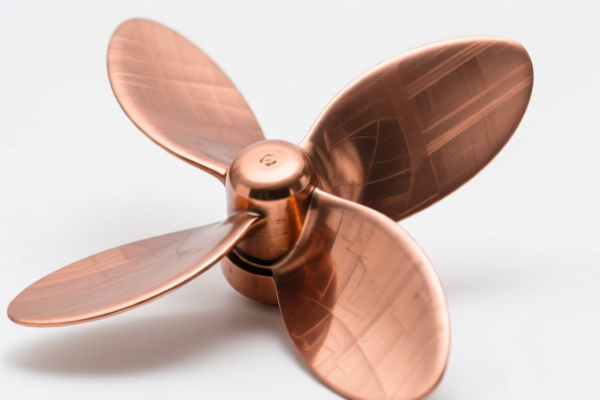
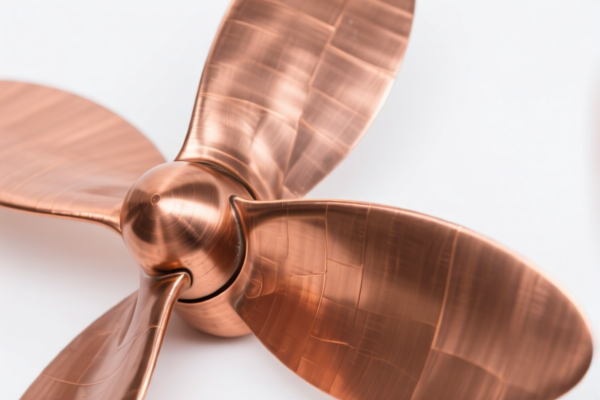
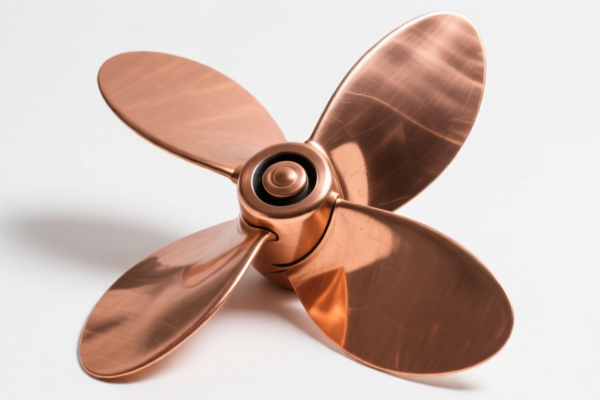
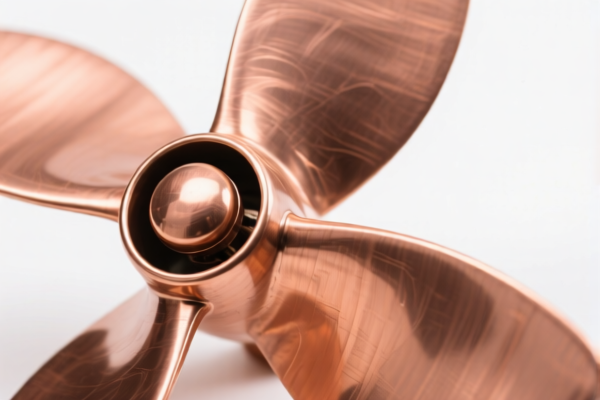
AI Analysis
🚢 Propeller Blade: HS Code Classification & US Import Strategy 2026
🌐 HS Code Reference & Customs Clearance Guide | 2026 Latest Tariff Analysis | Professional Clearance Strategy
📌 I. Product Definition: What Exactly is a "Propeller Blade"?
A Propeller Blade is a critical component of marine propulsion systems. In international trade, its classification depends heavily on its functional role and material composition. It is primarily viewed through two lenses: 1. As a Mechanical Part: As a component of transmission elements (gears, shafts, propellers) under Chapter 84. 2. As a Ship Part: As a specific part of ships/boats under Chapter 84 (heading 84.87 for parts of general machinery or 89.11/84.87 context depending on interpretation).
⚠️ Key Distinction:
- If classified as a Part of Transmission Elements (e.g., specific geared propellers) → Likely 8483.90.xx
- If classified as a Part of General Machinery/Other (broad ship parts not specified elsewhere) → Likely 8487.10.00
- Note: The specific 8-digit subheading depends on precise material and functional documentation.
📦 II. HS Code Classification Details (2026 Latest Tariff Reference)
Based on the provided data, here are the four potential HS Codes for Propeller Blades, with detailed tax breakdowns for imports into the USA from China.
| HS Code | Product Description & Logic | Total Tax Rate | Tax Breakdown (China Origin) |
|---|---|---|---|
| 8483.90.50.80 | Part of Transmission Elements: Propeller blades viewed as parts of geared propulsion systems. Typically metal/composite. | 37.5% | Base: 2.5% + Section 301: 25% + IEEPA 122: 10% |
| 8487.10.00.80 | Other Parts of Machinery: Classified under "Other" for mechanical parts. Matches usage for ships/boats entirely. | 35.0% | Base: 0.0% + Section 301: 25% + IEEPA 122: 10% |
| 8483.90.80.10 | Part of Transmission Elements (Other): Fits part morphology. Material inferred as metal/composite. | 37.8% | Base: 2.8% + Section 301: 25% + IEEPA 122: 10% |
| 8487.10.00.40 | Other Parts (Alternative): Matches morphology/usage. Material not explicitly conflicting. | 35.0% | Base: 0.0% + Section 301: 25% + IEEPA 122: 10% |
🔍 Critical Analysis:
- Lowest Tax Rate: 35.0% (HS Codes8487.10.00.80and8487.10.00.40)
- Highest Tax Rate: 37.8% (HS Code8483.90.80.10)
- Why the Difference? The base duty varies between 0%, 2.5%, and 2.8%. However, all include the flat 25% Section 301 Tariff and 10% IEEPA 122 Tariff.
💰 III. 2026 Latest Tariff Rate Details (Including Surcharges)
✅ Applicable Country: USA (US)
✅ Origin: China (CN)
✅ Effective Time: 2025/2026 (Current Trade Policy)
🎯 1. 8487.10.00.80 & 8487.10.00.40 — Optimal Classification (Lowest Duty)
| Item | Detail |
|---|---|
| Base Duty | 0.0% (Ad Valorem) |
| Section 301 Surcharge | +25.0% (From USITC Footnote 9903.88.01 / HTSUS 8487.10) |
| IEEPA 122 Surcharge | +10.0% (Targeted Chinese products, effective from late 2025) |
| Total Effective Rate | 35.0% |
| Tax Calculation | CIF Value × 35.0% |
| De Minimis Exemption? | ❌ NO (Denied: High tariff rate exceeds de minimis thresholds) |
| Legal Basis Path | HTSUS:8487.10.00.80 → SECTION301:9903.88.01 → IEEPA:9903.122 |
📌 Explanation:
- "Base 0%": Chapter 84 parts often have lower base rates if not specifically listed elsewhere. - "301 Tariff 25%": Mandatory for Chinese-made machinery parts. - "IEEPA 122 10%": Additional penalty for specific strategic goods/materials. - Total 35%: This is the most cost-effective classification among the options provided.
🎯 2. 8483.90.50.80 — Standard Transmission Part
| Item | Detail |
|---|---|
| Base Duty | 2.5% |
| Section 301 Surcharge | +25.0% |
| IEEPA 122 Surcharge | +10.0% |
| Total Effective Rate | 37.5% |
| Tax Calculation | CIF Value × 37.5% |
| De Minimis Exemption? | ❌ NO |
| Legal Basis Path | HTSUS:8483.90.50.80 → SECTION301 → IEEPA:9903.122 |
📌 Explanation:
- Slightly higher base duty (2.5%) pushes the total to 37.5%. - Recommended only if the propeller is strictly a geared transmission component rather than a general ship part.
🎯 3. 8483.90.80.10 — Other Transmission Parts (Highest Risk)
| Item | Detail |
|---|---|
| Base Duty | 2.8% |
| Section 301 Surcharge | +25.0% |
| IEEPA 122 Surcharge | +10.0% |
| Total Effective Rate | 37.8% |
| Tax Calculation | CIF Value × 37.8% |
| De Minimis Exemption? | ❌ NO |
| Legal Basis Path | HTSUS:8483.90.80.10 → SECTION301 → IEEPA:9903.122 |
📌 Explanation:
- Highest total tax (37.8%).
- Use only if no other transmission subheading fits the specific design.
🛠️ IV. Customs Clearance Practical Advice (Avoiding Pitfalls)
✅ 1. Documentation Checklist (Must-Haves)
| Document | Required? | Purpose |
|---|---|---|
| ✅ Product Specification Sheet | ✔️ | Must clearly state: Material (Metal/Composite), Dimensions, Weight, and Intended Use (Marine Propulsion). |
| ✅ Engineering Drawings | ✔️ | Proves the blade is a part of a propeller, not a standalone finished good. |
| ✅ Material Declaration | ✔️ | Confirms no restricted materials (e.g., specific alloys) that might trigger additional restrictions. |
| ✅ Commercial Invoice | ✔️ | Must describe as "Propeller Blade for Marine Vessel" not just "Metal Blade". |
| ✅ Packing List | ✔️ | Detail packaging to ensure damage-free transport (propeller blades are heavy/delicate). |
✅ 2. Declaration Strategy (Key Tips)
🔥 "Define Function, Specify Material, Avoid General Terms"
| Scenario | Correct Declaration | Incorrect Declaration | Risk |
|---|---|---|---|
| Standard Marine Propeller Blade | Propeller Blade, Aluminum Alloy, for Ship Propulsion System |
Metal Part or Machine Part |
High risk of misclassification → 37.8% or audit |
| Composite Blade (Carbon Fiber) | Propeller Blade, Carbon Fiber Composite, Marine Use |
Composite Material Sheet |
Misclassification as raw material (different HS) |
| Part of Geared Propeller | Part of Geared Propulsion System, Propeller Blade |
Transmission Part |
Too vague; may default to 8483.90.80.10 (37.8%) |
| General Ship Part | Propeller Blade, Spare Part for Marine Vessel |
Ship Part |
May be accepted under 8487.10 (35.0%) if justified |
📌 Pro Tip:
To secure the 35.0% rate, argue that the blade is a part of general machinery (Chapter 84, Note 2) or a part of ships not specifically listed in Heading 89.11. The term "Other" in8487.10is your friend if the blade doesn't fit strictly into "geared transmission" definitions.
✅ 3. Special Cases
| Situation | Recommendation |
|---|---|
| OEM Replacement Blades | Provide OEM authorization letter to prove they are genuine parts, not counterfeit. |
| Composite Materials | Ensure MSDS (Material Safety Data Sheet) is provided if materials contain hazardous compounds. |
| Large Yacht Blades | Verify if they fall under "Personal Use" vs. "Commercial". Commercial faces same tariffs. |
| Pre-Owned Blades | Must declare as "Used". Some ports may require additional inspection for biofouling (marine growth). |
🌍 V. Global Market Comparison (2026)
| Country/Region | Recommended HS Code | Est. Duty (China Origin) | Notes |
|---|---|---|---|
| 🇺🇸 USA | 8487.10.00.80 |
35.0% | Includes 301+IEEPA. Best option. |
| 🇪🇺 EU | 8487.10.00 |
~3-4% (Base) + Possible Anti-Dumping | Check for anti-dumping duties on steel/composite parts. |
| 🇨🇳 China | 8487.10.00 |
5-8% | Import duty for Chinese companies importing back. |
| 🇬🇧 UK | 8487.10.00 |
~3-4% | Post-Brexit tariffs apply. |
| 🇦🇺 Australia | 8487.10.00 |
5% | Free Trade Agreement (ChAFTA) may apply if from Chile/other. |
📌 Conclusion:
- The USA remains the most expensive market due to Section 301 and IEEPA tariffs.
- EU/UK have lower base rates but may have anti-dumping duties on steel/aluminum parts.
- Always verify anti-dumping cases for metal composite blades in Europe.
📌 VI. Common Mistakes & Pitfalls (Lessons Learned)
❌ Mistake 1: Classifying as "Machine Part" without specifying "Ship/Marine"
👉 Result: May be classified under 8483 (Transmission) with higher base duty → 37.5%-37.8%
❌ Mistake 2: Omitting Material Composition
👉 Result: Customs may assume steel → Higher scrutiny or different chemical restrictions.
❌ Mistake 3: Using "Propeller" instead of "Blade"
👉 Result: Propeller (assembled) might have different HS (8483.30). Blades are parts (8487 or 8483.90). Misdeclaration leads to penalties.
❌ Mistake 4: Ignoring IEEPA 122 Surcharge
👉 Result: Underpaying taxes by 10% → Back taxes + Fines upon audit.
✅ Correct Approach:
"Propeller Blade, Marine Grade, [Material], For Ship Propulsion System, Model [XYZ], Part of Assembly"
🎯 VII. Conclusion: Optimize Cost, Ensure Compliance
🎯 Key Takeaway:
🔹 Target HS Code:
8487.10.00.80or8487.10.00.40for the 35.0% total rate.
🔹 Avoid8483.90.80.10unless structurally mandatory, as it incurs 37.8%.
🔹 Always disclose material and end-use to prevent reclassification.
📌 Action Item:
📞 Consult a licensed customs broker for Advance Ruling if the blade's design is unique.
📄 Prepare detailed technical specifications to justify the8487.10classification.
✨ Smart Clearance, Lower Costs, Faster Delivery!
💼 Your Blade, Your Benefit – Get it Right the First Time!
Customer Reviews
About HS Code Classification
The Harmonized System (HS) is an internationally standardized nomenclature developed by the World Customs Organization (WCO) to classify traded products. Over 200 countries use the HS system as the basis for customs tariffs, trade statistics, and import/export regulations.
Each HS code follows a hierarchical structure:
- Chapter (2 digits) — Broad category of goods (e.g., Chapter 84: Machinery and Mechanical Appliances)
- Heading (4 digits) — More specific grouping within the chapter
- Subheading (6 digits) — Internationally standardized breakdown, used by all WCO member countries
- National subdivisions (8-10 digits) — Country-specific extensions for further classification, such as US HTSUS 10-digit codes
Correct HS code classification is essential for smooth customs clearance, accurate duty payment, and compliance with trade regulations. Misclassification can lead to customs delays, overpayment of duties, or penalties.
When importing from CN to US, the applicable tariff rates may include:
- Most-Favored-Nation (MFN) rate — The standard duty rate applied to WTO members
- General rate — Applied to countries without trade agreements
- Trade remedy duties — Additional tariffs such as Section 301 (anti-dumping), Section 232 (national security), or countervailing duties
The information provided on this page is for reference purposes only. For official classification, please consult with your local customs authority or a licensed customs broker.