Protective Clothing (HS Code 6506103075)
CN → US| HS Code | Tariff Rate | Origin | Destination | Doc |
|---|---|---|---|---|
| 2811 | 0.0% | CN | US | Official Doc |
| 1801 | 10.0% | CN | US | Official Doc |
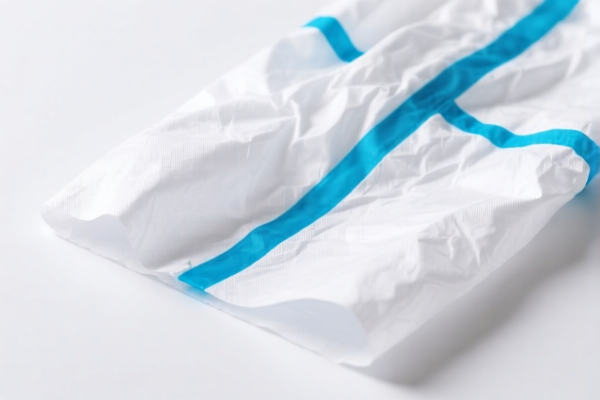
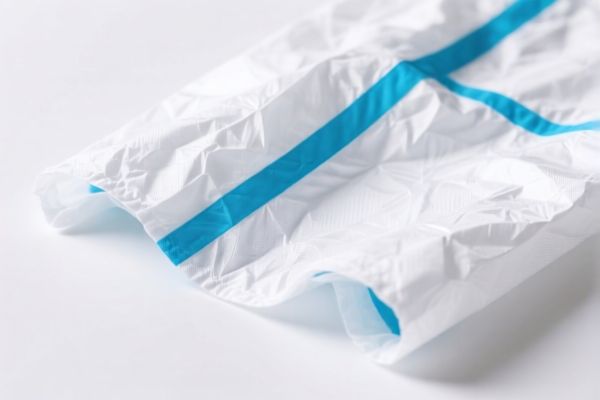
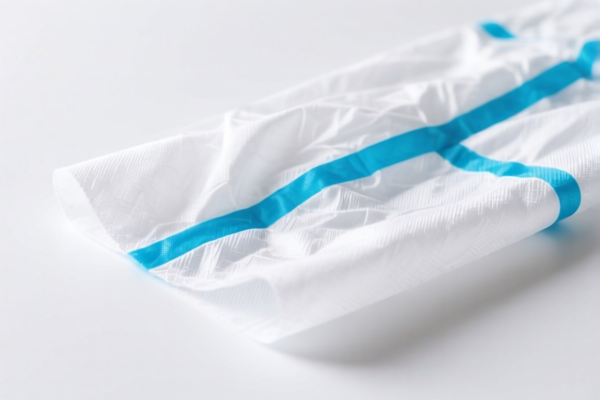
Product Images

AI Analysis
🛡️ Protective Clothing / Safety Helmets (HS Code 6506.10.30.75)
🌐 HS Code Deep Dive & Customs Clearance Guide | 2026 Latest Tariff Analysis | Specialized Compliance Strategy
📌 1. Product Definition & Classification: What exactly is 6506.10.30.75?
HS Code 6506.10.30.75 falls under the broader category of "Safety Helmets and other protective headgear." However, in the context of "Protective Clothing" import declarations, this code is specifically used for hard hats, safety helmets, and industrial head protection designed to protect against impact, penetration, and electrical shock.
⚠️ Critical Distinction:
- This code DOES NOT cover general workwear, coveralls, or high-visibility vests (which usually fall under Chapter 61 or 62, e.g., 6117 or 6211).
- It DOES cover rigid protective headgear (plastic, fiberglass, metal) and, in some jurisdictions, specific protective hoods if classified as part of the headgear assembly.
- If your product is a full-body suit without a helmet, do NOT use this code. Misclassification leads to severe penalties.🔍 Key Check:
- Is it a rigid shell? → Likely 6506.10.
- Is it a soft fabric hood/balaclava only? → Check Chapter 65 or 61/62 depending on material.
- Is it a full suit with integrated helmet? → The headgear portion may dictate the classification, or it may be split.
📦 2. HS Code Classification Details (2026 Latest Tariff Reference)
| HS Code | Product Description | Application Scenario | Material/Feature |
|---|---|---|---|
6506.10.30.75 |
Safety helmets (hard hats), protective, of plastic or other materials | Construction, mining, electrical utilities, industrial sites | Plastic/Fiberglass shell, internal suspension, impact-resistant |
6506.10.10.00 |
Other safety helmets (e.g., metal) | Heavy industry, specialized mining | Metal or composite |
6506.99.00.00 |
Other hats and headgear (non-safety) | Fashion, casual wear, non-protective | Any material |
6101.20.00.00 |
Men’s boys’ anoraks, windcheaters (protective outerwear) | General workwear | Fabric, synthetic |
6211.43.00.00 |
Trousers, bib and brace overalls, bib and brace workcoveralls | Industrial protective clothing | Synthetic fibers |
📌 Important Note:
- The suffix .30.75 often indicates a specific national subheading (e.g., in China or other Asian markets). For US Customs (HTSUS), the corresponding code is typically 6506.10.80.00 or 6506.10.00.00 depending on recent updates.
- Always verify the destination country’s tariff schedule. The provided code6506103075suggests a 10-digit code, likely from a country like China (where 6506.10.30.75 refers to plastic safety helmets).
💰 3. 2026 Latest Tariff Rate Analysis (US Context + China Origin)
✅ Applicable Country: United States (US)
✅ Country of Origin: China (CN)
✅ Effective Date: 2025-11-10 onwards (including subsequent imports)
🎯 1. 6506.10.80.00 (US HTSUS Equivalent of 6506.10.30.75)
(Plastic safety helmets)
| Item | Content |
|---|---|
| Base Tariff Rate | 0% (ad valorem) – Standard free rate for many safety goods |
| USITC Surcharge (Section 301) | +7.5% – From USITC Footnote 9903.70.00 |
| IEEPA Surcharge (China) | +10% – From IEEPA 9903.01.24 (effective Nov 2025) |
| Total Tariff Rate | 17.5% |
| Calculation Base | CIF Value × 17.5% |
| De Minimis Eligibility | ❌ Not Eligible (Deny De Minimis) – Section 321 (under $800) does NOT apply to goods subject to Section 301/IEEPA tariffs. |
| Legal Path | HTSUS:6506.10.80.00 → USITC:9903.70.00 → IEEPA:9903.01.24 |
📌 Explanation:
- While the base duty is 0%, the Section 301 tariffs still apply to safety helmets of Chinese origin.
- The IEEPA 10% surcharge is newly effective from November 10, 2025.
- Total Cost Impact: For a $10,000 shipment, you pay $1,750 in duties.
- No De Minimis Exemption: Small packages sent via USPS/UPS/FedEx are not exempt. This is a critical compliance point.
🎯 2. Comparison: Non-China Origin (e.g., Vietnam, USA)
| Item | Content |
|---|---|
| Base Tariff | 0% |
| Section 301 | 0% (Exempt) |
| IEEPA | 0% (Exempt) |
| Total Rate | 0% |
| De Minimis | ✅ Eligible (if under $800) |
📌 Strategy:
- If sourcing from Vietnam, Thailand, or Mexico, you can leverage 0% duty and De Minimis eligibility, significantly reducing costs and customs friction.
🛠️ 4. Customs Clearance Practical Advice (Avoid Pitfalls)
✅ 1. Required Documentation Checklist
| Document | Mandatory? | Notes |
|---|---|---|
| ✅ Commercial Invoice | ✔️ | Must clearly state: "Plastic Safety Helmet, Model XYZ, Cert. to ANSI Z89.1" |
| ✅ Packing List | ✔️ | Itemize quantities per color/size |
| ✅ Product Certifications | ✔️ | ANSI Z89.1 (US Standard) or EN 397 (EU Standard) is CRITICAL. US Customs may inspect for compliance. |
| ✅ FCC Declaration | ❌ | Not required unless electronic components (e.g., LED lights) are integrated. |
| ✅ Supply Chain Transparency | ✔️ | Declare country of origin precisely. Misdeclaring "Made in Vietnam" for "Made in China" is fraud. |
| ✅ IEEPA Compliance Statement | ✔️ | Some carriers require a statement confirming origin to apply the 10% IEEPA tax. |
✅ 2. Declaration Tips (Golden Rules)
🔥 "Declare Material, Declare Standard, Declare Origin!"
| Scenario | Correct Declaration | Incorrect Declaration |
|---|---|---|
| Standard Plastic Hard Hat | "Safety Helmet, Plastic, ANSI Z89.1, Made in China" | "Hard Hat" (too vague) |
| Electrical Insulated Helmet | "Class E Electrical Safety Helmet, Plastic, 20kV" | "Protective Gear" |
| Helmet with Visor Attached | "Safety Helmet with Polycarbonate Visor" | Split into "Helmet" + "Visor" (may trigger different codes) |
| Soft Fabric Balaclava | "Knitted Wool Balaclava, HTS 6101/6117" | HTS 6506.10 (Wrong chapter!) |
✅ 3. Special Cases & Warnings
| Situation | Recommendation |
|---|---|
| Integrating Electronics (e.g., heated helmet, LED) | May shift to Chapter 85 or 65.05. Consult classification expert. |
| Custom Logo Printing | Does not change HS Code. But ensure "Made in China" label is present on product/packaging. |
| Returns/Re-imports | If re-exporting, apply for HTS Subchapter 9802 relief if eligible. |
| Dropshipping from China | HIGH RISK: De Minimis ($800) is blocked for Section 301/IEEPA goods. Expect 17.5% duty + potential detention. |
🌍 5. Global Market Comparison (2026)
| Country | HS Code | Duty Rate (China Origin) | Certification Required | Notes |
|---|---|---|---|---|
| 🇺🇸 USA | 6506.10.80.00 |
17.5% | ANSI Z89.1 | IEEPA 10% + Sec 301 7.5% |
| 🇪🇺 EU | 6506.10.90 |
0% | EN 397 | No major surcharges |
| 🇨🇳 China | 6506.10.30.75 |
0% | GB 2811 | Import duty 0%, VAT 13% |
| 🇬🇧 UK | 6506.10.90 |
0% | UKCA/CE | Post-Brexit rules apply |
| 🇦🇺 Australia | 6506.10.90 |
5% | AS/NZS 1801 | GST 10% applies |
📌 Conclusion:
- USA is the most expensive market due to geopolitical tariffs.
- EU/UK/Australia remain tariff-free or low-tariff for safety helmets.
- Certification is as important as tariff: Non-compliant helmets (no ANSI/EN mark) will be seized, regardless of duty.
📌 6. Common Mistakes & Pitfalls (Blood Lessons)
❌ Mistake 1: Using De Minimis (Section 321) for small shipments from China
👉 Result: Customs blocks package, charges 17.5% + storage fees + penalty.
👉 Fix: Pay duty upfront or use a bond.
❌ Mistake 2: Misclassifying "Soft Helmets" (like cycling caps) as "Safety Helmets"
👉 Result: Duty evasion accusation if actual use is industrial.
👉 Fix: Use correct Chapter 61/65 for non-rigid headgear.
❌ Mistake 3: Ignoring ANSI Z89.1 Certification
👉 Result: US CBP may hold shipment for "lack of compliance" with safety standards.
👉 Fix: Provide test reports from accredited labs (e.g., Intertek, UL).
❌ Mistake 4: Combining Helmets with Non-Helmet PPE in One Line Item
👉 Result: Confusion on tariff application.
👉 Fix: Itemize separately:
- Line 1: Safety Helmet, 6506.10.80.00, 17.5% duty
- Line 2: Safety Gloves, 3926.90.90.90, 0% duty (if exempt)
✅ Correct Declaration Example:
"Plastic Safety Helmet, Type II, Class E, ANSI Z89.1 Certified, Made in China, Model SH-2025"
🎯 7. Conclusion: Professional Classification, Safe Clearance, Cost Control
🎯 Remember the Mantra:
🔹 "Hard Hat = 6506, Plastic = .80, China = 17.5%, No De Minimis!"
🔹 "Certify or Get Stopped: ANSI Z89.1 is Non-Negotiable for US Entry!"
📌 Pro Tip:
If you are importing >1000 units, consider:
1. Bonded Warehouse Entry: Delay duty payment until release.
2. First Sale Rule: If buying from a third party, prove first sale to reduce dutiable value.
3. Sourcing from Non-301 Countries: Shift supply chain to Vietnam/India to save 17.5%.
📣 Immediate Action:
📞 Contact a Licensed Customs Broker to file an ACE Entry for your first shipment.
📄 Attach ANSI/EN Certificates to your commercial invoice to prevent holds.
🚀 Avoid Surprise Duties: Calculate 17.5% into your landed cost from Day 1.
✨ Compliance is the Ultimate Competitive Advantage!
💼 Protect Your Cargo, Protect Your Profit!
Customer Reviews
About HS Code Classification
The Harmonized System (HS) is an internationally standardized nomenclature developed by the World Customs Organization (WCO) to classify traded products. Over 200 countries use the HS system as the basis for customs tariffs, trade statistics, and import/export regulations.
Each HS code follows a hierarchical structure:
- Chapter (2 digits) — Broad category of goods (e.g., Chapter 84: Machinery and Mechanical Appliances)
- Heading (4 digits) — More specific grouping within the chapter
- Subheading (6 digits) — Internationally standardized breakdown, used by all WCO member countries
- National subdivisions (8-10 digits) — Country-specific extensions for further classification, such as US HTSUS 10-digit codes
Correct HS code classification is essential for smooth customs clearance, accurate duty payment, and compliance with trade regulations. Misclassification can lead to customs delays, overpayment of duties, or penalties.
When importing from CN to US, the applicable tariff rates may include:
- Most-Favored-Nation (MFN) rate — The standard duty rate applied to WTO members
- General rate — Applied to countries without trade agreements
- Trade remedy duties — Additional tariffs such as Section 301 (anti-dumping), Section 232 (national security), or countervailing duties
The information provided on this page is for reference purposes only. For official classification, please consult with your local customs authority or a licensed customs broker.