Protective Cover
CN → US| HS Code | Tariff Rate | Origin | Destination | Doc |
|---|---|---|---|---|
| 8517790000 | 67.5% | CN | US | Official Doc |
| 8517130000 | 10.0% | CN | US | Official Doc |
| 4202929400 | 52.6% | CN | US | Official Doc |
| 4202929700 | 52.6% | CN | US | Official Doc |
| 4202929400 | 52.6% | CN | US | Official Doc |
Product Images
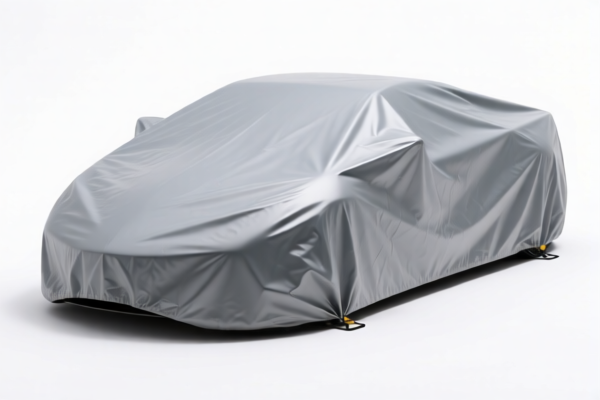
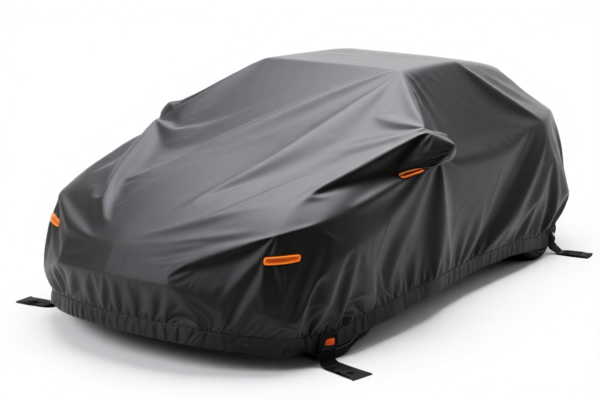
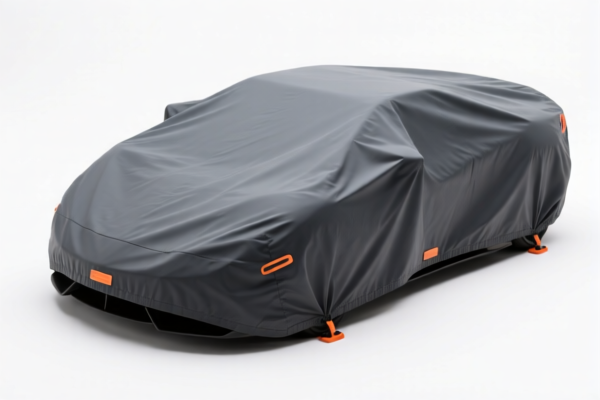
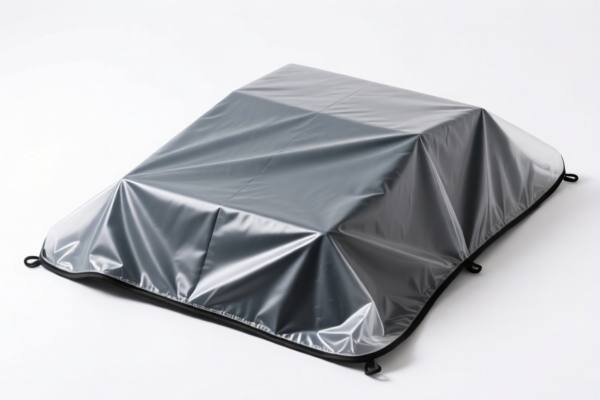
AI Analysis
📱 Protective Covers (Cases)
🌐 HS Code Reference & Customs Clearance Guide | 2026 Latest Tariff Analysis | Strategic Compliance Strategy
📌 I. Product Definition & Classification: What Exactly is a "Protective Cover"?
Protective covers are ubiquitous accessories designed to shield electronic devices (smartphones, tablets, communicators) or personal items from physical damage, scratches, and environmental factors. In international trade, classification is not determined solely by the name "cover," but by: 1. Function: Is it a communication accessory or a container? 2. Material: Plastic, silicone, textile, or leather? 3. Form: Rigid shell, flexible sleeve, or structured container?
⚠️ Critical Distinction Point:
- If it functions primarily as a part/accessory for communication equipment (e.g., a hard shell for a walkie-talkie or industrial communicator) → Chapter 85.
- If it functions primarily as a container/case for carrying or protecting goods (e.g., a soft case for a tablet, a cartoon-themed sleeve) → Chapter 42.
- Material Alone is Not Decisive: Plastic covers for tablets often fall under Chapter 42 if deemed "containers," while plastic parts for communication devices fall under Chapter 85.
📦 II. HS Code Classification Details (2026 Latest Tariff Authority Comparison)
Based on the provided data, here are the five possible classifications for "Protective Cover," each with distinct tariff implications.
| HS Code | Product Description | Application Scenario | Key Classification Logic |
|---|---|---|---|
8517.79.00.00 |
Other Parts & Accessories of Telecommunication Apparatus | Communication Equipment Parts: Hard plastic shells for walkie-talkies, industrial communicators, or phones where the case is integral to the device's function. | Primary Function: Part of the communication apparatus. |
8517.13.00.00 |
Shell Components for Telecommunication Equipment | Accessory Type: Specific shell-type components that fit the logic of accessories for data transmission machines. | Primary Function: Accessory/Component, not a standalone container. |
4202.92.94.00 |
Cartoon/Tablet Protective Covers (Plastic/Textile) | Container Type: Cases for tablets, phones, or general electronics with a "cartoon" or decorative design, made of plastic or textile materials. | Primary Function: Container/Case for carrying/protecting goods. |
4202.92.97.00 |
Cartoon Protective Covers (Plastic/Silicone) | Container Type: Similar to above, specifically inferring plastic or silicone material for "cartoon" styled cases. | Primary Function: Container/Case, decorative/cartoon theme. |
4202.92.94.00 |
Tablet Protective Covers (Plastic/Textile) | Container Type: Standard protective cases for tablets, focusing on protection utility. | Primary Function: Container/Case for electronics. |
🔍 Key Reminder:
- Chapter 85 (8517.xx) is generally LOW TARIFF (0% base) but subject to specific trade remedies.
- Chapter 42 (4202.xx) is HIGH TARIFF (17.6% base) due to being classified as "articles of apparel/accessories" or "containers."
- The same physical product (e.g., a plastic iPad case) can have vastly different tax rates depending on whether it is declared as a part of the computer (Ch 85) or a case/container for it (Ch 42).
💰 III. 2026 Latest Tariff Rate Breakdown (Including Additional Duties & Policy Surcharges)
✅ Applicable Country: United States (US)
✅ Origin: China (CN)
✅ Effective Date: Current trade remedies (Section 301, IEEPA)
🎯 1. 8517.79.00.00 – Parts of Telecommunication Apparatus
| Item | Content |
|---|---|
| Base Tariff | 0.0% |
| Section 301 / Additional Duty | 7.5% |
| Section 122 Duty | 10% |
| Steel/Aluminum/Copper Surcharge | 50% (If material composition triggers this clause) |
| Total Effective Rate | 7.5% to 77.5% (Highly dependent on material verification) |
| Tax Calculation | CIF Value × (Base + Additional + Surcharge) |
| De Minimis Exemption | ❌ Not Applicable (Commercial shipment) |
| Legal Basis | HTSUS:8517.79 → Section 301 → Section 122 |
📌 Explanation:
- Base 0%: Standard duty for communication parts is low.
- 7.5% Additional: Standard Section 301 surcharge for Chinese electronics accessories.
- 50% Steel/Aluminum Surcharge: CRITICAL! If the "plastic" cover contains metal hinges, clips, or reinforcements, this 50% surcharge may apply, spiking the total cost.
- 10% Section 122: Specific trade remedy duty.
🎯 2. 8517.13.00.00 – Shell Components (Accessories)
| Item | Content |
|---|---|
| Base Tariff | 0.0% |
| Section 301 / Additional Duty | 0.0% |
| Section 122 Duty | 10% |
| Total Effective Rate | 10.0% |
| Tax Calculation | CIF Value × 10% |
| De Minimis Exemption | ❌ Not Applicable |
| Legal Basis | HTSUS:8517.13 → Section 122 |
📌 Note:
- This is one of the most favorable classifications for plastic/electronic accessories.
- No Section 301 (7.5%) applies here, only the 10% Section 122 duty.
- Strategy: If the product is purely a communication accessory shell, argue for this classification to save 7.5% vs.8517.79.
🎯 3 & 4 & 5. 4202.92.94.00 & 4202.92.97.00 – Containers/Cases (Tablet/Cartoon Covers)
| Item | Content |
|---|---|
| Base Tariff | 17.6% |
| Section 301 / Additional Duty | 25.0% |
| Section 122 Duty | 10% |
| Total Effective Rate | 52.6% |
| Tax Calculation | CIF Value × 52.6% |
| De Minimis Exemption | ❌ Not Applicable |
| Legal Basis | HTSUS:4202.92 → Section 301 → Section 122 |
📌 Explanation:
- High Base Rate: 17.6% is the standard duty for "articles of apparel and clothing accessories, not knitted or crocheted; other containers."
- 25% Section 301: Heavy surcharge for Chinese-origin goods in this chapter.
- 10% Section 122: Additional trade remedy duty.
- Total 52.6%: This is a very high tariff burden. Importers must carefully justify why it is NOT a communication part (Ch 85).
🛠️ IV. Customs Clearance Practical Advice (Combat Avoidance Guide)
✅ 1. Required Documentation Checklist (Non-Negotiable)
| Document | Required? | Description |
|---|---|---|
| ✅ Product Specifications | ✔️ | Detailed material composition (100% plastic? Mixed?), dimensions, weight. |
| ✅ Usage Statement | ✔️ | Explicitly state: "Protective shell for [Model] Communicator" (Ch 85) vs. "Case for storing Tablet" (Ch 42). |
| ✅ Photos (Clear) | ✔️ | Front, back, inside, and close-up of material texture. |
| ✅ Bill of Lading / Invoice | ✔️ | Must match HS Code description exactly. |
| ✅ Material Safety Data Sheet (MSDS) | ✔️ | If containing any metal components or coatings, to prove no steel/aluminum content (avoiding 50% surcharge). |
✅ 2. Declaration Strategy (Key Mnemonic)
🔥 "Function Over Form: Part vs. Case!"
| Scenario | Correct Declaration | Incorrect Action |
|---|---|---|
| Hard shell for a walkie-talkie | 8517.79.00.00 or 8517.13.00.00 |
Declaring as "Case" → 52.6% |
| Soft silicone case for iPhone | 8517.79.00.00 (Part) |
Declaring as "Container" → 52.6% |
| Decorative cartoon case for iPad | 4202.92.94.00 |
Declaring as "Part" → Risk of rejection if not integral |
| Case with metal hinges | 8517.79.00.00 + Declare Metal Content |
Hiding metal content → 50% Surcharge triggered |
✅ 3. Special Situation Handling
| Situation | Handling Advice |
|---|---|
| Mixed Materials (Plastic + Metal) | If metal parts < 5%, argue for Ch 85. If >5%, be prepared for the 50% Steel/Aluminum surcharge on 8517.79. Consider removing metal parts if possible. |
| OEM Custom Cases | Provide the OEM contract and design files. If designed specifically for a communication device, Ch 85 is more defensible. |
| "Cartoon" or Decorative Designs | These lean towards Chapter 42 (4202.92) because they are seen as "accessories" rather than "parts." Be prepared for 52.6% unless you can prove functional necessity. |
| Pre-Order / Dropshipping | Ensure the HS Code on the commercial invoice matches the actual product. Mismatches lead to audits and penalties. |
🌍 V. Global Market Clearance Comparison (2026 Latest)
| Country/Region | Recommended HS Code | Tariff Rate (CN Origin) | Certification Required | Notes |
|---|---|---|---|---|
| 🇺🇸 USA | 8517.79.00.00 / 4202.92.94.00 |
7.5%–77.5% (Ch 85) 52.6% (Ch 42) |
FCC (if comms device), RoHS | Highest complexity. Section 122 & 301 apply heavily. |
| 🇨🇳 China | 8517.79.00.00 / 4202.92.94.00 |
0% - 5% (Most) | CCC (if applicable) | Low entry barrier. |
| 🇪🇺 EU | 8517.70.00 / 4202.92.00 |
0% - 4% (GSP/FTA if avail) | CE, RoHS, REACH | No Section 122 equivalent. Focus on safety compliance. |
| 🇬🇧 UK | 8517.70.00 / 4202.92.00 |
0% - 4% | UKCA, RoHS | Post-Brexit rules similar to EU. |
| 🇯🇵 Japan | 8517.70.00 / 4202.92.00 |
0% - 3% | PSE (if electronics) | No major surcharges. |
📌 Conclusion:
- USA is the most challenging market due to the layered duties (Base + 301 + 122 + Metal Surcharge).
- Chapter 85 is significantly cheaper than Chapter 42 for electronic accessories.
- Chapter 42 (52.6%) is often a trap for "decorative" cases. If the case is purely for style, 52.6% is unavoidable. If it is functional protection, fight for Ch 85.
📌 VI. Common Mistakes & Pitfalls (Blood & Tears Lessons)
❌ Mistake 1: Declaring a plastic phone case as "Case for Storage" (4202.92) instead of "Part of Phone" (8517.79).
👉 Consequence: Tax jumps from 10% to 52.6%. Loss of 42.6% profit margin!
❌ Mistake 2: Ignoring metal components in plastic covers.
👉 Consequence: If the cover has metal screws or clips, the 50% Steel/Aluminum surcharge on 8517.79 may apply, resulting in a 77.5% total duty.
❌ Mistake 3: Using vague terms like "Cover" or "Case" on the invoice.
👉 Consequence: Customs will inspect, detain the cargo, and may reclassify it to the highest applicable rate (4202.92 at 52.6%).
❌ Mistake 4: Assuming "Plastic" means "No Metal Surcharge."
👉 Consequence: Many "plastic" covers have metal reinforcement frames. If not declared, penalties apply.
✅ Correct Practice:
"Plastic Protective Shell for Model X Communicator, Part No. 123, 100% Plastic, No Metal Components"
OR
"Cartoon-themed Plastic Case for iPad, Decorative Accessory, Chapter 42 Compliant"
🎯 VII. Conclusion: Precision Classification Saves Money!
🎯 Remember the Golden Rules:
🔹 "Function First: Is it a PART or a CONTAINER?"
🔹 "Part = Ch 85 (Low Tax) vs. Case = Ch 42 (High Tax)"
🔹 "Watch for Metal: It triggers the 50% Surcharge!"
🔹 "52.6% vs. 10%: A 42.6% Difference Can Make or Break Your Margin!"
📌 Pro Tip:
If your product is a standard hard shell for a phone or communicator, always push for 8517.79.00.00 or 8517.13.00.00.
If it is a soft, decorative, or cartoon case, it will likely fall under 4202.92.94.00 at 52.6%.
Consider redesigning decorative cases to be more "integral" to the device (e.g., with mounting clips) to argue for Ch 85, if legally permissible.
📣 Immediate Action:
📞 Engage a Customs Broker: Provide photos and material specs.
📄 Request an Advance Ruling: If the shipment volume is high, apply for a pre-classification ruling from US CBP.
🚀 Optimize Your Supply Chain: Understand that 1 HS Code digit can change your cost by 40%+.
✨ Professional Clearance Starts with Precise Classification!
💼 Every Percentage Point of Tariff is Pure Profit Lost!
Customer Reviews
About HS Code Classification
The Harmonized System (HS) is an internationally standardized nomenclature developed by the World Customs Organization (WCO) to classify traded products. Over 200 countries use the HS system as the basis for customs tariffs, trade statistics, and import/export regulations.
Each HS code follows a hierarchical structure:
- Chapter (2 digits) — Broad category of goods (e.g., Chapter 84: Machinery and Mechanical Appliances)
- Heading (4 digits) — More specific grouping within the chapter
- Subheading (6 digits) — Internationally standardized breakdown, used by all WCO member countries
- National subdivisions (8-10 digits) — Country-specific extensions for further classification, such as US HTSUS 10-digit codes
Correct HS code classification is essential for smooth customs clearance, accurate duty payment, and compliance with trade regulations. Misclassification can lead to customs delays, overpayment of duties, or penalties.
When importing from CN to US, the applicable tariff rates may include:
- Most-Favored-Nation (MFN) rate — The standard duty rate applied to WTO members
- General rate — Applied to countries without trade agreements
- Trade remedy duties — Additional tariffs such as Section 301 (anti-dumping), Section 232 (national security), or countervailing duties
The information provided on this page is for reference purposes only. For official classification, please consult with your local customs authority or a licensed customs broker.