Protective Glasses
CN → US| HS Code | Tariff Rate | Origin | Destination | Doc |
|---|---|---|---|---|
| 9004900010 | 20.0% | CN | US | Official Doc |
| 3926909950 | 22.8% | CN | US | Official Doc |
| 3926909989 | 22.8% | CN | US | Official Doc |
| 9004900090 | 20.0% | CN | US | Official Doc |
| 9003110000 | 20.0% | CN | US | Official Doc |
Product Images
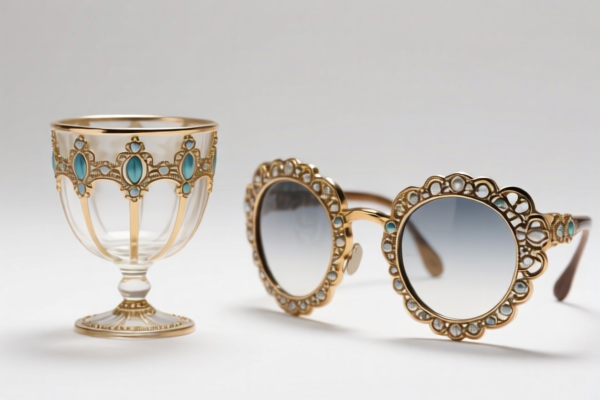


AI Analysis
👓 Protective Glasses (Eye Protection & Anti-Blue Light)
🌐 HS Code Reference & Customs Clearance Guide | 2026 Latest Tariff Analysis | Professional Entry Strategies
📌 I. Product Definition and Classification: What Exactly Are "Protective Glasses"?
Protective glasses, in international trade, are broadly categorized based on their primary function and material composition. The distinction is critical because it determines whether the item is treated as "optical apparatus" (lower base duty) or "plastic articles" (higher base duty), especially under US-China trade tensions.
Optical Eye Protection (Medical/Safety Standards):
Items designed primarily to protect eyes from physical hazards (impact, UV, chemical splash) or specific light spectrums (blue light), meeting ISO 12312-1 or similar safety standards. These fall under Chapter 90 (Optical Instruments).
Plastic Face Shields/Masks:
Items that resemble glasses but are essentially molded plastic barriers, often lacking precise optical correction or safety certifications. These fall under Chapter 39 (Plastics).
⚠️ Key Distinction Point:
- If the product is marketed as "Safety Goggles," "Anti-Blue Light Glasses," or "UV Protection Sunglasses" with lens specifications → It leans towards Chapter 90 (HS 9004).
- If the product is a "Plastic Face Shield," "Clear Mask," or generic plastic visor without specific optical certification → It leans towards Chapter 39 (HS 3926).
📦 II. HS Code Classification Details (2026 Latest Tariff Authority Comparison)
Based on the provided data, here are the five most likely HS Codes for "Protective Glasses," along with their logic and tax implications.
| HS Code | Product Description | Summary/Logic | Total Tax Rate (US/CN) |
|---|---|---|---|
9004.90.00.10 |
Protective Glasses / Safety Goggles | Classified as Goggles or Protective Eyewear. Fits the functional category of eye protection without prescription lenses. | 20.0% |
9004.90.00.90 |
Other Spectacles / Safety Glasses | Classified as Other Eyewear/Glasses. No material conflict; assumes standard optical frame/lens assembly. | 20.0% |
9003.11.00.00 |
Frames for Anti-Blue Light Glasses | Classified as Plastic Frames. Specifically for the frame components of blue-light glasses. | 20.0% |
3926.90.99.50 |
Plastic Face Shields / Visors | Classified as Plastic Masks/Face Shields. Assumes the item is a molded plastic barrier rather than precision optical gear. | 22.8% |
3926.90.99.89 |
Other Plastic Articles (Plastic Glasses) | Catch-all for Plastic. If proven to be purely plastic with no optical function, it falls here. | 22.8% |
🔍 Critical Note:
- Chapter 90 (9004/9003) items have a lower base tariff (2.5%) but are still heavily affected by additional duties.
- Chapter 39 (3926) items have a higher base tariff (5.3%), leading to a higher total tax burden.
- Misclassification Risk: Declaring a plastic face shield as "Protective Glasses" (9004) to save tax can lead to customs penalties if the product lacks optical certification.
💰 III. 2026 Latest Tariff Rate Breakdown (Including Additional Duties)
✅ Applicable Country: United States (US)
✅ Country of Origin: China (CN)
✅ Effective Date: Current US-China Trade Policy (Section 301 + IEEPA)
The total tax rate is composed of three distinct components. It is crucial to understand that "Total Tax" is not just a single number but a sum of specific legal provisions.
🎯 1. 9004.90.00.10 & 9004.90.00.90 – Optical Protective Glasses
Target: Safety Goggles, UV Sunglasses, Sports Eyewear
| Component | Rate | Source/Explanation |
|---|---|---|
| Base Tariff | 2.5% | Standard Most Favored Nation (MFN) rate for eyewear (Chapter 90). |
| Section 301 Surcharge | 7.5% | Additional duty under US Trade Act Section 301 (List 3/4B items). |
| Section 122 Tariff | 10.0% | Specific additional tariff applicable to certain goods from China. |
| Total Effective Rate | 20.0% | 2.5% + 7.5% + 10% = 20% |
📌 Explanation:
- These items are considered "consumer goods" but not high-tech strategic items, hence the 7.5% Section 301 rate (not the higher 25%).
- The 10% Section 122 tariff is a specific add-on.
- Total Cost Impact: For every $1,000 CIF value, you pay $200 in duties.
🎯 2. 9003.11.00.00 – Frames for Anti-Blue Light Glasses
Target: Prescription Frames, Blue-Light Filter Frames
| Component | Rate | Source/Explanation |
|---|---|---|
| Base Tariff | 2.5% | MFN rate for spectacle frames. |
| Section 301 Surcharge | 7.5% | Section 301 additional duty. |
| Section 122 Tariff | 10.0% | Specific additional tariff. |
| Total Effective Rate | 20.0% | 2.5% + 7.5% + 10% = 20% |
📌 Explanation:
- Frames are grouped with eyewear for tariff purposes.
- Cost Impact: Same as above, $200 per $1,000 CIF.
🎯 3. 3926.90.99.50 & 3926.90.99.89 – Plastic Face Shields / Visors
Target: Plastic Barriers, Non-Optical Clear Masks
| Component | Rate | Source/Explanation |
|---|---|---|
| Base Tariff | 5.3% | MFN rate for other plastic articles. |
| Section 301 Surcharge | 7.5% | Section 301 additional duty. |
| Section 122 Tariff | 10.0% | Specific additional tariff. |
| Total Effective Rate | 22.8% | 5.3% + 7.5% + 10% = 22.8% |
📌 Explanation:
- The higher base rate (5.3%) makes this category more expensive than optical goods.
- Cost Impact: For every $1,000 CIF value, you pay $228 in duties.
- Risk: If customs determines your "plastic shield" is actually "protective eyewear," they may reclassify it to 9004, but if you under-declared value, penalties apply.
🛠️ IV. Customs Clearance Practical Advice (Avoid Pitfalls)
✅ 1. Document Preparation Checklist (Mandatory)
| Document | Required? | Purpose |
|---|---|---|
| ✅ Product Catalog/Spec Sheet | ✔️ | Must clearly state: "Protective Glasses," "UV Blocking," "Impact Resistant," or "Plastic Face Shield." |
| ✅ Material Declaration | ✔️ | Specify lens material (Polycarbonate, Trivex, CR-39) vs. frame material. Crucial for distinguishing Ch. 90 vs. Ch. 39. |
| ✅ Certification/Testing Report | ✔️ | ISO 12312-1 (Sunglasses), ANSI Z87.1 (Safety Goggles), or EN 166. This proves optical/protective function → Supports 9004 classification. |
| ✅ Commercial Invoice | ✔️ | Must explicitly list "Protective Glasses" or "Plastic Face Shield." Avoid vague terms like "Eye Gear." |
| ✅ Packing List | ✔️ | Detail individual units. If sold in bulk, specify packaging type. |
✅ 2. Declaration Strategy (Key Tips)
🔥 "Function Defines Function, Material Defines Material"
| Scenario | Recommended HS Code | Declaration Description | Why? |
|---|---|---|---|
| Safety Goggles (Impact/Chemical) | 9004.90.00.10 |
"Safety Goggles, Polycarbonate Lens, ANSI Z87.1 Certified" | Clearly optical/protective function. Lower base tax (2.5%). |
| Anti-Blue Light Eyewear | 9004.90.00.90 |
"Anti-Blue Light Spectacles, Plastic Frame, UV400 Protection" | Functional eyewear. Supports 9004 classification. |
| Plastic Face Shield (No Lens) | 3926.90.99.50 |
"Plastic Face Shield, Clear Visor, No Optical Correction" | Clearly a plastic barrier, not an optical instrument. Avoids 9004 scrutiny. |
| Glasses Frames Only | 9003.11.00.00 |
"Spectacle Frames, Plastic, for Blue Light Lenses" | Explicitly frames. Supports 9003 classification. |
⚠️ Warning:
- Do NOT declare a clear plastic face shield as "Protective Glasses" (9004) if it lacks optical lenses or safety certifications. Customs may reject the entry or impose higher duties based on reclassification.
- Do NOT declare optical glasses as "Plastic Articles" (3926) to avoid Section 301 scrutiny. The base tax is higher anyway (5.3% vs 2.5%).
✅ 3. Special Circumstances
| Situation | Handling Advice |
|---|---|
| OEM Private Label | Provide brand authorization and product design files to prove origin and specifications. |
| Mixed Shipments (Glasses + Shields) | Split the invoice. Declare glasses under 9004 and shields under 3926. Mixing them can cause the entire shipment to be audited. |
| Medical vs. Cosmetic | If marketed as "medical protective eyewear" for hospitals, provide medical device registration if required. If "cosmetic sunglasses," ensure compliance with FTC guidelines. |
| Kit Sets (Frame + Lens) | Declare as "Complete Spectacles" under 9004.90.00.90. Do not split unless legally permissible. |
🌍 V. Global Market Clearance Comparison (2026 Latest)
| Country/Region | Recommended HS Code | Estimated Duty (CN Origin) | Key Certification | Note |
|---|---|---|---|---|
| 🇺🇸 USA | 9004.90.00.10 / 3926.90.99.50 |
20.0% (Optical) 22.8% (Plastic) |
ANSI Z87.1, ISO 12312 | High additional duties (Section 301 + 122) |
| 🇨🇳 China | 9004.90.00 / 3926.90.99 |
5% - 10% | CCC (if applicable) | No Section 301 retaliation |
| 🇪🇺 EU | 9004.90 / 3926.90 |
0% - 4.5% | CE Mark, EN 166 | Generally lower duties; focus on CE compliance |
| 🇬🇧 UK | 9004.90 / 3926.90 |
0% - 4.5% | UKCA Mark | Post-Brexit rules apply; CE still widely accepted |
| 🇦🇺 Australia | 9004.90 / 3926.90 |
5% | SAA / AS/NZS | Generally low duties; no major retaliatory tariffs |
📌 Conclusion:
- USA is the most complex market due to Section 301 and Section 122 tariffs. Accurate classification is financially critical.
- EU/UK/Australia are more straightforward, with lower base duties. Focus on CE/UKCA/AS certifications rather than tariff optimization.
📌 VI. Common Mistakes & Pitfalls (Lessons Learned)
❌ Mistake 1: Calling a "Plastic Face Shield" a "Protective Goggle" to get 20% tax instead of 22.8%.
👉 Consequence: If customs inspects and finds no optical lens or safety certification, they will reclassify to 3926 and charge the difference + penalties. Not worth the risk.
❌ Mistake 2: Declaring "Blue Light Glasses" as "Plastic Frames" (9003) when they include lenses.
👉 Consequence: Incomplete declaration. Customs may require a full amendment or reject the entry. Must declare the complete article.
❌ Mistake 3: Ignoring the Section 122 Tariff in calculations.
👉 Consequence: Many importers only account for Base + Section 301. The 10% Section 122 is a separate line item. Missing it leads to underpayment and interest charges.
❌ Mistake 4: Using vague terms like "Eye Care Product" or "Vision Aid" on the Invoice.
👉 Consequence: Customs will ask for clarification, causing hold-ups and storage fees. Be specific: "Safety Goggles" or "Plastic Face Shield."
✅ Correct Practice:
"Protective Safety Goggles, Polycarbonate Lens, UV400, ANSI Z87.1 Certified, Model PG-100"
OR
"Clear Plastic Face Shield, No Optical Correction, Medical Grade, Model FS-200"
🎯 VII. Conclusion: Precise Classification, Cost Control
🎯 Key Takeaways:
🔹 Optical/Protective Function → HS 9004/9003 → 20% Total Tax.
🔹 Plastic Barrier/Mask → HS 3926 → 22.8% Total Tax.
🔹 Always Provide Certification: ISO/ANSI/EN to justify Chapter 90 classification.
🔹 Separate Mixed Shipments: Do not mix goggles and face shields in one HS line.
📌 Pro Tip:
If you are exporting to the US, consider applying for an Exclusion (if applicable) or Advance Ruling for new product lines.
For China Origin, the 10% Section 122 and 7.5% Section 301 are unavoidable for most consumer goods. Focus on value-added features (e.g., medical certification) to justify the higher classification if needed, or optimize packaging to reduce CIF value impact.
📣 Action Required:
📞 Contact your customs broker with:
1. Product Photos (Front, Side, Lens Detail)
2. Material Specification Sheet
3. Certification Reports (ANSI/ISO/CE)
✅ Goal: Secure the correct HS Code and avoid costly reclassification at the port.
✨ Professional Clearance Starts with Accurate Classification!
💼 Every Percentage Point Saved is Pure Profit!
Customer Reviews
About HS Code Classification
The Harmonized System (HS) is an internationally standardized nomenclature developed by the World Customs Organization (WCO) to classify traded products. Over 200 countries use the HS system as the basis for customs tariffs, trade statistics, and import/export regulations.
Each HS code follows a hierarchical structure:
- Chapter (2 digits) — Broad category of goods (e.g., Chapter 84: Machinery and Mechanical Appliances)
- Heading (4 digits) — More specific grouping within the chapter
- Subheading (6 digits) — Internationally standardized breakdown, used by all WCO member countries
- National subdivisions (8-10 digits) — Country-specific extensions for further classification, such as US HTSUS 10-digit codes
Correct HS code classification is essential for smooth customs clearance, accurate duty payment, and compliance with trade regulations. Misclassification can lead to customs delays, overpayment of duties, or penalties.
When importing from CN to US, the applicable tariff rates may include:
- Most-Favored-Nation (MFN) rate — The standard duty rate applied to WTO members
- General rate — Applied to countries without trade agreements
- Trade remedy duties — Additional tariffs such as Section 301 (anti-dumping), Section 232 (national security), or countervailing duties
The information provided on this page is for reference purposes only. For official classification, please consult with your local customs authority or a licensed customs broker.