Protective Pad
CN → US| HS Code | Tariff Rate | Origin | Destination | Doc |
|---|---|---|---|---|
| 6304910170 | 23.3% | CN | US | Official Doc |
| 4016990500 | 20.9% | CN | US | Official Doc |
| 3926909950 | 22.8% | CN | US | Official Doc |
| 3926909989 | 22.8% | CN | US | Official Doc |
| 4016996050 | 37.5% | CN | US | Official Doc |
Product Images
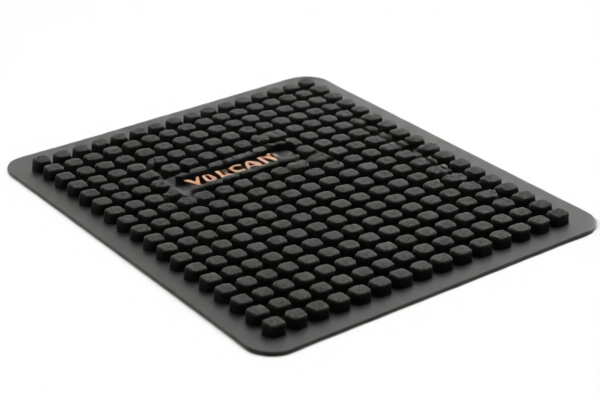
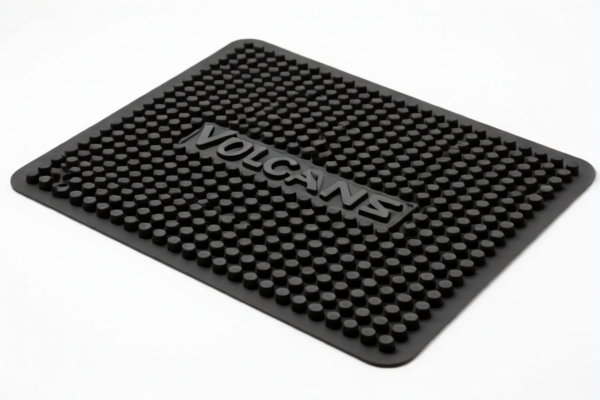
AI Analysis
🛡️ Protective Pad (Protective Pads, Mats, and Liners)
🌐 HS Code Reference & Clearance Guide | 2026 Latest Tariff Analysis | Professional Customs Strategy
📌 I. Product Definition & Classification: Do You Know What Kind of "Pad" It Is?
Protective Pads are a broad category of goods used to cushion, isolate, or protect other objects. In international trade, their classification is highly dependent on material composition and specific usage. Unlike electronics or textiles, there is no single "Protective Pad" HS code. Instead, customs authorities classify them based on the primary material (Rubber, Plastic, Knitted Fabric, etc.).
⚠️ Critical Distinction Point:
- If the pad is made of knitted/hooked fabric (e.g., cushion covers, decorative linings) → It falls under Chapter 63.
- If the pad is made of rubber (e.g., anti-slip mats, industrial gaskets) → It falls under Chapter 40.
- If the pad is made of plastic/synthetic (e.g., EVA foam mats, medical positioning pads, transport cushions) → It falls under Chapter 39.
📦 II. HS Code Classification Details (Based on Provided Data)
| HS Code | Product Description & Summary | Primary Material | Typical Application |
|---|---|---|---|
6304.91.01.70 |
Other Furnishing Articles of Knitted or Crocheted Material: Based on product name inference, the form belongs to the category of furniture decoration/supplies, fitting the bottom-level category for other materials knitted or crocheted furniture supplies. | Knitted/Crocheted Fabric | Furniture pads, decorative cushion liners, knitted protective covers |
4016.99.05.00 |
Other Vulcanized Rubber Articles: By inferring product use, the material is usually rubber or plastic, fitting the bottom-level attribute of vulcanized rubber products. | Vulcanized Rubber | Anti-slip rubber mats, industrial rubber pads, general-purpose rubber protectors |
3926.90.99.50 |
Other Articles of Plastics and Articles of Other Materials of Heading 3901 to 3914: Matches usage, highly consistent in function with medical positioning or transport pads, fitting the judgment of plastics and other material products. | Plastic/Synthetic | Medical positioning pads, transport cushioning, specific functional plastic pads |
3926.90.99.89 |
Other Articles of Plastics: Based on common sense, the material is mostly plastic or rubber synthetic materials, fitting the bottom-level category of plastics and other material products. | Plastic/Synthetic | General plastic protective pads, EVA foam pads, generic synthetic mats |
4016.99.60.50 |
Other Vulcanized Rubber Articles: Based on functional attributes, the material is inferred to be rubber class, fitting the bottom-level category judgment logic of other vulcanized rubber products. | Vulcanized Rubber | Heavy-duty rubber pads, specialized industrial rubber protective gear |
🔍 Key Reminder:
- "Protective Pad" is NOT a sufficient description. You MUST specify the material (e.g., "Rubber Anti-Slip Pad" vs. "Knitted Furniture Pad"). - Misclassification Risk: Declaring a rubber pad as "plastic" (3926) to avoid higher tariffs (4016) can lead to significant penalties and delays.
💰 III. 2026 Latest Tariff Rate Breakdown (Including Surtaxes & Policy Add-ons)
✅ Applicable Country: United States (US)
✅ Country of Origin: China (CN)
✅ Effective Date: November 10, 2025 (and subsequent imports)
🎯 1. 6304.91.01.70 – Furniture Articles of Knitted/Crocheted Material
| Item | Content |
|---|---|
| Base Tariff | 5.8% (Ad Valorem) |
| Section 301 Surtax | +7.5% (From USITC Footnote for Chapter 63) |
| IEEPA Surtax (Section 122) | +10% (Against Chinese products, effective Nov 10, 2025) |
| Total Tariff Rate | 23.3% |
| Tax Calculation | CIF Value × 23.3% |
| De Minimis Eligibility | ❌ No (Deny de minimis for these rates) |
| Legal Basis Path | IEEPA:9903.01.25 → USITC:6304.91.01.70 → FOOTNOTE:Section 122 |
📌 Explanation:
- 5.8% is the standard MFN rate for knitted furniture accessories. - 7.5% is the Section 301 surcharge applicable to most textile/furnishing goods from China. - 10% is the additional IEEPA surcharge (often referred to as "122 Clause Tariff") targeting specific Chinese imports. - Total: 23.3%. This is a moderate-high tariff. Ensure your material is truly knitted/hooked fabric.
🎯 2. 4016.99.05.00 – Other Vulcanized Rubber Articles
| Item | Content |
|---|---|
| Base Tariff | 3.4% (Ad Valorem) |
| Section 301 Surtax | +7.5% |
| IEEPA Surtax (Section 122) | +10% |
| Total Tariff Rate | 20.9% |
| Tax Calculation | CIF Value × 20.9% |
| De Minimis Eligibility | ❌ No |
| Legal Basis Path | IEEPA:9903.01.25 → USITC:4016.99.05.00 → FOOTNOTE:9903.88.01 |
📌 Explanation:
- 3.4% is the base rate for unspecified rubber articles. - 7.5% and 10% surcharges apply similarly as above. - Total: 20.9%. Rubber pads are slightly cheaper in tariffs than knitted ones.
🎯 3. 3926.90.99.50 – Plastic/Other Material Articles (Medical/Transport)
| Item | Content |
|---|---|
| Base Tariff | 5.3% (Ad Valorem) |
| Section 301 Surtax | +7.5% |
| IEEPA Surtax (Section 122) | +10% |
| Total Tariff Rate | 22.8% |
| Tax Calculation | CIF Value × 22.8% |
| De Minimis Eligibility | ❌ No |
| Legal Basis Path | IEEPA:9903.01.25 → USITC:3926.90.99.50 → FOOTNOTE:9903.88.01 |
📌 Explanation:
- 5.3% is the base rate for plastic articles. - Total: 22.8%. This code is often used for medical positioning pads or specialized transport cushions. The specific function matters here.
🎯 4. 3926.90.99.89 – Other Plastic/Other Material Articles
| Item | Content |
|---|---|
| Base Tariff | 5.3% (Ad Valorem) |
| Section 301 Surtax | +7.5% |
| IEEPA Surtax (Section 122) | +10% |
| Total Tariff Rate | 22.8% |
| Tax Calculation | CIF Value × 22.8% |
| De Minimis Eligibility | ❌ No |
| Legal Basis Path | IEEPA:9903.01.25 → USITC:3926.90.99.89 → FOOTNOTE:9903.88.01 |
📌 Explanation:
- This is a catch-all for plastic/synthetic pads not specified elsewhere. - Total: 22.8%. If the pad is generic plastic/EVA foam without a specific medical/transport function, this is the likely code.
🎯 5. 4016.99.60.50 – Other Vulcanized Rubber Articles (High Surcharge)
| Item | Content |
|---|---|
| Base Tariff | 2.5% (Ad Valorem) |
| Section 301 Surtax | +25.0% (Higher surcharge for this specific subheading) |
| IEEPA Surtax (Section 122) | +10% |
| Total Tariff Rate | 37.5% |
| Tax Calculation | CIF Value × 37.5% |
| De Minimis Eligibility | ❌ No |
| Legal Basis Path | IEEPA:9903.01.25 → USITC:4016.99.60.50 → FOOTNOTE:9903.88.01 |
📌 Explanation:
- Base 2.5% is low, BUT the Section 301 surcharge is 25% (higher than the standard 7.5% for other rubber articles). - Total: 37.5%. This is a HIGH TARIFF category. This code likely applies to specific, possibly heavier, industrial rubber products. Verify carefully if your rubber pad falls into this specific subheading, as it is significantly more expensive.
🛠️ IV. Customs Clearance Practical Advice (Avoid Pitfalls)
✅ 1. Required Documentation Checklist
| Document | Mandatory? | Notes |
|---|---|---|
| ✅ Product Specification Sheet | ✔️ | Must clearly state MATERIAL (e.g., "95% Vulcanized Rubber, 5% Carbon") |
| ✅ Composition Ratio | ✔️ | Crucial for Chapter 39 vs. 40 vs. 63 classification |
| ✅ Product Photos | ✔️ | Show texture, thickness, and any branding |
| ✅ Commercial Invoice | ✔️ | Description must include material: "Rubber Protective Pad, Anti-Slip" NOT just "Protective Pad" |
| ✅ Packing List | ✔️ | Weight and dimensions |
| ✅ Material Safety Data Sheet (MSDS) | ✔️ | For rubber/plastic items, may be requested to verify vulcanization status |
✅ 2. Declaration Tips (Key Mantras)
🔥 "Material First, Function Second, Specificity Saves Money!"
| Scenario | Correct Declaration | Wrong Declaration |
|---|---|---|
| Knitted Cushion Cover | 6304.91.01.70 - "Knitted Furniture Pad, Cotton Blend" |
"Furniture Pad" → Unclear, risks reclassification |
| Rubber Anti-Slip Mat | 4016.99.05.00 - "Vulcanized Rubber Anti-Slip Mat" |
"Plastic Mat" → Wrong Chapter, 22.8% vs 20.9% |
| Medical Positioning Pad | 3926.90.99.50 - "Plastic Medical Positioning Pad" |
"EVA Foam Pad" → If EVA is considered plastic, use 3926; if not, may need 4016 |
| Generic EVA Pad | 3926.90.99.89 - "Synthetic Plastic Protective Pad" |
"Foam Pad" → Too vague |
| Heavy Rubber Pad | 4016.99.60.50 - "Industrial Vulcanized Rubber Pad" |
"Rubber Pad" → Avoid if it falls here, as tax is 37.5% |
✅ 3. Special Handling
| Situation | Recommendation |
|---|---|
| Mixed Materials | If the pad has a rubber bottom and fabric top, it is classified by essential character. Usually, the rubber sole dominates → Chapter 40. |
| EVA Foam Pads | EVA is a plastic polymer. Use 3926.90.99.89 unless specifically marketed for medical/transport use → 3926.90.99.50. |
| High Tariff Avoidance | For rubber pads, check if 4016.99.05.00 (20.9%) applies instead of 4016.99.60.50 (37.5%). The difference is 16.6%! |
🌍 V. Global Market Clearance Comparison (2026 Latest)
| Country/Region | Recommended HS Code | Tariff (China Origin) | Certification | Notes |
|---|---|---|---|---|
| 🇺🇸 USA | 4016.99.05.00 (Rubber) |
20.9% | No specific cert | 6304 is 23.3% |
| 🇺🇸 USA | 3926.90.99.89 (Plastic) |
22.8% | No specific cert | 4016.99.60.50 is 37.5% |
| 🇨🇳 China | 4016.99.05.00 |
5-7% | CCC (if applicable) | No surtaxes |
| 🇪🇺 EU | 4016.99 |
0-6% | REACH Compliance | No surtaxes |
| 🇬🇧 UK | 4016.99 |
0-6% | UKCA | No surtaxes |
📌 Conclusion:
- USA is the most expensive market due to Section 301 and IEEPA surtaxes. - Rubber pads (4016) are generally cheaper than Knitted pads (6304) in the US, EXCEPT for the specific high-surtax code4016.99.60.50. - Plastic pads (3926) are in the middle.
📌 VI. Common Errors & Pitfalls (Lessons Learned)
❌ Error 1: Declaring a Rubber Pad as Plastic (3926)
👉 Consequence: Customs may suspect misclassification. If proven, penalties apply. Also, 3926 (22.8%) vs 4016 (20.9%) is a small difference, but integrity matters.
❌ Error 2: Using 4016.99.60.50 for a generic rubber pad
👉 Consequence: 37.5% Tariff instead of 20.9%. You lose 16.6% profit margin unnecessarily.
👉 Fix: Verify if your product fits 4016.99.05.00 (20.9%).
❌ Error 3: Not specifying Material in the Invoice
👉 Consequence: Customs will use the highest possible duty rate or detain the shipment for clarification.
❌ Error 4: Declaring a Knitted Pad as Plastic
👉 Consequence: 23.3% vs 22.8%. Small difference, but if it's actually rubber, it could be 20.9% or 37.5%. Material accuracy is key.
✅ Correct Approach:
"Vulcanized Rubber Anti-Slip Pad, 5mm Thickness, For Gym Floors, Made of Natural Rubber" →
4016.99.05.00
🎯 VII. Conclusion: Precise Classification Saves Thousands!
🎯 Remember the Mantras:
🔹 "Rubber vs. Plastic vs. Fabric - Know Your Material!"
🔹 "Avoid4016.99.60.50unless necessary - 37.5% is expensive!"
🔹 "Specificity in description prevents delays!"
📌 Pro Tip:
If your pads are made in Vietnam, Mexico, or Thailand, you may qualify for IEEPA Exemptions, reducing tariffs to 0%-5%.
Consider Advance Rulings for high-volume shipments to lock in the correct, lower tax code (4016.99.05.00 or 3926.90.99.89).
📣 Immediate Action:
📞 Contact your customs broker
🖼️ Provide material samples + photos
📄 Request HS Code Pre-Ruling for your specific product
🚀 Clear Customs Smoothly, Maximize Profits!
✨ Professional Clearance Starts with Accurate Classification!
💼 Every percentage point counts!
Customer Reviews
About HS Code Classification
The Harmonized System (HS) is an internationally standardized nomenclature developed by the World Customs Organization (WCO) to classify traded products. Over 200 countries use the HS system as the basis for customs tariffs, trade statistics, and import/export regulations.
Each HS code follows a hierarchical structure:
- Chapter (2 digits) — Broad category of goods (e.g., Chapter 84: Machinery and Mechanical Appliances)
- Heading (4 digits) — More specific grouping within the chapter
- Subheading (6 digits) — Internationally standardized breakdown, used by all WCO member countries
- National subdivisions (8-10 digits) — Country-specific extensions for further classification, such as US HTSUS 10-digit codes
Correct HS code classification is essential for smooth customs clearance, accurate duty payment, and compliance with trade regulations. Misclassification can lead to customs delays, overpayment of duties, or penalties.
When importing from CN to US, the applicable tariff rates may include:
- Most-Favored-Nation (MFN) rate — The standard duty rate applied to WTO members
- General rate — Applied to countries without trade agreements
- Trade remedy duties — Additional tariffs such as Section 301 (anti-dumping), Section 232 (national security), or countervailing duties
The information provided on this page is for reference purposes only. For official classification, please consult with your local customs authority or a licensed customs broker.