Protective Plastic Strip
CN → US| HS Code | Tariff Rate | Origin | Destination | Doc |
|---|---|---|---|---|
| 3926909950 | 22.8% | CN | US | Official Doc |
| 3916903000 | 41.5% | CN | US | Official Doc |
| 3916905000 | 40.8% | CN | US | Official Doc |
| 3926909989 | 22.8% | CN | US | Official Doc |
| 3926206000 | 35.0% | CN | US | Official Doc |
Product Images
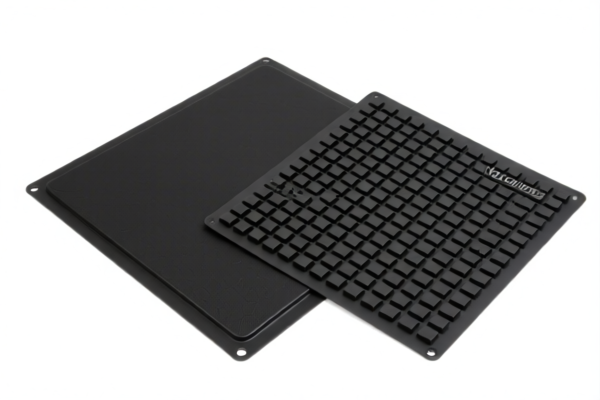
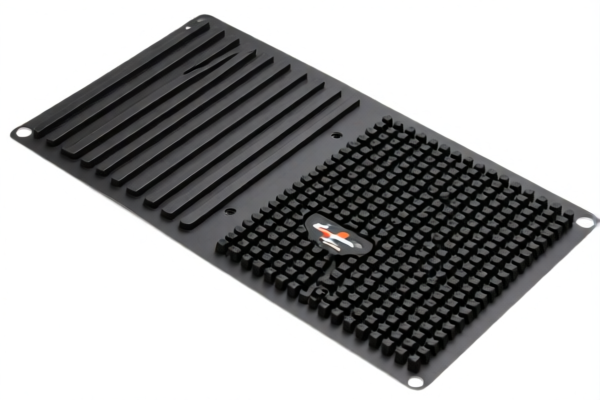
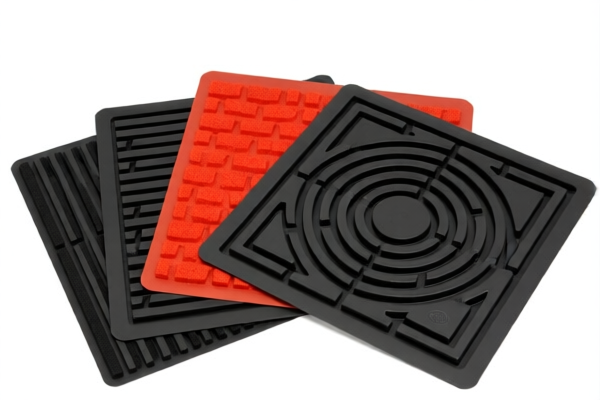
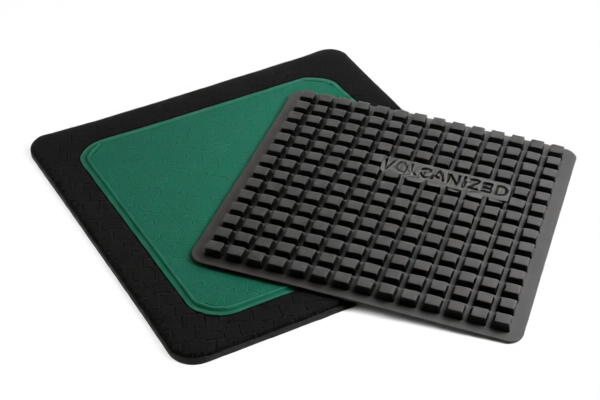
AI Analysis
🛡️ Protective Plastic Strip (Medical & Industrial Grade)
🌐 HS Code Reference & Customs Clearance Guide | 2026 Latest Tariff Analysis | Professional Clearance Strategy
📌 Part 1: Product Definition & Classification – Do You Know Your "Plastic Strip"?
"Protective Plastic Strip" is a broad term in international trade. In customs classification, the fate of your product depends entirely on its specific application and physical form. It generally falls into two main categories:
- Medical Use Plastic Strips: Items specifically designed for medical purposes (e.g., wound dressings, protective barriers in healthcare settings). These often fall under Chapter 39 ("Articles of plastics and articles of other materials of heading 3901 to 3914") or Chapter 90 (if part of medical devices).
- General/Industrial Plastic Strips: Items used for general protection, packaging, or industrial reinforcement. These are typically classified based on their shape (monofilament, strips, rods, etc.) under heading 3916 ("Monofilament, strip, rod and tube...").
⚠️ Critical Distinction: - If the item is intended for medical use and meets specific criteria → Often classified under 3926.90 (Other articles of plastics) or specific medical device headings. - If the item is a general-purpose plastic strip (rod, bar, shape) → Classified under 3916.90 (Other). - If the item is a protective suit/clothing made of plastic → Classified under 3926.20 (Clothing and clothing accessories).
📦 Part 2: HS Code Classification Matrix (2026 Latest Tariff Reference)
Based on the provided data, here is the authoritative mapping for "Protective Plastic Strip":
| HS Code | Product Description & Summary | Applicability | Total Tax Rate |
|---|---|---|---|
3926.90.99.50 |
Plastic Medical Strip: Material is plastic, purpose is medical, falls within the scope of medical plastic products. | Medical use strips/barriers | 22.8% |
3916.90.30.00 |
Plastic Medical Strip: Material is plastic, morphology fits "monofilament" attributes, classified under other categories. | Monofilament-style medical strips | 41.5% |
3916.90.50.00 |
Plastic Medical Strip: Material is plastic, morphology is "strip-shaped," reasonable inference under other categories. | Strip-shaped medical strips | 40.8% |
3926.90.99.89 |
Plastic Medical Strip: Material is plastic, morphology is "strip-shaped," falls under "Other" unclassified articles. | General medical plastic strips | 22.8% |
3926.20.60.00 |
Plastic Protective Suit: Material is plastic, form is protective clothing, falls under other catch-all categories. | Note: This is for protective clothing, not just strips. | 35.0% |
🔍 Key Insight: - The lowest tax rate (22.8%) applies to strips classified as "Other articles of plastics" for medical use (
3926.90.99.50/.89). - The highest tax rate (41.5%) applies to strips that resemble "monofilaments" (3916.90.30.00). - Crucial Warning: If the "strip" is actually part of a protective suit (e.g., a full-body coverall), it must be declared as3926.20.60.00, not a strip. Misclassification here leads to severe penalties.
💰 Part 3: 2026 Latest Tariff Rate Breakdown (Including Add-ons & Policy Surcharges)
✅ Applicable Country: United States (US) ✅ Country of Origin: China (CN) ✅ Effective Date: November 10, 2025 (and subsequent imports)
🎯 1. 3926.90.99.50 & 3926.90.99.89 – Medical Plastic Strips (Best Case Scenario)
| Item | Content |
|---|---|
| Base Tariff | 5.3% (Ad valorem) |
| Section 301 Surcharge | +7.5% (From USITC Footnote for this subheading) |
| IEEPA Surcharge | +10% (Targeting China/HK products, effective Nov 10, 2025) |
| Total Tax Rate | 22.8% |
| Tax Calculation | CIF Value × 22.8% |
| De Minimis Exemption? | ❌ No (Denied due to Section 301/IEEPA) |
| Legal Basis Path | IEEPA:9903.01.25 → USITC:3926.90.99 → FOOTNOTE:301_Section |
📌 Explanation: - This category benefits from a lower Section 301 surcharge (7.5%) compared to general plastics. - The 10% IEEPA surcharge is mandatory for Chinese-origin goods. - Total Cost Impact: 22.8% is relatively moderate for plastic imports from China, but still significant for low-margin medical supplies.
🎯 2. 3916.90.30.00 – Monofilament-Type Medical Strips (Highest Risk)
| Item | Content |
|---|---|
| Base Tariff | 6.5% |
| Section 301 Surcharge | +25.0% (High tier for monofilaments/rods) |
| IEEPA Surcharge | +10% |
| Total Tax Rate | 41.5% |
| Tax Calculation | CIF Value × 41.5% |
| De Minimis Exemption? | ❌ No |
| Legal Basis Path | IEEPA:9903.01.25 → USITC:3916.90.30 → FOOTNOTE:301_High_Tier |
📌 Warning: - If your "strip" is technically a monofilament (single continuous strand), the tariff jumps to 41.5%. - This is a high-cost item. Importers must verify the physical form carefully. Is it a flat strip or a round filament? This distinction is critical.
🎯 3. 3916.90.50.00 – Strip-Shaped General Medical Strips
| Item | Content |
|---|---|
| Base Tariff | 5.8% |
| Section 301 Surcharge | +25.0% |
| IEEPA Surcharge | +10% |
| Total Tax Rate | 40.8% |
| Tax Calculation | CIF Value × 40.8% |
| De Minimis Exemption? | ❌ No |
| Legal Basis Path | IEEPA:9903.01.25 → USITC:3916.90.50 → FOOTNOTE:301_High_Tier |
📌 Note: - Similar to monofilaments, general "strips" under heading 3916 are subject to the 25% Section 301 surcharge. - Total tax of 40.8% is nearly double the rate of
3926.90.99.50.
🎯 4. 3926.20.60.00 – Plastic Protective Suits (If Misclassified as Strips)
| Item | Content |
|---|---|
| Base Tariff | 0.0% |
| Section 301 Surcharge | +25.0% |
| IEEPA Surcharge | +10% |
| Total Tax Rate | 35.0% |
| Tax Calculation | CIF Value × 35.0% |
| De Minimis Exemption? | ❌ No |
| Legal Basis Path | IEEPA:9903.01.25 → USITC:3926.20.60 → FOOTNOTE:301_High_Tier |
📌 Caution: - If the product is actually a protective suit (e.g., Tyvek-style coveralls), it cannot be declared as a "strip." - Tax rate is 35.0%, which is higher than the optimal strip rate (22.8%) but lower than the monofilament rate (41.5%).
🛠️ Part 4: Customs Clearance Practical Advice (Real-World Pitfall Guide)
✅ 1. Documentation Checklist (Non-Negotiable)
| Document | Required? | Explanation |
|---|---|---|
| ✅ Product Specification Sheet | ✔️ | Must clearly state: Material (e.g., PVC, PE, Polypropylene), Form (Strip/Rod/Filament), and Intended Use (Medical vs. General). |
| ✅ Product Photos (Clear) | ✔️ | Show the item’s cross-section. Is it flat? Round? Twisted? This determines if it’s a "strip" or "monofilament." |
| ✅ Intended Use Declaration | ✔️ | Explicitly state "For Medical Use Only" or "For Industrial Protection." Medical use may qualify for 3926.90 (lower tax). |
| ✅ FDA Registration/510(k) Number | ✔️ | If claiming medical use, customs may request proof of FDA compliance. Without it, you may be forced to reclassify to 3916 (higher tax). |
| ✅ Commercial Invoice | ✔️ | Must match the HS Code description exactly. Avoid vague terms like "Plastic Item." Use "Plastic Medical Protective Strip." |
| ✅ Certificate of Origin | ✔️ | Essential for verifying Country of Origin (China) to apply correct IEEPA/Section 301 rates. |
✅ 2. Declaration Strategy (Key Mantra)
🔥 "Medical Use, Lower Tax; Monofilament, Higher Tax. Be Precise or Pay the Price!"
| Scenario | Correct Declaration | Wrong Practice |
|---|---|---|
| Flat Plastic Strip for Medical Use | 3926.90.99.50 (22.8%) |
Declare as "Plastic Rod" → 40.8%+ |
| Round Plastic Filament for Medical Use | 3916.90.30.00 (41.5%) |
Declare as "Strip" → Risk of penalty |
| Plastic Coveralls/Suits | 3926.20.60.00 (35.0%) |
Declare as "Strip" → Severe Misclassification |
| General Plastic Tape/Strip | Check specific subheading | Vague description "Plastic Protection" → Seizure |
✅ 3. Special Situations & Handling
| Situation | Handling Advice |
|---|---|
| OEM Custom Medical Strips | Provide the customer’s design drawings and intended use statement. If it’s a custom medical device component, it might still fall under 3926.90. |
| Mixed Containers (Strips + Suits) | Do not mix. Declare suits separately. Mixing can lead to an audit of the entire shipment. |
| FDA-Exempt Items | If the strip is not a regulated medical device (e.g., general barrier), you can still use 3926.90 if it’s a "medical article," but ensure it’s not a drug-delivery device. |
| High-Value Medical Devices | If the strip is part of a complex assembly, consider the assembly rule. It might be classified with the main device. |
🌍 Part 5: Global Market Clearance Comparison (2026 Latest)
| Country/Region | Recommended HS Code | Tariff | Certification Requirement | Notes |
|---|---|---|---|---|
| 🇺🇸 USA | 3926.90.99.50 |
22.8% (Best) | FDA + Section 301/IEEPA | Highest Risk: Monofilaments (3916) hit 41.5%. |
| 🇨🇳 China | 3926.90.99.50 |
5% (Import) | CCC (if applicable) | No Section 301/IEEPA surcharges. |
| 🇪🇺 EU | 3926.90.99 |
0% (General) | CE Mark + Medical Device Regulation (MDR) | No "Section 301" equivalent, but strict MDR compliance needed. |
| 🇦🇺 Australia | 3926.90.99 |
5% | TGA Registration (if medical) | No high surcharges. |
| 🇯🇵 Japan | 3926.90.99 |
6% | PMDA Approval (if medical) | Competitive market, low tariffs. |
📌 Conclusion: - The USA market is the most challenging due to Section 301 and IEEPA surcharges. - Tax Savings Opportunity: Ensuring the product is classified as a "Medical Article" (
3926) rather than a "Plastic Shape" (3916) saves ~18% in duties (22.8% vs 40.8%/41.5%). - Action: Always provide Medical Use Documentation to justify the lower3926classification.
📌 Part 6: Common Errors & Pitfall Guide (Lessons Learned)
❌ Error 1: Declaring a Round Monofilament as a "Flat Strip"
👉 Consequence: Customs reclassifies to 3916.90.30.00 → Tax jumps from 22.8% to 41.5%. Back taxes + interest.
❌ Error 2: Declaring Protective Suits as "Plastic Strips"
👉 Consequence: Major misclassification. Customs may seize goods for fraud. Correct code is 3926.20.60.00.
❌ Error 3: Vague Description: "Plastic Item for Hospital" 👉 Consequence: Customs lacks information to determine if it’s a device or general plastic. Shipment held at port for inspection.
❌ Error 4: Ignoring FDA Requirements 👉 Consequence: If you claim "Medical Use" for tax benefits but cannot provide FDA registration, customs may revoke the medical classification and apply higher tariffs + penalties.
✅ Correct Practice:
"Plastic Medical Protective Strip, Flat, PVC Material, For Wound Care Barrier, FDA Listed, Model XYZ, Country of Origin: China"
🎯 Part 7: Conclusion – Professional Declaration Saves Money!
🎯 Remember the Mantra:
🔹 "Medical Use = 22.8%; Monofilament = 41.5%. Choose Wisely!" 🔹 "Flat Strip = Lower Tax; Round Rod = Higher Tax. Describe Accurately!"
📌 Pro Tip:
If your product is originally from Vietnam, Mexico, or Thailand, you may be eligible for IEEPA Exemptions, reducing the total tax to 0%~5%. Recommendation: Apply for an Advance Ruling from US Customs and Border Protection (CBP) before shipping. This provides legal certainty on your HS Code and tax rate.
📣 Immediate Action:
📞 Contact a Professional Broker + Provide Product Images + Apply for CBP Advance Ruling 🚀 Ensure your Protective Plastic Strip clears customs smoothly, efficiently, and profitably!
✨ Professional Clearance Starts with Accurate Classification! 💼 Every Percent in Tax is a Percent of Your Profit!
Customer Reviews
About HS Code Classification
The Harmonized System (HS) is an internationally standardized nomenclature developed by the World Customs Organization (WCO) to classify traded products. Over 200 countries use the HS system as the basis for customs tariffs, trade statistics, and import/export regulations.
Each HS code follows a hierarchical structure:
- Chapter (2 digits) — Broad category of goods (e.g., Chapter 84: Machinery and Mechanical Appliances)
- Heading (4 digits) — More specific grouping within the chapter
- Subheading (6 digits) — Internationally standardized breakdown, used by all WCO member countries
- National subdivisions (8-10 digits) — Country-specific extensions for further classification, such as US HTSUS 10-digit codes
Correct HS code classification is essential for smooth customs clearance, accurate duty payment, and compliance with trade regulations. Misclassification can lead to customs delays, overpayment of duties, or penalties.
When importing from CN to US, the applicable tariff rates may include:
- Most-Favored-Nation (MFN) rate — The standard duty rate applied to WTO members
- General rate — Applied to countries without trade agreements
- Trade remedy duties — Additional tariffs such as Section 301 (anti-dumping), Section 232 (national security), or countervailing duties
The information provided on this page is for reference purposes only. For official classification, please consult with your local customs authority or a licensed customs broker.